

You've navigated the competitive West Michigan market, secured a contract on a beautiful home in Ada or Forest Hills, and then the unexpected happens. Your lender calls to say the appraisal came in lower than the purchase price. It's a moment defined by three distinct emotions: frustration, uncertainty, and the sudden fear of losing your dream home. Knowing what to do after a low home appraisal Michigan is essential when you're worried about bridging a financial gap or feeling pressured into a deal that no longer makes sense. With over 30% of Michigan homes selling above list price in 2026, this scenario is a common hurdle that requires a steady, methodical hand.
While a low valuation feels like a roadblock, it's actually a strategic pivot point that can be managed with the right expertise. You don't have to face this alone or settle for a stressful outcome. This guide provides the professional strategies you need to navigate the appraisal gap with absolute confidence. We'll walk through the process of challenging flawed reports, negotiating price reductions, and utilizing contract contingencies. By the end, you'll understand how to ensure your path to closing remains clear, secure, and successful.
Key Takeaways
- Understand the specific market catalysts in Forest Hills and Ada that cause contract prices to outpace traditional "sold" comparable data in 2026.
- Learn exactly what to do after a low home appraisal Michigan to successfully navigate negotiations and determine the best path forward for your specific transaction.
- Explore the methodical steps of a Reconsideration of Value (ROV) to challenge appraisal errors without the unnecessary costs or delays of a full second report.
- Discover how localized neighborhood authority and strategic planning can turn a valuation gap into a fair, closed deal that protects your long-term financial well-being.
Understanding the Low Appraisal Gap in Michigan's 2026 Market
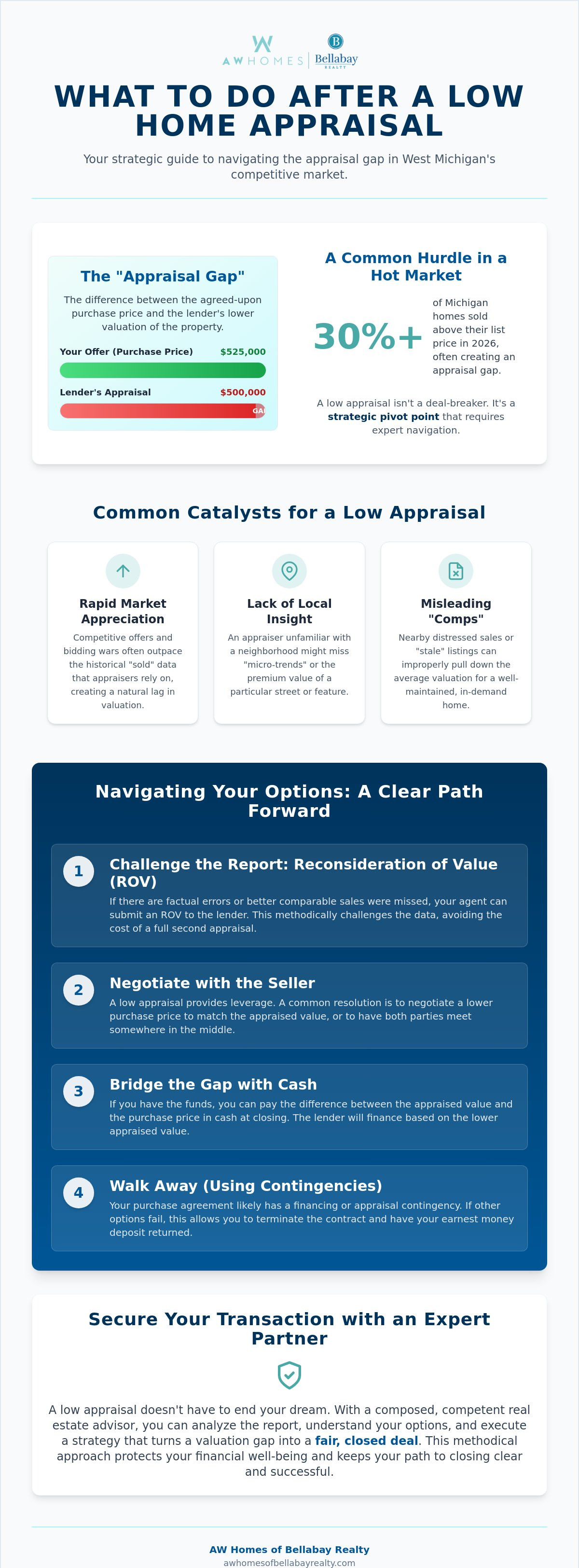
The moment you receive a low appraisal, the excitement of a pending sale can quickly shift into a period of high-stakes problem-solving. This discrepancy, known as the appraisal gap, occurs when the bank's valuation of a property falls short of the agreed-upon contract price. In the vibrant 2026 market, particularly in sought-after communities like Forest Hills and Ada, these gaps have become a frequent transactional hurdle. It's an emotionally taxing experience that affects three primary parties: the buyer who fears losing their home, the seller who anticipates a lower profit, and the lender who must manage financial risk. Understanding what to do after a low home appraisal Michigan begins with viewing this gap as a strategic pivot point rather than a deal-breaker.
Why Appraisals Matter in Michigan Real Estate
Lenders utilize the real estate appraisal process to determine the Loan-to-Value (LTV) ratio, which serves as the foundation for your mortgage approval. When a valuation misses the mark, it creates a ripple effect that can stall the Michigan home closing process entirely. It's essential to distinguish between market value, which is the price a buyer is willing to pay, and appraised value, which is the bank's conservative assessment of collateral. This distinction often creates a gap that requires expert navigation to bridge without compromising your financial security. We focus on clarity, strategy, and resolution to ensure your transition remains on track despite these technical discrepancies.
The 2026 West Michigan Market Context
Current Grand Rapids real estate trends show that inventory remains tight, pushing many buyers into aggressive bidding wars in areas like Caledonia. These competitive offers often outpace the historical "sold" data that appraisers use to justify values. The appraisal gap stands as the primary obstacle to 2026 homeownership transitions. Knowing what to do after a low home appraisal Michigan starts with understanding that this gap is a common byproduct of a thriving, fast-moving market rather than a definitive failure of the deal. By analyzing local inventory, neighborhood demand, and recent sales, we can address the gap with a methodical approach that protects your interests and your peace of mind.
This situation requires a composed, attentive, and highly competent partner who prioritizes your long-term well-being. We move the conversation away from chance and toward expert navigation, ensuring that no detail is left unexamined. Whether you are moving up to a larger home or relocating to the area, we provide the localized reliability needed to handle these high-stakes moments with ease.
Common Catalysts for Low Appraisals in Grand Rapids and Ada
A low appraisal often stems from a disconnect between the rapid pace of the West Michigan market and the historical data used by lenders. When you're determining what to do after a low home appraisal Michigan, it's vital to identify whether the issue lies with the property itself or the data pool. In high-demand areas like Ada and Grand Rapids, prices can climb faster than "sold" records can document. This lag creates a valuation gap that feels personal but is often purely technical. We see this frequently when a buyer's emotional investment meets a lender's rigid requirement for conservative collateral.
Local micro-trends also play a significant role. An appraiser who isn't intimately familiar with the specific nuances of a West Michigan neighborhood might overlook the premium placed on a particular cul-de-sac or a specific park proximity. Additionally, the presence of "stale" listings or distressed sales in the immediate vicinity can pull down the average valuation. These outliers don't reflect the true market demand for a well-maintained executive home, yet they still influence the final report. Knowing what to do after a low home appraisal Michigan involves recognizing these external factors before they disrupt your closing.
The 'Comps' Challenge in Forest Hills and Cascade
The process of selling my home Forest Hills MI requires a hyper-local approach to data. Using comparable properties from a different school district, even if they are only a mile away, can lead to significant valuation errors. In 2026, inventory shortages have further limited the available data pool, forcing appraisers to look further afield for "comps." This often results in a report that doesn't account for the specific prestige or demand associated with the Forest Hills or Cascade townships. Understanding your options after a low appraisal includes knowing how to identify these geographic inaccuracies.
Property-Specific Valuation Factors
High-end renovations and executive-level finishes are notoriously difficult to quantify. An appraiser might see a "kitchen remodel" but fail to adjust for the specific value of custom cabinetry, professional-grade appliances, or quartzite surfaces. While curb appeal drives buyer interest, it doesn't always translate directly to the lender's bottom line. FHA or VA loans involve specific inspection requirements that can trigger low valuations if minor structural or safety issues are identified during the walk-through. If you're concerned about how your home’s unique features are being valued, our residential listing services provide the strategic oversight needed to highlight these assets effectively.
Navigating Your Options: Negotiate, Bridge, or Walk Away
When an appraisal report arrives with a valuation below your contract price, the transaction enters a delicate phase where emotional security is as important as the financial math. Our "Concierge Approach" to this challenge is designed to be calm, methodical, and fair. Instead of reacting with panic, we evaluate the leverage held by both parties to find a path forward. Sellers often have a strong motivation to bounce back from a low appraisal without restarting the entire marketing process. Understanding what to do after a low home appraisal Michigan means looking past the immediate frustration to see the strategic possibilities that protect your investment and your future.
Strategy 1: Negotiating a Price Reduction
Negotiating a price reduction is often the most logical first step for a buyer. We present the low appraisal not as a personal slight, but as a current market reality that the seller must now acknowledge. If a seller chooses to walk away and relist the property, they face a significant risk; the next buyer's appraiser will likely encounter the same data limitations. In many cases, finding a "meeting in the middle" point preserves the deal. This approach allows both parties to proceed with their life transitions while maintaining a sense of fairness and order.
Strategy 2: Bridging the Gap with Cash
In competitive West Michigan markets like Ada and Forest Hills, an "Appraisal Guarantee" has become a common contractual tool. This clause legally commits the buyer to covering a specific dollar amount of the difference between the contract price and the bank's valuation. While paying above the appraised value requires more out-of-pocket cash at closing, the long-term ROI in high-appreciation neighborhoods often justifies the investment. It is a strategic choice to secure a home in a location where inventory remains historically low and demand continues to rise. We help you calculate these numbers precisely so you can move forward with absolute confidence.
Strategy 3: The Contractual Exit
If a resolution cannot be reached through negotiation or cash, you must understand your contractual rights. The appraisal contingency in a standard Michigan purchase agreement is designed to protect your earnest money deposit. If the home does not value and the seller refuses to adjust the price, you can legally terminate the contract. Knowing what to do after a low home appraisal Michigan includes having the professional courage to walk away when the financial risk outweighs the reward. From there, we can seamlessly transition your search with a buyers agent in Grand Rapids who understands how to find a property that better aligns with your long-term goals.
Every real estate transaction is a significant personal milestone. We prioritize your peace of mind by ensuring no detail is left to chance during these high-stakes negotiations. Our focus remains on your long-term well-being, providing the localized reliability you need to navigate these complex transitions with ease.
The Reconsideration of Value: How to Challenge a Low Appraisal
When an appraisal report fails to reflect the true market reality of a West Michigan property, the formal path forward is a Reconsideration of Value (ROV). This is a precise administrative process where the lender reviews specific evidence of factual errors or overlooked data within the original report. Many people instinctively ask for a second appraisal, but this is rarely the first or most effective step. Lenders are often restricted by federal regulations from simply ordering a new report without proof of a significant failure in the first. Instead, we focus on a methodical appeal that leverages localized authority and strategic data to correct the record.
The Reconsideration of Value serves as a meticulously structured, data-driven document that addresses technical inaccuracies rather than functioning as an emotional plea for a higher valuation.
Identifying Errors in the Appraisal Report
We begin by conducting a forensic review of the appraiser's work. It's common to find factual mistakes regarding the fundamental characteristics of a home, such as incorrect square footage, inaccurate room counts, or discrepancies in lot size. We also verify that the appraiser properly credited executive living features that define the Forest Hills and Ada markets. If high-end kitchen renovations or specialized mechanical systems were ignored, they must be brought to the lender's attention. Knowing what to do after a low home appraisal Michigan involves ensuring every detail of your property's evolution is accurately documented and valued.
Building a Compelling Case with New Comps
The most persuasive part of an ROV is the introduction of superior comparable sales that the appraiser may have overlooked. We select three to four recent sales that better align with the subject property's location, condition, and amenities. We also provide context for "pending" sales, which serve as a verbal shorthand for the market's current upward trajectory in 2026. This formal rebuttal is drafted with professional authority and precision, moving the conversation away from opinion and toward objective market evidence. If you need a strategic partner to defend your home's value with this level of detail, our residential listing services provide the high-level consulting necessary for a successful appeal.
Our approach is grounded in the belief that no detail should be left to chance. By positioning the brand as a strategic advisor, we mitigate the stress of these technical hurdles and prioritize your long-term financial well-being. We provide the steady, knowledgeable guidance required to navigate these complex transitions and secure your successful closing.
Partnering with a Strategic Advisor to Secure Your Transaction
A real estate transaction is rarely just about property; it is about the evolution of your life story. When faced with a valuation gap, the guidance of a strategic advisor becomes the defining factor between a failed deal and a successful closing. A concierge-style agent does more than just relay news from a lender. We mitigate stress, provide emotional security, and implement a methodical plan of action. By positioning ourselves as high-level consultants, we move the focus away from the immediate hurdle and toward your long-term well-being. Knowing what to do after a low home appraisal Michigan requires a partner who views neighborhood authority as a primary tool for defense.
This localized reliability is essential when defending a home's price against conservative bank valuations. We understand that every life stage brings different logistical and emotional nuances. Our approach is intentionally calming, designed to provide a sense of order in a high-stakes environment. We don't view these moments as mere financial transactions. Instead, we see them as significant personal milestones that deserve a sophisticated blend of professional authority and empathetic reassurance. This creates an atmosphere of trust that feels both high-end and accessible for every client during a complex move.
The Angela Worth Difference in West Michigan
Our expertise is rooted in the specific nuances of Ada, Forest Hills, and Cascade. These are unique markets where luxury property transitions require a deeper understanding of situational needs. We don't leave details to chance. From the first showing to the final closing, our commitment to strategic planning ensures that your interests are protected. We provide a steady, knowledgeable presence that anchors the transaction in reality, even when data-driven challenges arise. This methodical nature of our work moves the conversation away from chance and toward expert navigation, planning, and insight.
Moving Forward with Confidence
A low appraisal is a strategic pivot point, not a dead end. It is a moment that demands a composed, attentive, and highly competent partner who prioritizes your long-term goals. Whether we're negotiating a fair price reduction, bridging a gap with an appraisal guarantee, or challenging a report through a formal appeal, our focus remains on your personal milestone. You deserve a process that feels seamless, a strategy that is transparent, and a result that provides financial security. Connect with Angela Worth for a strategic real estate consultation to ensure your next chapter begins with absolute confidence and localized expertise.
Securing Your Path to a Successful Closing
Navigating a valuation discrepancy requires more than just persistence; it demands a composed and methodical strategy. You've learned that a low appraisal in 2026 is often a byproduct of a thriving market rather than a failure of the property itself. By identifying factual errors, utilizing superior comparable sales, and engaging in strategic negotiation, you can bridge the gap while maintaining your financial security. Knowing what to do after a low home appraisal Michigan empowers you to turn a potential roadblock into a successful life transition that protects your investment.
Our concierge-style approach ensures that no detail is left to chance during these high-stakes moments. We specialize in Grand Rapids and Ada neighborhood trends, providing the strategic negotiation and transaction management you need to move forward with absolute confidence. Your next chapter deserves a partner who prioritizes your long-term well-being and emotional security. Secure your West Michigan home sale with a strategic advisor; contact AW Homes today. Your vision for the future remains clear, secure, and attainable.
Frequently Asked Questions
What happens if a home appraisal comes in low in Michigan?
The lender will only approve a mortgage based on the appraised value or the purchase price, whichever is lower. This discrepancy creates a financial gap that must be resolved through negotiation, cash, or contract termination. It is a technical hurdle that requires methodical management to protect the buyer's loan approval and ensure the seller's closing timeline remains intact.
Does a seller have to lower their price if the appraisal is low?
No, a seller is not legally obligated to reduce their price unless the contract contains specific language requiring a price match to the appraisal. However, most sellers choose to negotiate because they recognize that a future buyer will likely encounter the same valuation constraints. Finding a fair middle ground is often the most strategic way to ensure a seamless transition for both parties.
Can a buyer back out of a contract if the appraisal is low in Michigan?
Yes, a buyer can legally terminate the contract and protect their earnest money deposit if the purchase agreement includes an appraisal contingency. This clause serves as a vital safety net in a fluctuating market. Understanding what to do after a low home appraisal Michigan involves reviewing these specific legal protections with your advisor before the transaction stalls or becomes a source of stress.
How often do appraisals come in low in the Grand Rapids market?
Appraisal gaps are a frequent occurrence in high-demand areas like Forest Hills, Ada, and Cascade. In 2026, with approximately 30.3% of Michigan homes selling above the list price, the historical data used by appraisers often lags behind real-time buyer demand. This frequency makes strategic planning and localized neighborhood authority essential for move-up buyers and sellers alike.
What is an appraisal gap guarantee and how does it work?
An appraisal gap guarantee is a contractual commitment where the buyer agrees to cover a specific dollar amount if the bank's valuation falls short of the purchase price. It works by providing the seller with financial certainty and making the buyer's offer more competitive in bidding wars. This tool offers emotional security, financial clarity, and a structured path to a successful closing.
Who pays for a second appraisal if the first one is low?
The party requesting the new report typically covers the cost, which in Michigan generally ranges between $350 and $550 for standard single-family homes. It's important to note that lenders rarely order a second appraisal simply because the first valuation was low. We generally recommend focusing on a methodical Reconsideration of Value to address specific factual errors or overlooked comparable properties first.
How long does a reconsideration of value take to process?
A formal Reconsideration of Value (ROV) typically takes between three to seven business days to process once the rebuttal is submitted to the lender. The exact timeline depends on the lender's internal review speed and the original appraiser's responsiveness. We prioritize precision and professional authority in these documents to minimize delays and keep your personal milestone on schedule.
Can I pay the difference between appraisal and purchase price in cash?
Yes, buyers often choose to bridge the gap with cash to secure a specific property in a highly competitive neighborhood. This is a strategic decision made when the long-term ROI and lifestyle benefits of the home outweigh the immediate out-of-pocket costs. Paying the difference in cash ensures the mortgage remains within the lender's required Loan-to-Value limits while allowing the deal to proceed.


