

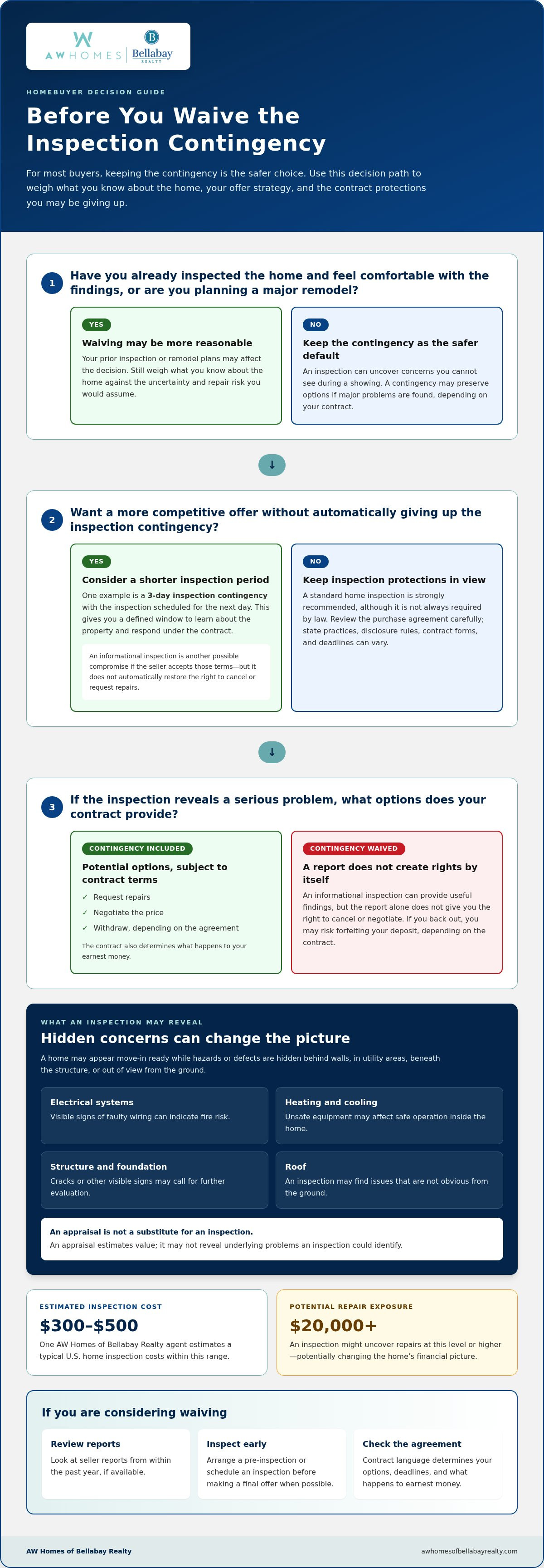
For most buyers asking “should I waive the home inspection,” the safer choice is to keep an inspection contingency. A home inspection is strongly recommended, though it isn’t always mandatory, and a contingency may let you withdraw, negotiate repairs, or discuss the price if the inspection uncovers major problems. Waiving it may make an offer more attractive, but it also means accepting greater uncertainty about the home’s condition.
It’s understandable to feel pressure when a seller is considering competing offers. In some situations, waiving an inspection may make sense, such as when you’ve already inspected the property and are comfortable with the findings, or when you’re planning a major remodel. The decision depends on what you know about the home and how much risk you can reasonably take on.
This guide explains when waiving may be worth considering, what hazards an inspection can reveal, and how to strengthen your offer without automatically giving up the inspection contingency. You’ll also learn how a shorter inspection period or an informational inspection can provide useful insight while helping keep your offer competitive.
Key Takeaways
- Keeping an inspection contingency can preserve options if the inspection uncovers major concerns; understand how your contract handles withdrawal, repairs, and earnest money.
- An inspection can reveal safety hazards and costly hidden problems that an appraisal may not identify.
- Consider a shorter inspection period or an informational inspection as alternatives to waiving the inspection entirely.
- Waiving may be more reasonable if you’ve already inspected the home or plan a major remodel, but weigh what you know against the risks you’ll assume.
- Compare the inspection cost with the value of learning about the property, and use buyer-agency guidance to assess how your offer terms fit your homebuying priorities.
Should you ever waive a home inspection?
For most buyers, keeping an inspection contingency preserves more options than waiving it. If you’re asking, “should I waive the home inspection?” weigh the home’s known condition, your contract rights, and the risk of paying for repairs yourself.
Inspection Contingencies and Informational Inspections
An inspection contingency is a contract term that may let a buyer renegotiate or withdraw after an inspection finds problems. An informational inspection provides findings without necessarily preserving those options. The distinction matters because a contingency may allow you to request repairs, negotiate the price, or withdraw without losing earnest money, depending on the contract. Without that protection, backing out after an informational inspection may mean forfeiting the deposit.
Informational Inspections as a Compromise
An informational inspection can provide a professional assessment even when your offer waives the inspection contingency. This compromise may appeal to a seller who wants fewer conditions, but it doesn’t automatically restore your right to cancel or request repairs. Before relying on this approach, read the contract language closely. The report may help you plan, but the agreed terms determine what happens if it reveals a serious defect.
Yes, you can waive the inspection contingency and still request an informational inspection if the seller accepts those terms. Receiving a report doesn’t itself give you the right to withdraw or negotiate. Your contract determines which options you have.
Inspection Requirements and Practices
A general home inspection is strongly recommended for buyers, but it isn’t always required by law. Lenders don’t universally require a standard home inspection, although the Board of Governors of the Federal Reserve System notes that a lender may require a termite inspection or an analysis of the property’s structural condition. Separate lender conditions from your own inspection protections before deciding what to include in an offer.
Yes, inspection rules and practices vary by state. State disclosure requirements, contract forms, and deadlines can affect how buyers handle inspection findings, so review the applicable purchase agreement carefully. For example, a state’s disclosure process may be separate from its inspection contingency. Understanding the difference helps you avoid assuming that a seller disclosure gives you the same options as an inspection clause.
Inspection Costs and Risk Reduction
One agent at AW Homes of Bellabay Realty estimates a typical U.S. home inspection costs between three hundred and five hundred dollars. That expense can provide vital information before closing, while waiving an inspection may leave you responsible for problems discovered later. If you’re considering waiving, review seller reports from within the past year, arrange a pre-inspection, or negotiate a shorter inspection period. These options can reduce uncertainty beyond what you can see during a showing.
If you waive, reduce risk by studying available reports and arranging an inspection before making a final offer when possible. A buyer may consider a 3-day inspection contingency and schedule the inspection for the next day. This approach creates a defined window to learn about the property and respond under the contract, rather than proceeding without inspection findings.
Safety risks of skipping an inspection
A home can look move-in ready while hiding hazards behind walls, in utility areas, or beneath the structure. Skipping an inspection means losing a professional opportunity to identify concerns such as faulty wiring, unsafe heating or cooling equipment, and structural problems before closing.
Safety hazards and hidden defects
Faulty wiring can create fire risks, while unsafe heating equipment may affect safe operation inside the home. Structural issues may signal problems that need closer evaluation. Distressed homes and fixer-uppers may have more serious underlying issues than newer construction, so assess visible wear in context rather than guessing.
- Electrical systems: An inspector may identify visible signs of faulty wiring or other concerns.
- Heating and cooling: Unsafe equipment can affect the home’s operation and require attention.
- Structure: Cracks or other visible signs may prompt further evaluation of the foundation.
- Roof: An inspection can reveal issues that aren’t obvious from the ground.
Inspection findings don’t all carry the same urgency. A safety concern, such as faulty wiring, calls for a different response than a planned cosmetic update. The report can help distinguish immediate concerns from maintenance and future projects.
Financial exposure and appraisal limits
Waiving an inspection can leave you with fewer ways to respond if serious defects emerge after closing. A home appraisal may estimate value, but it may not reveal underlying problems a home inspection could identify. The appraisal and inspection serve different purposes, so one doesn’t replace the other.
Repair expenses can add up quickly. An inspection might uncover repairs costing $20,000 or more, changing the home’s financial picture.
Waiving the inspection contingency creates a separate contract risk. If you discover a major issue and decide to withdraw, your contract may not protect your earnest money deposit. The outcome depends on the agreement, so understand which options remain before removing the contingency.
Ways to limit risk
Review existing seller reports and arrange a pre-inspection when possible. If time is tight, a shorter inspection period can preserve an opportunity to learn about the property. For buyers weighing a fixer-upper as an investment, real estate investment consulting can help frame property condition alongside investment goals.
Alternatives for strengthening an offer
Waiving an inspection contingency isn’t the only way to make an offer more appealing. A shorter timeline, clear financing, or a defined repair threshold can reduce uncertainty while preserving some protection.
Shorten the inspection period
Offer a focused inspection window instead of removing the contingency. One agent suggests completing a shortened inspection period within 3-5 days; another suggests arranging the inspection within a few days. If inspectors are already lined up, a buyer may consider a 5-day contingency. A clear deadline can address a seller’s concern about delays while giving you time to review findings and decide how to respond.
A shorter timeline helps only if the inspection can happen promptly. Before making the offer, coordinate the appointment and understand when the contractual period starts and ends. A fast schedule is useful only if it leaves enough time to receive the report and communicate a decision, not merely to complete the property visit.
Use an inspection-gap agreement
An inspection gap sets a defined amount of repair costs that the buyer agrees not to request from the seller. For example, one agent describes a buyer agreeing not to request repairs for the first $2-10k in defects. That approach can limit small repair negotiations, but it doesn’t mean every problem is harmless or affordable.
Consider the exposure against your available funds before choosing a threshold. A $400,000 home is one example used to illustrate an inspection-gap offer, not a universal formula. The contract should state how the threshold works and what happens when findings exceed it. A buyer should understand whether the agreement changes repair requests, cancellation rights, or both.
Strengthen financing and offer terms
A lender’s pre-approval can make an offer more appealing without surrendering the inspection contingency. It signals that financing has been reviewed, while the inspection term addresses the home’s physical condition. These are separate sources of uncertainty for a seller.
Offer terms can also be clear and practical. Present a realistic closing schedule, respond promptly to contract details, and avoid adding requests unrelated to the property. In a competitive U.S. seller’s market, sellers may favor offers that reduce uncertainty or avoid delaying closing. A well-organized offer can address those concerns without treating the inspection as optional.
Choose a compromise that fits the home
Compare the shortened period, inspection gap, and pre-approval based on what each protects. A buyer facing a fixer-upper may place more weight on inspection findings, while a buyer with a tight timeline may prioritize a 3-5-day window. The strongest alternative is the one whose terms match your finances, schedule, and tolerance for repairs.
Reasons buyers waive home inspections
Buyers usually consider waiving an inspection when another priority changes how they weigh the risks. A competitive offer, a planned teardown, or a recent inspection report may influence that choice. The decision is strongest when the buyer understands what information is available and what uncertainty remains.
Competition and seller confidence
Yes, waiving an inspection can happen in a competitive housing market, where sellers may receive multiple offers quickly. Some sellers favor terms that reduce uncertainty, avoid repair negotiations, or keep closing on schedule. That pressure can make a waiver seem like a direct route to a stronger offer, but it doesn’t prove the property is problem-free.
For example, a buyer competing for a home may compare a full contingency with a shorter inspection period. The seller may value fewer conditions, while the buyer may want time to identify major defects. A sound decision weighs both sides: how much the offer benefits from the waiver and how much repair risk the buyer can absorb.
Prior knowledge of the property
A buyer may consider waiving after personally inspecting the property and feeling comfortable with what they observed. Existing seller reports from within the past year can also provide relevant information. Reports are most useful when they describe the property’s current condition, rather than an earlier state before repairs or other changes.
Even then, a report is evidence, not a guarantee that every issue has been identified. Note its date, scope, and any recommended follow-up. For instance, if a report identifies a roof concern, account for that finding instead of treating the report as proof that no further questions remain.
Major renovation plans
Waiving may make sense for a buyer planning a major remodel or teardown. If the buyer expects to replace key systems or substantially alter the structure, some inspection findings may not change the renovation plan. The decision still matters: existing conditions can affect safety before work begins, project planning, and the total resources required.
A buyer pursuing a teardown, for example, may focus on whether the property suits the intended project rather than on preserving its current finishes. A buyer planning a partial remodel faces a different calculation because existing wiring, heating equipment, or structural conditions may remain in use. Let the planned work guide which unknowns matter most.
Timing and property type
Scheduling can affect the decision. In one buyers’ area, inspectors were booked at least two weeks out, creating pressure to submit an offer before an appointment was available. In that situation, a buyer might consider a pre-inspection or a short contingency rather than treating time pressure alone as a reason to waive.
New construction can also tempt buyers to skip an inspection because the home is newly built. Yet an agent recommends inspecting new-build homes, too. A home’s newer age doesn’t replace an independent assessment. Compare the inspection’s potential value with the specific property, available reports, and contract terms.
How much does a home inspection cost in the United States?
One real estate agent estimates a U.S. Treat that as a planning reference, not a fixed national price. The amount depends on the property and inspection scope, so the home’s size, age, condition, and access can shape the work involved. A larger or more complex property may take more time to assess than a straightforward home.
The inspection fee is only one part of the decision. Compare it with the information an inspection can provide before closing. For example, a report identifying a concern with the roof, electrical system, or foundation can help you understand what further evaluation or repairs may involve. An inspection doesn’t guarantee that every defect will be found, but it provides a professional assessment of observable conditions.
What affects the inspection fee?
Property characteristics and the requested scope influence the work. A single-family home and a property with more systems or areas to assess may require different amounts of inspection time. Access matters, too: areas that cannot be reached or observed may limit what the inspector can assess. Specialty evaluations, such as termite inspections or structural analysis, are separate from a standard home inspection.
To compare estimates, focus on what each inspection covers rather than looking only at the total. Find out whether the scope includes the home’s main systems, how the report describes findings, and whether additional evaluation is being discussed. According to the Board of Governors of the Federal Reserve System, a lender may require a termite inspection or structural analysis. Those requirements are distinct from choosing a general inspection to understand the home.
Put the cost in context
Consider the fee beside the property’s condition and your intended use. For an owner-occupied home, a report may help you plan maintenance and evaluate concerns before closing. For an investment property, the same information can inform assumptions about repairs and the property’s financial prospects. A home inspection might reveal repairs costing $20,000 or more, so the fee can be modest compared with the uncertainty it helps clarify.
Waiving an inspection avoids its upfront cost, but it also removes an opportunity to learn about observable defects before purchase. If a report finds a concern, the contract determines whether you can negotiate, request repairs, or withdraw. For investment buyers comparing inspection findings with projected expenses, discuss your real estate investment strategy as part of evaluating the property.
Before deciding, compare the inspection expense with the home’s age, visible condition, available reports, and your ability to manage unexpected repairs. A newer home still deserves careful consideration, while a distressed property may have more unknowns.
AW Homes of Bellabay Realty: Residential Listing Services
AW Homes of Bellabay Realty helps buyers weigh offer terms, property condition, and inspection findings through Buyer Agency Services. If you’re purchasing a home in Grand Rapids, Ada, Caledonia, or East Grand Rapids, this guidance can help you compare options such as keeping a contingency, shortening the inspection period, or making an informational inspection part of your offer. Buyers considering a property as an investment can also draw on Real Estate Investment Consulting to assess how inspection findings fit their plans.
For sellers, Residential Listing Services can support decisions about preparing a home and reviewing offers with their terms in view. Whether you’re buying or selling, a clear understanding of the inspection clause can help you move through the transaction with greater confidence. Contact AW Homes of Bellabay Realty or visit its website to discuss your real estate plans.
Make Your Next Move With Clarity
If you’re still asking, “Should I waive the home inspection?” bring the decision back to your priorities: what you know about the property, what risk you can manage, and which contract terms protect your plans. A competitive offer should still make sense for the home you’ll own after closing. Weighing these factors can help you move forward deliberately rather than letting market pressure decide for you.
AW Homes of Bellabay Realty guides buyers through offer decisions with Buyer Agency Services and supports sellers through Residential Listing Services. If your move involves a new area, Relocation Assistance can help you plan the transition alongside your real estate decisions in Grand Rapids, Ada, Caledonia, or East Grand Rapids.
When you’re ready to discuss your next step, contact AW Homes of Bellabay Realty. Make your decision with care, then move forward with confidence.
Frequently Asked Questions
What are the risks of waiving a home inspection?
Waiving can leave you without a clear picture of problems that affect safety, repairs, or move-in plans. For example, discovering a heating issue after closing may force urgent decisions before you’ve planned for the work. Depending on the signed agreement, you may also give up contract options tied to inspection findings. Before proceeding without an inspection, consider whether you could manage unexpected repairs and uncertainty.
Can I make an offer more competitive without waiving the inspection?
Yes. Make your offer easy to assess with complete financing information, clear terms, and a closing schedule that fits the seller’s needs. You can also preserve inspection protection while limiting unrelated conditions that add complexity. For example, if the seller prefers a particular possession date, matching your proposed timing may address that concern without removing your opportunity to learn about the home.
What is an inspection contingency, and how does it work?
An inspection contingency is a contract provision that connects inspection findings to options written into the purchase agreement. Review the agreement for the inspection deadline, how to deliver notice, and what actions the clause permits. For example, a contract may set a process for raising a concern before a deadline. Missing a required step can affect your options, so track the dates and instructions in your signed terms.
What alternatives are there to a full home inspection?
Options include reviewing a recent seller report, arranging a pre-inspection before submitting an offer, or requesting a focused evaluation of a specific concern. A termite inspection or structural analysis may address a particular issue, but it doesn’t cover everything a general home inspection might assess. Match the evaluation to what you need to understand, such as a visible roof concern or signs that warrant closer structural review.


