

Pre-approval is a strong start, not final loan approval. A lender can still deny your mortgage or change its terms if your financial situation shifts before the formal application is processed or before closing. Knowing what not to do after getting pre-approved for a mortgage means keeping your credit, income, employment, and account activity as steady as possible while the lender completes its review.
It’s natural to feel ready to make plans once you have a pre-approval letter. Still, a new debt, missed payment, job change, or unexplained deposit can prompt questions and slow the path to closing. A little care now can help keep the process on track.
Here, you’ll learn which financial changes to avoid, how to document large deposits, and why prompt replies to lender requests matter. You’ll also learn what to do if an unexpected change arises, so you can approach the next steps with greater clarity and confidence.
Key Takeaways
- Keep your income, employment, and account activity as steady as possible while your mortgage is being reviewed.
- Before taking on debt or making a major purchase, consider how it could affect your credit profile, monthly obligations, or cash reserves.
- Keep a clear paper trail for large deposits and transfers so the source of your funds is easier to document.
- Reply promptly to lender requests and share important changes early to help prevent avoidable delays.
1. What financial changes should I avoid after getting pre-approved?
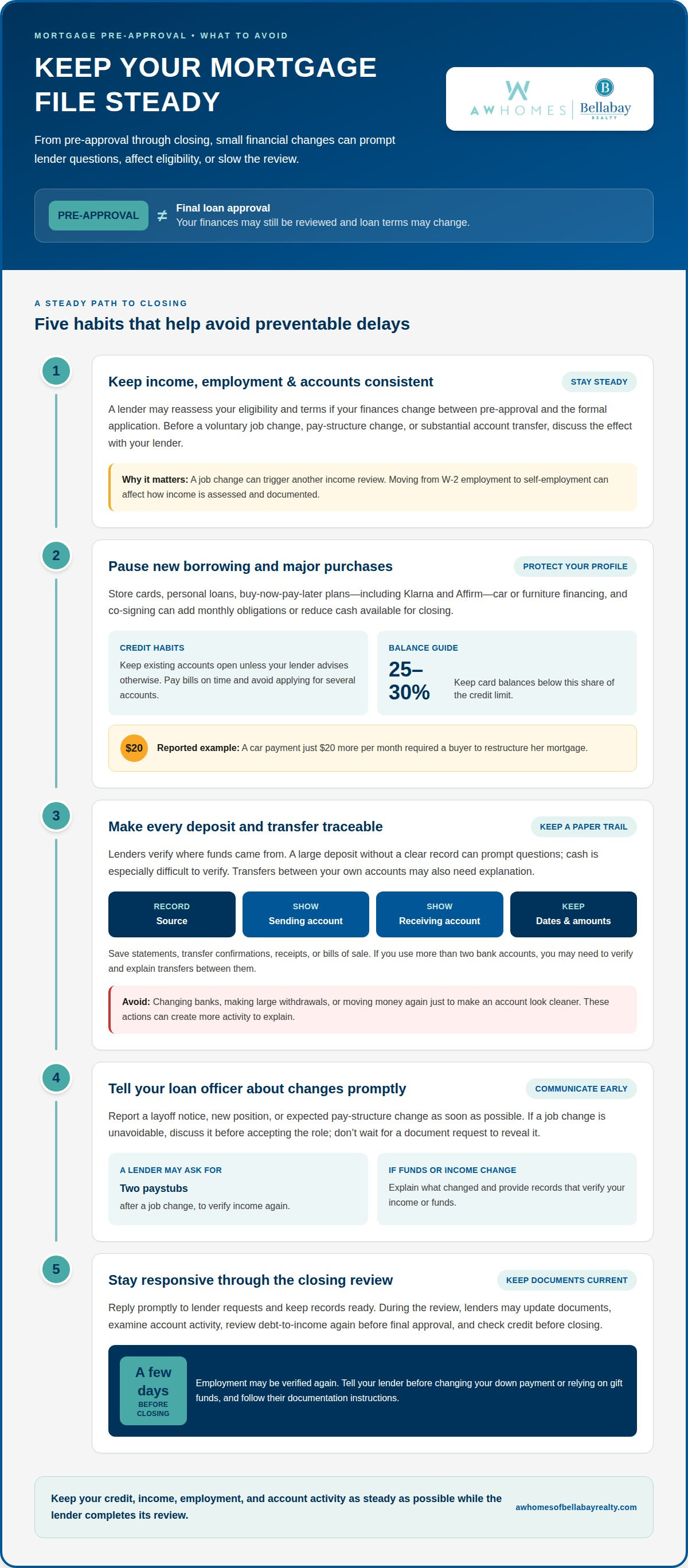
Keep your income, employment, and financial accounts as consistent as possible through closing. A pre-approval isn’t a final loan commitment. If your finances change between receiving the pre-approval letter and submitting a formal application, the lender may reassess your eligibility and terms. Discuss the effects with your lender before making a voluntary job change, changing how you’re paid, or transferring substantial funds between accounts.
Changing jobs can trigger additional review, even when your new role seems like a positive move. A lender may need to verify your income again and could request two paystubs after a job change. Moving from W-2 employment to self-employment can also affect financing eligibility because the lender must assess how your income is earned and documented. If you receive a layoff notice, accept a new position, or expect a change in pay structure, tell your loan officer promptly. Don’t wait until a document request exposes the change.
Do mortgage pre-approval rules vary by loan type or state? Loan-program requirements can differ, and state-specific transaction details may also affect the process. Ask your lender how a proposed change applies to your loan and timeline before deciding.
How often do lenders recheck credit, employment, and finances before closing? Lenders review debt-to-income again before final approval, may check credit before closing, and may verify employment a few days before closing. They can also review account activity and request updated documents during underwriting.
If your finances change after pre-approval but before closing, the lender may need to reassess your application, request new documents, or adjust loan terms. Contact the loan officer as soon as possible, explain what changed, and provide records that verify your income or funds. If a job change is unavoidable, discuss it before accepting the role. If you’re laid off, report it immediately rather than relying on outdated income information. As you plan homebuying costs, preserve a financial cushion and keep a clear record of any deposit transfers. A timely conversation gives the lender the information needed to review your next steps.
2. Opening new credit accounts or taking on debt
Pause new borrowing until your mortgage closes. A store card, personal loan, or buy-now-pay-later plan can add a required monthly payment, changing your debt-to-income ratio and affecting eligibility. Discuss Klarna and Affirm arrangements with your lender, too, as they can count as credit commitments. Even an account with a small minimum payment can change the figures used to assess your application. A practical guide to what not to do after getting pre-approved for a mortgage starts with avoiding optional new debt.
Big purchases can create two pressures at once: a larger monthly debt and less cash available for closing. A car loan, furniture financing, or co-signing someone else’s loan may affect your debt-to-income ratio or reserves. In one reported example, a car payment just $20 more per month required a buyer to restructure her mortgage. Before financing an exciting purchase, speak with your loan officer and wait for guidance.
Protect existing credit accounts, too. Don’t close a credit card or pay it off and close it before closing without discussing the move with your lender. Closing accounts can affect your credit history and score, while paying a balance may reduce cash reserves needed for the transaction. Keep making every payment on time, and avoid applying for several accounts. Mortgage lenders may conduct a soft credit check before the loan closes, so newly opened credit lines can come to light.
Keep card balances below 25-30% of the credit limit during the mortgage process. This helps avoid using a high share of available credit, which may lower your score. Another part of what not to do after getting pre-approved for a mortgage is closing an old account just to simplify your finances. If you’re considering a necessary purchase, give your lender the price, payment terms, and timing before applying. Preserve current accounts, pay bills by their due dates, and postpone optional borrowing until after closing. These steps keep your credit and debt picture steadier during underwriting.
3. Making large deposits without documentation
During mortgage underwriting, lenders verify where your funds came from. A large deposit without a clear paper trail can prompt questions and delay the review. Cash kept at home is especially difficult to verify because it lacks bank records. For example, depositing cash from a personal sale may make it difficult to connect those funds to a documented source. Before depositing money for a home purchase, keep records showing the transaction and the funds’ path into your account.
Transfers between your own accounts may also need an explanation. If you use more than two bank accounts, you may need to verify and explain transfers between them. Keep statements showing the sending account, receiving account, dates, and amounts. Changing banks during underwriting can complicate the paper trail, while large withdrawals may prompt questions about available funds. Keep original statements and transfer confirmations together, ready to provide if requested. A lender may review several months of statements, including pages without transactions.
Should you avoid changing your down payment or using gift funds without lender approval? Yes. Tell the lender before changing your planned down payment or relying on gift funds. These changes can affect which funds need verification and may alter loan eligibility or documentation requirements. Explain the source, amount, and timing, then follow the lender’s instructions.
If an unexplained deposit or withdrawal appears, don’t move the money again to make an account look cleaner. That can create more activity to explain instead of resolving the original question. Identify the source or purpose, keep a receipt, bill of sale, or transfer confirmation, and provide the matching statement pages. For a transfer between accounts, retain records from both sides. If the transaction has already happened, disclose it promptly and explain what the records show. These steps help the lender trace the funds and reduce avoidable delays. To protect your timeline, discuss cash deposits, account changes, or down-payment adjustments with your lender before making them.
4. Responding promptly to lender requests
A lender may request updated documents or clarification during underwriting. Delayed replies can slow the review and postpone closing. Requests may concern a specific detail, such as a recent pay stub, an account statement, or an explanation of income. Read each message carefully, note exactly what’s missing, and respond with the requested information. If you don’t understand a request, ask the loan officer which document or detail will answer it.
Set up a simple document routine. Save each requested file with a clear name, such as “March pay stub” or “checking account statement,” and send complete pages in the lender’s preferred format. The lender may request updated pay stubs, bank statements, or tax returns. If a statement has multiple pages, include the full statement, not just the page showing a balance. Complete records help the lender review the source of funds and assess income accurately.
When a request involves a change, include a short, factual explanation with the supporting documents. If a deposit came from selling a personal item, for example, provide the receipt or sale record and identify the matching deposit. If an updated pay stub shows a new income amount, explain the change rather than leaving the lender to infer its impact. Clear answers help the underwriter assess whether the detail affects your loan, income ratio, or eligibility.
Keep lender messages accessible and track what you’ve sent. A brief list of requested items, submission dates, and outstanding questions can prevent missed follow-ups during a busy homebuying period. If you’re waiting for a document, tell the loan officer what’s pending and when you expect to provide it. Prompt, complete communication helps keep underwriting moving toward closing. For guidance on a property purchase as an investment, explore real estate investment consulting.
AW Homes of Bellabay Realty
AW Homes of Bellabay Realty helps buyers make informed decisions as they move from pre-approval toward a home purchase. Its Buyer Agency Services provide guidance through the buying process, and Relocation Assistance supports people planning a move to West Michigan, including Grand Rapids, Ada, Caledonia, and East Grand Rapids. For sellers, Residential Listing Services support the sale side of a property transition.
A real estate professional can help you consider timing, property choices, and local neighborhood context in Grand Rapids, Ada, Caledonia, and East Grand Rapids. Your lender is the source for mortgage questions, including how a financial change may affect loan approval. Keeping those roles clear can help you make property decisions while your lender reviews your finances.
Planning a move, purchase, or sale in West Michigan? Contact AW Homes of Bellabay Realty to discuss your real estate needs.
Move forward with a clear homebuying plan
Pre-approval can help shape your search, but it works best as a planning guide, not a reason to rush. Before making an offer, align the homes you’re considering with the budget and conditions your lender has reviewed. If your priorities shift, revisit the plan before committing. This gives you room to make a considered choice while your financing moves through review.
A thoughtful approach to what not to do after getting pre-approved for a mortgage also means knowing who can guide each part of the transition. Your lender addresses financing questions; a real estate professional can help you assess property choices and the next steps in your move. For a purchase, sale, or relocation in West Michigan, contact AW Homes of Bellabay Realty to discuss your real estate plans. Move ahead with clarity, preparation, and confidence.
Frequently Asked Questions
Can I still be denied a loan after receiving preapproval?
Yes. A pre-approval is not a final loan commitment, and the lender can reassess your application during underwriting. If updated information changes your financial picture or no longer meets the loan’s requirements, the lender may revise the terms or deny the loan. Treat the pre-approval as a planning tool, not a guarantee, until the lender completes its review.
How long does my mortgage preapproval last?
Mortgage preapprovals typically last 60 to 90 days. The expiration date on your letter is the key date for planning your home search. If it expires before you secure a property, contact your lender about refreshing the preapproval. That process may involve updated financial information, so keep your records organized as you approach the stated expiration date.
What does it mean to get pre-approved for a mortgage?
Getting pre-approved means a lender has reviewed information about your finances and estimated the mortgage amount you may qualify to borrow. The pre-approval letter can help you set a home-search budget and show sellers you’ve started the financing process. It does not mean the lender has completed underwriting or committed to fund a specific home purchase.
What financial changes should I avoid after getting pre-approved?
Avoid optional changes that could alter your finances before closing. For example, hold off on taking on a recurring payment for a home renovation until your lender has reviewed its impact. Keep funds available for the down payment and closing, and preserve a cushion for repairs or temporary income interruptions. If a change is necessary, share the details with your lender early.
What does mortgage pre-approval mean, and how long does it last?
A mortgage preapproval is a lender’s preliminary assessment of your borrowing ability, based on the information reviewed at that time. It helps guide your home search, but it isn’t final approval for a particular property. Preapprovals typically last 60 to 90 days. Check the letter’s expiration date and plan your search around it, since the lender may need refreshed information afterward.
What financial changes should you avoid after mortgage pre-approval?
Protect the financial cushion you’ll need after making your down payment. Spending available cash on optional upgrades before closing could leave less room for repairs, emergencies, or a temporary disruption in income. Before committing to a large expense, consider whether it will reduce your available reserves. Keeping a practical buffer can help you manage homeownership costs alongside the mortgage payment.


