

A home inspection focuses on a home’s visible, accessible condition, not hidden areas behind walls or beneath floors. Knowing what a home inspector looks for means understanding the main systems and surfaces they can examine: the foundation and structure, plumbing, roof, gutters, flashing, chimney, and signs of moisture or pest entry.
It’s natural to want a clear picture of a home before making a major decision. An inspection can reveal visible concerns such as cracks, leaks, damaged shingles, drainage problems, or gaps that could let pests inside. It can also show where a closer specialist assessment may be useful. This guide explains what inspectors typically review, what their observations can tell you, and where a standard visual inspection has limits. With that context, you can better understand the findings and consider your next steps.
Key Takeaways
- Learn which visible electrical components inspectors review and how their observations can flag concerns that need closer attention.
- Recognize how foundation cracks, soil movement, drainage, and possible pest entry can point to issues affecting the home.
- Understand what inspectors assess in plumbing, from exposed pipes and fixtures to leaks and drainage.
- See how roof coverings, gutters, flashing, and chimney condition can reveal signs of water intrusion or wear.
House Inspection Checklist: What Do Home Inspectors Look For?
A standard inspection reviews visible, accessible parts of a home, including its structure and major systems. Electrical observations can help clarify potential safety concerns and identify where further evaluation may be useful.
Electrical systems and safety
Inspectors examine accessible electrical components for visible damage and potential safety concerns. They may test outlets and switches, inspect lighting, and look for exposed wiring or splices.
These checks matter because damaged components can signal hazards that deserve attention before you make a purchase decision. Inspectors also review structural features, plumbing, and HVAC systems, including a heater and air conditioning when present. In most residences, they may test large built-in appliances, such as a stove or dishwasher, to see if they operate.
Panels, wiring, grounding, and GFCI outlets
An electrical panel inspection covers the panel, breakers or fuses, visible wiring, and accessible connections. Inspectors may test outlets and ground-fault circuit interrupters, or GFCI outlets, where present.
They look for visible damage, exposed splices, and other conditions that may call for repair or replacement. Grounding and GFCI protection matter for electrical safety, especially near outlets exposed to moisture. A home inspection is visual and non-invasive, so inspectors don’t open walls to trace concealed wiring. Findings identify concerns for follow-up, rather than certify every hidden component.
Inspection scope and exclusions
Inspection standards and state requirements can vary. The American Society of Home Inspectors and the International Association of Certified Home Inspectors publish standards of practice that describe the scope of an inspection.
A typical U.S. home inspection generally covers visible structural components, plumbing, electrical systems, heating, the roof, and other accessible areas. It doesn’t involve opening walls to examine concealed wiring or piping. Specialized checks for radon, mold, termites, or underground sewer lines are separate inspections. These limits distinguish a general visual review from targeted testing.
Foundation cracks, soil movement, and pest entry
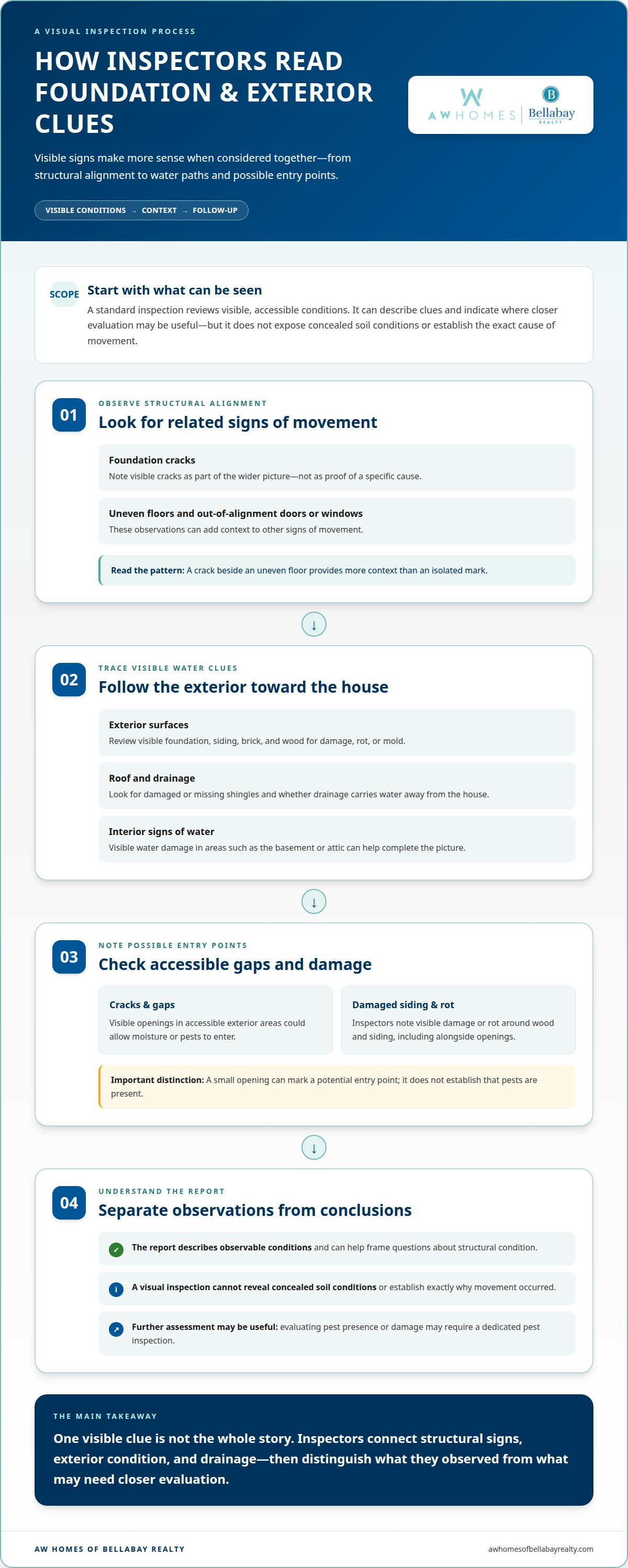
Inspectors assess visible foundation and exterior conditions for clues about structural movement, moisture, and possible pest access. They also consider how the roof, siding, and drainage affect the home.
Foundation cracks and soil movement
Foundation cracks and uneven floors can signal settling or structural movement. Inspectors consider these features together, rather than treating one crack as proof of a specific cause. For example, a crack beside an uneven floor provides more context than an isolated mark.
The inspection also considers visible structural components around the foundation. Doors or windows that appear out of alignment can add context to other signs of movement. The report describes observable conditions, but a visual inspection can’t reveal concealed soil conditions or establish exactly why movement occurred.
Exterior observations help complete the picture. Inspectors review visible foundation, siding, brick, and wood for damage, rot, or mold, along with roof conditions such as damaged or missing shingles. These details can point to areas where water may reach structural components, especially if drainage doesn’t carry water away from the house properly.
Foundation integrity and pest entry
Foundation integrity includes visible conditions that could create openings for moisture or pests. Inspectors look for cracks, damaged siding, and gaps in accessible exterior areas, noting signs that could allow pests to enter.
A small opening doesn’t establish that pests are present, but it can mark a potential entry point. Inspectors also note visible damage or rot around wood and siding, since these conditions can occur alongside openings in the exterior. Assessing pest presence or damage may require a dedicated pest inspection.
Drainage matters, too. Inspectors check whether water flows away from the house and look for signs of water damage in areas such as the basement or attic. In yards with uneven slopes or severe runoff, resolving soil movement often requires structural earth retention, such as consulting a qualified retaining wall contractor Johnson County KS to stabilize the perimeter. For a buyer evaluating a home purchase, these observations can help frame questions about structural condition and any follow-up inspections before deciding what the findings mean.
Plumbing systems
Inspectors review accessible plumbing for leaks, drainage problems, and signs of water damage. Their observations help buyers understand the condition of fixtures, exposed pipes, and the water heater.
Fixtures, pipes, and water pressure
Inspectors operate visible faucets, showerheads, toilets, and tubs, looking for leaks, damage, and proper function. They may assess water pressure and drainage, since slow drains or weak flow can point to a plumbing concern.
Exposed pipes receive a visual review for corrosion, leaks, or damage around joints. For example, moisture beneath a sink can indicate an active leak, while corrosion on a pipe can signal deterioration. These observations give buyers specific plumbing issues to consider, rather than just a general impression of the system.
A typical visual inspection doesn’t open walls or establish the condition of concealed pipes. It also doesn’t determine the condition of an underground sewer line. A separate sewer-scope inspection uses a camera to view the line’s interior, providing information beyond the visible plumbing review.
Water heaters and water damage
Inspectors check the visible water heater for signs of leakage, damage, and operation. They may also note its age to put the equipment’s condition in context, without establishing exactly when replacement will be needed.
Water damage can appear around the heater, beneath sinks, near tubs, or on basement surfaces. Stains, damp areas, and corrosion near plumbing connections can show where further attention may be useful. Inspectors also consider whether nearby fixtures drain properly, since standing water can leave marks or affect adjacent materials.
These findings can help buyers distinguish a simple repair concern from an issue that merits closer assessment. A report records observed conditions, such as a leaking faucet or a corroded exposed pipe, but doesn’t price repairs. Concealed leaks and underground plumbing require further investigation beyond a standard visual inspection.
Roof, gutters, flashing, and chimney condition
A roof review covers visible shingles, flashing, gutters, and downpipes. Inspectors look for damage, loose or missing sections, and signs that water may enter around roof joints. They also assess whether gutters and downpipes direct water away from the home. In an attic, visible leaks, ventilation, mold, and insulation can add context to the roof’s condition.
Flashing protects joints around features such as chimneys and roof edges. Gaps or damaged flashing can let water in, so inspectors note visible defects and related interior staining. A chimney review may include looking for open seams or rust in the flue. These observations connect exterior wear with possible water damage inside.
Heating and air conditioning checks focus on operation and visible condition. An inspector may assess the furnace, central air conditioning when temperature permits, and accessible ductwork. Visible filters, rust, or signs of neglected maintenance may also be noted. The inspection describes observed function and condition, rather than predicting how long equipment will last.
Interior and exterior surfaces offer further clues. Inspectors may examine ceilings, walls, floors, windows, doors, siding, and paint for moisture marks, rot, or sealing problems. If worn frames or seal failures are uncovered during the review, consulting specialists like Galaxy Home Remodeling can provide clear guidance on modern replacement options. For example, a water stain below a roof joint may point to an area needing closer attention. In most residences, inspectors also test large appliances such as a stove, dishwasher, or built-in microwave to see if they operate. Their checklist may not include washers and dryers.
For a property investment decision, roof, HVAC, and appliance findings can help frame questions about condition and potential repairs. Discuss a home investment decision in light of the inspection findings.
AW Homes of Bellabay Realty
AW Homes of Bellabay Realty helps buyers put inspection findings in context as they consider a home purchase. A report can identify visible concerns, while your priorities, plans, and goals help determine how those observations fit into the broader decision.
Through Buyer Agency Services, buyers receive guidance during the purchase process, including consideration of inspection findings alongside the home and transaction. For those assessing a property as an investment, Real Estate Investment Consulting can help connect the home’s condition with investment considerations. Inspection results are one piece of the decision, not a substitute for specialized evaluations when a concern calls for closer assessment.
If you’re weighing inspection findings as part of a home purchase or investment, contact AW Homes of Bellabay Realty to discuss your next step.
Let Your Next Move Reflect Your Priorities
Understanding what a home inspector looks for can help you approach a property decision with clearer expectations. Consider how the home fits the life you’re planning, not just the immediate transaction. Inspection findings can inform that decision, while your priorities, timing, and plans shape what comes next.
Whether you’re preparing to sell a home or moving to West Michigan, AW Homes of Bellabay Realty can help you navigate the real estate process in Grand Rapids, Ada, Caledonia, and East Grand Rapids. Sellers assistance supports homeowners preparing for a transition, while the Relocation Method helps people planning a move. Personalized guidance can bring structure to a major change and help you move forward with intention.
Contact AW Homes of Bellabay Realty to discuss your next real estate step. A well-considered move can open the door to a future that feels more aligned with your goals.
Frequently Asked Questions
Should buyers attend an inspection?
Yes, buyers are advised to attend so they can ask questions and learn about the home firsthand. Seeing a condition in context can make it easier to understand a written observation. For example, an inspector can explain where a concern appears and which part of the property it affects. Attending also gives buyers a chance to note which findings may need follow-up.
What happens if a house fails inspection?
A home inspection generally records observed conditions rather than declaring a home passed or failed. If serious concerns arise, the buyer may be able to request repairs, negotiate a price reduction or credit, or withdraw, depending on the purchase contract and its inspection contingency. The report clarifies the concerns, but it doesn’t decide which option the buyer should choose.
What should sellers expect from a home inspection?
Sellers should expect an inspector to document observable conditions and provide a report of findings, often with photos and recommendations. The report may identify concerns the seller hadn’t noticed, but it doesn’t set repair prices or tell the buyer whether to proceed. Findings can lead to further discussion between the parties about repairs or other terms, guided by the purchase agreement.
How does a home inspection work, step by step?
The inspection is commonly arranged after the purchase offer is signed and before the appraisal is ordered. The inspector reviews accessible areas and systems, records visible observations, and prepares a report with findings, photos, and recommendations. The report is usually delivered within 1 to 2 business days of the visit. Buyers can use its documented observations to identify questions or potential follow-up evaluations.
What areas and systems does a home inspector examine?
A general inspection typically covers accessible structural components, heating and cooling, plumbing, electrical systems, the roof, attic, basement, and interior surfaces. Inspectors may also review windows, doors, and built-in appliances for visible condition or operation. Specialized tests, such as radon, mold, or sewer-line inspections, are separate from the standard visual review, so their findings need to be evaluated separately.
What structural issues do home inspectors look for?
Inspectors look for visible signs that may point to structural concerns, including cracks in walls or ceilings, uneven floors, and abnormal settling. They consider observations together, since a crack alone may not explain its cause. The report describes what was visible during the inspection; further assessment may clarify the significance of a concern or what action it calls for.


