

A freshly staged home can look reassuring while still showing clues that deserve a closer look. The most important red flags to look for when viewing a house include large or widening foundation cracks, sloping floors, flickering lights, signs of moisture, and repairs that don’t match the surrounding finishes. These observations aren’t a diagnosis, but they can help you decide what to ask and what needs professional evaluation.
It’s natural to focus on a home’s layout, light, and overall feel during a viewing, whether walking through a suburban house or touring high-end landed estates such as a Good Class Bungalow for sale Singapore. A steady walkthrough helps balance that first impression with a closer look at walls, windows, outlets, ceilings, plumbing areas, and drainage around the yard.
This guide explains how to spot possible structural and electrical concerns, what to look for in seller records, and how to make an open-house visit more informative. Treat warning signs as prompts for follow-up, so you can make your next decision with greater clarity and confidence.
Key Takeaways
- Compare foundation cracks with nearby signs such as sloping floors or sticking doors, and note anything that may need professional evaluation.
- Look for electrical warning signs, including flickering lights, warm outlets, exposed wiring, and older panels.
- Use seller records, inspection reports, and repair details to understand what work was done and what may need follow-up.
- Walk through the home methodically, checking for moisture, roof wear, drainage issues, and clues that staging or fresh paint may draw attention away from.
1. Foundation cracks and structural movement
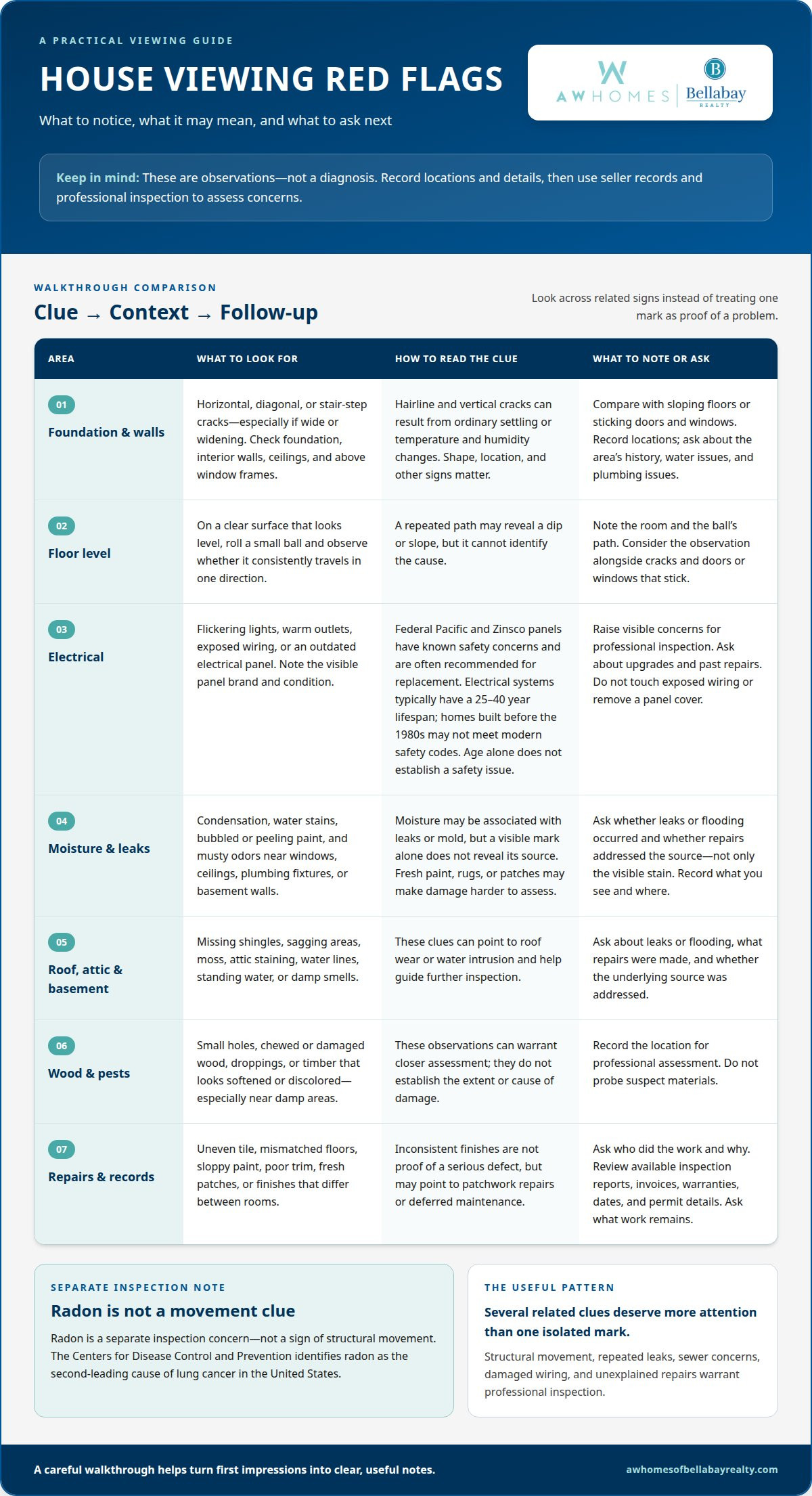
Some of the red flags to look for when viewing a house are horizontal, diagonal, or stair-step cracks, especially if they appear wide or seem to be growing. Hairline and vertical cracks can result from ordinary settling or changes in temperature and humidity, so their presence alone doesn’t establish a structural problem. Consider the crack’s shape and location alongside any other signs.
Look across the foundation, interior walls, and ceilings, including the areas above window frames. Cracks in masonry, sloping floors, and sticking doors or windows can form a concerning pattern. Fresh paint in one section may make earlier repairs harder to assess. Ask about the area’s history and any past water or plumbing issues, then note the answers and locations for follow-up.
To check for a floor slope during the tour, roll a small ball across a clear surface that looks level. Notice whether it consistently travels in one direction, and record the room and path. This may reveal a dip or slope, but it can’t identify the cause. Treat the red flags to look for when viewing a house as observations, not a diagnosis.
Before making an offer, assess the surrounding area too. Visit the neighborhood at different times of day to notice changes in noise. Look for nearby water, street flooding, or drainage that directs water toward the home. These conditions add context to the property and its setting.
Radon is a separate inspection concern, not a sign of structural movement. The Centers for Disease Control and Prevention identifies radon as the second-leading cause of lung cancer in the United States, making testing relevant to inspection planning. Horizontal or widening cracks and multiple signs of movement merit professional evaluation. Keep clear notes so a qualified inspector can assess the specific conditions you observed.
2. Outdated or damaged electrical components
During a viewing, look for flickering lights, warm outlets, exposed wiring, and an outdated electrical panel. Each is a red flag to raise during a professional inspection, not a reason to diagnose the system yourself. Federal Pacific and Zinsco panels have known safety concerns and are often recommended for replacement. Note the panel’s visible brand and condition, and ask about electrical upgrades or past repairs.
Age adds useful context. Electrical systems in homes typically have a lifespan of 25-40 years, and houses built before the 1980s may not meet modern safety codes. Age alone doesn’t establish that a system is unsafe, but older components and visible damage together deserve closer assessment. Don’t touch exposed wiring or remove a panel cover during an open-house visit.
Check whether fresh paint, rugs, or patches may be concealing damage. A newly painted wall beside an outlet, a rug covering a discolored floor, or peeling paint near a window can prompt questions about repairs. Look for condensation, water stains, bubbled paint, and musty odors around windows, ceilings, plumbing fixtures, and basement walls. Moisture can affect building materials and may be associated with leaks or mold; a visible mark alone won’t reveal the source.
In the roof, attic, and basement, note missing shingles, sagging areas, moss, attic staining, water lines, standing water, and damp smells. These clues can point to roof wear or water intrusion and help guide further inspection. Ask whether leaks or flooding occurred and whether repairs addressed the source, not just the visible stain.
For possible pests or wood rot, look for small holes, chewed or damaged wood, droppings, and timber that appears softened or discolored, especially near damp areas. Don’t probe suspect materials; record their location for professional assessment. A real estate viewing is a first look, so include electrical, moisture, roof, and wood concerns in your inspection notes.
3. Seller repair records, inspection reports, and warranties
Ask the seller for records of visible repairs, renovations, and recurring problems. For a ceiling stain, ask about the leak, its source, and the work completed. Ask whether major upgrades used permits and whether licensed contractors completed them. Review available inspection reports, repair invoices, warranties, and dates together. These records can help show whether the homeowner addressed the cause or only covered the symptom.
Compare finishes across rooms. Uneven tile, mismatched floors, sloppy paint, and poorly installed trim may point to DIY or patchwork repairs. A new patch beside older plumbing or a recently replaced section of flooring deserves an explanation. Ask who did the work, what prompted it, and whether related areas were inspected. Inconsistent finishes aren’t proof of a serious defect, but they can indicate deferred maintenance or work that needs closer review.
State disclosure forms and transaction requirements vary by location, so there isn’t one nationwide checklist covering every seller’s obligations. Read the forms and inspection terms for the property, paying attention to how known issues, prior repairs, and inspection opportunities are addressed.
Ask the seller or real estate agent whether the roof, sewer line, foundation, plumbing, electrical system, or HVAC has needed repairs. Request reports and warranty documents for those components, then ask what work remains. When cooling or heating units show signs of trouble, consulting specialists like Comfort Boys Air and Heating can clarify necessary repairs and costs.
Structural movement, repeated leaks, sewer concerns, damaged wiring, and unexplained repairs warrant professional inspection. A viewing can reveal clues, but it can’t establish what’s behind a wall or beneath a floor. Use inspection findings and seller records to understand the scope, likely repair difficulty, and implications before deciding how to proceed with the purchase.
4. Using an open-house visit to identify potential concerns
Use the open house as a methodical walkthrough, not just a first impression. Start outside, then move through each interior room and note specific warning signs. Strong air fresheners, chemical smells, or persistent smoke odors can mask unwanted smells. Staging and fresh finishes can make a home feel appealing, so record what you observe instead of treating appearance as proof of condition.
In each room, scan ceilings, window frames, floors, and walls for water stains, warped surfaces, or peeling paint. Check bathrooms, basements, and areas around plumbing fixtures for moisture or small dark spots. Lift area rugs only where permitted, and look for floor staining or visible pet damage. A fresh patch beside an older finish is a reason to ask what work was done.
Test ordinary fixtures during the visit if access allows. Run faucets and flush toilets, then note weak pressure, unusual noises, or slow drainage. In the bathroom farthest from the water heater, running hot water can reveal weak pressure or a delay within thirty seconds. Look at exposed basement or laundry-room pipes for rust, water marks, or leaks. A walkthrough can flag concerns, but hidden plumbing problems may need inspection.
Step into the yard and check whether water pools near the foundation, downspouts empty close to the house, or the ground slopes toward it. Note missing roof shingles, moss, or sagging areas visible from the ground. Also consider neighborhood conditions, including street flooding, limited parking, noise, and nearby homes’ upkeep. A visit after heavy rainfall can make drainage problems easier to spot.
Make a short record of each signal: its location, what you noticed, and any seller explanation. For buyers weighing a property’s condition alongside its investment potential, get guidance on evaluating a home purchase. Use the notes to identify questions and areas for professional follow-up, rather than relying on one open-house impression.
AW Homes of Bellabay Realty
AW Homes of Bellabay Realty helps buyers assess a home’s condition and location as part of a thoughtful purchase decision. If a viewing reveals foundation movement, moisture, aging systems, or unclear repair history, its Buyer Agency Services can help you weigh those concerns alongside your goals and the property’s broader context.
For buyers considering a home as an investment, Real Estate Investment Consulting offers guidance on evaluating the opportunity. Relocation Assistance can also support a move to West Michigan, where neighborhood insight helps inform your search. A viewing is an initial assessment, not a substitute for a professional inspection, but organized observations can make the next steps clearer.
For guidance on a home you’re considering, contact AW Homes of Bellabay Realty.
Make your next step an informed one
A showing is the beginning of your decision, not the moment you need to reach a final verdict. Use your notes to separate questions that need an expert assessment from preferences that affect how you’ll live in the home. That distinction can help you focus on the property’s suitability, the follow-up it needs, and whether you’re comfortable moving forward.
The red flags to look for when viewing a house are most useful when they lead to clear questions and a deliberate plan. If you’re still weighing a property, review what you observed and how it fits your goals. For homeowners preparing to sell in Grand Rapids, Ada, Caledonia, or East Grand Rapids, AW Homes of Bellabay Realty’s Sellers assistance can support the next stage of that transition.
For thoughtful guidance on your real estate plans, contact AW Homes of Bellabay Realty. You can take your next step with care and confidence.
Frequently Asked Questions
What structural problems should you look for when viewing a house?
Look for clues that appear together, such as uneven floors, sticking doors, and cracks near openings or along masonry. Note whether interior cracks seem to continue across adjoining surfaces, or whether an exterior wall looks displaced. These observations can help an inspector focus on possible movement. A single cosmetic flaw may have a different explanation, so record its location and surrounding details rather than judging severity by appearance alone.
How can you spot signs of water damage, leaks, or mold during a home tour?
Check beneath sinks, around toilets, and at the base of cabinets for discoloration, swollen materials, or dampness. Look for water marks on ceilings below bathrooms and near plumbing routes. A musty odor or dark spotting can signal a moisture concern, but a viewing can’t establish whether mold is present or identify a leak’s source. Note the affected area and ask about its history and any repairs.
What are warning signs of electrical, plumbing, or HVAC problems in a house?
For electrical concerns, notice flickering lights, exposed wiring, warm outlets, or a visibly old panel without touching components. Run faucets and flush toilets, observing pressure, drainage, and unusual sounds. For heating and cooling, notice uneven room temperatures, loud operation, dirty vents, or an old thermostat. Record which rooms show the issue; a pattern across several areas can help an inspector assess the system.
What foundation cracks are serious, and how can you distinguish them from cosmetic cracks?
Horizontal, diagonal, widening, or stair-step cracks deserve closer attention, especially alongside sloping floors or doors that bind. Hairline or vertical cracks can occur with ordinary settling, but appearance alone can’t establish whether a crack is cosmetic. Note whether it crosses masonry, appears on both sides of a wall, or sits near a window. A qualified inspection can assess its pattern and related movement.


