

A thoughtful downsizing checklist for seniors in Grand Rapids can make a move easier to plan and less rushed. Starting six months or a year ahead gives you time to set priorities, sort belongings gradually, and prepare for the practical changes that come with a new home.
Downsizing can mean less space and upkeep, and potentially lower housing and maintenance expenses. It’s natural to feel attached to belongings or unsure where to begin. This guide explains how to weigh the benefits, decide what to keep, donate, sell, or discard, and pack and label boxes for a smoother unpacking process. You’ll also find a practical reminder to update your address, utilities, and health care providers so important services follow you to your next home.
Key Takeaways
- Match furniture and appliances to the new home’s layout before deciding what will make the move.
- Sort belongings by their usefulness and personal meaning, then choose a thoughtful next step for each item.
- Set aside moving-day essentials and label boxes clearly to make unpacking more manageable.
- Include address changes and service-provider updates in your move plan so important connections carry over.
What Are the Steps in the Downsizing Checklist for Seniors?
Start planning a Grand Rapids move six months or a year ahead to avoid a rushed final stretch. A practical downsizing checklist for seniors in Grand Rapids begins with goals for the next home, health considerations, daily routines, and a timeline for sorting, packing, and moving. Working room by room makes each decision easier to track.
- Compare the current home with the new floor plan. Measure rooms, doorways, and furniture before deciding what fits. Keep measurements and floor-plan documents together, so choices reflect the actual space rather than a guess.
- Inventory furniture and appliances by room. List each item, its dimensions, condition, and intended use. Mark pieces that support everyday living, then use the one-year rule for items rarely used. This gives sorting decisions a practical starting point.
- Choose furniture for the senior apartment’s layout. Prioritize pieces that fit measured rooms and daily needs, such as a comfortable chair or a dining table suited to the available space. Multifunctional furniture can make a smaller home work harder.
- Confirm which appliances come with the new home. Compare that list with appliances in the current home before reserving space for a refrigerator, washer, or other large item. This prevents moving equipment the apartment already provides.
- Decide what to keep based on comfort and routine. Consider preferences, health needs, and how each piece supports daily tasks. Familiar furniture can ease the emotional adjustment, while removing unused items may reduce upkeep and stress.
- Plan large pieces before small belongings. Place essential furniture on the floor plan first, then consider lamps, side tables, and storage. This order reveals available space and helps make the new living arrangement feel intentional and fulfilling.
Use this downsizing checklist for seniors in Grand Rapids to keep decisions connected to your goals for the move. A clear sequence helps older adults and family members see what is settled, what still needs attention, and how each choice supports the next stage of living.
Donating, selling, or gifting unwanted belongings
For a Michigan home sale or transfer, begin by reviewing ownership and title documents and identifying who can make decisions. Those details shape the transaction paperwork and steps. Sort household belongings separately.
Use five categories for each room: keep, donate, sell, discard, and recycle. A labeled list or set of boxes gives every item a destination and makes decluttering easier to manage. Consider both practical use and sentimental value. A favorite quilt may deserve space, while unused duplicates can leave the home.
- Keep: Set aside items that support the next lifestyle, such as daily kitchenware or meaningful keepsakes.
- Give: Offer wanted belongings to family or friends, and have them take the items promptly so they don’t return to the sorting pile.
- Donate: Separate usable clothing, furniture, and appliances from damaged items; large pieces may suit a charity that offers pickup.
- Sell: Group useful, marketable belongings together, or consider whether selected items can be included with the home.
- Discard or recycle: Remove worn-out shoes, unusable clothing, and broken items from donation piles.
For closets, use the past 12 months as a practical guide: keep clothing worn during that period, then assess what remains. For holiday decorations, retain the special pieces and a quantity that fits the new home. This reduces clutter without treating every memory as disposable.
When an estate sale suits the move, coordinate how items will be advertised and organized while protecting household privacy. Make a clear inventory first, then identify belongings family members want before sale arrangements begin. For a move to senior living, match each donation, gift, or sale decision to the space and routine residents will have next. A written record of destinations helps family members follow the plan and keeps the process orderly.
Review the home’s ownership and title documents and confirm who has authority to make decisions. These details determine the transaction paperwork and steps for a sale or transfer.
Packing and labeling boxes
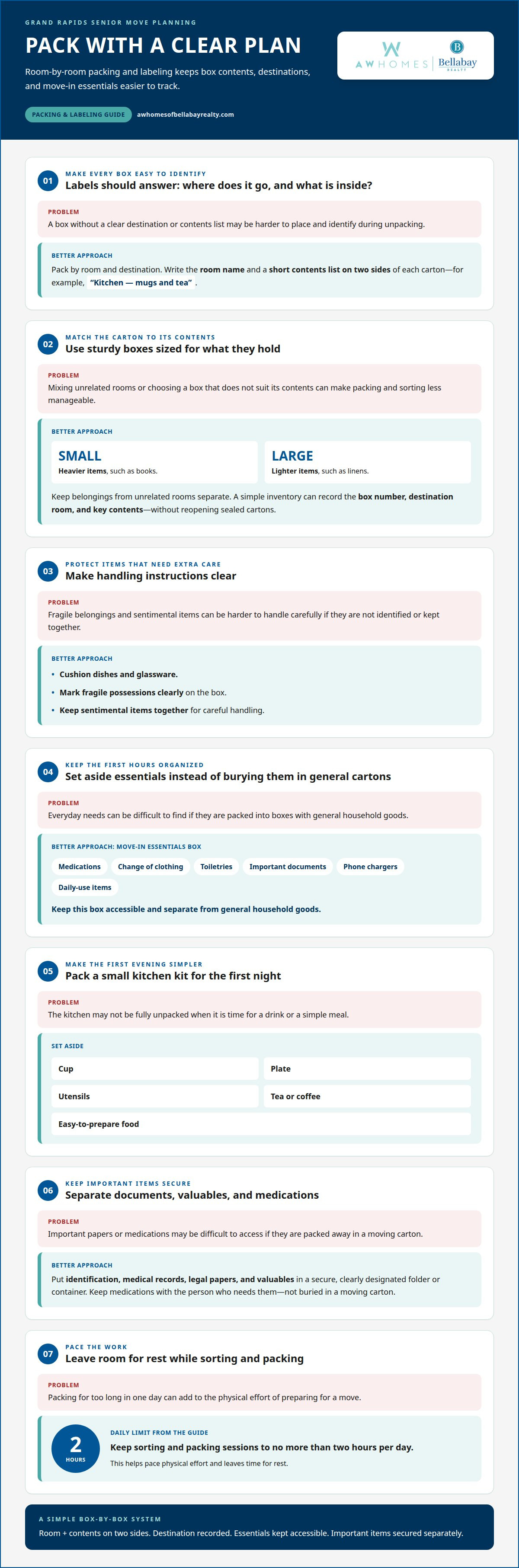
Pack by room and destination so each carton has a clear place in the new home. Write the room name and a short contents list on two sides, such as “kitchen, mugs and tea.” Mark fragile possessions clearly, and keep sentimental items together for careful handling.
Use sturdy boxes sized for their contents. Pack heavier items, such as books, in smaller cartons, and reserve larger boxes for lighter linens. Cushion dishes and glassware, and avoid mixing items from unrelated rooms. A simple inventory can record the box number, destination room, and key contents without reopening sealed cartons.
- Prepare a move-in essentials box. Include medications, a change of clothing, toiletries, important documents, phone chargers, and daily-use items. Keep this box accessible instead of loading it with general household goods.
- Separate documents and valuables. Place identification, medical records, legal papers, and valuables in a secure, clearly designated folder or container. Keep medications with the person who needs them, not buried in a moving carton.
- Pack the first-night kitchen kit. Set aside a cup, plate, utensils, tea or coffee, and easy-to-prepare food. This makes the first evening more manageable before the kitchen is fully unpacked.
- Coordinate boxes with the move plan. Note which items go directly to the new home and which need storage or shipping. Confirm the destination room on labels so movers or family assistance can place each box correctly.
For older adults, keep sorting and packing sessions to no more than two hours per day. This limit helps pace physical effort and leaves time for rest. In Grand Rapids, family and friends can help with packing and coordination, as can professional movers and senior-transition organizers. Senior living staff can clarify where belongings belong and how to prepare for amenities and activities.
Senior moving and downsizing costs depend on the move’s size, packing assistance, distance, and storage needs; providers give a price after a quote request. For local planning, family support, professional movers, senior-transition organizers, and the receiving community’s staff can help coordinate tasks and arrival details.
Updating addresses and service providers
Build an address-update list alongside the move calendar. Include the postal service, utilities, and health care providers, then note each contact’s purpose and the new address to use. A written record helps prevent missed notices, interrupted household services, and confusion during the transition.
- Postal service: Arrange for mail to reach the new address, and keep the move date with the change details.
- Utilities: List each current service, such as electricity, gas, water, and internet. Record which accounts must end at the old home and which services need to begin at the new one.
- Health care providers: Give the updated address to doctors, pharmacies, and other providers involved in ongoing care. Keep appointment details and medical records organized with the move documents.
- Important contacts: Tell family members and trusted friends where the older adult will live. Share the new address with people who send essential correspondence or provide regular assistance.
Keep the list in one folder with moving documents, account details, and the move schedule. Mark each notification complete only after submitting the change, and note any next step or confirmation received. This simple tracking method makes the handoff manageable when several services change around the same time.
Before leaving the former home, record final utility readings if relevant to the account, and keep the closing statements with household records. At the new home, match service start dates to your arrival plans so essentials are ready for daily living. If an account is no longer needed, record its end date and retain the final paperwork.
Use the move as a chance to organize digital records, medical and legal documents, and family photos. Store copies in clearly named folders, while keeping originals secure and accessible. Label each record by purpose, such as “health care” or “home utilities,” so relatives can find information without searching through packed belongings.
For guidance coordinating a home sale or purchase with this transition, plan your next home move with real estate support.
AW Homes of Bellabay Realty
AW Homes of Bellabay Realty can connect your downsizing plan with the housing decisions ahead. If you’re selling a longtime home, its Residential Listing Services support the listing process. If you’re choosing a smaller home, Buyer Agency Services can help you consider options that fit your next stage of living. Relocation Assistance can help bring the move into focus, while Real Estate Investment Consulting can inform decisions involving property investments.
Consider real estate guidance when you’re weighing whether to sell, looking for a new home, or coordinating a move to another area. The right next step depends on your housing goals and the transition you’re planning.
Contact AW Homes of Bellabay Realty to discuss your next move.
Make Your Next Move a Deliberate One
A move can create room for a daily routine that better fits your priorities. Before making a housing decision, consider what you want your next home to support: easier upkeep, closer connections, or a different pace of living. A downsizing checklist for seniors in Grand Rapids can help turn those priorities into a clear starting point for the decisions ahead.
Give yourself space to consider the options and involve trusted family members in conversations that matter. If selling your current home or finding a new one is part of the transition, real estate guidance can help you plan those housing decisions around your goals.
Contact AW Homes of Bellabay Realty to discuss the next step in your move. A thoughtful plan can help make this new chapter feel more personal, manageable, and your own.
Frequently Asked Questions
What Are the Benefits of Downsizing?
Downsizing can reduce the space and upkeep involved in maintaining a home, and may lower housing and maintenance expenses. In Grand Rapids, it can also mean finding a home better suited to current routines, such as one with fewer rooms to clean or easier access to daily necessities. The value is personal: it depends on whether a smaller home supports comfort, independence, and the lifestyle the older adult wants.
What Are the Benefits of Rightsizing?
Rightsizing means intentionally matching living space, possessions, and lifestyle to current needs. It isn’t simply choosing a smaller home. For an older adult in Ada or East Grand Rapids, the right fit might mean less home maintenance, a convenient layout, or access to community amenities and activities. The goal is a living arrangement that supports well-being, rather than keeping space or belongings that no longer serve a purpose.
What Do You Gain When You Rightsize?
You gain a home and routine that can better fit the way you live now. That may mean less time spent caring for unused rooms, more manageable household responsibilities, or a community setting with shared dining and social activities. Consider what matters most before choosing: privacy, family proximity, transportation, or nearby health care. The best outcome is a purposeful fit, not simply fewer possessions.
What is a step-by-step downsizing checklist for seniors?
Begin by defining the move’s goals and setting a timeline. Next, compare the new home’s layout with your current furniture and appliances, then sort belongings by their intended destination. Plan packing and moving logistics, keeping important records and daily necessities accessible. Before moving, notify the postal service, utilities, and health care providers. For a Grand Rapids-area move, include travel between your current home and the new address in the schedule.
How can seniors sort, donate, sell, or dispose of belongings in Grand Rapids?
Work through one area at a time, assigning each item a destination: keep, gift, donate, sell, discard, or recycle. Family members can identify belongings they want, then take them home so they don’t rejoin the sorting pile. Consider selling useful items or arranging an estate sale. For disposal or donation around Grand Rapids, separate usable goods from damaged items before arranging their next destination.
What Grand Rapids charities accept furniture and household goods donations, and do they offer pickup?
Large furniture and appliances may be donated to a charity that offers pickup, but acceptance and pickup depend on the organization and the items. Before setting belongings aside, make an inventory with each item’s condition and dimensions. This helps match usable pieces with a donation program’s needs. If pickup is available, coordinate access and timing so donated items leave before the home’s final move preparations.


