

You might assume that a lengthy inspection report is a legal mandate standing between you and your closing date. In reality, the state of Michigan doesn't require a single specific repair for a property to change hands. While the paperwork can feel overwhelming, most items on that list are simply points of negotiation rather than legal roadblocks. We understand that selling your home in Forest Hills, Ada, or East Grand Rapids is a major life milestone. It's natural to feel protective of your equity while managing the logistical stress of a move.
This guide will help you navigate the process with confidence by defining what repairs are mandatory after a home inspection in Michigan. You'll learn how to distinguish between lender-required safety standards, critical structural issues, and the cosmetic requests you can strategically decline. Our goal is to provide you with emotional security, methodical planning, and a clear path toward a seamless closing. We'll explore how FHA and VA requirements dictate the "must-fix" list, how to manage contractor timelines, and how to negotiate credits that keep your transaction on track. By the end of this article, you'll have the expert insight needed to protect your investment and move forward into your next chapter with total peace of mind.
Key Takeaways
- Michigan law prioritizes transparent disclosure over legal repair mandates, meaning most inspection items are negotiable rather than legally required for closing.
- Understand how specific loan types like FHA and VA effectively determine what repairs are mandatory after a home inspection in Michigan to satisfy lender safety standards.
- Prioritize the "Big Three"-safety, structural, and environmental hazards-to maintain your property's integrity and ensure a smooth property transition.
- Master strategic negotiation by learning when to offer a repair credit, complete a fix, or decline a request to protect your hard-earned equity.
- Leverage a concierge-style approach that coordinates trusted West Michigan contractors to handle necessary repairs methodically, ensuring no detail is left to chance.
Are Any Repairs Legally Mandatory in Michigan? Debunking the Inspection Myth
Many sellers in West Michigan feel a surge of anxiety when the inspection report arrives. It's easy to view this document as a legally binding list of demands, but that's a common misconception. A home inspection is a diagnostic tool designed to provide a snapshot of a property's condition. It's not a building code enforcement visit. In Michigan, there are no state laws that force a seller to repair a specific item simply because an inspector flagged it. Instead, the process is governed by three distinct pillars: disclosure requirements, contractual agreements, and lender safety standards.
You'll often see inspectors mention items that don't meet current building codes. It's vital to distinguish between a code violation in new construction and a recommendation in an existing home. Older homes in East Grand Rapids or Ada aren't required to be upgraded to 2026 standards just to be sold. Understanding what repairs are mandatory after a home inspection in Michigan requires looking past the inspector's opinion and focusing on what your specific contract demands. We focus on clarity, strategy, and results to ensure you don't spend money on unnecessary fixes.
The Michigan Seller Disclosure Act and Your Obligations
Michigan law centers on transparency rather than forced renovation. The Seller Disclosure Act requires you to be honest about known material defects in the home's structure, mechanical systems, or environmental health. Disclosing a defect often supersedes the need to repair it. If a buyer accepts the home knowing the furnace is aging, you've met your legal obligation. However, failing to disclose a known issue carries significant legal risk. Even "As-Is" clauses don't provide a total shield. They don't excuse a seller from disclosing latent defects that could compromise the safety of the next family to call your house their home. Honesty protects your equity, your reputation, and your peace of mind.
Contractual Mandates vs. Inspector Opinions
The ultimate authority on repairs is your purchase agreement. Most standard Michigan real estate contracts include an inspection contingency. This gives the buyer a window to request repairs or credits, but it doesn't mean you must say yes to every request. The home closing process in Michigan involves a tight timeline where these negotiations happen. While an inspector's opinion is just a suggestion, an appraiser's report for an FHA or VA loan can turn a negotiable item into a mandatory fix. If the lender refuses to fund the loan until a handrail is installed or peeling paint is scraped, that repair becomes a functional requirement for the deal to move forward. We navigate these gray areas with methodical planning to ensure your transaction remains seamless.
The 'Big Three': Safety, Structural, and Environmental Hazards
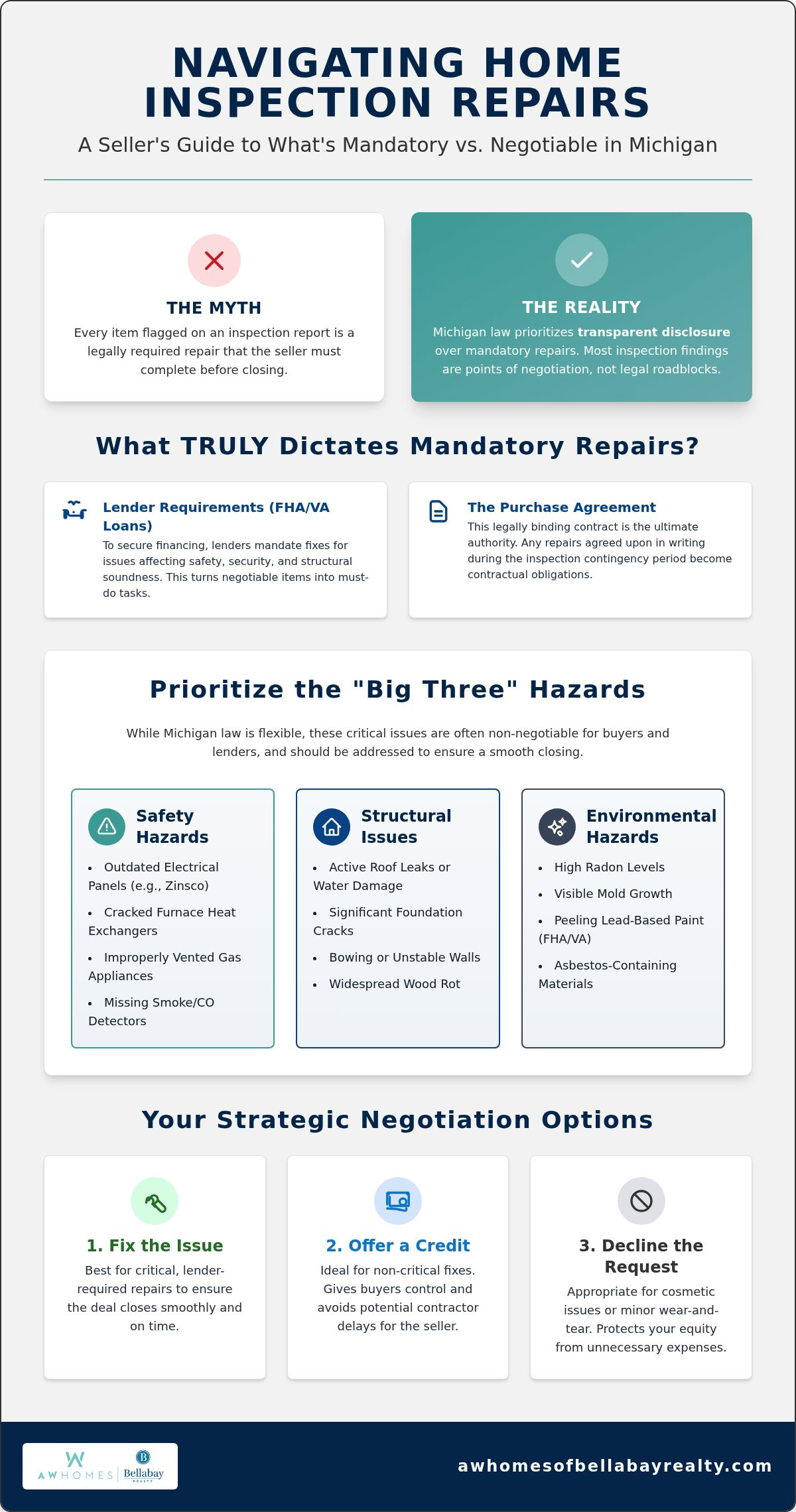
While we've established that Michigan law doesn't technically force a seller's hand, the reality of the 2026 market is different. Certain issues are so critical that they effectively become non-negotiable. When we look at what repairs are mandatory after a home inspection in Michigan, we focus on the "Big Three": safety, structural, and environmental hazards. These are the items that can halt a transaction, spook a lender, or compromise the emotional security of your buyer. Addressing these methodically ensures your property transition remains on a steady, predictable path.
Major Safety Hazards: Electrical, Fire, and Gas
Safety is the primary lens through which modern buyers and lenders view a property. Outdated electrical panels, specifically Federal Pacific or Zinsco models, are often flagged as immediate fire risks. These components are no longer considered safe by modern standards and frequently require replacement to secure homeowner's insurance. We also pay close attention to gas appliances. A cracked heat exchanger or an improperly vented water heater in a West Michigan basement isn't just a repair; it's a life-safety issue. For 2026, Michigan Residential Code updates have tightened requirements for smoke and carbon monoxide detector placement. Ensuring these are installed correctly on every level and near sleeping areas is a simple yet vital step in preparing for a successful closing.
Structural Integrity and the Foundation of Your Sale
Your home's foundation is its most critical asset. In West Michigan, our clay-heavy soil and intense freeze-thaw cycles can cause foundation movement. It's important to distinguish between minor seasonal settling and active structural failure. If an inspector finds horizontal cracks or significant bowing, it will likely become a mandatory fix for any buyer using traditional financing. Similarly, your roof must be functional. A leak that compromises the interior envelope is often a deal-breaker. If you're concerned about how your property's condition might affect your move, our residential listing services provide the strategic guidance needed to address these issues before they derail your timeline.
Environmental Concerns in West Michigan
Geography plays a major role in what repairs are mandatory after a home inspection in Michigan. Kent County is known for higher radon levels, making mitigation systems a common requirement in areas like Forest Hills and Ada. While radon is invisible, its impact on a sale is very real. Mold and water intrusion also demand intentional attention. If moisture is found in crawlspaces or basements, remediation is typically required to protect the home's air quality. For homes built before 1978, lead-based paint and asbestos remain significant disclosure items. While you might not always be required to remove these materials, any chipping or peeling lead paint must be stabilized to meet FHA and VA safety standards. We navigate these environmental nuances to protect your equity and ensure a seamless closing.
Lender-Required Repairs: Financing Dictates the To-Do List
While Michigan law remains flexible on property condition, mortgage lenders are far more rigid. Their primary objective is protecting the collateral for the loan. If your buyer is utilizing government-backed financing, the appraiser effectively acts as a secondary inspector. They identify specific health and safety deficiencies that must be corrected before the loan can be funded. This is where the distinction regarding what repairs are mandatory after a home inspection in Michigan becomes critical. The home inspector's report is a suggestion for the buyer; the appraiser's report is a requirement for the bank. We navigate these requirements with a strategic focus on your closing timeline.
FHA and VA Minimum Property Standards (MPS)
FHA and VA loans adhere to strict guidelines known as Minimum Property Requirements. These standards ensure every home is safe, sound, and secure. For properties built before 1978, any peeling, chipping, or flaking paint must be scraped and repainted to address lead-based paint concerns. Other common mandates include functional utilities, a roof with at least two years of remaining life, and the installation of handrails on all staircases. These repairs are non-negotiable. If the seller refuses to address them, the lender will not release funds. We recommend a proactive approach by identifying these potential red flags before the appraiser arrives. This methodical preparation protects your equity and ensures a seamless property transition.
Conventional Loans and Appraisal-Driven Fixes
Conventional loans are generally less restrictive, yet they aren't exempt from mandatory fixes. A conventional appraiser will still flag significant structural issues, active roof leaks, or hazardous electrical systems. In the evolving Grand Rapids real estate market, an appraisal that is issued "subject to" repairs can create unexpected friction. If a lender mandates a fix that wasn't highlighted in the initial inspection, it requires a strategic pivot to keep the deal alive. We prioritize these items based on their impact on the home's valuation and the buyer's ability to secure financing.
When weather or contractor schedules prevent repairs from being finished before the closing date, we may suggest an escrow holdback. This process allows a portion of the sale proceeds to be set aside in an escrow account, ensuring the work is completed shortly after the keys change hands. It is a sophisticated solution that provides emotional security for both parties while satisfying the lender's safety mandates. By managing these logistical nuances, we ensure that no detail is left to chance during your move.
Strategic Negotiation: Deciding What to Fix, Credit, or Decline
Once the inspection report is in hand, the focus shifts from discovery to strategy. Understanding what repairs are mandatory after a home inspection in Michigan is only half the battle; the other half is knowing how to respond without compromising your closing date. We view this phase as a structured conversation where your equity is protected through methodical planning. By analyzing 2026 market inventory levels in West Michigan, we can determine whether you have the leverage to stand firm or if a compromise is necessary to keep the deal moving forward. Negotiation is a process of prioritization, calculation, and finalization.
To navigate this milestone successfully, we follow a five step approach:
- Prioritize: Focus exclusively on safety and structural issues that could derail the buyer's financing.
- Verify: Obtain professional quotes from reputable West Michigan contractors to ensure we're negotiating with real data.
- Evaluate: Weigh the benefits of a physical repair against a seller credit to see which better serves your timeline.
- Leverage: Use current 2026 market data to determine how competitive the property remains despite the inspection findings.
- Finalize: Draft a clear Repair Addendum that defines deadlines, quality standards, and the transfer of any applicable warranties.
The Power of the Seller Credit
Offering a seller credit is often the calmest path for a seller in transition. It simplifies the process by removing the need to manage contractors while you're packing for your move. More importantly, it protects you from future liability. If you perform a physical repair and it fails later, the buyer may look to you for recourse. A credit shifts the responsibility of the work to the buyer after closing. It's vital to ensure any credit aligns with the buyer's lender rules, as some programs limit the amount a seller can contribute to closing costs. We coordinate these details to ensure a seamless transition.
When to Stand Firm: Declining Cosmetic Requests
It's important to differentiate between maintenance items and genuine defects. A scuffed baseboard or a foggy window pane is a maintenance item; a cracked heat exchanger is a defect. When you sell my home in Forest Hills MI, you're often dealing with savvy buyers who may request minor cosmetic upgrades. We act as a buffer to filter out unreasonable requests that don't affect the home's safety or structural integrity. Standing firm on cosmetic issues preserves your equity and keeps the focus on the essential components of the sale. If you need a partner to help you navigate these high-stakes discussions, our residential listing services provide the strategic advisor you need to reach a successful closing.
The AW Homes Method: Protecting Your Equity and Peace of Mind
At AW Homes of Bellabay Realty, we don't view the inspection phase as a hurdle to be cleared. Instead, we treat it as a manageable milestone within a larger, curated journey. We replace the typical stress of managing contractors with a concierge-style approach designed to protect your most valuable asset. While you focus on your family's next chapter, we handle the technical nuances of determining what repairs are mandatory after a home inspection in Michigan. Our process is built on trust, warmth, and localized reliability.
Methodical planning is the cornerstone of our success. We anticipate potential red flags long before the inspector's ladder ever touches your siding. By identifying safety or structural concerns early, we move the conversation away from chance and toward expert navigation. Our team vets local West Michigan contractors to ensure that if work is required, it's done right, on time, and within the standards required by 2026 lending guidelines. This level of intentionality provides the emotional security you need during a high-stakes transition.
A Seamless Transition Through Expert Navigation
Angela Worth provides a strategic focus that is specifically tailored to the nuances of move-up buyers and downsizers. Protecting your equity in communities like Ada, Caledonia, and Forest Hills requires more than just a listing; it requires a consultant who understands the logistical and emotional weight of a move. Our concierge real estate service minimizes friction by managing the transaction pipeline from start to finish. We act as your neighborhood authority, defending your property's value against unreasonable requests while ensuring you remain in compliance with all lender mandates. We believe your home sale should be a positive development in your life story, not a source of exhaustion.
Your Strategic Partner from Listing to Closing
For clients moving across town or across the country, our Grand Rapids relocation guide offers a roadmap for a successful transition. We understand that a stress-free sale in 2026 depends on clear categorizations of expertise and a logical, step-by-step manner of operation. No detail is left to chance, and no repair request is handled without a strategic plan. We prioritize your long-term well-being over a quick closing, ensuring that the final walk-through is as celebratory as the first day on the market. If you're ready to experience a transaction defined by composure and competence, we're here to lead the way.
Schedule a strategic home sale consultation with Angela Worth today to define your path forward.
Your Path to a Seamless West Michigan Closing
A home inspection shouldn't be a source of stress or a barrier to your next chapter. By distinguishing between cosmetic requests and critical safety mandates, you maintain control over your transaction's timeline. Understanding what repairs are mandatory after a home inspection in Michigan allows you to approach negotiations with clarity and composure. We prioritize your long-term well-being. We protect your hard-earned equity. We ensure a steady path forward. Whether you're navigating the "Big Three" hazards or managing lender-required fixes, a methodical approach turns potential obstacles into manageable milestones.
Angela Worth serves as your strategic advisor and regional specialist, offering sophisticated concierge-style management for life transitions in Forest Hills and Ada. You deserve a partner who understands that a home sale is more than a financial transaction; it's a significant personal milestone. Let us handle the technical negotiations and contractor coordination so you can focus on the future with total emotional security. We invite you to Request a Strategic Market Analysis and Home Sale Consultation today. Your successful property transition starts with expert insight and intentional planning. We look forward to guiding you home.
Frequently Asked Questions
Are any repairs legally mandatory for sellers in Michigan?
No Michigan state laws require a seller to perform specific repairs before a property transfer. The process is governed by your contract and the Michigan Seller Disclosure Act. While you aren't legally forced to fix a leaky faucet or an old roof, you must accurately disclose these known issues. The only functional mandates come from your buyer's lender or the specific terms you agree to in the purchase addendum.
What repairs does an FHA loan require in Michigan?
FHA appraisers focus on health and safety standards known as Minimum Property Requirements. Common required fixes include scraping and repainting peeling paint in homes built before 1978, ensuring all utilities are operational, and verifying the roof has at least two years of remaining life. If these standards aren't met, the lender will typically withhold funding until the repairs are completed and re-inspected by the appraiser to ensure a safe transition.
Can a buyer walk away after a home inspection in Michigan?
Buyers can typically terminate the contract if their purchase agreement includes a standard inspection contingency. This window allows them to walk away for any reason related to the home's condition, often with their earnest money deposit returned. It is a critical period where clear communication and strategic negotiation are essential to keep the deal on track. We manage this phase methodically to ensure your property transition remains secure and predictable.
Is a seller required to fix mold found during an inspection?
There is no state law requiring mold remediation, but it frequently becomes a point of negotiation. If the mold is extensive or caused by active water intrusion, most mortgage lenders will require professional remediation before approving the loan. Even if the lender doesn't mandate it, savvy buyers in Forest Hills or Ada will likely request a fix to ensure their family's health and air quality before they move into the property.
What is a 'Seller Credit' and how does it work for repairs?
A seller credit is a specific dollar amount provided to the buyer at closing to cover the cost of future repairs. Instead of managing contractors yourself, you reduce your net proceeds to allow the buyer to handle the work after they move in. This approach is often the most efficient way to address what repairs are mandatory after a home inspection in Michigan while protecting your timeline and reducing your post-sale liability.
Do I have to fix building code violations found by an inspector?
Existing homes are generally not required to meet current building codes unless you are pulling permits for new renovations. An inspector might note that your electrical outlets aren't GFCI protected or that your attic insulation is below 2026 standards. While these are code violations for new builds, they aren't mandatory fixes for a sale unless they pose an immediate safety hazard or your buyer's lender specifically flags them during the appraisal process.
How long do I have to respond to a repair request in Michigan?
The response window is defined by the specific terms of your purchase agreement. In many West Michigan contracts, the seller has two to three days to respond once the buyer submits their formal repair request. Failing to respond within this timeframe can sometimes result in a default acceptance of the buyer's terms or give the buyer the right to terminate the contract. We track these deadlines with precision to ensure your equity remains protected.


