

The biggest price reduction isn’t automatically the better deal. Buying a house with foundation issues in Michigan can make sense when you compare the seller’s concession with a written repair proposal and confirm that financing can proceed.
It’s reasonable to worry that a visible crack could point to a larger problem or delay a loan. The cause and extent of the damage matter: some signs need further structural evaluation, while others may be less serious.
This article explains how to compare repair costs with a price reduction, what a foundation inspection can reveal, and how insurance and financing may affect your decision. You’ll also find a practical way to weigh the options and clarify the risks, costs, and next steps.
Key Takeaways
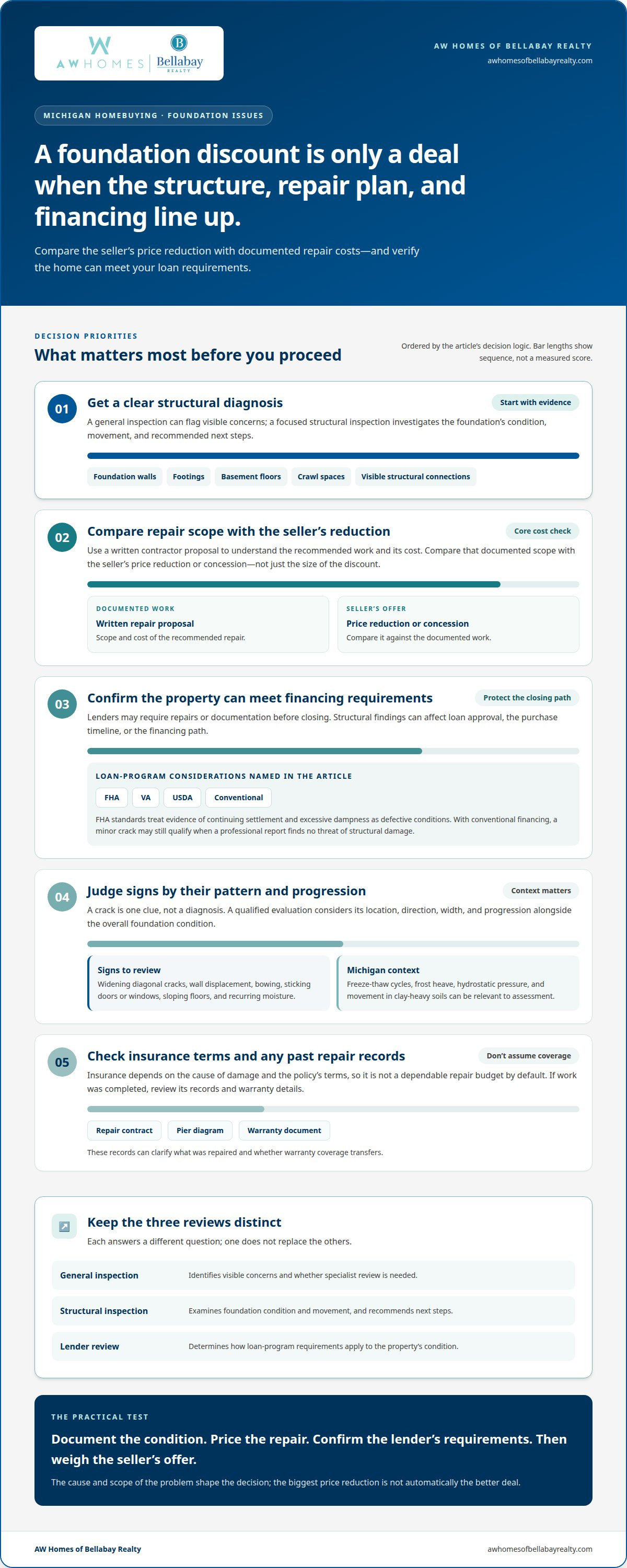
- Use a focused structural inspection to understand whether visible symptoms point to a repair need, rather than relying on a general inspection alone.
- Compare a written repair proposal with the seller’s price reduction, and account for how the repair’s cause and scope affect the decision.
- Review the signs of movement over time, including crack patterns and changes in doors or floors, to better assess the concern’s severity.
- Consider how the inspection findings may affect insurance, loan approval, and your negotiating options before deciding whether to proceed.
Why do financed buyers walk away over foundation issues?
Unrepaired movement can worsen, affect plumbing or framing, and complicate loan approval. For buyers using financing, the main concerns are unresolved structural damage, repair costs, and whether the lender accepts the home’s condition.
General and Structural Inspections
A general home inspection can identify visible concerns, such as cracks, sloping floors, or sticking doors. It may recommend further evaluation, but it won’t establish the cause, extent, or repair cost of foundation movement. A focused structural inspection examines foundation walls, footings, basement floors, crawl spaces, and visible structural connections. Its report should explain the observed conditions and recommend next steps.
Structural Damage and Normal Settling
Not every crack signals structural failure. Some settling in older Michigan homes reflects their age and construction, while widening diagonal cracks, wall displacement, or bowing may point to movement. Sticking doors and windows can also occur with shifting. A qualified evaluation considers a crack’s location, direction, width, and progression alongside the foundation’s condition. This helps distinguish cosmetic signs from conditions that may affect stability.
Mortgage Structural Requirements
Government-backed mortgage programs, including FHA, VA, and USDA loans, have structural requirements a property must meet before loan approval. FHA standards treat evidence of continuing settlement and excessive dampness as defective conditions. For conventional financing, a minor crack may still qualify when a professional report finds no threat of structural damage. Lenders may also require repairs or documentation before closing, so a finding can change the purchase timeline or financing path.
Risks of Unrepaired Foundation Problems
Leaving movement unresolved can allow damage to progress and increase future repair needs. A shifting foundation may move plumbing lines and contribute to leaks, while persistent basement moisture can create further concerns. The central risk is uncertainty: without a clear evaluation, buyers may not know whether a visible symptom is cosmetic, active, or part of a larger problem. If the underlying cause is beyond the property line, the buyer may not be able to address it directly.
| Option | What it identifies | What it answers |
|---|---|---|
| General inspection | Visible concerns | Whether specialist review is needed |
| Structural inspection | Foundation condition and movement | Implications and recommended action |
| Lender review | Loan-program requirements | Whether the property can qualify |
Choose a focused structural evaluation when a general inspection identifies symptoms that need further investigation.
Does homeowners insurance cover foundation repair?
Homeowners insurance isn’t a dependable repair budget by default. Whether a policy contributes depends on the cause of the damage and the policy’s terms. For a purchase decision, separate the insurance question from the repair estimate: an inspection and written proposal describe the work, while policy language determines whether coverage may apply.
Foundation repair costs vary with the movement, foundation type, drainage conditions, and effects on other parts of the house. These figures provide context, not a property-specific estimate. Different methods address different conditions, so their prices aren’t interchangeable.
A foundation inspection identifies concerns; a structural engineer’s report can explain the recommended repair approach. A written contractor proposal should detail the scope and cost, making it easier to compare the work with a seller credit or price reduction. When dealing with complex remediation or extensive rebuilding, an advisory firm such as Hodge Construction Management & Consulting can provide owner's representative oversight to evaluate proposals and manage the work effectively.
If the seller reports completed work, review the repair contract, pier diagram, and warranty document. The details can clarify what was repaired and whether warranty coverage transfers. A buyer’s agent can use the inspection findings and written proposal to negotiate a price reduction, repair, or other terms, then coordinate the repair plan with the purchase timeline. For buyer representation for a foundation-issue purchase, the goal is a negotiation grounded in documented scope, not guesswork.
Assessing the cause, severity, and progression of foundation problems
A visible crack is one clue, not a complete diagnosis. When buying a house with foundation issues in Michigan, consider how freeze-thaw cycles can stress foundation walls and footings as soil expands and contracts. Assessment should also account for frost heave, hydrostatic pressure against basement walls, and movement in clay-heavy soils. A crack’s location, direction, width, and progression can help distinguish a stable flaw from movement that may be continuing.
Other symptoms add context. Sticking doors, sloping floors, or recurring moisture can accompany foundation movement, but each can have more than one cause. A structural evaluation can connect visible signs to the underlying condition and explain recommended action. If nearby construction or a major weather event may have affected soil stability, that context can help clarify when symptoms appeared.
Disclosure is part of the purchase record. According to the Michigan Legislature, the Seller Disclosure Act applies to homes with one to four units and requires a written disclosure statement. Sellers answer based on what they know, and the statement isn’t a warranty. Buyers should compare disclosed history with the home inspection and any structural findings, especially when repairs or recurring symptoms appear in the records.
Foundation problems can affect mortgage underwriting and closing. When buying a house with foundation issues in Michigan, tell the lender about structural findings, since loan programs and underwriters may treat the same condition differently. A buyer’s agent can help organize the inspection report and repair information for the lender and keep financing questions aligned with negotiation and contract deadlines. Some loans may cover both the purchase and repairs, while a lender may require repairs to be completed before closing. The cause and severity, proposed work, and loan program all shape the underwriting decision. Clear, timely information helps the lender assess the property and buyers make informed decisions.
Foundation inspections for homebuyers
A focused inspection helps distinguish visible symptoms from the repair work a property may need. Resolve permit and contractor-license questions for the repair’s location and scope; a buyer’s agent can help organize relevant records before closing.
What General Inspections Can Diagnose
A general home inspection can identify visible cracks, uneven floors, moisture, or bowing and recommend specialist review. It doesn’t establish the cause, extent, or repair cost of foundation movement. A dedicated assessment can examine the foundation and related structural components, then connect observed conditions with recommended next steps. This distinction matters when repair decisions require more than a surface-level observation.
Buyer and Seller Inspections
For buyers, a focused inspection clarifies the property’s condition before purchase and informs decisions about repairs or negotiation. For sellers and homeowners, an inspection before listing can reveal issues that might otherwise lead to late negotiations or disrupt a sale. Owners may also schedule evaluations after major weather events or nearby construction that could affect soil stability. The purpose differs, but both buyers and owners benefit from a documented understanding of any movement.
Inspection and Appraisal Contingencies
An inspection contingency may give buyers a contractual way to respond to findings, depending on the purchase agreement. An appraisal contingency addresses the appraisal and its relationship to the agreed price, not the diagnosis of cracks or bowing. If foundation concerns arise, the report, contract deadlines, and lender requirements shape the available choices. A buyer may be able to recover a deposit if the contract includes applicable contingencies.
Choosing a Local Inspector With Your Buyer’s Agent
A buyer’s agent can help identify local inspectors whose work includes foundation and structural evaluations, then clarify whether the proposed scope addresses the home’s visible symptoms. For example, a report on basement cracks may need to consider drainage, grading, or wall movement. The agent can help organize the inspection findings, repair records, and questions about contractor credentials or permits for the specific project. Work with a buyer’s agent on an inspection plan that keeps property findings and purchase decisions aligned.
AW Homes of Bellabay Realty
AW Homes of Bellabay Realty helps buyers weigh inspection findings, repair needs, financing, and negotiation as one home-purchase decision. Its Buyer Agency Services support buyers considering a home with foundation concerns, while Real Estate Investment Consulting can help frame the property’s potential in an investment plan. For sellers, Residential Listing Services can help bring repair documentation and property details into the sale process. Relocation Assistance supports buyers coordinating a move alongside these decisions.
Turn to AW Homes of Bellabay Realty when you’re ready to assess how a foundation report fits your purchase or sale strategy. Contact AW Homes of Bellabay Realty to discuss your real estate plans.
Set Your Priorities Before the Next Offer
If you’re buying a house with foundation issues in Michigan, decide what conditions would make the purchase workable. Set your priorities before negotiations: the repair scope you can accept, the financial room you need for unexpected work, and the point at which you would rather walk away. Weigh these boundaries against your plans for the home, not just the seller’s asking price.
A foundation concern doesn’t have to define your next chapter, but it should shape a deliberate decision. Clear priorities help keep negotiations focused and make it easier to compare this property with other possibilities. If you’re weighing a purchase, sale, or move, contact AW Homes of Bellabay Realty to discuss your real estate plans. Take the next step with a plan that fits your goals and comfort level.
Frequently Asked Questions
How much does foundation repair cost compared with what it takes off the price?
Compare the seller’s reduction with the written repair scope, not a broad estimate alone. Account for follow-on work, such as replacing finishes disturbed during repairs or addressing drainage, as well as financing requirements that could affect closing. A price reduction is useful only if it offsets documented work and leaves room in your budget for related restoration. Keep seller repairs and a lower price distinct during negotiations.
How much do foundation problems lower a home's value?
There’s no universal percentage for a foundation-related value reduction. The effect depends on the documented repair scope, whether movement is active, and how the condition affects buyer demand for that home. Compare the home’s condition and price with similar properties, then account for repair estimates. An unresolved issue can narrow the pool of interested buyers, while clear records can help explain the property’s condition.
Are foundation problems always a deal-breaker?
No. A foundation concern may be manageable if its cause and repair scope are understood, the purchase price reflects the work, and financing can proceed. A buyer with room in the budget and a clear plan may judge the risks differently from someone who needs a move-in-ready home. Before committing, consider whether the seller’s terms, repair plan, and financing fit your priorities.
Can I get a foundation quote before my due diligence period ends?
Yes, a written proposal may be possible within the due diligence period if the contractor can access the property and the repair scope is clear. If symptoms need a structural diagnosis first, an engineer’s report may be required before a contractor can define the work. Schedule the inspection and proposal early, and track the contract deadline so the findings can inform your decision in time.
How do lenders view homes that need foundation repairs?
Lenders assess whether the property meets the requirements of the loan program and underwriting. If major work is needed, the FHA offers 203(k) rehabilitation loans to finance repairs needed to make a home habitable. The repair scope and loan structure matter: purchase financing alone may not address a substantial project. Share the inspection findings promptly so the lender can assess the property and financing path.
What are common signs and causes of foundation problems in Michigan homes?
Cracks, uneven floors, sticking doors, and basement moisture can signal a concern, though they don’t identify its cause. Michigan freeze-thaw cycles, water pressure against basement walls, and soil movement can contribute to foundation stress. Drainage details matter too: grading, downspout placement, and sump-pump performance can affect moisture around a home. In Grand Rapids, Ada, Caledonia, and East Grand Rapids, assess visible symptoms alongside the property’s site conditions.


