

A septic system’s age alone doesn’t tell you whether a home is a sound buy. Dealing with well and septic systems when buying a home means looking at the system’s condition, type, and maintenance history, not just its years in service. Septic systems typically last between 20 and 40 years, depending on materials, soil conditions, and maintenance.
It’s understandable to feel uneasy when an inspection raises concerns about systems hidden underground. A failed inspection doesn’t automatically explain the scope of the problem, so the findings, repair history, and system design all matter.
This guide explains how a septic system works, what an inspection can reveal, and how pumping records help put its condition in context. You’ll also learn why the system’s age and type can shape your next steps, and what to review about a private well as you consider buying a home in Grand Rapids, Ada, Caledonia, or East Grand Rapids.
Key Takeaways
- Understand how wastewater moves through a septic tank and drainfield, and which visible signs may point to a problem.
- Learn what a failed inspection can reveal and how its findings may shape your purchase decisions.
- Use pumping, repair, and inspection records to build a clearer picture of a system’s maintenance history.
- Consider system age and type alongside well condition to better assess the home’s long-term needs.
1. What is a septic tank, and how does it work?
Household wastewater typically flows into a septic tank. Heavier solids settle, while oils and grease rise to form a scum layer. Bacteria can transform up to 50% of the tank’s solids into liquids and gases. The remaining wastewater then flows toward the drainfield for further treatment.
In the drainfield, pipes distribute wastewater into the surrounding soil, where it is treated naturally. Water use affects how much wastewater enters the system, so avoid excessive use and flushing unsuitable materials. Running several water-heavy appliances at once, for example, can send a large volume through the tank. Steady household use helps the system process wastewater as designed.
Before planning an addition, fence, or other major property change, locate the well, septic tank, and drainfield. A property plan or local records may help identify their positions. Protect the drainfield from heavy vehicles and parking, which can damage underground piping. Keep large trees and moisture-seeking shrubs at least 10 to 15 feet away to reduce root damage.
Some properties also have a designated reserve area for a future drainfield. Requirements vary by location: Virginia regulations require a 50% reserve area for soils with higher failure risk. Some Virginia counties and cities require a 100% reserve area for all new construction, while some county districts may require 200% reserve capacity. A reserve area may be absent where drainfield trenches sit in soils with a percolation rate of 45 MPI or faster.
Walk the property for warning signs, but remember that underground problems may not be visible during a showing. Standing water or a distinct effluent smell over drainlines can signal failure. Lush grass over drainlines or excessive plant growth in nearby ditches may also indicate trouble. These signs don’t identify the cause, but they can help direct inspection attention to the system’s location and drainage.
2. What happens if the septic system fails inspection?
Responsibility for arranging inspections, repairs, and permits depends on local requirements and the purchase agreement. Requirements vary by municipality, county, and property, so the agreement and local process determine who handles each step.
Inspection cost depends on access, evaluation scope, and any added testing. An inspection may locate the tank, assess its size and condition, check for leaks, and evaluate wastewater flow.
A visual review can reveal surface concerns, while a professional evaluation may examine underground components and system function. The scope depends on the property and local requirements. Written findings help distinguish a specific repair from a broader system concern.
For buyers dealing with well and septic systems when buying a home, the reason for a past failure matters. Correcting broken baffles or clogged pipes is different from relocating or replacing a drainfield. Review the report to understand what was found, what work may be needed, and how the findings affect your purchase decision.
A private well needs a separate evaluation. An assessment can identify potential issues with equipment, water pressure, water supply, or water quality. Water testing provides information a septic inspection cannot.
Records can clarify whether earlier problems were addressed. Review pumping receipts, repair and upgrade records, inspection reports, and township compliance documents. Local transfer rules may also call for testing, such as a dye test, hydraulic load test, or soil percolation evaluation. When dealing with well and septic systems when buying a home, consider these findings alongside the purchase terms and the property’s condition.
3. Septic tank pumping and maintenance records
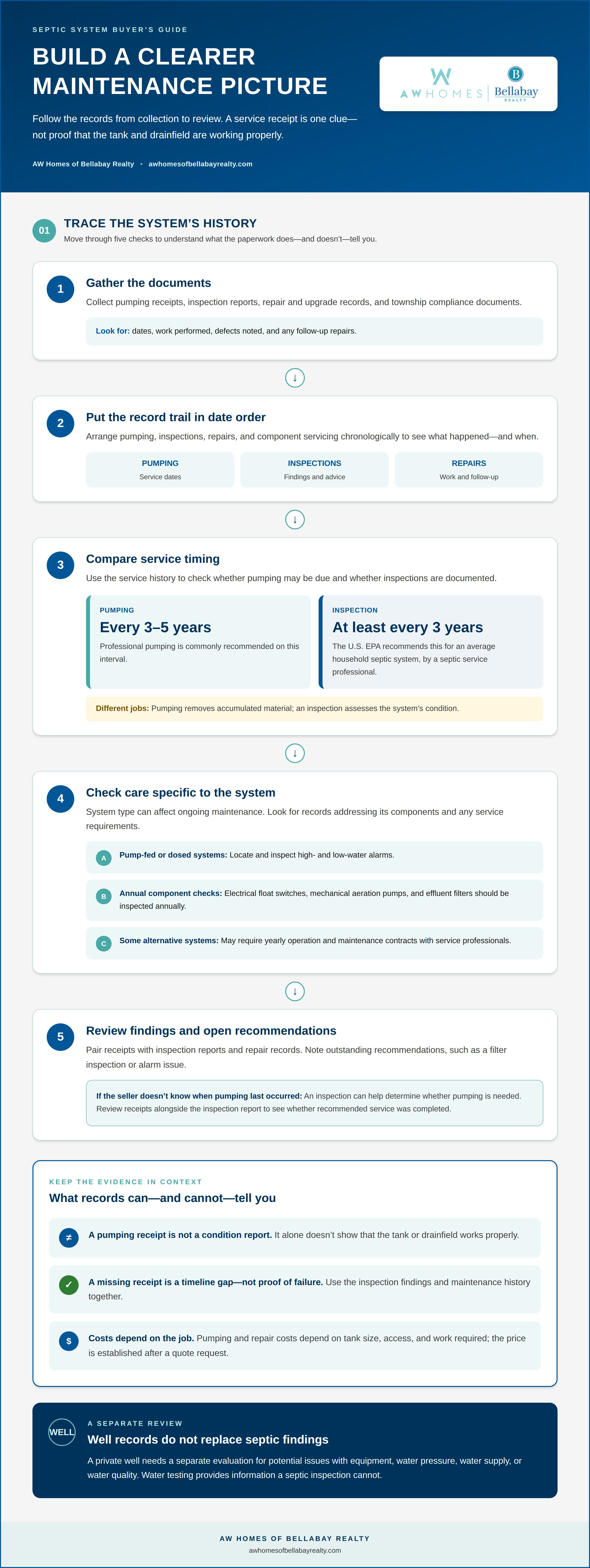
Buyers can use pumping receipts and maintenance records to understand how a septic system has been cared for. Look for dates, work performed, noted defects, and follow-up repairs. A pumping receipt alone doesn’t show that the tank or drainfield works properly; pair it with inspection reports and repair documents to see the broader history.
Pumping and repair costs depend on tank size, access, and the work required; the price is established after a quote request. A routine pump-out differs from repairing a damaged component, so records should show what work was completed. Compare the service date with the system’s maintenance history to understand whether pumping may be due.
Professional pumping is commonly recommended every 3-5 years. The U.S. Environmental Protection Agency recommends that an average household septic system be inspected at least every three years by a septic service professional. These are different tasks: pumping removes accumulated material, while inspection assesses the system’s condition.
If the seller doesn’t know when the tank was last pumped, an inspection can help determine whether pumping is needed. Review receipts alongside the inspection report to see whether recommended service was completed. A missing receipt doesn’t establish system failure, but it leaves a gap in the maintenance timeline.
System type also affects ongoing care. Pump-fed or dosed systems may have high- and low-water alarms; locate and inspect them as part of the system review. Electrical float switches, mechanical aeration pumps, and effluent filters should be inspected annually. Some alternative systems also require yearly operation and maintenance contracts with service professionals.
For a useful record trail, organize the seller’s documents by date: pumping, inspections, repairs, and component servicing. Note any open recommendations, such as a filter inspection or alarm issue. Excessive water use and flushing unsuitable items can strain the system, so consider maintenance history alongside household use and system design.
4. Septic system age and type
A septic system’s age is a clue, not a condition report. Systems typically last between 20 and 40 years, depending on materials, soil conditions, and maintenance. For a home purchase, weigh the system’s age alongside its design, documented repairs, and inspection findings. A newer system may still have issues, while an older one may have a clear service history.
Identify the system type and its main components. Conventional systems use a tank and drainfield; other designs may rely on additional equipment. The distinction matters because components and ongoing care differ. A system with pumps or controls, for example, needs attention to those parts as well as the tank and wastewater-treatment area.
A practical approach to dealing with well and septic systems when buying a home is to compare the system’s age with its records and current use. Check whether past work addressed an isolated defect or a more extensive failure. Consider whether renovations or additions changed the home’s use, and whether the tank was enlarged to accommodate them.
Local regulations and permits may shape repairs or upgrades, and requirements vary by municipality, county, and property. For buyers dealing with well and septic systems when buying a home, connect the system’s type and age with its documented condition and the home’s current layout. That context can help you understand how the system fits your plans for the property in Grand Rapids, Ada, Caledonia, or East Grand Rapids.
If you’re considering the property as an investment, explore real estate investment consulting to weigh its systems alongside the broader purchase decision.
AW Homes of Bellabay Realty
AW Homes of Bellabay Realty helps buyers navigate the home purchase, including decisions that follow well and septic findings. Buyers assistance can support you as you consider inspection reports, maintenance records, system age, and how these details fit your plans. If you’re moving to West Michigan, the Relocation Method can help organize the transition. Real estate professionals guide the transaction; septic and well evaluations provide the technical findings.
Bring your questions about the property and purchase process into the conversation as you decide what matters most. For thoughtful guidance on your next move in Grand Rapids, Ada, Caledonia, or East Grand Rapids, contact AW Homes of Bellabay Realty.
Move forward with a clear plan
Buying a home with a private well and septic system is also a decision about how the property will serve you over time. Consider how the system’s condition fits your plans, whether you’re moving into a new home, relocating, or preparing to sell. Dealing with well and septic systems when buying a home becomes more manageable when you weigh technical findings alongside your priorities for the property.
AW Homes of Bellabay Realty can guide you through the real estate decisions around your next move, from buying or relocating to preparing a home for sale. The right next step leaves you informed about the property and confident in your decision.
Contact AW Homes of Bellabay Realty to discuss your plans and move forward with a thoughtful approach.
Frequently Asked Questions
What happens if the septic system fails inspection?
A failed inspection means you need to understand the reported issues before deciding how to proceed with the purchase. Review the written findings to see whether they identify a repair, further evaluation, or a larger system concern. A reported defect may lead to a repair discussion, while substantial drainfield concerns may affect your assessment of the property and purchase terms.
Are there any regulations you must follow?
Yes. Applicable requirements can vary by municipality, county, and property. Local rules may address permits, inspections, and septic compliance during a property transfer. One township may require an inspection as part of a sale, while another may have different procedures. Build local requirements into the purchase timeline so evaluations and documentation can be addressed before closing.
Are there any signs of a failing system?
Yes. Signs can include sewage odors, unusually wet ground, or vigorous grass growth in a drainfield area. Excessive plant growth in a nearby ditch can also merit attention. These observations don’t reveal the precise fault by themselves. Note where and when they appear, then compare those locations with inspection findings to understand whether the tank, pipes, or drainfield may need further evaluation.
Has the property had a system failure before and for what reason?
Understand a past failure by looking at its cause, the work completed, and evidence that the repair addressed it. Find out whether the issue involved a broken baffle, a clogged pipe, or drainfield relocation or replacement. These examples involve different scopes of work. A dated repair invoice or prior report can clarify what happened, while a current evaluation shows how the system functions now.
Is the house on a septic system and where is it?
Property records, a site plan, or seller-provided system documents can help establish whether the home uses septic and where its components are located. A tank lid may be visible, but landscaping can conceal it, so appearance alone isn’t conclusive. Locate the tank and drainfield before planning outdoor work; their positions can affect where future structures, driveways, or planting may fit.
Is the tank big enough?
A tank’s suitability depends on its design and the home’s current use, not age alone. Compare the documented tank size and system design with changes such as added bedrooms or an extension. If the house was renovated, records can show whether the tank was enlarged. An inspection can help assess condition and function, while local requirements may also affect what is acceptable for the property.


