

What if the title insurance policy connected to your mortgage protects the lender, but not your investment? For buyers understanding title insurance in Michigan, that distinction matters. Title insurance can help protect against certain ownership-related risks, but it isn’t a blanket safeguard for every property problem.
Title and closing paperwork can feel unfamiliar, especially when two policies sound as though they do the same thing. An owner’s policy and a lender’s policy serve different interests, and the title commitment lists exceptions that may limit coverage.
This guide explains what title insurance may protect, where its limits are, and what to review before closing on a Michigan home. You’ll learn how to compare owner and lender policies, identify exceptions such as easements or other recorded restrictions, and prepare focused questions for the title professional. Whether you’re buying in Grand Rapids, Ada, Caledonia, or East Grand Rapids, your real estate agent can help you follow the transaction and decide which questions to raise before closing.
Key Takeaways
- Understanding title insurance in Michigan starts with separating covered title risks from issues a policy may exclude.
- Follow the title process from search to commitment, then use the review period to flag unclear entries before closing.
- Compare who each policy insures, what interest it protects, and where its coverage ends.
- Use a practical checklist to review proposed insured parties, exceptions, and final policy documents.
- Bring questions about title documents to the title professional, and ask your real estate agent to help identify what needs clarification.
What Is Title Insurance in Michigan, and What Problem Does It Solve?
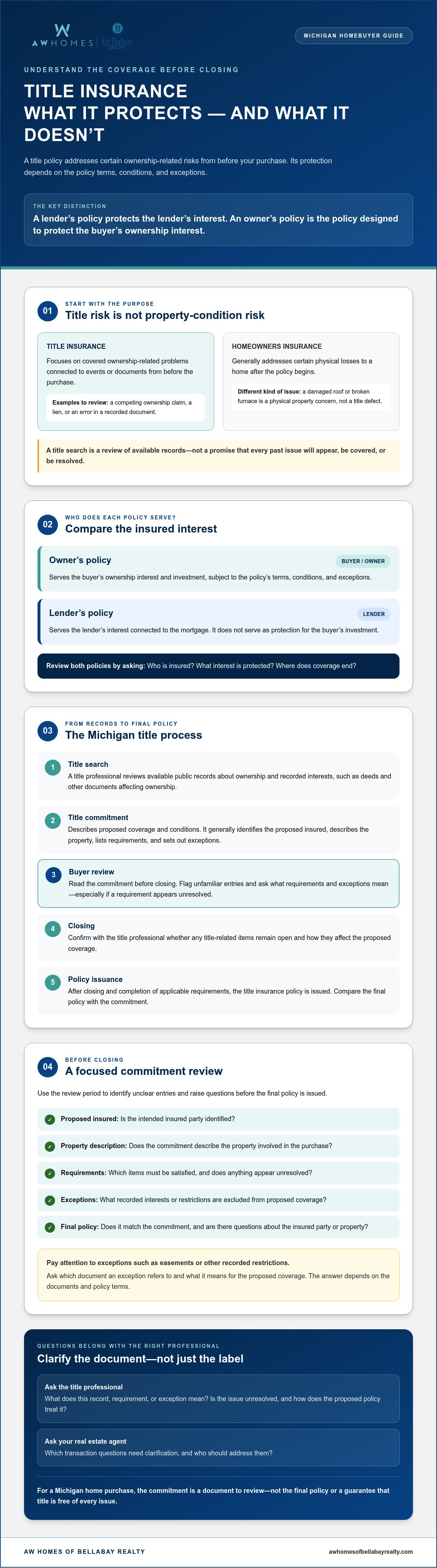
The terminology around a home purchase is easier to understand when you start with the purpose of the coverage. Title insurance addresses certain risks tied to a property’s ownership history, not the physical condition of the house.
Title insurance protects against specific title defects covered by a policy, subject to its terms, conditions, and exceptions. Homeowners insurance generally addresses certain physical losses to a home after the policy begins. Title insurance focuses on covered ownership-related problems connected to events or documents from before the purchase. Understanding title insurance in Michigan means recognizing that a policy doesn’t guarantee every ownership issue will be found, covered, or resolved.
For a neutral overview of the concept and its history, see What is Title Insurance. For a specific purchase, the policy language and the title professional’s explanation are what matter.
What does a title search look for?
A title search examines available public records to build a picture of the property’s ownership history and identify recorded interests or potential problems. Records may include deeds and other documents affecting ownership. The search can uncover concerns such as a lien that wasn’t identified earlier, a competing ownership claim, or an error in a recorded document.
A search is a review of available records, not a promise that every past issue will appear or be covered by a policy. If a finding is unclear, ask the title professional what the record shows, whether the issue remains unresolved, and how the proposed policy treats it. For example, if a commitment lists an easement or other recorded interest, ask which document it refers to and what the exception means for the proposed coverage. The answer depends on the documents and policy terms.
Why can an old title issue matter to a new owner?
A home’s ownership history can affect the rights a buyer receives. A prior claim or document error, for example, could raise questions about who has an interest in the property. An unresolved issue may also need attention if the owner later wants to sell. A title concern can matter even when the buyer had no connection to the event that created it.
Keep title risks separate from condition issues. A disputed ownership claim or recording error is a title issue; a damaged roof or broken furnace is a physical property issue. Title insurance isn’t homeowners insurance, and a title policy doesn’t automatically cover every defect or guarantee that an issue can be fixed. Review the specific findings and exceptions with the title professional. Your real estate agent can help you organize transaction questions and identify whom to ask next.
How Michigan Title Insurance Works from Title Search to Closing
Understanding title insurance in Michigan is easier when you know what each document is for. The title search gathers available property records, the commitment describes proposed coverage and conditions, and the final policy is issued after closing. Since steps can overlap, ask the title professional which documents or decisions need your attention and when.
- Title search: A title professional reviews available public records related to the property’s ownership and recorded interests. The search may identify items that need clarification or attention before the transaction proceeds.
- Title commitment: The title company provides a commitment describing the proposed policy. It generally identifies the proposed insured, describes the property, lists requirements to be satisfied, and sets out exceptions to coverage. Treat it as a document to review, not the final policy or a guarantee that title is free of every issue.
- Buyer review: Read the commitment before closing, paying particular attention to the property description, proposed insured, requirements, and exceptions. Reviewing the commitment before closing gives you time to ask what its requirements and exceptions mean before the final policy is issued. Mark unfamiliar entries and ask the title professional to explain them, especially if a requirement appears unresolved.
- Closing: The transaction proceeds through closing, where documents and requirements related to the purchase are addressed. Confirm with the title professional whether any title-related items remain open and how they affect the proposed coverage.
- Policy issuance: After closing and completion of applicable requirements, the title insurance policy is issued. Compare the final policy with the commitment and raise questions if the insured party, property description, or exceptions don’t match your understanding.
What should buyers look for in a title commitment?
Check that the proposed insured and property description reflect the transaction as you understand it. Then review the requirements and exceptions. An exception identifies something the proposed policy may not cover; the exact effect depends on the policy wording. Note unfamiliar entries, ask the title professional what recorded document or requirement each one refers to, and confirm whether listed requirements have been addressed. The American Land Title Association also offers industry information that can help buyers become familiar with title insurance terminology.
What happens when the title search finds an issue?
The title professional can explain what the records show and outline possible next steps. Some issues may be addressed before closing; others may remain listed as policy exceptions. Don’t assume that every finding will be resolved or insured. If the issue involves a contested ownership claim or you need a legal interpretation, consult a qualified Michigan attorney. Your real estate agent can help organize questions for the title professional. Buyers in Greater Grand Rapids can also explore buyer guidance in West Michigan as they work through the transaction.
Owner's vs. Lender's Title Insurance: Which Policy Protects Whom?
The names sound similar, but the policies are designed for different insured parties. A lender’s policy protects the lender’s covered interest in the property. An owner’s policy is intended to protect the homeowner against title claims covered by that policy. Understanding title insurance in Michigan means checking whose interests are insured, rather than assuming one policy protects everyone involved.
| Policy | Insured party | Purpose | Key limitation |
|---|---|---|---|
| Owner’s | The homeowner named in the policy | Protection against specified covered title risks affecting the owner’s interest | Terms, conditions, and exceptions determine what is covered |
| Lender’s | The lender named in the policy | Protection for the lender’s covered interest in the property | It doesn’t insure the buyer’s equity or replace an owner’s policy |
What does an owner's title insurance policy cover?
An owner’s policy may provide protection if a covered title claim affects your ownership, but the exact protection depends on the policy wording. Certain undiscovered liens, ownership claims, or recording errors may be covered risks, depending on the terms and exceptions. These examples aren’t promises of coverage. A listed exception or another policy provision may limit or exclude protection for a particular issue.
Review the proposed policy and its exceptions for terms related to the property. Ask the title professional to explain an unfamiliar exception and whether a specific concern is covered, excluded, or needs further review. The title commitment can help you identify proposed exceptions before the final policy is issued, but the policy itself sets out the coverage.
Is a lender's policy enough for the homebuyer?
No, not as protection for the buyer’s personal ownership interest. A lender’s policy is designed to protect the lender’s covered interest, not your equity. If a title claim affects the property, the lender and homeowner may have different interests at stake. The lender’s coverage doesn’t become owner coverage simply because both policies relate to the same home.
Before closing, confirm with the title professional which policies are being considered, who each would insure, and what terms and exceptions apply. Don’t rely on the policy name alone or assume either policy covers every ownership dispute, physical damage, or future property problem. For buyers in Grand Rapids, Ada, Caledonia, and East Grand Rapids, a real estate agent can help organize transaction questions, while the title professional can explain the proposed coverage and policy documents.
What Michigan Buyers Should Review Before Choosing Title Coverage
There isn’t one title coverage choice that fits every purchase. Start by comparing the proposed insured parties, the risks described in each policy, and the exceptions that could limit coverage. The title commitment is a useful place to begin, but review the final policy too, since it sets out the coverage that applies.
Use this checklist to organize your review:
- Identify the insured parties. Confirm who would be protected by each proposed policy and whether the buyer’s ownership interest is insured.
- Compare covered risks. Ask the title professional to explain the risks addressed by each policy and how its terms apply to your transaction.
- Read the exceptions and requirements. Note entries you don’t understand and requirements that still need attention before closing.
- Review the policy documents. Ask how to obtain the final policy after the transaction and compare it with the commitment.
- Clarify payment and selection arrangements. Who pays a premium and which title arrangements are chosen can depend on the purchase agreement and transaction details. Review the proposed terms with the appropriate professionals rather than assuming a local custom applies.
Understanding title insurance in Michigan means looking beyond a policy’s name. Focus on who it insures, what it covers, and what it excludes. A title professional can explain underwriting language and policy terms; your real estate agent can help track questions and connect them to the purchase.
Questions to ask the title professional
Ask which policy types are proposed, who each is intended to protect, and which exceptions or requirements need attention before closing. If an exception refers to a recorded document or property interest, ask what it means for the proposed coverage. Confirm how and when you can obtain the final policy, and whom to contact if you have questions after closing.
When should a buyer get legal or professional clarification?
Ask the title professional to explain underwriting terms, requirements, and exclusions. If you encounter a contested ownership claim, a complex ownership history, or uncertainty about your legal rights, consult a qualified Michigan real estate attorney. An agent can help coordinate transaction questions, but isn’t a substitute for legal counsel or the title professional’s explanation of coverage.
For a purchase in Greater Grand Rapids or elsewhere in West Michigan, talk through your Michigan home purchase with AW Homes of Bellabay Realty. An agent can help you organize transaction questions so you can direct them to the right professional.
A Clear Next Step for Title Insurance in a West Michigan Home Purchase
Before closing, bring the pieces together in order: understand which policy protects whom, review the title documents, raise questions about anything unclear, and confirm which final documents you’ll receive. This sequence turns unfamiliar paperwork into specific decisions and follow-ups.
If you’re also preparing for the wider transaction, see Michigan Home Closing Process: A Strategic Guide to Your Next Chapter for a related overview of the closing journey. Keep title coverage questions tied to your own purchase and policy documents, since the property, proposed coverage, and exceptions can differ from one transaction to another.
How your real estate agent can help during title review
Your agent can help track questions, organize deadlines, and coordinate communication among the people involved in the transaction. For example, if you’re buying in Grand Rapids, Ada, Caledonia, or East Grand Rapids and aren’t sure whether a question belongs with the title professional or another participant, your agent can help direct it to the appropriate person.
There are clear boundaries. The title professional should explain underwriting terms, requirements, and policy provisions. A Michigan real estate attorney is the right resource for legal interpretation or contested ownership questions. Your agent can support communication and transaction planning, but doesn’t decide what the policy covers or provide legal advice.
A simple pre-closing title-insurance checklist
- Confirm policy roles. Before signing closing documents, make sure you understand who the owner’s and lender’s policies are intended to protect.
- Revisit the commitment. Identify requirements that remain open and exceptions you still need explained.
- Ask direct questions. Get clarification from the title professional about unfamiliar language, unresolved items, or how to obtain your final policy.
- Confirm final documents. Check which policy documents you’ll receive after closing and how they relate to the commitment you reviewed.
- Keep good records. Store the final policy and closing records with important homeownership documents so you can find them if questions arise later.
Clear communication matters. If you’d like support organizing the real estate questions around your next move in West Michigan, plan your next move with AW Homes. A clear plan, the right professional for each question, and well-kept documents can help you approach closing with confidence.
Move Toward Closing with Clarity
Understanding title insurance in Michigan means knowing the difference between coverage for a lender and protection intended for a homeowner, then checking the commitment and final policy for their specific terms and exceptions. A careful review helps you spot questions early, but a title policy doesn’t cover every ownership dispute or property concern.
Before closing, confirm which policies are part of your transaction, ask the title professional about unclear requirements, and keep your final documents with your homeownership records. If a question involves legal rights or a contested claim, seek guidance from a qualified Michigan real estate attorney.
Buying a home is a meaningful next chapter. AW Homes offers buyer representation and transaction guidance, with local knowledge across Greater Grand Rapids, including Ada, Caledonia, and East Grand Rapids. Plan your next move with AW Homes and approach your purchase with a clear plan and the right questions.
Frequently Asked Questions
What is title insurance in Michigan?
Title insurance in Michigan protects an insured owner or lender against certain covered title defects tied to a property’s past, subject to the policy’s terms and exceptions. It differs from homeowners insurance, which generally addresses specified physical losses to the home during the policy period. A title policy doesn’t promise that every ownership issue will be found or covered. Review the commitment and final policy, and ask the title professional about unclear language.
Is owner's title insurance required in Michigan?
Whether an owner’s policy is legally required is separate from whether a buyer chooses that protection. Don’t assume either answer based on general advice. Review the coverage proposed for your transaction and ask the title professional to confirm any applicable requirements and terms. For a home in Grand Rapids, Ada, Caledonia, or East Grand Rapids, check the purchase documents and clarify the policy arrangements before closing.
What is the difference between owner's and lender's title insurance?
An owner’s policy is intended to protect the homeowner against title claims covered by that policy. A lender’s policy is designed to protect the lender’s covered interest in the property. Lender coverage doesn’t automatically protect the buyer’s equity or serve as owner coverage. To understand what applies to your purchase, check the proposed insured parties and read the policy documents, including their terms, conditions, and exceptions.
What does title insurance not cover?
Title insurance doesn’t cover every ownership dispute or every problem with a home. Coverage depends on the policy, and exclusions and exceptions can vary. It isn’t homeowners insurance, so it shouldn’t be treated as blanket protection against future physical damage, such as a roof leak. A title policy also doesn’t guarantee that every past title issue will be discovered or covered. Ask the title professional about specific concerns and listed exceptions.
When do I receive my title insurance policy after closing?
The title commitment generally comes before closing and describes proposed coverage, requirements, and exceptions. The final policy is issued after closing, once applicable requirements have been addressed. The exact timing can depend on the transaction, so ask the title professional when to expect the policy, how it will be delivered, and whom to contact if it doesn’t arrive as expected. Keep the final document with your important homeownership records.
Who pays for title insurance in Michigan?
Payment arrangements for title insurance may depend on the purchase agreement and other transaction details. Don’t assume a universal local custom determines who pays for an owner’s or lender’s policy. Review the allocation in your closing documents and ask the title professional to explain any charge you don’t recognize. If the proposed arrangement differs from your understanding of the agreement, raise the question before closing so it can be clarified.
Can title insurance protect me from an undiscovered lien?
Some covered title claims may involve liens, but a policy doesn’t automatically cover every lien. The policy’s terms, coverage dates, exclusions, and exceptions determine whether a particular claim is covered. Review the title commitment for listed requirements or exceptions and ask the title professional about any lien-related entry or concern. If a lien raises a legal dispute or uncertainty about your rights, consider consulting a qualified Michigan real estate attorney.


