

The biggest renovation isn’t always the best move before a sale. If you’re weighing how to increase home value before selling, a focused refresh may be more practical than a costly overhaul.
To decide which updates deserve attention, start with the home’s condition, the features buyers expect in your area, and comparable homes competing for attention. Separate visible maintenance issues from optional upgrades, then consider the time and disruption each project involves. In Greater Grand Rapids, relevant local comparisons can help you make those choices with more context.
This guide explains how to prioritize repairs, cosmetic updates, and curb appeal, and when a major project may not be worthwhile. You’ll get a practical way to prepare a well-maintained, inviting home without over-improving, so you can plan your next move with greater confidence.
Key Takeaways
- Learn how to increase home value before selling by weighing the home’s condition, buyer appeal, and nearby comparable listings.
- Prioritize repairs and visible refreshes before considering major renovations that may not suit your timeline or listing strategy.
- Compare listing as-is with making updates by considering disruption, uncertainty, and how the home will present to buyers.
- Use a practical preparation sequence to separate must-address items from optional improvements and final presentation tasks.
- Use local market positioning to shape a listing plan without assuming a particular sale price.
How to Increase Home Value Before Selling Starts With the Right Goal
Before deciding how to increase home value before selling, define what “value” means for your situation. An improvement can address a condition concern or make the home more appealing, but it can’t guarantee a higher sale price. The goal is to choose work based on what buyers are likely to notice, what the property needs, and how it compares with nearby competition.
Keep four figures distinct: your intended asking price, the sale price a buyer agrees to pay, an appraised value, and what you spend preparing the home. They may relate to one another, but they are not interchangeable. The asking price is part of a marketing strategy; the sale price is established through a transaction. An appraisal is an independent estimate for a specific purpose and may differ from either. Project spending is an expense, not proof that the home’s market value has risen by the same amount.
What does increasing home value before selling really mean?
Think of value as an assessment, not a renovation promise. Addressing a condition concern may make the property easier for buyers to evaluate, while a clean, thoughtfully presented space can help buyers focus on its features. Neither guarantees a higher offer. Home improvement covers work ranging from maintenance to upgrades, as outlined in this Home Improvement Overview. For a seller, the useful distinction is between work that supports the home’s condition, optional upgrades, and personal design choices that may not suit the next owner.
Presentation affects how buyers experience the whole home, but appeal and price are different outcomes. Neutral paint may help a room feel cared for; a highly personalized feature may delight some buyers and distract others. Before starting a project, ask whether it fixes a visible issue, helps the home compare with similar listings, or mainly reflects your own taste. If it is mostly personal preference, it may not be a priority before selling.
Why do local comparable homes matter?
Similar nearby listings and recent sales help you understand what buyers may expect from a home with comparable location, size, layout, and condition. They also help answer whether an update could help your home compete or add a feature buyers already find elsewhere. Use a specific comparison set rather than a broad regional average: a large detached home and a smaller condo, for example, may not be useful comparisons even if they are close by.
West Michigan is varied. A home in Grand Rapids shouldn’t automatically be assessed using the same comparisons as one in Ada, Caledonia, or East Grand Rapids. Even within one community, street, property type, condition, and timing can shape which homes are relevant. Ask which properties most closely match your home and likely listing window, not simply which neighborhood has the highest prices.
Timing matters, too. A project that could make sense with months to plan may add stress when listing is close, especially if the result is uncertain. AW Homes brings condition, comparable properties, and timing into a residential listing strategy. That gives you a practical basis for deciding what to repair, what to present well, and what to leave for the next owner.
Which Home Improvements Can Make the Biggest Difference Before a Sale?
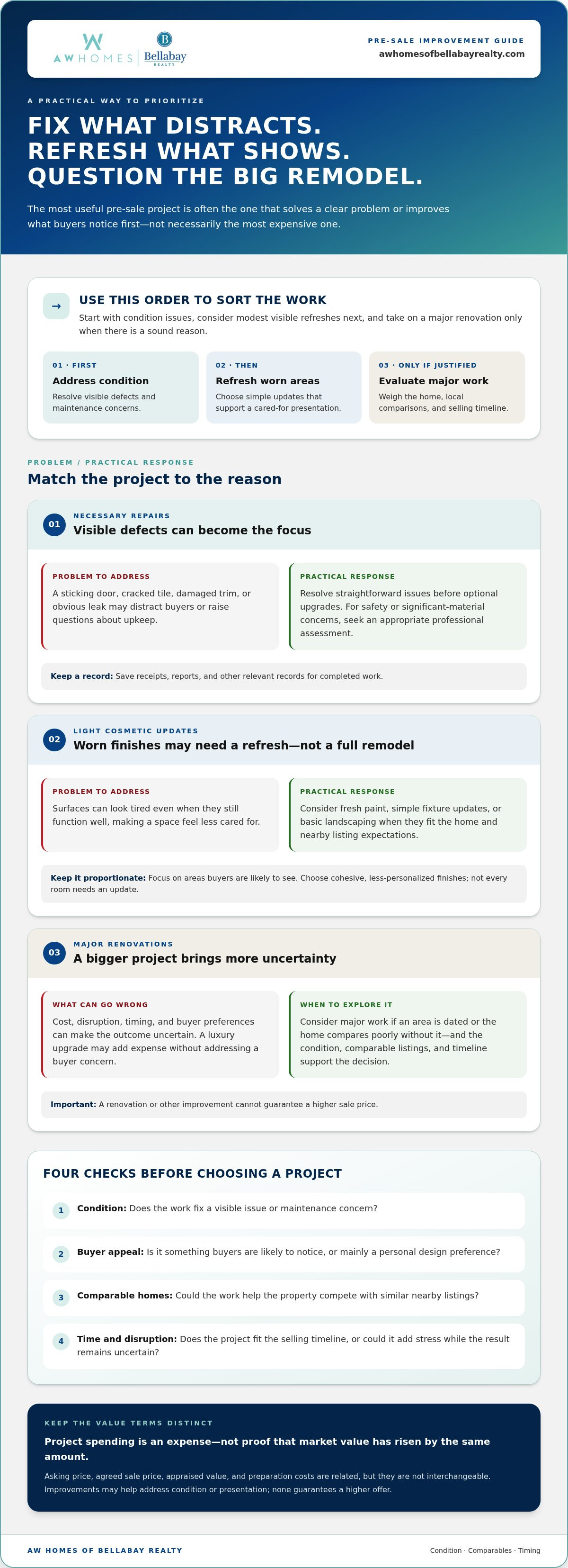
The most useful pre-sale project is often the one that solves a clear problem or improves what buyers notice first, not necessarily the most expensive one. A leaking fixture, damaged flooring, or peeling paint can draw attention away from the home’s strengths. A luxury upgrade, by contrast, may add cost without addressing a concern buyers have.
Sort possible work by urgency, visibility, and scope. Start with condition issues, then consider simple updates that make worn areas feel cared for. Take on a major renovation only when the home’s condition, comparable listings, and selling timeline give you a sound reason. This is a more practical way to decide how to increase home value before selling than treating every improvement as an automatic investment.
| Project category | Reason to consider it | Key caveat |
|---|---|---|
| Necessary repairs | Addresses defects that may distract buyers or raise questions about upkeep. | Safety or material concerns may need assessment by an appropriate professional. |
| Light cosmetic updates | Refreshes visibly worn finishes and supports a clean, cared-for presentation. | Keep choices proportionate; personal style may not appeal to every buyer. |
| Major renovations | May be worth exploring if a major area is dated or the home compares poorly without it. | Cost, disruption, timing, and buyer preferences make outcomes uncertain. |
Which repairs should sellers address before optional upgrades?
Review visible defects and maintenance concerns first. A sticking door, cracked tile, damaged trim, or obvious leak can become a buyer’s focus during a showing. Resolve straightforward issues before spending on optional features. For concerns involving safety or significant materials, arrange an appropriate professional assessment rather than relying on a cosmetic cover-up. Keep receipts, reports, and other relevant records for completed work so you can explain what was addressed.
When are cosmetic improvements more practical than remodeling?
If surfaces look tired but function well, modest updates may be more appropriate than replacing an entire kitchen or bathroom. Fresh paint, simple fixture updates, and basic landscaping can help a home feel maintained when they fit its condition and the expectations set by nearby listings. You don’t need to upgrade every room for consistency. Focus on areas buyers are likely to see, and choose finishes that feel cohesive rather than highly customized.
Presentation also shapes how buyers experience a space. Decluttering, arranging furniture, and making room layouts easy to understand can help a home feel more inviting without changing its structure. These steps complement repairs, but don’t replace them. For more ideas on preparing rooms for showings, use these home staging tips for sellers.
Before committing to a larger project, compare its likely benefit with the disruption and deadline. AW Homes’ local market positioning helps sellers weigh preparation choices against comparable homes and their intended listing strategy. Learn more about residential listing guidance.
Should You Renovate Before Selling or List the Home As-Is?
There isn’t one right choice for every seller. Renovating can resolve issues that might otherwise dominate a showing, but it also takes money, coordination, and time. Listing as-is may reduce preparation, but buyers will still assess the home’s condition and may factor visible work into their decisions. The better path depends on what needs attention, how soon you plan to list, and whether a project is likely to make the home more competitive.
Use a simple decision test: Is there a condition issue buyers are likely to notice? Do comparable homes show a clear gap in condition or presentation? Can the work be completed, and the home prepared, without putting your timeline at risk? If the answers point to a limited repair, targeted work may be sensible. If the case for a large renovation rests mainly on hope, pause and weigh its scope and uncertainty before committing.
When might a seller choose targeted repairs over a full renovation?
Start with visible condition issues and nearby comparable listings. If damaged flooring or a malfunctioning fixture stands out, addressing that specific concern may be more practical than reworking an entire room. A dated kitchen doesn’t automatically need a full remodel. Include planning, completion, cleanup, and photography in your schedule. If the full process doesn’t fit your listing window, consider a smaller scope or a different presentation plan.
A larger project deserves closer analysis when it affects how buyers can use the home, when comparable properties consistently present at a different level, or when the existing condition could limit buyer interest. Weigh the entire commitment: decisions, materials, work, possible delays, and disruption to daily life. No renovation guarantees a particular offer. A deliberate choice can protect your time and make the selling transition more manageable.
What should you weigh before listing a home as-is?
As-is describes the approach to the property’s current condition; it doesn’t make visible maintenance needs disappear. Buyers may consider repair work, uncertainty, and the effort involved as they evaluate the home. Clear communication helps set expectations and supports a straightforward transaction. Before listing, confirm which Michigan disclosure requirements apply to your circumstances. Don’t treat an as-is approach as permission to omit information required under applicable rules.
Compare the likely trade-offs rather than assuming one route is easier:
- Condition: Identify what is functioning, what is visibly worn, and what merits further assessment.
- Timeline: Allow for planning, work, cleanup, and listing preparation, not just the project itself.
- Disruption: Consider how construction or repairs could affect your household and moving plans.
- Buyer appeal: Think about whether the work addresses a concern likely to matter during a showing.
- Uncertainty: Account for the possibility that a project takes longer or produces a different result than expected.
For broader regional context, the Grand Rapids real estate market outlook can help frame the local selling environment. To decide how to increase home value before selling, connect that context to your home’s condition and listing timeline. AW Homes helps sellers weigh preparation priorities and market positioning as part of a tailored residential listing strategy.
Build a Pre-Sale Improvement Plan That Fits Your Timeline
A manageable plan turns a long list of possible projects into a sequence you can complete. Start with what the home needs, then consider what will help it show well. Keep must-address items separate from optional upgrades and presentation tasks, and set a listing date before deciding how much work to take on. This structure makes it easier to see how to increase home value before selling without letting the project list expand indefinitely.
How do you prioritize projects when time is limited?
Rank each task by condition, buyer visibility, practical importance, and completion time. Safety concerns and clear maintenance issues come before trend-driven changes. Protect time for cleaning and final preparation, too, rather than scheduling work right up to photography or showings.
- Review the home’s condition. Walk through every room and the exterior. Note safety concerns, visible defects, and maintenance tasks. Separate straightforward fixes from items that need further assessment.
- Compare nearby listings. Look at homes with a similar property type, size, and condition in the areas relevant to your sale. Note where your home is already well maintained and where a visible difference may affect its presentation.
- Prioritize the work. Put essential condition items first. Rank remaining tasks by visibility to buyers, practical importance, and time required. Label each as must-address, optional improvement, or presentation task.
- Set a deadline and scope. Work backward from your intended listing date. Leave room for planning, completion, cleanup, and final corrections. If a project threatens the schedule, reduce its scope or reconsider whether it belongs in the plan.
- Prepare the home for marketing. Once the work is complete, set aside time to clean, clear surfaces, and make rooms easy to understand. Keep presentation tasks separate from repairs and renovation so the final days don’t become a second construction phase.
How can local market context shape the plan?
Use comparable homes to guide priorities rather than relying on a national list of renovations. A home’s property type, condition, and location affect which comparisons are most useful. The right reference point for a property in Forest Hills may differ from one in Grand Rapids, Ada, Cascade, or East Grand Rapids. Don’t assume an upgrade is needed just because it appears on a general pre-sale checklist.
Keep the plan realistic. If a task is cosmetic, optional, and unlikely to be finished comfortably before listing, focus instead on care and presentation. AW Homes’ strategic Forest Hills home-selling guide offers related listing preparation context. AW Homes also connects a home’s condition and nearby comparisons to a practical preparation plan.
When you’re ready to set priorities around your home and selling timeline, explore a residential listing strategy.
How AW Homes Helps Sellers Turn Improvements Into a Clear Listing Strategy
Choosing what to fix is only one part of preparing to sell. Those choices also need to support how the home will be positioned for buyers. AW Homes of Bellabay Realty helps sellers weigh preparation priorities alongside comparable homes, the intended listing strategy, and the timing of their move. The aim is a clear plan, not a promise of a particular sale price.
What does personalized listing preparation look like?
Angela Worth and the AW Homes team help sellers consider the home’s current condition, relevant nearby comparables, and which preparation steps fit their goals. A property in Grand Rapids may call for a different comparison set than one in Ada, Cascade, Caledonia, or East Grand Rapids. The focus is a practical scope for the specific home, not a generic renovation checklist.
This process helps distinguish issues that deserve attention from optional updates and brings the seller’s timeline into the plan. If an improvement would disrupt the listing schedule, the strategy can account for that. If the home is already well maintained, preparation may focus on presenting its existing strengths. Market positioning means describing and presenting the property in its competitive context, not guaranteeing buyer response or a particular outcome.
Listing preparation continues through marketing. AW Homes’ residential listing services include professional photography to represent the home clearly online and support a consistent presentation. Photography works alongside thoughtful positioning and transaction guidance, helping sellers move from a list of possible projects to a coordinated plan for bringing the home to market.
What can sellers do next?
Bring three things to the conversation: what you know about the home’s condition, when you hope to move, and what matters most in your next chapter. You don’t need to arrive with every project decided. A focused discussion can clarify which preparation choices deserve attention and which may not fit your property or schedule.
For sellers in Greater Grand Rapids, neighborhood context adds perspective without treating every community or property as the same. A plan can reflect the home, relevant comparisons, and the transition ahead, whether your next step is a local move or a broader change. The selling process continues beyond listing preparation; the Michigan home closing process guide offers context for that later stage.
As you weigh how to increase home value before selling, focus on choices that suit your property, timeline, and move. A practical preparation plan can support the home’s presentation while leaving room to adjust as circumstances change.
Ready to plan your sale? Discuss your listing strategy with Angela Worth and AW Homes.
Frequently Asked Questions
Does replacing a roof increase home value before selling?
Replacing a roof can improve buyer confidence when its condition is a visible concern, but it doesn’t guarantee a higher sale price. In Grand Rapids, Ada, Caledonia, or East Grand Rapids, weigh the roof alongside the home’s overall condition and comparable properties. If you replace it, keep records describing the work completed, materials used, and any available warranty information. This helps buyers understand what was addressed rather than relying only on appearance.
Which home improvements are most likely to appeal to buyers?
Buyers are more likely to appreciate improvements that make a home feel cared for and straightforward to maintain than highly personalized features. Examples include repairing a loose handrail, replacing a broken fixture, or refreshing a visibly scuffed entry. Compare your home’s presentation with similar listings in its community to judge whether an update fits. A feature that stands out in one property type may be ordinary or unnecessary in another.
Is it better to renovate a home before selling or sell it as-is?
Neither approach is automatically better. Choose based on the work required, your available time, and the home’s likely competition. A targeted repair may be practical if it resolves a clear issue, while a large renovation can bring added coordination and uncertainty. If selling as-is, describe the property accurately and consider how buyers may account for visible work. A local comparison can help clarify the trade-offs.
Can a finished basement be counted as living space when selling a home?
A finished basement may add useful, flexible space, but it shouldn’t automatically be presented as equivalent to above-grade living area. Reporting conventions can vary by appraisal, listing platform, and measurement method. Record the basement’s dimensions and describe its features separately, such as finished rooms, storage, or a bathroom. Before publishing the listing, verify how the space should be categorized so buyers can clearly understand the home’s layout and reported square footage.
Do home improvements affect property taxes in Michigan?
They can, depending on how an improvement is reflected in the property’s local assessment and applicable tax rules. Don’t assume a project will change taxes by a specific amount or that its cost will translate directly into assessed value. For a Michigan property, such as a home in Ada or Caledonia, check with the local assessing office about how completed work may be treated. Keep project records for reference.
Should I get a pre-listing home inspection before selling?
A pre-listing inspection can be useful if you want a clearer picture of potential concerns before setting your preparation plan. It may reveal an issue that isn’t obvious during an ordinary walk-through, giving you time to consider next steps and gather relevant records. It’s not a guarantee that every defect will be found, and it doesn’t replace accurate communication about known conditions. Consider whether the added insight would help you prepare with confidence.
How far in advance should I make improvements before listing my home?
Start when you have a likely listing window, since project timing depends on the work and any scheduling needs. Allow room for assessment, repairs, cleanup, and photography instead of planning to finish everything at the last minute. For example, complete dusty or disruptive work before final cleaning and listing photos. If your timeline is short, focus on essential tasks first and avoid optional projects that could delay the move.


