

Could a well-intended credit move make your mortgage application more complicated? Opening a new account or paying down balances may affect your credit profile in different ways, depending on your situation. As you map out the steps to buying a house in Michigan, it helps to know what to review first and when to ask a lender for guidance.
If online advice about credit balances, new accounts, and inquiries seems contradictory, your uncertainty is understandable. Credit report corrections can take time, so a clear plan is more useful than rushing through every tip you find. Start by understanding what’s in your reports and how a mortgage lender may assess your application.
This article explains which credit factors to focus on, how to build a practical improvement plan, and when to speak with a mortgage professional. You’ll also learn why the score shown in a free credit app may differ from the score a lender uses. With thoughtful preparation and local support coordinating your home search and timeline, you can approach a Michigan purchase with greater clarity.
Key Takeaways
- Start by reviewing your credit reports, then dispute only errors you can verify.
- Build steady habits around on-time payments and manageable balances before making other credit changes.
- Use the steps to buying a house in Michigan as a planning guide, not a promise that one score guarantees mortgage approval.
- Ask a lender when to apply, what documents to prepare, and which financial changes to avoid during the process.
- Once you understand your readiness and timeline, coordinate your West Michigan home search with a buyer representative.
Why your credit profile matters when buying a house in Michigan
You don’t need to know your current credit score to begin preparing. Getting familiar with your credit profile and asking focused questions can help you approach the steps to buying a house in Michigan with more confidence, even if you’re still deciding when to purchase.
A credit score is a number calculated from information in your credit history. It can help a lender assess how you’ve handled borrowed money, but it’s only one part of a mortgage application. Different scoring models can produce different numbers, and the score you see through a consumer app may not match the score used in a mortgage review. For a general overview of credit scores in the United States, including how scoring models differ, see this summary.
Credit readiness means understanding your credit picture and preparing thoughtfully. Mortgage approval is the lender’s decision after reviewing your full application. Your loan type, the lender’s criteria, your finances, and other application details can all affect qualification. There isn’t one score that guarantees approval with every lender or program, so treat online benchmarks as a starting point, not a decision about your eligibility.
What lenders may review alongside your credit score
Along with your score, a lender may discuss payment history, outstanding balances, the length of your credit history, and recent credit applications. The review typically extends beyond credit: your income, debts, assets, and other application details help the lender assess your financial situation. Ask which factors matter for the loan program you’re considering and what documents the lender needs to evaluate them.
Your goal isn’t to chase a particular number based on generic advice. It’s to understand what appears in your records, identify questions, and get guidance that reflects your circumstances. That gives you a more useful basis for deciding what, if anything, to address before applying.
Why Michigan buyers should start before choosing a home
Starting early gives you time to review your reports, ask a lender about anything unclear, and find out whether a potential correction needs attention before you make an offer. Credit report updates or investigations can take time, so don’t assume a change will appear by a particular date. A lender can explain how to prepare based on your finances and intended loan program.
This preparation is useful whether you’re considering a home in Greater Grand Rapids or elsewhere in West Michigan. A buyer representative can help coordinate your property search with your readiness and timeline, while mortgage underwriting and credit questions should stay with qualified financial professionals. Prepare, ask, then plan your search.
How to improve your credit score before applying for a mortgage
Credit improvement is usually about careful, consistent habits, not quick fixes. As part of the steps to buying a house in Michigan, use this sequence to understand your reports and make measured changes before applying. The right timing and priorities depend on your situation, so ask a qualified mortgage professional before making major account decisions.
- Review your credit reports. Get reports through an authorized source and compare them for accuracy. Check personal details, account status, balances, and payment records on each available report. If something looks unfamiliar or incorrect, gather statements or other supporting records before taking action.
- Dispute verified errors. Submit disputes to the credit reporting agency showing the error and, when appropriate, the company that supplied the information. Keep copies of your records and dispute correspondence. Focus on genuine inaccuracies. Accurate negative information isn’t automatically removable just because it may affect a mortgage application.
- Pay bills on time. Set reminders or automatic payments to help avoid missed due dates, and make sure funds are available in the account. If you’re having trouble keeping up, contact the creditor to discuss your options rather than ignoring a payment.
- Manage revolving balances. Paying down credit card balances may support credit health, but don’t rely on a promised score increase or a particular timeline. Keep track of due dates and balances, and ask a lender how to handle payments if you’re preparing to apply.
- Limit new applications and account changes. Avoid opening several accounts or taking on new debt without considering the timing. Keep existing accounts open unless a qualified professional familiar with your circumstances advises otherwise. Closing a card can change parts of your credit profile, so ask before making that move.
Review reports and handle accounts with care
Work through the list methodically, saving copies of reports and noting any dispute follow-up. Consistent on-time payments and careful account management support credit health over time. Avoid paid promises to erase accurate history or claims that a particular action will guarantee mortgage approval.
Loan program requirements can differ. For example, Michigan’s MI Home Loan program lists a 640 minimum credit score. Confirm current eligibility details and lender requirements directly with MSHDA and a participating lender. Don’t assume that requirement applies to other loan programs.
Before changing accounts or applying for new credit, ask your lender what makes sense for your application and when to make changes. Once you have a clearer picture of your readiness, a buyer representative can help coordinate your home search with your timeline. If you’re planning a move in West Michigan, you can discuss your home-search plans with AW Homes of Bellabay Realty.
Credit score myths and lender differences Michigan buyers should understand
Credit advice can sound absolute, but mortgage decisions depend on more than a single number. As you work through the steps to buying a house in Michigan, separate general guidance from requirements a lender can confirm for your loan and circumstances.
Myth: One credit score guarantees approval.
Reality: A score is one part of the review. Lenders also consider the loan program, their own criteria, and your full application.
Myth: Every lender uses the same score and rules.
Reality: Scoring models and lender policies can differ. Ask which score model and current requirements apply to you.
Myth: A credit repair company can promise a specific score increase or mortgage approval.
Reality: Be cautious of guarantees. No company can make accurate negative information disappear simply because it affects your application.
Myth: Paying off debt is always the best move before applying.
Reality: Reducing debt may affect your credit profile, but using cash to do so can also reduce the funds available for other expenses.
Is there one minimum credit score to buy a house?
No single score guarantees qualification across all lenders and loan programs. Program eligibility guidance is not the same as a lender’s full underwriting decision, which considers your overall application. Requirements can change and may vary by lender, so ask what applies to your intended loan type, which score model will be used, and whether the lender has additional criteria.
Will checking your credit or paying off debt always help?
Checking your own credit report is different from applying for new credit. A credit application may involve an inquiry that can affect your profile. How mortgage shopping inquiries are treated can depend on scoring models and timing, so ask your lender before applying elsewhere. Before paying down a large balance or changing accounts during an application, consider your cash reserves and get mortgage guidance.
Use care with promises of fast fixes. A legitimate review should explain what information may be challenged and why, not guarantee a score result or loan approval. Before making a proposed change, ask a mortgage professional how it could affect your specific application.
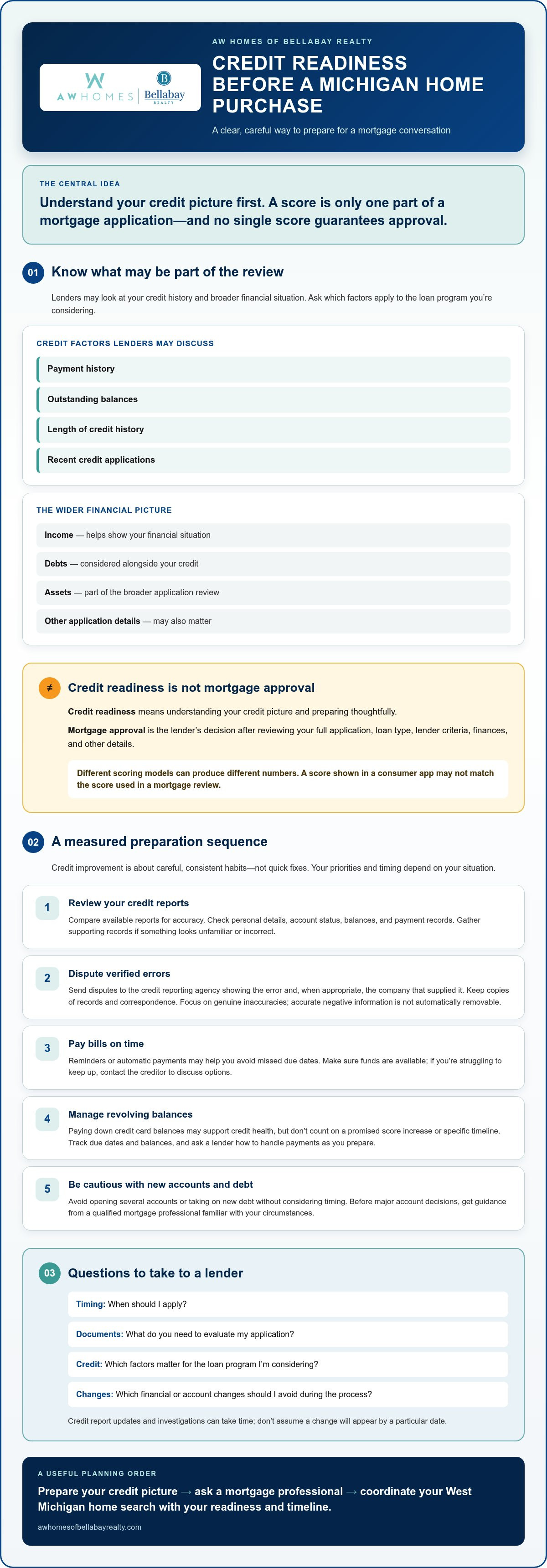
A practical credit-preparation timeline for buying a Michigan home
Credit preparation doesn’t follow a guaranteed schedule. Reports, lender review, and personal finances all take their own course, so focus on completing useful steps in sequence rather than expecting a score change by a certain date. This staged plan can help you organize the steps to buying a house in Michigan while leaving room for lender guidance tailored to you.
Early preparation: build a clear financial picture
Before you’re ready to apply, review your credit reports and household budget. Note your monthly debt obligations and the funds you may have available for the purchase. If you find report details you don’t understand, write down your questions and gather any documents that may help explain them.
This is also a good time to prepare questions for prospective lenders. Ask which loan types might fit your circumstances, when to submit an application, what documents to prepare, and how credit inquiries may be handled. General guidance can help you get oriented, but a qualified lender is the right person to discuss how current requirements apply to your finances and intended loan program.
Before preapproval: compare guidance and get organized
Before seeking preapproval, ask lenders to clarify their documentation needs and how they’ll evaluate your application. You can compare their explanations and communication styles before choosing a lender. Keep financial documents organized, and ask when to provide updates if your circumstances change. Don’t treat online advice as a substitute for a lender’s review of your specific situation.
Representation can also be part of your planning. A buyer’s agent can help coordinate the search with your readiness, explain the role of buyer representation, and guide property sourcing and negotiation. For context on choosing representation, look for a guide to finding a buyer’s agent in Grand Rapids.
During the active home search: protect your application profile
Once you’re looking at homes, keep paying obligations consistently and be cautious about taking on major new debt or making significant account changes. If your employment, income, assets, or other financial circumstances change, tell your lender promptly and ask what documentation is needed. Don’t assume a change is minor from an underwriting perspective.
As you move from an accepted offer toward the later stages of the transaction, stay responsive to lender requests and clarify next steps with the professionals involved. A Michigan home closing process guide can help you understand what to expect as the purchase progresses. For support coordinating a home search in Greater Grand Rapids or nearby West Michigan communities, discuss your buyer representation needs with AW Homes of Bellabay Realty.
Your next steps: coordinate credit preparation and a West Michigan home search
A clear plan can make the transition from credit preparation to house hunting feel more manageable. Start by understanding what your credit reports show, make careful changes based on accurate information, and speak with a lender about your intended financing. Then set a home-search plan that reflects your readiness and timeline. These steps help organize the process, but only a lender can assess and approve financing.
Questions to ask a mortgage professional
Bring specific questions to your lender so you can make decisions based on your own application, not generic online advice. Consider asking:
- Which credit information, score model, and current loan requirements apply to the financing I’m considering?
- Could a planned account change, debt payment, or new credit application affect my application timing or underwriting?
- What documents should I prepare, and what are the next steps before preapproval?
Ask the lender to explain any recommendation you’re unsure about. If your financial circumstances change during the process, check in rather than assuming the change won’t affect your application.
How a buyer representative can support the next chapter
A real estate agent can guide your property search and help coordinate parts of the transaction, but they can’t repair your credit or approve a mortgage. Keep those decisions with qualified financial professionals. A buyer representative can help you identify properties, understand local context, review comparative market information, and navigate offer negotiation as you move from preparation to the search.
For buyers considering Greater Grand Rapids and nearby West Michigan communities, AW Homes of Bellabay Realty provides buyer representation and relocation assistance. Depending on where you hope to live, your search might include Ada, Caledonia, Forest Hills, or East Grand Rapids. The right starting point is a conversation about your priorities and timing, not a promise of a particular financing or purchase outcome.
When you’re ready to discuss a West Michigan home search, connect with AW Homes of Bellabay Realty to talk through your goals and possible next steps. With lender guidance and a considered search plan, the steps to buying a house in Michigan can feel more organized and aligned with your circumstances.
Take your next steps toward a Michigan home
A stronger mortgage application starts with a clear picture of your credit, consistent financial habits, and advice from a lender who can assess your circumstances. Credit readiness can help you prepare, but it doesn’t guarantee approval. Treat the steps to buying a house in Michigan as a plan you can tailor with qualified financial guidance.
When you’re ready to turn preparation into a home search, local buyer representation can help connect your timeline with the right next moves. AW Homes of Bellabay Realty supports buyers across Greater Grand Rapids, including Ada, Caledonia, Forest Hills, and East Grand Rapids. Buyer representation includes property sourcing, comparative market analysis, and contract negotiation, while credit repair and mortgage approval remain with financial professionals.
Connect with AW Homes of Bellabay Realty to plan your West Michigan home search when the timing feels right. One considered step at a time can bring your next chapter into clearer focus.
Frequently Asked Questions
How can I improve my credit score before buying a house in Michigan?
Start by reviewing your credit reports for errors, then dispute information you can document as inaccurate. Pay bills on time and manage revolving balances carefully. Avoid opening or closing accounts without considering your mortgage timeline, since changes can affect your overall financial profile. Credit improvements don’t follow a guaranteed schedule. As you plan the steps to buying a house in Michigan, ask a qualified lender which actions are most relevant to your circumstances.
What credit score do I need to buy a house in Michigan?
There isn’t one credit score that guarantees approval for every buyer or loan. Requirements can vary by loan program and lender, and the lender will assess your broader financial application as well. Ask which current criteria and scoring approach apply to your intended financing. General score ranges you find online can be useful starting points, but they aren’t a promise of eligibility or a substitute for a lender’s review.
Does checking my credit score lower it when I am preparing to buy a home?
Checking your own credit information is generally different from applying for new credit, which may involve a lender inquiry. The effect of an inquiry depends on the circumstances and scoring model. Before authorizing a credit review or submitting applications, ask the lender what type of inquiry they’ll make and how it fits your mortgage preparation. This can help you distinguish routine report checking from applications that may affect your credit profile.
How long does it take to improve credit before applying for a mortgage?
There’s no reliable fixed timeline for improving credit before a mortgage application. The time needed depends on what appears in your file, the actions you take, and when creditors report updates. Corrections or balance changes may take time to appear, and no particular score increase can be promised. Review your reports early, keep records of issues you’re addressing, and ask a lender to help set a realistic application timeline for your situation.
Should I pay off all my debt before buying a house?
Not necessarily. Paying down debt may affect your financial profile, but using all your available funds could leave less for other home-buying needs. The right choice depends on your income, monthly obligations, savings, and intended loan plan. Before making a large payment or changing accounts, ask a mortgage professional to review the tradeoffs with you. A lender can help you consider debt alongside the rest of your application and available funds.
Can a real estate agent help me improve my credit score?
No. A real estate agent doesn’t repair credit or approve financing, so direct credit questions to a qualified mortgage professional. A buyer representative can help with property sourcing, local market context, comparative market analysis, and offer negotiation. AW Homes of Bellabay Realty serves Greater Grand Rapids and nearby West Michigan communities, including Ada, Caledonia, and East Grand Rapids. That local support can help coordinate your home search while your lender addresses financing.


