

81% of homeowners say the costs of owning a home exceeded their expectations, according to Real Estate Witch. A mortgage payment is only part of the picture, which is why budgeting for homeownership costs means planning for recurring bills, seasonal upkeep, and repairs that don’t arrive on schedule.
If you’re unsure which expenses to include, or worried that a major repair could squeeze your monthly cash flow, start by separating predictable costs from expenses that vary or happen occasionally. Then make room in your plan for both. A useful budget reflects the specific home you’re considering, not a one-size-fits-all estimate.
This guide will help you identify common ownership expenses, build a flexible monthly plan, and compare homes with a clearer view of their ongoing costs. Property taxes, insurance, utilities, and association fees can differ from one home to another, even within Greater Grand Rapids communities such as Grand Rapids, Ada, Caledonia, and East Grand Rapids. Use property-specific estimates to understand those differences before you decide which home fits your budget.
Key Takeaways
- Use a complete ownership-cost picture, not a lender’s monthly payment estimate, to shape your budget.
- Sort expenses by timing and plan ahead for costs that don’t arrive every month.
- Make budgeting for homeownership costs more precise by comparing property-specific estimates side by side.
- Build a monthly plan from your take-home income, existing obligations, and realistic allowances for irregular expenses.
- Use local property details across Grand Rapids, Ada, Caledonia, and East Grand Rapids to make home comparisons more informed.
Budgeting for homeownership costs starts beyond the mortgage payment
A home’s purchase price helps you compare properties, but it doesn’t show what living in each one may cost month to month. A lender’s payment estimate is useful for understanding a potential loan, but it isn’t a complete household budget. Budgeting for homeownership costs means looking at the loan alongside the bills, upkeep, and property-specific obligations that come with owning a home.
Homeownership costs include your mortgage, ongoing household bills, routine and occasional upkeep, and any obligations tied to the property or location. That wider view helps you plan for life after closing, not only for the amount due at closing. A broad overview of Homeownership in the United States can provide context, but your budget should be built around the specific home you’re considering.
What belongs in a complete homeownership budget?
Start with the mortgage payment. Depending on the loan and how payments are arranged, it may include principal and interest, along with property taxes and homeowners insurance. Taxes and insurance may be collected through an escrow account, or you may pay them separately. Either way, include them in your ownership budget.
Next, account for costs outside the mortgage payment. Utilities, routine upkeep, homeowners association dues, and applicable services can all affect your monthly cash flow. Some are billed monthly; others may be annual, seasonal, or occasional. A cost still belongs in your budget even if it doesn’t appear on your mortgage statement.
Actual amounts depend on the home, its location, your insurance coverage, household usage, and any services or association requirements that apply. For a property in Grand Rapids, Ada, Caledonia, or East Grand Rapids, use estimates tied to that home rather than assuming a general figure will fit.
Why the mortgage payment does not tell the whole story
Two homes with similar purchase prices can have different ongoing costs. One might have association dues while the other doesn’t. Their insurance estimates, property taxes, utility needs, or maintenance demands may also differ. Compare the likely expenses for each property instead of assuming similar prices mean similar monthly commitments.
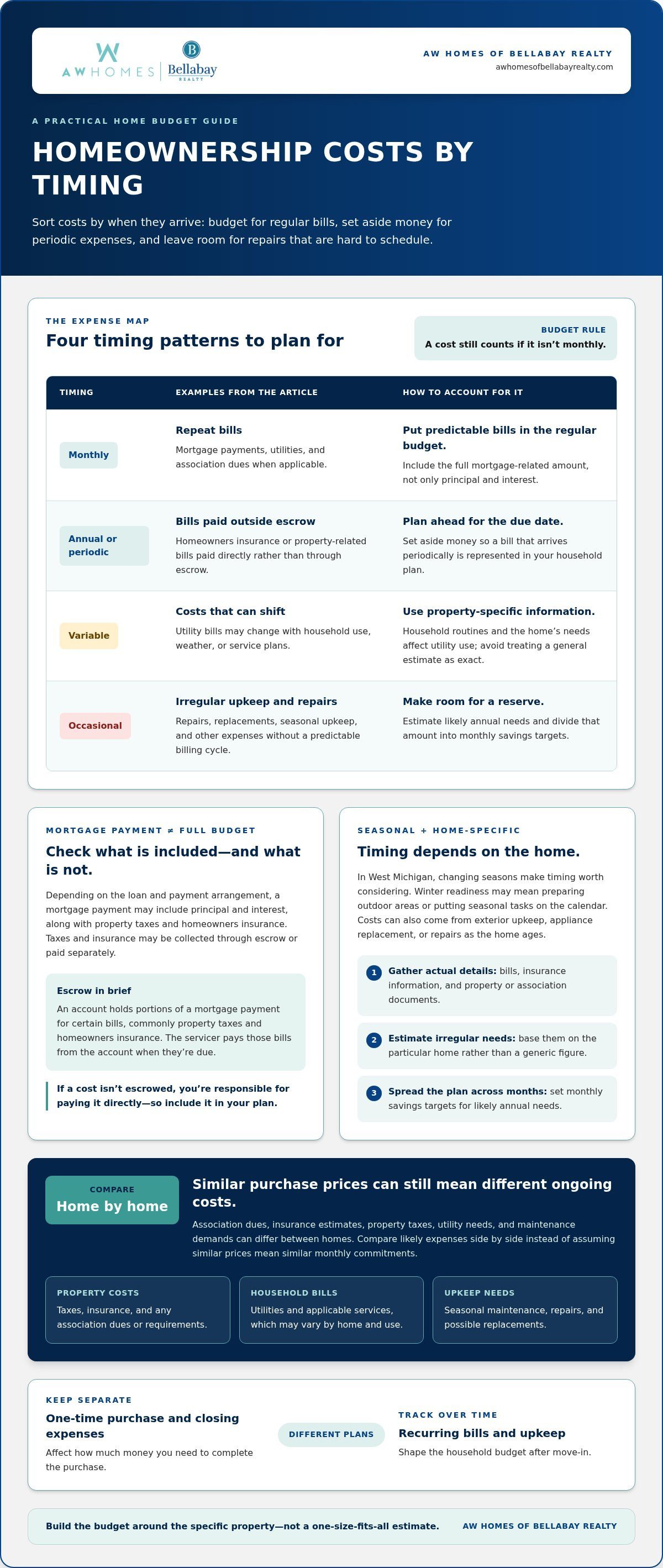
Sort expenses by when they’re due. Put predictable monthly bills directly into your regular budget. Plan ahead for seasonal upkeep and annual bills, and set aside money for unexpected repairs so they’re less likely to collide with your usual obligations.
For example, imagine comparing two homes in the Grand Rapids area. Their estimated mortgage payments are close, but one has association dues and different utility needs. Seasonal maintenance or an unexpected repair could further affect the cash flow for either home. Listing these expenses side by side gives you a more useful comparison than relying on broad local averages or invented estimates.
Keep one-time purchase and closing expenses separate from costs that continue after move-in. One-time expenses affect how much money you need to complete the purchase, while recurring bills and upkeep shape your household budget over time. Tracking both, but keeping them distinct, makes your plan clearer and helps you evaluate a home’s full financial demands.
Understand recurring, seasonal, and unexpected homeownership expenses
A useful budget doesn’t treat every expense as a monthly bill. Some costs arrive on a regular schedule, while others follow the seasons or the condition of the home. Sort expenses by timing to see what needs to be paid now, what to set aside for, and what may require a reserve.
Which costs are recurring, variable, or paid periodically?
Start by listing expenses that repeat, then note which ones can change:
- Monthly: Mortgage payments, utilities, and association dues when applicable.
- Annual or periodic: Homeowners insurance or property-related bills you pay directly rather than through escrow.
- Variable: Utility bills that shift with household use, weather, or service plans.
- Occasional: Repairs, replacements, and other expenses that don’t follow a predictable billing cycle.
Escrow is an account used to collect and hold portions of a mortgage payment for certain bills, commonly property taxes and homeowners insurance. Your servicer pays those bills from the account when they’re due. If a cost isn’t escrowed, you’re responsible for paying it directly, so include it in your plan. For general tax information, the IRS explains potential Tax Benefits of Homeownership. Eligibility depends on individual circumstances, so don’t assume a potential benefit will reduce your regular bills.
Use actual bills, insurance details, and property or association documents wherever possible. Coverage choices affect insurance costs, household routines affect utility use, and association rules can affect both dues and owner responsibilities. Generic estimates may help you start planning, but they can’t show the full picture for a particular home.
How can homeowners plan for repairs and seasonal upkeep?
West Michigan’s changing seasons make timing worth considering, although the work and its cost depend on the home. Winter readiness might involve preparing outdoor areas or putting seasonal tasks on your calendar. Other expenses could include exterior upkeep, appliance replacement, or repairs as the home ages.
When an expense is irregular, estimate its likely annual need and divide that amount into monthly savings targets, so a future bill is less likely to disrupt cash flow. Base the estimate on the home’s condition and your household finances, not a universal reserve percentage. A newer property and an older home with more immediate upkeep needs won’t necessarily call for the same plan.
Keep a simple calendar with each expense, its likely timing, and whether it’s paid through escrow or directly. Update it as you learn more about the property and as bills change. For a home search in Greater Grand Rapids, local property guidance can help you organize home-specific details as part of a thoughtful comparison.
Compare homes by their full ownership costs, not purchase price alone
A side-by-side comparison can reveal differences that a listing price or mortgage estimate won’t show. As you look at homes in Grand Rapids, Ada, Caledonia, or East Grand Rapids, use the same expense categories for each property and gather figures tied to the actual address wherever possible. This makes budgeting for homeownership costs more practical and helps you compare each home with fewer assumptions.
Which property details can change your ongoing budget?
A home’s age and condition can affect the upkeep it may need. Note the condition of the heating and cooling systems, roof, windows, and exterior features, since maintenance and replacement needs can shape future costs. Lot size and landscaping may also affect the time, equipment, or services required to maintain the property.
For a home in a homeowners association, include the dues and review the association’s rules and responsibilities. Shared amenities may be appealing, but they can come with ongoing obligations that differ from those of a home without an association. Treat taxes and insurance as address-specific figures, too. Because amounts can change over time, record the date and source of each estimate rather than treating it as permanent.
How do you compare two homes fairly?
Create one worksheet and use the same categories and estimate period for both properties. Compare projected monthly mortgage payments alongside taxes, homeowners insurance, utilities, association dues, and an upkeep allowance. Note seasonal or occasional needs separately, then translate them into a monthly planning amount for a more complete view.
- Mortgage: Record the estimate and the assumptions used, such as the loan terms.
- Taxes and insurance: Use figures for each property, and mark whether they’re confirmed or estimated.
- Utilities and upkeep: Review available bills or records, property condition, and likely maintenance needs.
- Association obligations: Note dues and relevant rules for homes governed by an association.
Keep confirmed figures distinct from estimates. If you don’t have a recent utility bill or a clear insurance quote, label the amount as an assumption and revisit it when better information becomes available. Avoid filling gaps with a general neighborhood average; homes on nearby streets can still have different features, coverage needs, or obligations.
Put one-time purchase and closing expenses in a separate part of your comparison. They affect the funds needed to complete the transaction, not just the ongoing household budget. Keep both views visible without blending them. Then weigh the numbers alongside your priorities: one home may offer features or a location that matter more to your household, while another may have a different pattern of upkeep or monthly obligations. The least expensive option isn’t automatically the best fit. A clear comparison helps you understand the trade-offs and choose with greater confidence.
Build a practical monthly budget for homeownership costs
A workable budget turns property details into a plan you can test against your household income and obligations. There’s no single percentage that fits every buyer. Start with your take-home income, regular commitments, and savings priorities, then see whether the home’s expected costs leave enough flexibility for everyday life.
Use this repeatable process:
- Gather the figures. Collect the mortgage estimate and property-specific information for taxes, insurance, utilities, association dues, and upkeep. Mark each item as confirmed or estimated, and note its source.
- Categorize each expense. Separate monthly bills from annual or seasonal expenses and less predictable repairs. This shows what needs to be paid directly and what you may want to set aside each month.
- Convert irregular costs into planning amounts. For a known annual bill, divide the expected amount by twelve and save that portion monthly. The bill still comes due on its actual schedule; the monthly set-aside helps prepare for it. Keep a separate repair reserve for costs that can’t be forecast precisely.
- Test and review the plan. Subtract estimated housing costs and existing obligations from take-home income. Consider what remains for food, transportation, savings, and other priorities. Adjust assumptions if the result feels too tight, then revisit the budget as better information becomes available.
How do you turn annual expenses into monthly planning amounts?
Use current documents and property information to replace early estimates as you get closer to a purchase. A bill, insurance quote, or association document can sharpen the picture, but don’t confuse a monthly savings target with a monthly bill. Keep the repair reserve separate from known expenses because a future repair’s timing and scope may be uncertain. This gives you a more useful plan than relying on one all-purpose estimate.
After move-in, track actual bills and compare them with your assumptions. If a utility bill differs from the estimate or a property expense changes, update the budget rather than relying on outdated figures. A simple monthly review can reveal patterns and help you adjust your set-asides before the next annual or seasonal bill arrives.
How should the budget change for different life stages?
Your plan should reflect how you expect to use the home. Household income, commuting patterns, and how long you expect to stay can all shape which expenses matter most. A move-up buyer may value added space while accounting for the upkeep it brings. A downsizer may prioritize simpler maintenance, location, or a different balance of monthly obligations. The right comparison is personal, not just numerical.
Relocating to West Michigan can bring new routines, travel distances, and household needs into the picture. If you’re planning a move to Grand Rapids, consider those practical changes as you assess what feels sustainable. AW Homes provides buyer representation to help organize property details for a more informed purchase comparison. Explore buyer guidance for your Grand Rapids move as you shape a budget around your next chapter.
Revisit the plan when income, household needs, bills, or property condition changes. Budgeting for homeownership costs is an ongoing practice: gather information, compare options, and adjust so the home’s financial demands remain visible as life evolves.
Plan your West Michigan home budget with property-specific guidance
A budget becomes more useful when it’s tied to the home you’re considering, not just a general idea of what ownership might cost. Across Grand Rapids, Ada, Caledonia, and East Grand Rapids, property details can differ even between nearby homes. Thoughtful budgeting for homeownership costs means gathering the relevant information for each address, identifying what’s still an estimate, and comparing the trade-offs before making a decision.
What local details should West Michigan buyers include?
Start with property taxes and any applicable assessments for the specific address and municipality. Don’t assume two homes in the same area have identical figures, or that an amount shown in an existing document will remain unchanged over time. Treat it as a property-specific reference point and note when the information was gathered.
Also consider how the property’s condition and features may shape ongoing needs. A home’s age, exterior, lot, and heating or cooling systems can affect upkeep and utility use. West Michigan winters make seasonal maintenance worth including in your planning, but the tasks depend on the particular home. If the property belongs to a homeowners association, review its dues and rules to understand both the cost and any owner responsibilities.
Use current property documents and estimates to fill out your comparison. Don’t assume a home in Grand Rapids will have the same insurance, utility use, or association obligations as a similar-looking property in Ada, Caledonia, or East Grand Rapids. Record the source and date of each figure, and mark anything that remains an estimate. This simple distinction helps keep assumptions from looking like confirmed expenses.
How can a buyer make the next step feel manageable?
Bring your comparison worksheet into the home search. Include the costs you’ve identified, the documents behind them, and a short list of unresolved questions or assumptions. That gives each property a consistent starting point and makes it easier to see which details matter as you consider a home.
AW Homes of Bellabay Realty provides buyer guidance and local neighborhood insight across Greater Grand Rapids, including Grand Rapids, Ada, Caledonia, and East Grand Rapids. That perspective can help you consider how a home’s features, location, and ongoing obligations align with your priorities, without treating the lowest projected cost as the only measure of a good fit.
Your budget doesn’t need to answer every question before you begin. It should give you a clear framework for comparing options and updating your assumptions as you gather property-specific information. When you’re ready, plan your West Michigan home search with AW Homes and take the next step with a more informed view of the costs ahead.
Move forward with a plan that fits your next chapter
A home purchase is more than a financial decision. It’s a choice about the routines, priorities, and possibilities you want your next chapter to hold. A thoughtful approach to budgeting for homeownership costs can help you make that choice with greater confidence while leaving room for the life you’re building beyond the house itself.
You don’t have to make every decision alone. AW Homes offers concierge-style guidance for buyers and people navigating life transitions, helping bring clarity to an important move. Local neighborhood insight across Greater Grand Rapids can also add perspective as you consider how a home and its setting fit your priorities.
When you’re ready to turn your plans into a home search, plan your next home move with AW Homes. Take the next step at your own pace, with a clearer sense of what matters most.
Frequently Asked Questions
What costs should I include when budgeting for homeownership?
Include both payments attached to the property and the costs of living in it. Beyond your loan payment, account for taxes, insurance, utilities, association obligations if applicable, routine care, and a reserve for repairs. Keep one-time purchase expenses separate from ongoing costs so you can plan for cash needed at closing without confusing it with the amount you’ll need to sustain the household after moving in.
Is a mortgage payment the same as the full cost of owning a home?
No. A mortgage payment covers only the items included in that payment, which may vary by loan and escrow arrangement. It won’t necessarily include utilities, association dues, maintenance, or bills you pay directly. For a realistic affordability check, compare the estimated housing payment with your other monthly commitments and the costs you’ll need to save toward, such as seasonal upkeep or future replacements.
How much should I save for home repairs?
There isn’t one reserve amount that fits every home or household. Consider the property’s age and condition, any known maintenance needs, and how much room your finances allow for savings. A home with an aging appliance or deferred exterior work may call for a different plan than a property in stronger condition. Use inspection findings and available maintenance records to identify likely priorities, then revisit your reserve as you learn more.
Can property taxes and homeowners insurance change after I buy?
Yes, either expense can change over time. Property tax amounts may be affected by updates to property information or local rates, while insurance premiums and coverage terms can change at renewal. Don’t assume the figures you used before purchase will stay fixed. Keep each bill or policy renewal with your budget records, compare new amounts with your previous estimates, and adjust your monthly set-aside when needed.
Does a homeowners association fee cover all exterior maintenance?
Not necessarily. What dues cover, and which maintenance tasks remain the owner’s responsibility, depends on the association’s governing documents and the property. Review the rules, budget information, and any materials describing maintenance responsibilities before treating a fee as a substitute for upkeep. For example, an association may handle some shared areas while owners remain responsible for certain parts of their individual homes. Confirm each responsibility in the property documents.
How can I compare the monthly costs of two homes?
Use the same worksheet and time period for each property. Compare estimated mortgage payments, taxes, insurance, utilities, association dues, and upkeep, labeling each figure as confirmed or estimated. Convert known annual bills into monthly planning amounts, but keep irregular repairs visible as a separate reserve. For homes in Grand Rapids, Ada, Caledonia, or East Grand Rapids, use information tied to each address rather than assuming nearby properties have identical expenses.


