

Selling your family home isn't a loss of history; it's a strategic curation of your personal evolution. You've likely spent years building a life within these walls, and the thought of strangers judging your private sanctuary during showings can feel deeply unsettling. It's natural to feel a heavy sense of anxiety as you face high-stakes negotiations and the fear of losing the physical connection to your past. Most homeowners find that the emotional stages of selling the family home are just as demanding as the financial ones.
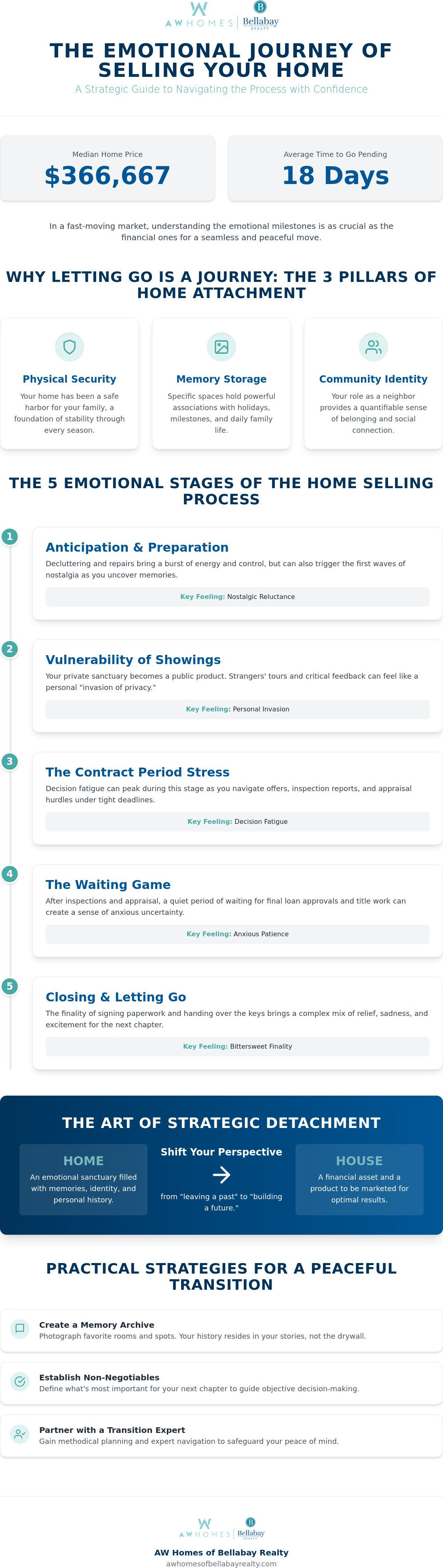
You deserve a transition that prioritizes your emotional security, professional clarity, and long-term well-being. This guide provides the expert strategies you need to navigate this journey with composure and confidence. We'll explore the psychological milestones of the sale, offer practical tools to manage decision fatigue, and outline a clear path toward your next chapter. In a market where the median home price sits at $366,667 and homes often go pending in 18 days, having a methodical plan is essential for a seamless and peaceful move.
Key Takeaways
- Understand your home as an emotional sanctuary and learn how to process the transition as a significant personal milestone.
- Gain clarity on the five emotional stages of selling the family home to navigate the "Invasion of Privacy" and other high-stakes stressors with grace.
- Master the art of strategic detachment by shifting your perspective from "home" to "house," a necessary step for objective decision-making and optimal results.
- Implement practical strategies, such as creating a memory archive and establishing non-negotiables, to safeguard your peace of mind throughout the process.
- Discover how partnering with a transition expert provides the methodical planning, expert navigation, and localized reliability needed for a stress-free move.
The Psychology of Home Attachment: Why Letting Go is a Journey
Your home is far more than a collection of rooms and a legal description. It serves as an emotional anchor, a private sanctuary, and a tangible reflection of your identity. When you begin to consider a move, your brain doesn't just process data about market rates or inventory levels. It processes the potential loss of a significant life stage. Research into The Psychology of Home Attachment shows that the bond between a person and their residence is foundational to their sense of self. This is why the initial decision to list can feel like a heavy burden. Your mind often processes the "Grief of Letting Go" in a way that mirrors other major life changes, leading to a natural and valid reluctance.
In West Michigan, this attachment is often deepened by the concept of social anchoring. Whether you've raised a family near the schools in East Grand Rapids or enjoyed the peaceful, expansive lots in Caledonia, your home is your gateway to the community. You aren't just selling a building; you're transitioning away from a specific role within your neighborhood. Acknowledging the emotional stages of selling the family home is the first step toward a successful transition. It allows you to move from a place of reactive stress to one of strategic intentionality.
The Three Pillars of Home Attachment
To navigate this journey, it helps to categorize your feelings into three distinct pillars. First is physical security; your house has been a safe harbor for your family through every season. Second is memory storage. You likely associate specific corners of the kitchen with holiday mornings or the backyard with summer milestones. Finally, there is community identity. Your role as a neighbor in the Greater Grand Rapids area provides a sense of belonging that is hard to quantify but easy to feel. Recognizing these pillars helps you understand exactly what you're honoring as you prepare for the next chapter.
Reframing the Sale as Personal Evolution
Strategic detachment begins when you shift your perspective from "leaving a past" to "building a future." It's a common fear that selling the house means losing the memories created within it. However, your history resides in your people and your stories, not in the drywall or the foundation. Viewing the sale as a form of personal evolution allows you to approach the process with a sense of purpose. This transition is about intentionality. It is an opportunity to curate a lifestyle that better serves your current needs while carrying the warmth of your past experiences forward into a new, thoughtfully chosen space.
The 5 Emotional Stages of the Home Selling Process
The emotional stages of selling the family home often mirror a complex narrative arc. It begins with the adrenaline of preparation and ends with the quiet finality of the closing table. Understanding these milestones helps you maintain your composure when the process feels intrusive or uncertain. By recognizing these shifts, you can move through the transaction with a sense of strategic focus rather than reactive anxiety. Each stage requires a different level of resilience and a specific set of tools to ensure your emotional security remains intact.
Anticipation and The Preparation Phase
Decluttering and light repairs often bring a surprising burst of energy. You're taking control and preparing for a future chapter. However, this phase also triggers the first wave of nostalgia. Finding a child's height markings on a doorframe or an old photo tucked behind a cabinet can lead to a sudden sense of reluctance. It's a natural pause in the momentum. This is the time to honor the past while staying committed to the methodical planning of your move.
The Vulnerability of Showings and Feedback
Once the "For Sale" sign is up, your sanctuary becomes a public product. It’s common to feel a sense of "invasion" when strangers tour your private spaces and open your closets. Hearing critical feedback about your decor or layout can feel like a personal critique rather than a market evaluation. To Cope With the Stress, you must view these tours as business appointments. Maintaining a strict routine during the active listing stage provides a much-needed sense of normalcy and control.
The Contract Period: Inspection and Appraisal Stress
The contract stage is often where decision fatigue peaks. You've navigated the "Negotiation Anxiety" of comparing offers, but now you face the technical hurdles of inspections and appraisals. The fear that a deal might fall through after weeks of work is a significant stressor. This is when the value of a composed, strategic advisor becomes most apparent. Having a partner who manages the logistics allows you to focus on your long-term well-being. If you are feeling overwhelmed by these high-stakes moments, exploring residential listing services with a consultant-first approach can provide the stability you need.
The final stage is closure and relief. While the signing table marks a financial transaction, it also provides a profound sense of peace. You've successfully navigated the emotional stages of selling the family home and are ready to step into your next chapter with a clear understanding of the road ahead. The weight of the house is replaced by the excitement of new possibilities.
Transitioning from "Home" to "House": The Art of Strategic Detachment
Moving through the emotional stages of selling the family home requires more than just logistical preparation; it demands a fundamental shift in your perspective. To achieve a successful outcome, you must transition from a "Home" mindset to a "House" mindset. This process, known as strategic detachment, isn't about erasing your history or diminishing the value of your memories. Instead, it is a methodical approach designed to protect your emotional security. By viewing your property as a marketable product, you gain the clarity needed to make high-stakes decisions without the fog of sentimentality. This mental pivot allows you to lead the process with intentionality, professionalism, and poise.
The "Product" Mindset vs. The "Home" Mindset
Objectivity is your greatest asset in a competitive market like Forest Hills. Buyers in this region aren't looking for your past; they're searching for their future. It's vital to separate your family’s intrinsic worth from the home’s current market value. While your home is priceless to you, the market views it as an asset defined by square footage, school districts, and recent comparable sales. One of the most effective ways to begin this detachment is by leveraging professional home photography. Seeing your living spaces through a polished, high-definition lens helps you view the property as a buyer would. It reframes the rooms as segments of a high-end listing rather than the backdrop of your private life. This visual distance is a powerful tool for maintaining your composure during negotiations.
The Role of Staging in Emotional Detachment
Professional staging serves as a psychological bridge between your past and your next chapter. Neutralizing a space by removing personal photographs and unique decor helps you "move out" mentally long before the physical move occurs. You are essentially creating a blank canvas, allowing the next family to project their own stories onto the walls. This process can be embraced as a meaningful ritual of saying goodbye to each room. As you pack away heirlooms and depersonalize the environment, you're acknowledging that the house's mission as your sanctuary is complete. Staging provides three essential benefits: it highlights the property's potential, minimizes buyer distractions, and reinforces your own readiness for change. By the time the first showing occurs, the house feels less like your private harbor and more like a curated opportunity for someone else. This intentional distance acts as a shield, ensuring that critical buyer feedback or low-ball offers feel like market data points rather than personal slights.
Practical Strategies to Navigate the Emotional Load
Managing the weight of a move requires a blend of professional clarity, emotional security, and methodical planning. While earlier stages of this journey focused on mental detachment, this phase is about implementing actionable tools to safeguard your well-being. By proactively addressing the emotional stages of selling the family home, you transform a potentially overwhelming experience into a series of manageable, intentional steps. You don't have to leave your peace of mind behind when you hand over the keys.
Preserving Memories Without the Real Estate
One of the most effective ways to ease the transition is to separate your memories from the physical structure of the house. Consider commissioning a custom illustration of the property or creating a high-quality professional photo book that captures the home in its best light. These keepsakes allow you to carry the essence of your history into your next chapter without being tied to the maintenance of the building. Another therapeutic strategy is writing a "love letter" to the next owners. Sharing the home’s best quirks, the way the light hits the morning room, or the history of the perennial garden in the backyard provides a sense of continuity. Finally, schedule a private, final walkthrough once the house is empty. This quiet moment of reflection offers a profound sense of closure, allowing you to honor the past before stepping forward.
Establishing non-negotiables is another vital strategy for reducing decision fatigue. Before the stress of active negotiations builds, decide on your walk-away points regarding price, closing dates, and repair concessions. Having these benchmarks in place prevents you from making reactive choices during high-pressure moments. It keeps your strategic focus sharp and your emotional energy protected.
Protecting Your Emotional Energy
Your daily routine is your greatest defense against the anxiety of a sale. It's essential to set strict boundaries for showing times to preserve your family’s peace and privacy. Don't feel obligated to vacate your home at a moment's notice; instead, work with your advisor to establish a schedule that respects your "West Michigan lifestyle" and commitments. Whether it's your morning walk through the trails in Ada or your weekend visits to local markets in Cascade, maintaining these rituals provides a necessary sense of normalcy.
As you manage the sale of your current property, your attention will naturally shift toward your future sanctuary. To keep your momentum forward and reduce the logistical burden, you should lean on a professional buyers agent to handle the search for your new home. Delegating the search allows you to focus on the emotional transition of your current sale while ensuring your next move is handled with the same level of expertise. If you're ready to secure a partner who prioritizes your long-term well-being, explore our relocation assistance services to ensure a seamless transition to your next chapter.
Partnering with a Strategic Advisor for a Seamless Transition
The final step in mastering the emotional stages of selling the family home is recognizing that you don't have to navigate this journey alone. While the psychological and logistical demands are significant, a professional partnership provides the stability needed to move forward with confidence. A strategic advisor does more than facilitate a transaction; they act as a guardian of your peace. By providing expert navigation, localized reliability, and methodical planning, a concierge-style partner ensures that your personal evolution is celebrated rather than overshadowed by stress. This high-level consultancy transforms a complex property transition into a curated milestone for your family.
The Buffer Effect: Protecting Your Peace
One of the most valuable assets a strategic partner provides is the "buffer effect." We understand that the constant "invasion" of showings can feel like an emotional drain. Our role is to manage these interactions, vet potential buyers, and schedule appointments with your specific boundaries in mind. This layer of protection allows you to maintain your daily rhythm while we handle the market's demands. Beyond the showings, having a calm, objective negotiator in your corner is essential. When offers arrive, we filter out the noise and focus on the data, ensuring your long-term well-being is the priority. We also work to reduce friction throughout the Michigan home closing process, handling the technical complexities so you can focus on your next chapter. Our goal is to provide a seamless experience where every detail is managed with precision and care.
Expert Navigation for Every Life Stage
Every move represents a unique life stage, and each requires a tailored approach. Whether you are a move-up buyer seeking more space, a downsizer looking for a refined lifestyle, or a relocation client moving into the Grand Rapids or Ada areas, your needs are specific. We provide the specialized expertise required to turn a chaotic event into a logical, unhurried journey. Our deep roots in the local community allow us to offer insights that generalists often miss, providing you with a sense of security that only a regional specialist can deliver. We don't just view our work as residential listing services; we view it as a partnership in your growth. At AW Homes of Bellabay Realty, we're committed to ensuring your transition is methodical, organized, and deeply supportive.
As you prepare to turn the page, remember that your memories are safe within you, and your future is waiting to be built. We invite you to start this next chapter with the confidence that comes from professional authority and empathetic reassurance. Your story is evolving, and we are here to ensure that every step of the way is handled with the intentionality you deserve. Let's work together to secure your emotional security and achieve a seamless transition in the beautiful landscapes of West Michigan.
Your Evolution into a New Chapter
Selling your home is a significant personal milestone that demands professional clarity, emotional security, and strategic focus. You've learned how to shift from a "home" to a "house" mindset and how to protect your energy through the technical hurdles of the sale. Navigating the emotional stages of selling the family home is a journey best taken with a composed partner who understands the weight of your history and the potential of your future.
We provide a concierge-style service tailored to West Michigan families, offering expert navigation for high-stakes life transitions. Our team is deeply rooted in the Forest Hills and Ada communities, ensuring your move is handled with localized reliability and methodical planning. We act as your buffer, your advisor, and your advocate throughout the entire process. Begin your seamless transition with a strategic home consultation. Your next sanctuary is waiting, and we are here to ensure you reach it with a profound sense of peace and confidence.
Frequently Asked Questions
How do I stop feeling guilty about selling my family home?
You stop feeling guilty by reframing the sale as an act of stewardship rather than abandonment. View the transition as providing a foundation for a new family's future while honoring your own personal evolution. Focus on the fact that your memories live within your family, your stories, and your heart; they don't stay behind in the structure. This perspective shift highlights your intentionality, growth, and readiness for a new chapter.
What is the hardest part of selling a house emotionally?
Many homeowners find the "Invasion of Privacy" stage during active showings to be the most challenging emotional milestone. It's a period where your private sanctuary becomes a public product, leading to feelings of vulnerability, exposure, and judgment. This is a primary reason why the emotional stages of selling the family home require such a methodical approach. Strategic detachment acts as your best defense during this high-stakes time.
How can I stay calm when buyers criticize my home?
You stay calm by viewing buyer feedback as objective market data rather than a personal critique of your lifestyle. Remember that buyers are searching for a "marketable product" that fits their specific needs, not judging your family's history. Lean on your strategic advisor to filter this feedback for you. They provide the clarity, perspective, and composure needed to keep the process moving forward without unnecessary stress.
Is it normal to want to back out of a home sale at the last minute?
It's completely normal to experience a sudden wave of hesitation or "Seller's Remorse" before closing. This reaction is a common part of the emotional stages of selling the family home, often triggered by decision fatigue or a fear of the unknown. When these feelings arise, review your original goals and trust your methodical plan. Your strategic advisor can help you regain focus and maintain your emotional security.
How do I help my children cope with selling the family home?
Help your children by involving them in "memory rituals" and giving them a sense of agency in the new space. Let them create a scrapbook of their favorite rooms or choose a special feature for their new bedroom. Focus on the themes of growth, excitement, and continuity. This approach turns a potentially scary transition into a curated family adventure that prioritizes their long-term well-being.
Should I stay in the house during showings or leave?
You should always leave the property during showings to allow potential buyers to envision their own lives in the space. Staying creates friction for the buyer and increases your own emotional load as you witness strangers in your sanctuary. Stepping away allows you to maintain your peace, privacy, and perspective. Use this time to enjoy a quiet ritual at a favorite local spot in Ada or Grand Rapids.
How long does the "emotional hangover" last after moving?
The transition period typically lasts between 90 and 180 days as you establish new anchors in your new environment. During this time, you're building new routines, finding new favorite local spots, and settling into a new sense of place. Focus on intentionality and personal evolution to help this process feel like a positive development. It's a natural phase of settling into your next chapter.
Can a real estate agent help with the emotional side of selling?
A concierge-style real estate agent acts as a vital buffer between you and the market's inherent stressors. They provide the professional authority, empathetic reassurance, and localized reliability needed to safeguard your peace of mind. For readers in the Greater Toronto Area, you can learn more about Pinnacle Realty to see how their brokerage supports residential and commercial clients through these transitions. By managing the high-stakes logistics and negotiations, they ensure your emotional security remains a core priority. This partnership allows you to focus on your transition while they handle the complexities.


