

When selling a house with title issues Michigan, the first step is to find out what the property records actually show. An old deed, unpaid lien, missing probate document, or mismatch in public records can raise questions, but it doesn’t automatically make a sale impossible. Gather the records that relate to the concern and arrange a review before drawing conclusions.
It’s understandable to worry about delays, buyer financing, or a failed closing. A title professional or attorney can assess title and legal questions, while your real estate agent can help organize the sale details and keep communication moving. Knowing who handles each part helps you focus on practical next steps.
This guide explains common title issues, how they may affect a Michigan transaction, and which records can help investigate them. You’ll find steps for organizing documents, coordinating a review, and setting realistic expectations for the sale. Whether your home is in Grand Rapids, Ada, Caledonia, or East Grand Rapids, a clear process can help you understand what needs attention.
Key Takeaways
- Learn how unreleased mortgages, liens, ownership-name discrepancies, probate questions, and deed-description errors can affect a home sale.
- Understand why a title concern’s effect on buyer financing and closing depends on the issue and the transaction.
- Use a practical checklist to gather deeds, mortgage and payoff records, estate documents, and prior title paperwork for review.
- Learn how early communication helps the parties plan around what is known, without assuming a title issue has a guaranteed fix.
- For selling a house with title issues Michigan, see how AW Homes helps organize listing preparation, marketing, negotiation, and transaction communication.
Selling a House With Title Issues in Michigan: What the Problem Means
A title concern can sound like a roadblock, but finding one doesn’t automatically end a sale. If you’re considering selling a house with title issues Michigan, first identify which record or document raised the question. Then have the relevant paperwork reviewed. The next steps depend on what the records establish and the specific circumstances of the property.
What does a title issue mean when selling a Michigan home?
Title refers to ownership rights and recorded interests associated with a property. A title review examines documents and public records to determine what they show about ownership, claims, and the property’s legal description. It differs from a visual home inspection, which focuses on the property’s physical condition.
A title defect is a question, inconsistency, or claim in the records that may affect ownership, a recorded interest, or the property description. There isn’t one remedy for every defect. A document may need clarification, a record may require further review, or another process may apply depending on the facts. The general idea is sometimes described as a cloud on title.
These terms can help you sort through the paperwork:
- Deed: A legal document used to transfer an ownership interest in real estate.
- Mortgage: A loan-related interest secured by the property. Even after a loan is paid off, appropriate documentation may still need to appear in the records.
- Lien: A recorded claim against the property that may relate to an unpaid obligation.
- Title insurance: A policy that may protect against certain covered title problems, subject to its terms. It isn’t the same as title and doesn’t replace review of every concern.
Can a Michigan home sale proceed with a title problem?
Possibly. Some concerns may be addressed before closing with documentation or another appropriate step. Others need additional investigation. A title professional or attorney can assess title and legal questions based on the specific records and facts.
Buyers want confidence that the seller can convey the ownership interest being sold. A lender may review title as part of its financing requirements, and closing professionals need clear information to prepare the transaction. If a concern remains unresolved near the planned closing, it may lead to further review, affect financing or the buyer’s decision, or change the timing. The result depends on the issue, the parties, and the applicable review.
For a home in Grand Rapids, Ada, Caledonia, or East Grand Rapids, an organized sale plan starts with identifying the record concern and sharing relevant information early. Your agent can coordinate listing and transaction details. Title and legal determinations belong with the appropriate professionals.
Common Michigan Title Problems and How Sellers Can Address Them
An inconsistent result in an online search isn’t automatically proof of a legal defect. Treat it as a reason to investigate, then compare it with the underlying documents. The county Register of Deeds is a source for recorded documents, but a search result alone doesn’t explain what a record means or how to resolve a concern.
Unreleased mortgages, liens, and recorded claims
A mortgage may remain visible in property records after the loan is paid if a release hasn’t been recorded or isn’t reflected in the records being reviewed. Gather any payoff confirmation, release document, and prior closing or title paperwork you have. A closing professional can review the records and identify what other documentation may be needed.
Other recorded liens or claims need their own review. Collect related notices, payment records, and correspondence, if available. Don’t assume every lien can be paid from sale proceeds or cleared through the same process. The type of claim, amount, and supporting documents all matter.
Ownership, probate, name, and property-description questions
A prior deed may show a former name, leave questions about another person’s ownership interest, or raise issues following a divorce, inheritance, or estate matter. Gather earlier deeds, name-change or divorce records, and available estate documents. Probate and ownership questions need fact-specific review by qualified legal or title professionals.
A deed may also contain a spelling error, an inconsistent legal description, or wording that differs from another property record. A description discrepancy doesn’t automatically mean there’s a boundary dispute, and a map or search result alone may not settle the question. Share the documents with the appropriate professionals before deciding that a correction is needed.
The right resolution depends on the defect, the documents, and the title review. The Michigan rules on transfer of ownership explain how certain ownership changes relate to Michigan property tax rules. This information provides context, but it doesn’t replace a review of the property’s title records.
If you’re selling a house with title issues Michigan, organize the paperwork before deciding what the issue means for your sale. AW Homes helps Greater Grand Rapids sellers coordinate listing details and keep transaction communication organized while title and legal professionals review the records. Explore residential listing guidance as you plan your next steps.
How Title Issues Affect a Michigan Sale, Buyer Financing, and Closing
A title concern can affect different parts of a sale, but its presence alone doesn’t determine whether a buyer can proceed or a lender will approve financing. The records, the nature of the concern, and the transaction’s requirements all matter. This table outlines possible effects as the issue is reviewed:
| Title status | Possible effect on the transaction | Practical focus |
|---|---|---|
| Issue identified | The buyer or lender may ask for more information. An initial finding isn’t necessarily a final decision. | Share relevant records and clarify what needs review. |
| Review underway | Closing preparation may depend on receiving documents or understanding the next steps. | Coordinate updates among the seller, buyer, agent, and closing professionals. |
| Issue unresolved near planned closing | The buyer, lender, or closing professionals may need to reconsider timing or requirements. | Discuss the current status and expectations rather than assuming the closing date is unchanged. |
What buyers and mortgage lenders may need clarified
A buyer may want to understand what interest is being transferred, while a lender may require documentation as part of its financing review. A request for records or clarification isn’t the same as a final decision about financing, insurability, or whether the sale can proceed. Buyers and lenders may respond differently depending on the concern and the information available.
Title insurance isn’t a universal solution. Coverage depends on the specific policy’s terms, conditions, and exclusions. The policy and title review determine what applies to a particular transaction.
How an unresolved issue can change closing preparation
An open question may require additional document review, more coordination, or updated expectations among the parties. It may also affect how contingencies and closing preparations are managed. A delay isn’t inevitable, but the people involved need accurate information to plan responsibly.
Share the concern and available records with the appropriate transaction professionals early. That gives them more time to identify what needs review before the planned closing date. For context on the broader sequence, consult the article on the Michigan home closing process.
For sellers considering selling a house with title issues Michigan, clear communication supports informed decisions. Your real estate agent can coordinate transaction updates, while title and legal questions should be addressed by the appropriate professionals.
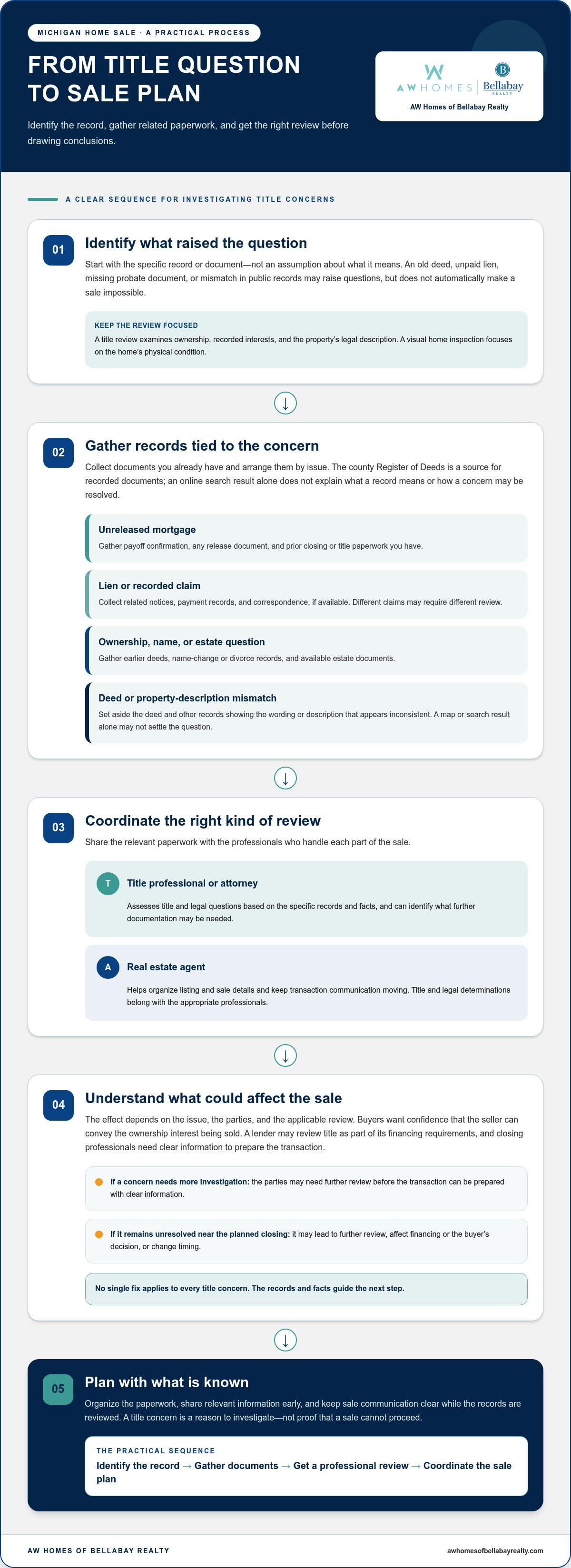
A Step-by-Step Plan to Address Title Issues Before Selling
A clear process can turn an unfamiliar record concern into practical next steps. You don’t need to diagnose the issue yourself. Organize what you know, then share it with the professionals involved in the transaction.
- Identify the concern. Note which record or document raised the question, when you found it, and what seems inconsistent. Describe what you see without assuming it proves a defect.
- Collect available records. Gather the property details and paperwork that may explain the ownership history or recorded interest.
- Share the information early. Provide copies to the appropriate transaction professionals through secure channels, and tell your agent about the concern while planning the sale.
- Obtain a fact-specific review. Title and legal professionals can assess the records and identify whether further documentation or action is needed.
- Plan next steps and timing. Coordinate updates with the parties involved. Keep expectations flexible until the review clarifies the concern.
Documents and details to organize first
Start with the property address, parcel details if available, current deed, and any prior deeds. Note known ownership changes, such as a name change, divorce, inheritance, or transfer involving an estate. These details help reviewers follow the property’s record history.
Also collect mortgage statements, payoff information, release documents, lien notices, relevant estate or divorce paperwork, and prior title or closing paperwork. The county Register of Deeds is a source for recorded documents. Closing professionals can help identify which records are relevant to the transaction. Keep original documents safe and share copies through appropriate secure channels.
Coordinate the review and keep the sale plan realistic
Title and legal professionals assess the documents and explain any fact-specific next steps. AW Homes helps organize listing preparation, coordinate transaction communication, and keep the sale timeline informed as the review progresses. An agent doesn’t make title or legal determinations, and the review may affect the plan in ways that aren’t clear at the outset.
For sellers selling a house with title issues Michigan, early coordination keeps information moving without assuming a particular fix, timeline, or closing result. Keep a record of questions, documents shared, and updates received so everyone involved can work from the same information.
Plan your Michigan home sale with AW Homes and get help organizing listing details and transaction communication.
Selling With Title Issues: How AW Homes Helps Keep the Transaction Organized
A title concern adds another moving part to a home sale. The sale still needs thoughtful preparation, clear communication, and a plan based on what’s known about the property. AW Homes of Bellabay Realty helps sellers organize the listing and transaction process while the appropriate title and legal professionals review ownership and recorded-interest questions.
A coordinated sale plan for a property with a title concern
Sharing the concern early gives your agent a chance to plan with better information. Provide what you know, the documents you’ve gathered, and any review already underway. AW Homes of Bellabay Realty can help track relevant milestones, coordinate transaction updates, and keep the listing process aligned with the available information. This coordination doesn’t determine whether a title concern can be resolved or when a sale can close.
Listing preparation, marketing, and offer discussions can be planned around your circumstances. If a document is still under review, for example, the parties may need to discuss expectations and timing carefully. Your agent can help manage those conversations and the transaction pipeline, while title and legal professionals assess the records and advise on their areas of expertise. Clear roles keep decisions grounded in the facts.
For sellers selling a house with title issues Michigan, an organized process can bring more clarity to a complicated transition. It supports informed planning without promising a particular outcome.
Local guidance for Greater Grand Rapids sellers
AW Homes of Bellabay Realty, led by Angela Worth, works with residential sellers across Greater Grand Rapids, including Grand Rapids, Ada, Caledonia, Forest Hills, and East Grand Rapids. Local market insight helps shape listing preparation and marketing for the property and its neighborhood context. The title review is specific to the property’s documents and circumstances, not the community where the home is located.
A steady point of coordination can help keep the sale’s practical details in view while specialized questions are reviewed. Your goals, preferred timing, property information, and current understanding of the title concern all help inform the plan. Bring the records you already have. You don’t need every answer before beginning to prepare for a sale.
If you’re considering a sale, start by talking through your Michigan home-selling plans with AW Homes of Bellabay Realty. A conversation about your goals and available information can help organize the listing process and identify what needs coordination next.
Move Forward With a Clearer Sale Plan
A title concern doesn’t automatically end a Michigan home sale. First identify what the records raise, gather relevant documents, and arrange appropriate title or legal review. The effect on financing, timing, and closing depends on the specific property and transaction. Early communication helps everyone plan with better information.
If you’re considering selling a house with title issues Michigan, AW Homes can help organize listing preparation, marketing, negotiation, and transaction updates while the appropriate professionals address title and legal questions. Serving Greater Grand Rapids, including Ada, Caledonia, Forest Hills, and East Grand Rapids, AW Homes brings local insight and coordination to an important transition.
Talk through your Michigan home-selling plans with AW Homes and take the next step with a clearer view of your goals and the information you already have.
Frequently Asked Questions
Can I sell a house with title issues in Michigan?
A title concern doesn’t automatically make a sale impossible, but the specific issue and available documents matter. If you’re researching “selling a house with title issues Michigan,” share the concern early with the transaction professionals. A title review can clarify whether more documentation or review is needed and how the issue may affect the buyer, lender, or closing. Don’t assume the sale can proceed unchanged.
What are common title problems when selling a house?
Common concerns include an unreleased mortgage, a recorded lien, a mismatch in an ownership name, an estate or probate question, and an error in a deed or legal description. Each has a different history and may call for a different review. A record that looks inconsistent isn’t, by itself, a legal diagnosis. Gather the relevant documents so the concern can be assessed in the context of the property and sale.
Can I sell a house with a lien on it in Michigan?
Possibly, but a lien may affect the sale, the amount due at closing, or the buyer’s ability to obtain clear title. The result depends on the lien and the transaction. Don’t assume sale proceeds will cover it or that it can be removed automatically. Collect related notices and payoff information, then have the appropriate closing and legal professionals review the records and explain which options may apply.
How do I find out if my Michigan home has a title problem?
Start with your current deed and any prior title or closing paperwork, then identify the county where the property is recorded. The county Register of Deeds maintains recorded property documents, but searching those records alone may not answer every ownership or legal question. A title review can help interpret relevant records and identify additional documents that may be needed, whether your home is in Grand Rapids, Ada, or another local community.
Will a title issue stop a buyer from getting a mortgage?
A title issue may prompt a lender to request clarification or documents, but it doesn’t automatically mean financing has been denied. The effect depends on the concern, the lender’s requirements, and the information available for review. Share the issue early so the relevant parties can understand what’s being assessed. The buyer’s lender and transaction title professionals determine what documentation or resolution the specific sale requires.
Can a title issue delay closing in Michigan?
It can affect closing preparation if ownership records, mortgage releases, or other documents need additional review. There’s no universal timeline because the issue and required responses vary by transaction. Identifying the concern early and organizing available paperwork can help the transaction team see what remains outstanding. This supports realistic conversations with the seller and buyer without guaranteeing a particular closing date.
Should I tell a real estate agent about a title issue before listing?
Yes. Sharing what you know before listing helps your agent plan the sale with better information. Provide available deeds, notices, payoff details, or estate documents, and distinguish confirmed facts from questions still under review. For sellers in Greater Grand Rapids, including Caledonia and East Grand Rapids, an agent can coordinate listing and transaction communication while title or legal professionals assess the records.
Do I need a Michigan real estate attorney to fix a title problem?
It depends on the issue and the documents involved. Some concerns may require legal analysis or professionally prepared documents; others may call for locating or reviewing existing paperwork. A general article can’t determine what your situation requires. Share the concern with the closing professionals handling the transaction and ask what review is appropriate for the facts. An attorney can address legal questions when the circumstances call for that guidance.


