

What if the model home is the easiest part of buying new construction to evaluate? Its polished finishes can make it easy to overlook what the advertised price includes, what the contract commits you to, and how you’ll review the finished home. The mistakes to avoid when buying new construction often start when buyers focus on the staged space instead of the complete purchase.
If you’re considering a new build, it’s reasonable to have questions about construction quality, added costs, delays, and whether the location will suit your life beyond move-in day. A clear process can help you compare options without letting the excitement of a new home crowd out the details.
This guide explains how to assess a builder, compare base prices with included features and upgrades, review contract terms and timelines, and prepare for inspections and the final walkthrough. You’ll come away with a practical plan for evaluating the whole purchase, so your next step feels considered and right for your next chapter.
Key Takeaways
- Look beyond the model home: compare the specific lot, community, and included features with what you saw in the showcase.
- Use a written comparison of advertised features, contract specifications, selection deadlines, and questions before committing.
- The mistakes to avoid when buying new construction often come from assumptions. Review the documents, budget, and timeline as one complete purchase.
- Plan for progress updates, inspections, a careful walkthrough, and clear records of unfinished or overlooked details.
- Balance builder, location, and home priorities against the needs of your next chapter to make a more confident decision.
Buying New Construction: Why the Model Home Is Only the Starting Point
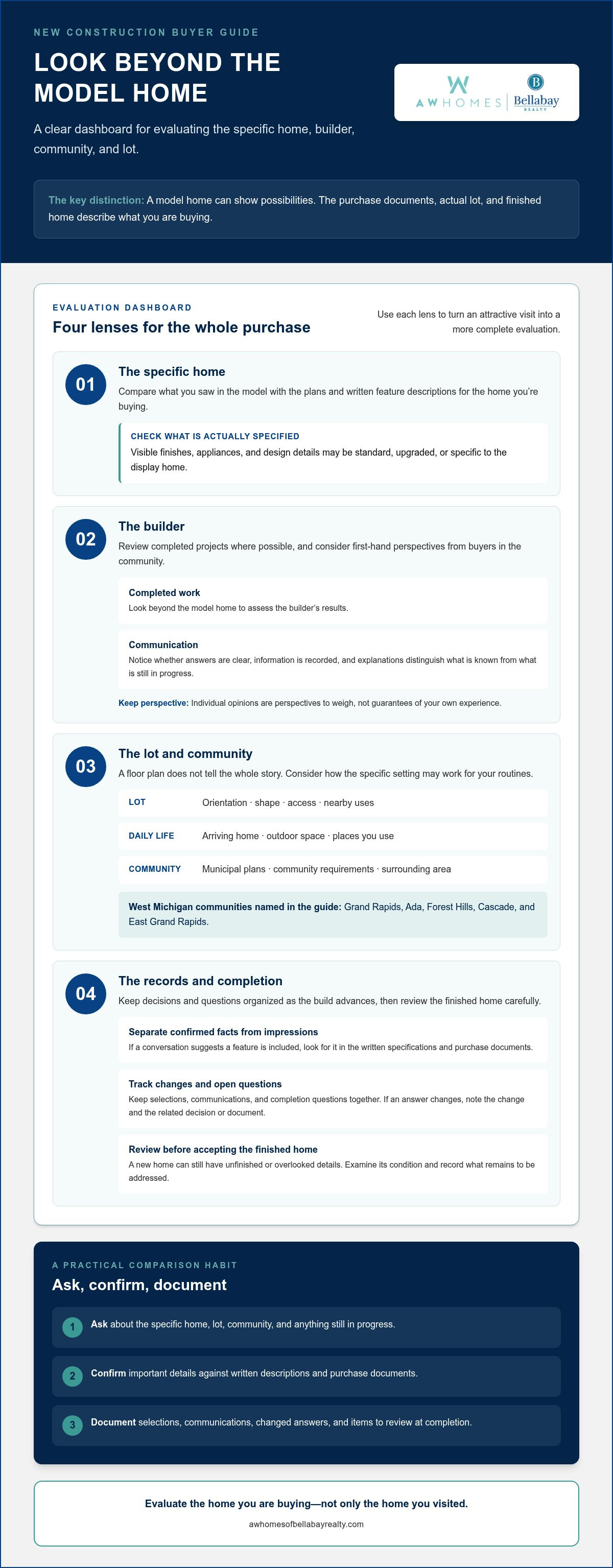
Buying a newly built home means evaluating both a property and a process that may still be underway. You might be choosing finishes before installation, reviewing plans while work continues, or assessing a completed home with details that still need attention. The model home can help you picture the possibilities, but it may not represent the exact home, lot, or package you’re purchasing.
That distinction matters. A staged kitchen may show upgraded counters or appliances, while the advertised price may describe a different set of features. The lot may have a different orientation, shape, or relationship to nearby homes than the one beside the model. One of the mistakes to avoid when buying new construction is treating an appealing visit as a full evaluation. Home Construction Overview offers general background on the stages and methods involved in building a home.
What the model home shows, and what it cannot tell you
A model is useful for seeing room proportions, finishes, and possible design choices. But visible details may be standard, upgraded, or specific to that display home. Compare the actual home’s plans and written feature descriptions with what you saw. Then consider the lot itself: its position, shape, and immediate surroundings can affect how the home feels day to day.
Keep a simple record of questions and answers. If a conversation leaves you thinking a feature is included, look for it in the written specifications and purchase documents. A verbal explanation can clarify what you’re seeing, but it shouldn’t replace the documents describing the home you’re buying.
Why new construction calls for a different kind of preparation
With a completed home, you’re primarily assessing an existing property and its current condition. During an active build, you may also be making selections, following progress, and tracking what remains to be completed. These considerations connect: a documented choice affects expectations, timing can shape when decisions are needed, and completion details influence what to review before move-in.
The process can feel more manageable when you break it into stages instead of trying to resolve every question at once. Start with the home and lot, then organize the documents and decisions tied to them. As construction progresses, keep relevant communications and records together. Before accepting the finished home, review its condition carefully. A new home can still have unfinished or overlooked details.
- Compare: Match the model’s visible features to the specific home’s written descriptions.
- Separate: Note which details are confirmed in documents and which are only impressions from a visit.
- Track: Keep selections, communications, and completion questions organized as the build advances.
A model-home visit is a chance to imagine the possibilities. A complete purchase evaluation examines the specific home, its written terms, its lot, and its condition. That distinction gives you a steadier starting point for the decisions ahead.
Mistakes to Avoid When Evaluating the Builder, Community, and Lot
A new home is only one part of the decision. The builder’s work, the community around it, and the specific lot all shape what you’re buying and how well it may fit your daily life. Looking at these elements separately helps you compare options clearly, rather than letting an attractive floor plan make the decision for you.
Overlooking builder history and communication
Review completed projects where possible, not just model homes. Seeing finished work can help you assess the builder’s results. First-hand perspectives from people who have bought in the community may also offer context about communication and how questions were handled. Treat individual opinions as perspectives to weigh, not as a guarantee of your own experience.
Pay attention to how information is shared. Clear answers, consistent written records, and realistic explanations of what’s known or still in progress can help you understand the decisions ahead. If an answer changes, note the change and the document or decision it relates to. A pattern of unanswered questions or unclear explanations deserves attention before you commit. The goal isn’t to expect a project without complications. It’s to understand how information and concerns are addressed.
Choosing a house before understanding the lot and community
A floor plan can look appealing while the lot changes how you experience the home. Consider its orientation, shape, access, and nearby uses. Think through ordinary routines: how you’ll arrive home, where outdoor space matters, and whether the setting supports the way you spend your time. Lots that look similar on a plan may feel different once you consider their surroundings.
For a West Michigan search, compare communities across Grand Rapids, Ada, Forest Hills, Cascade, and East Grand Rapids based on your priorities. Commute patterns, access to the places you use, and the feel of the surrounding area can matter as much as the home itself. If you’re relocating, the Grand Rapids relocation guide can help frame questions about settling into the region. Review relevant municipal information for plans that could affect the area and community requirements that may shape how you use the property. Don’t assume current surroundings will remain unchanged.
Checklist sentence: Research the builder’s completed work and communication, the community’s plans and requirements, and the lot’s position and fit with your routines.
- Builder: Look at completed work, written information, and how questions are handled.
- Community: Consider nearby uses, relevant municipal information, and how the area fits your priorities.
- Lot: Compare its orientation, access, and setting with the way you expect to use the home.
For buyers weighing West Michigan neighborhoods and new-build options, personalized buyer guidance can help bring these comparisons into focus. A broader review can help you avoid mistakes when buying new construction and keep the decision grounded in the home, its setting, and your next chapter.
Contract, Inclusions, and Upgrades: Avoid Costly Assumptions
A model home can show you what’s possible. The contract and written specifications define what you’re agreeing to buy. Before committing, compare the advertised features with the documents for your specific home, including listed exclusions, selections, and decision deadlines. A finish that catches your eye may be an optional selection, and a feature you assumed was included may be described differently in writing.
Use a comparison table to turn impressions into questions you can resolve before signing. Fill in the written details from the purchase documents, not from memory of a sales conversation.
| Advertised feature | Written specification | Selection deadline | Buyer question |
|---|---|---|---|
| Kitchen appliances | Record the models or features named in the documents | Enter the stated date or milestone | Which appliances are included for this home? |
| Lighting fixtures | Note the listed fixtures and any exclusions | Enter the stated date or milestone | Which fixtures are specified, and what requires a selection? |
| Landscaping | Record the written description of the completed work | Enter the stated date or milestone | What landscaping or completion work is documented? |
Assuming the advertised price includes everything
Don’t treat a headline price or staged room as a complete list of what the purchase includes. Track appliances, landscaping, fixtures, and completion responsibilities only when they’re described in writing. If an item isn’t clear, record the question and note where the final answer appears in the documents. This helps you compare homes on the same basis, rather than weighing one builder’s written package against another’s display features.
Optional finishes can change both the home’s appearance and the overall budget. Different cabinet, flooring, or countertop selections, for example, may create a noticeably different look from the model. List the selections you care about, note their decision deadlines, and consider their combined effect before making choices. Don’t assume an upgrade is included or that it will add value in a particular way.
Signing before understanding the builder’s contract
Review the contract’s timeline, procedures for changes, cancellation terms, and warranty language before signing. These terms vary, so read the actual documents rather than relying on general expectations. Michigan-specific legal questions call for careful verification. Don’t treat a general explanation as a substitute for advice on your circumstances.
Buyer representation can help organize offer details, document review, and transaction questions so you can see how selections, deadlines, and contract terms fit together. For buyers also exploring off-plan developments or ready investments abroad, specialized brokerages like terrafirma.ae offer similar assistance to navigate developer terms and delivery milestones. As you prepare for closing, keep the purchase documents and questions in one place. The mistakes to avoid when buying new construction often begin with assumptions left unwritten. A clear record gives you a steadier basis for decisions.
Inspections, Timeline, and Budget: Build a Practical Buyer Checklist
A new home can still have unfinished work, damage, or details that were overlooked. A steady review process helps you track what’s happening and what remains before move-in. Treat inspection, walkthrough, timing, and budget as connected parts of the purchase, not last-minute tasks.
- Review the documents. Keep the signed agreement, selections, schedule milestones, and written updates together. Note deadlines and any responsibilities described in the documents.
- Track construction progress. Understand how progress updates are shared and record changes to expected milestones. Keep questions and responses in one place.
- Plan inspections. Review the contract’s inspection provisions and organize inspection planning around the build schedule.
- Complete the final walkthrough. Check the home’s visible condition and compare it with the agreed specifications and completion items.
- Save completion records. Keep written records of issues raised, agreed follow-up work, and information provided at completion.
Skipping inspection and treating the final walkthrough as a formality
An inspection and a final walkthrough serve different purposes. An inspection is an opportunity to assess the home’s condition at a point in the process. The walkthrough is a practical review near completion, including visible condition and whether agreed items appear complete. Neither guarantees that no defects exist. If you notice damage, unfinished work, or another concern, document it clearly and keep a written record of the response and any agreed next steps.
Give the walkthrough enough time to check rooms, surfaces, fixtures, doors, and other visible details against your selections and documents. A careful review is more useful than a quick pass through the home.
Underestimating timing and the complete financial picture
Build plans can change, so understand the contract milestones and how you’ll receive progress updates. Note the expected sequence of decisions and completion steps, then record changes as they’re communicated. For a West Michigan purchase, identify which municipality’s information applies to the property. Verify relevant property details, local requirements, and tax information through appropriate current sources rather than assuming they’re identical across communities.
Separate the purchase price from the broader ownership budget. Depending on the property and your plans, categories to investigate may include:
- Financing and closing-related expenses
- Property taxes and insurance
- Utilities and ongoing maintenance
- Appliances, selections, or other items not included in the written specifications
- Moving costs and any immediate household needs
These steps can help reduce mistakes to avoid when buying new construction by making responsibilities, condition, and costs easier to track. For personalized buyer assistance with transaction details, explore buyer support with Angela Worth.
Move Forward With a New-Build Plan That Fits Your Next Chapter
A thoughtful purchase doesn’t require every question to be settled on day one. It does require knowing what’s clear, what still needs an answer, and where each decision is documented. Before you commit, use this readiness check to bring the builder, home, and your priorities into focus.
A final readiness check before you commit
- Builder: Have you reviewed completed work and considered how questions and updates are handled?
- Documents: Can you explain what’s included, what’s optional, what you’re responsible for, and which selections or milestones remain?
- Budget: Have you considered the purchase alongside financing, taxes, insurance, utilities, moving, and ongoing ownership costs?
- Location: Do you understand how the lot and community fit your routines, priorities, and plans for the area?
- Walkthrough: Do you know how you’ll review the home’s condition and record any concerns or completion items?
Pause on any answer that still feels uncertain. Clarify how timing updates will be shared, which location or property details need further review, and how choices could affect your overall budget. Keep agreements, selections, and important decisions in writing as the process moves forward. That record helps you return to the details instead of relying on memory during a busy transition.
Your life stage can shape the right trade-offs. A household planning for more space may prioritize a different layout than someone seeking a simpler move or relocating for a new opportunity. For those contemplating an international move or a sunny retreat, regional specialists such as Spaindinavia guide buyers through local communities and property considerations abroad. Consider which features matter every day, which are preferences, and where flexibility makes sense. A good plan reflects your priorities, not just the most impressive model-home details.
Personalized buyer support for West Michigan
For a consequential purchase, personalized buyer assistance can help bring order to offers and transaction details. Angela Worth of AW Homes of Bellabay Realty brings local knowledge of Grand Rapids, Ada, Forest Hills, Cascade, and East Grand Rapids to buyer guidance shaped around each person’s needs. She has 9+ years of real-estate experience, and AW Homes has completed 250+ West Michigan transactions. Angela also has a 5.0 ★ Zillow rating with 50+ client reviews.
As you consider mistakes to avoid when buying new construction, remember that a confident decision comes from understanding the whole purchase and how it fits the life you’re building. Explore personalized buyer assistance with Angela Worth when you’re ready to consider your next step. Your Life. Your Home. Your Peace of Mind.
Take Your Next Step With Clarity
A new build can be an exciting part of a life transition, but you don’t have to make every decision at once. Start by naming what matters most in your next home, then use those priorities to guide your questions and the trade-offs you’re willing to make. That gives you a steadier basis for moving forward than trying to find a home with every possible feature.
The mistakes to avoid when buying new construction are easier to recognize with a thoughtful plan and support through the decisions ahead. If you’re considering a new build in West Michigan, explore buyer assistance with Angela Worth for personalized guidance through offers and transaction details.
Your Life. Your Home. Your Peace of Mind. Take the next step at your own pace, with a plan that feels right for you.
Frequently Asked Questions
For buyers comparing new construction in Grand Rapids, Ada, Caledonia, and East Grand Rapids, compare the complete home and purchase, not just one headline figure.
Is buying new construction more expensive than buying an existing home?
Not necessarily. The overall comparison depends on the specific home, its location, included features, and your priorities. An advertised price may not reflect optional selections or every cost of ownership. Compare homes with similar size, location, and features, then consider how each fits your needs and plans. Review documented inclusions before deciding, and don’t assume new or existing homes are always the less expensive choice.
Can you negotiate the price of a new construction home?
Possibly, but negotiation depends on the builder, specific home, timing, and contract terms. Evaluate the full written offer, including documented features, selections, deadlines, and other terms, instead of focusing only on the headline figure. One of the mistakes to avoid when buying new construction is assuming a discount is available or guaranteed. Buyer representation can help you understand the offer and consider how its terms align with your priorities.
How long does it take to buy a new construction home?
There’s no single timeline: a completed home may follow a different path from one still being built. The construction stage, contract schedule, and documented completion milestones all affect timing. Before committing, understand which steps remain and how progress updates will be communicated. If you’re coordinating a move to West Michigan, include your household’s transition plans, and don’t rely on an informal estimate as a firm completion date.
Can I use my own lender when buying a newly built home?
Your financing options depend on the purchase documents and your lender’s terms, so review both before deciding. Read any builder-related financing language and compare the complete terms that apply to your situation, including any conditions tied to an advertised incentive. Don’t assume a particular lender is required or that an incentive applies to every buyer. If a financing term is unclear, discuss it with your lender before making your decision.
What should I know about property taxes on a new construction home in Michigan?
Property tax details depend on the specific property and applicable local assessment information. For a home in Grand Rapids, Ada, Caledonia, or East Grand Rapids, review available property-specific records and direct current questions to the appropriate local assessing authority. Don’t assume information from another municipality applies to your home or that an estimate reflects the final tax details. For tax questions specific to your circumstances, consult a qualified tax professional.
Can I make changes to a new home after construction has started?
Changes may be possible, but they depend on the builder’s process, construction stage, contract terms, and written change procedures. A selection made early may involve different decisions from a request made after related work is scheduled or underway. Before choosing finishes or requesting a change, understand the applicable deadline and how the request must be documented. Don’t assume a change will be accepted or that its effect on the project is known without written details.


