

What if your home’s strongest first impression came from editing what’s already there, not buying new furniture? The best affordable home staging ideas help buyers see a home’s spaces and features clearly. In the National Association of Realtors’ 2025 Profile of Home Staging, 83% of buyers’ agents said staging made it easier for buyers to picture a property as their future home.
It’s understandable to worry that staging means hiring a professional or redesigning every room. Often, a thoughtful reset can make a noticeable difference: clear clutter, soften personal touches, improve lighting, and give each room an obvious purpose. The goal isn’t to erase your home’s character. It’s to create a clean, welcoming presentation that lets buyers imagine their own lives there.
In this guide, you’ll find practical, low-cost ways to prioritize the rooms and details buyers notice, using what you already own wherever possible. You’ll also learn how to prepare your home for listing photos and showings without taking on a full redesign. A focused staging plan can help you make confident choices as part of your overall listing preparation.
Key Takeaways
- Use affordable home staging ideas to help buyers understand each room without committing to a full redesign.
- Prioritize the living room, kitchen, main bedroom, and entry for visible, practical improvements.
- Decide what to tackle first by weighing each change’s visibility, effort, reversibility, and relevance to your home.
- Follow a simple walk-through, edit, clean, arrange, and review sequence to prepare rooms before listing.
- Connect staging choices to your listing plan so professional photography can showcase the home clearly to prospective buyers.
Affordable Home Staging Ideas Start with a Buyer-Focused First Impression
Home staging presents a property so buyers can understand its spaces, features, and potential uses. Effective affordable home staging ideas don’t require a remodel or a new furniture set. They focus on editing belongings, cleaning thoroughly, making the most of natural and artificial light, and arranging furniture so rooms are easy to navigate. For a broader overview of staging’s purpose and common techniques, see Home Staging on Wikipedia.
Think of staging as a temporary presentation, not a renovation. Arrange what’s already there and make small, reversible adjustments, such as removing excess items or shifting a chair away from a doorway. The goal is to help buyers notice the home’s existing features, not to suggest staging guarantees a particular offer or sale result.
What buyers need to notice when they walk in
A welcoming first impression begins with the way a room reads at a glance. Clear pathways make it easier to move through the home, while open surfaces and a defined purpose help buyers picture where they might sit, eat, work, or rest. In a Grand Rapids home with a flexible dining area, for example, a simple table arrangement can show how the space functions without adding extra décor.
Personal collections and surplus furniture can pull attention away from those details. A crowded corner may make a room feel smaller, while keepsakes can compete with a distinctive window or built-in shelving. Edit selectively rather than stripping the home of all personality. Keep a few intentional accents, and let the room’s layout and features take the lead.
A tidy, clearly arranged room is easier to understand during a showing because buyers can focus on its purpose, proportions, and features. That clarity supports a stronger presentation, but it doesn’t promise a specific sale outcome.
Set a staging budget before buying anything
Start with a no-spend walk-through. Write down what you can do with time and the belongings you already own before considering purchases. This keeps your staging budget focused on genuine needs instead of turning preparation into an open-ended decorating project.
- Declutter: Remove items that crowd walkways, work surfaces, or storage areas.
- Clean: Address visible dust, smudges, and everyday buildup that can distract during a showing.
- Rearrange: Test furniture positions that improve movement and make the room’s purpose clear.
After these free tasks, set a spending limit for any remaining improvements. Consider each possible purchase by asking: Can buyers see the issue? Does this item solve a real presentation problem? Does it suit the home rather than impose a new style? A simple lamp may make a dim corner feel more usable; a decorative item may add little if the space is already clear. Local real estate guidance can also help you prioritize presentation choices for your home and its likely audience as part of the broader listing plan.
Low-Cost Staging Ideas for Living Rooms, Kitchens, and Bedrooms
Once you’ve decided what to keep, use each room’s existing furnishings to make its purpose easy to read. Focus on spaces buyers are likely to examine closely: the living room, kitchen, main bedroom, and entry. Small adjustments can make these rooms feel more open and cared for without replacing furniture or adding a new design scheme.
The National Association of REALTORS® reports that 83% of buyers’ agents said staging helped buyers visualize a property as their future home. That doesn’t mean every room needs a makeover. These National Association of REALTORS® home staging findings reinforce the value of a clear, purposeful presentation, which can often start with the belongings you already have.
Refresh shared spaces with what you already own
In the living room, remove a chair or side table if it interrupts the route through the space. Try angling seating toward a natural focal point, such as a fireplace or window, while leaving enough room to walk comfortably. The arrangement should show how the room works, not how much furniture it can hold.
In the kitchen, clear enough counter space to make the work surfaces visible. Put away appliances and loose items you don’t use every day, but leave a practical touch, such as a fruit bowl, if it suits the room. Wipe counters and cabinet fronts, then open blinds or curtains to bring in daylight. At the entry, relocate shoes, bags, and mail. A clear landing spot and unobstructed doorway make arrival feel simpler.
Make bedrooms feel calm and easy to understand
Use clean, simple bedding already in the home, and clear bedside surfaces except for a few useful items. If a dresser, chair, or storage piece makes it difficult to move around the bed, try another position or temporarily remove it. Buyers should be able to see the available floor space and understand how the bedroom can function.
Give closets a quick edit, too. Arrange hanging clothes with some breathing room and clear items from the floor so storage is easier to assess. The aim isn’t to empty the closet; it’s to avoid presenting it as already overfilled.
Clear the surfaces, open the pathways, and arrange furnishings around each room’s purpose. These simple actions help a home feel more intentional without requiring a whole new look. Take a quick phone photo after each adjustment; the frame can reveal a blocked route or crowded corner that’s easy to miss in person.
As you prepare to list, connect these room-by-room choices to the overall marketing plan. AW Homes of Bellabay Realty provides local listing guidance to help Grand Rapids sellers prioritize presentation for their home and prospective audience.
Which Affordable Staging Changes Are Worth Doing First?
The best place to start isn’t the shopping list. It’s the room that currently creates the most friction for a buyer. A simple decision framework can help you compare no-cost tasks, selective purchases, and optional professional support without letting preparation become an open-ended project. Consider each possible change through four lenses: visibility, effort, reversibility, and relevance to the home’s current condition.
- Visibility: Will buyers notice the issue in person or in listing photos?
- Effort: Can you address it with a quick reset, or does it need more time and planning?
- Reversibility: Can you easily undo the change after showings?
- Relevance: Does it solve a real presentation problem in this home?
A change that is visible and relevant, takes little effort, and is easy to reverse is often a sensible first step. This approach to evaluating different home staging approaches can help you decide whether a DIY adjustment is enough or whether additional guidance would be useful. No staging choice guarantees a faster sale or a higher offer; it supports a clear, considered presentation.
Free improvements versus selective purchases
Begin with tasks that cost nothing: declutter, clean, open curtains, and rearrange existing furnishings. Then pause and review the space. If the room still has a specific problem, consider a small, practical purchase, such as a replacement light bulb for a dim fixture or a simple neutral accent that balances an empty surface.
Skip items that add decoration without clarifying the room or addressing a visible gap. A new throw pillow won’t solve a blocked walkway, and extra accessories may create more visual clutter. Professional support can help you set priorities when you’re unsure which changes matter most, but it should complement a plan based on the home’s actual needs, not push you toward a full redesign.
Keep repairs and safety concerns separate from staging. A loose handrail, damaged step, or malfunctioning fixture shouldn’t be hidden behind décor or treated as a cosmetic issue. Address the concern appropriately, then stage the surrounding area so it remains easy to see and use.
Choose priorities for your home and West Michigan audience
Room use, natural light, and the season can change what deserves attention. In a darker winter showing, for instance, clean windows, open curtains, and working lamps can help buyers see the room more clearly. In wet-weather months, a crowded entry may need a better place for footwear and coats so the area feels orderly. These are practical adjustments, not a reason to buy an entirely new set of furnishings.
A home’s layout matters, too. An open living and dining area in Greater Grand Rapids may need furniture arranged to show how the zones connect, while a smaller room may benefit more from removing one bulky piece. For broader preparation decisions, the strategic Forest Hills home-selling guide connects presentation choices with the larger listing process. Prioritize what buyers can see, what the home needs, and what you can change with confidence.
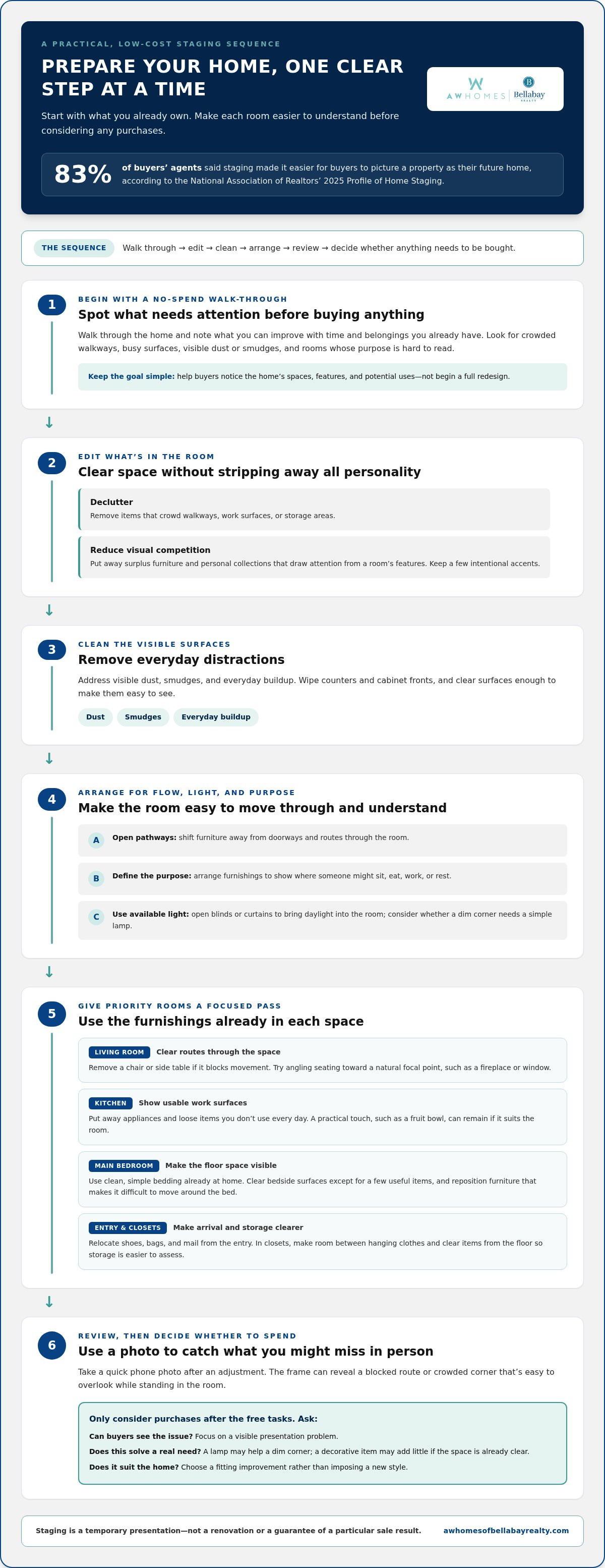
A Simple, Affordable Home Staging Plan Before Listing
A clear sequence keeps preparation manageable and helps prevent last-minute styling from getting in the way of more important tasks. Walk through the home first, then edit, clean, arrange, and review each room. This approach lets you make decisions in order, use what you already have, and focus effort where it will be most visible before listing photographs and showings.
Work through the home in a practical order
Start at the entry and main living areas, where buyers begin understanding the home’s layout. Continue through bedrooms, then address secondary spaces such as a home office, laundry area, or finished basement. Complete essential cleaning and simple maintenance before styling surfaces. Keep personal documents, medications, valuables, and sensitive items securely stored before showings.
- Walk through: Note clutter, dim areas, unfinished cleaning, and furniture that makes movement difficult. Focus on what you can see and experience as you enter each room.
- Edit: Remove items that crowd counters, floors, shelves, and walkways. Put away personal papers and belongings that shouldn’t be accessible during a showing.
- Clean: Dust, wipe visible surfaces, and take care of everyday buildup. Finish straightforward maintenance before adding decorative touches, so styling doesn’t conceal a task that still needs attention.
- Arrange: Reposition furniture to show how each space can be used. Check that doors open fully and common routes through rooms remain clear.
- Review: Look at every room as if seeing it for the first time, then adjust anything that feels crowded, distracting, or unclear.
Review the presentation with fresh eyes
After arranging a room, stand in the doorway and take a photograph. A phone photo gives you a different perspective: clutter that blends into the room in person may become obvious in the frame, and a chair or lamp may block a feature you meant to highlight. Review the images one at a time, then make only the adjustments that improve clarity.
- Surfaces: Check that counters, tables, and bedside areas look clean rather than overloaded.
- Lighting: Open curtains where appropriate and make sure the room’s lighting is ready for photographs and showings.
- Pathways: Confirm that buyers can move through the space without weaving around furniture or belongings.
- Personal items: Put away sensitive belongings and reduce distractions that draw attention away from the room.
Walk, edit, clean, arrange, and review before the listing photos are taken. This simple rhythm helps sellers put affordable home staging ideas into practice without turning preparation into a full redesign.
Market information can offer useful context, but each home still calls for decisions based on its layout, condition, and intended presentation. The Grand Rapids real estate market outlook can help frame the broader picture, while home-specific guidance keeps preparation relevant. AW Homes of Bellabay Realty offers listing preparation guidance to help align these steps with your plan.
Bring Affordable Staging Ideas into Your Listing Strategy
Staging is one part of preparing and marketing a home, not a promise of a particular sale price or timeline. Its role is practical: help prospective buyers understand the property’s rooms and features, both in person and in listing materials. The right level of preparation depends on the home’s condition, layout, and intended presentation. A focused plan can make affordable home staging ideas useful without turning them into a full redesign.
Coordinate staging with listing photography
Before the photography session, consider what each image needs to communicate. Clear sightlines can draw attention to a window, fireplace, or open connection between rooms. Uncluttered counters and tables help photographs show the space itself, while furniture arranged with a clear purpose makes it easier to understand how a room might be used. These details matter because buyers often encounter a listing through its marketing before they visit.
Complete the main staging edits before the photographer arrives, then keep the setup consistent for showings. If a chair is moved to open a walkway for photos, avoid shifting it back into a position that makes the room feel crowded. A final walkthrough helps catch small changes, such as items left on counters or curtains drawn across a bright window.
Photography works best as part of a broader selling plan. The Forest Hills home-selling guide provides wider listing-preparation context, while presentation choices should still reflect the features and condition of your specific home.
Make the next step feel clear and manageable
You can begin with the furniture and belongings already in your home. Identify the changes that will make rooms easier to understand, complete those first, and hold off on purchases that don’t solve a clear presentation need. This keeps preparation intentional and leaves room to adapt if a particular feature deserves more attention.
For sellers in Greater Grand Rapids, local listing guidance can connect staging priorities with the property’s marketing plan and likely audience. AW Homes of Bellabay Realty, led by Angela Worth, incorporates professional photography and market positioning into its residential listing services. That perspective can help you decide which presentation details to emphasize and how they fit into the wider process of bringing a home to market.
You don’t need every detail decided before planning your sale. Start with a clear view of the home, its current condition, and the impression you want its listing to make. If you’re preparing to sell in Greater Grand Rapids, plan your home sale with AW Homes and discuss how staging priorities fit your overall listing strategy.
Prepare Your Home for Its Next Chapter
Your listing presentation is a chance to help buyers connect with the home while giving you a clear path into your next chapter. You don’t need to make every room look different. Choose the affordable home staging ideas that fit your property, then consider how those choices work alongside photography, marketing, and your overall plans for selling.
A thoughtful strategy can help you decide where to focus, what to leave as it is, and how to prepare without adding unnecessary stress. With local guidance, those decisions can reflect the home’s character and the audience you hope to reach across Greater Grand Rapids.
To shape a listing plan around your home and goals, plan your home sale with AW Homes of Bellabay Realty. A clear first step can make the transition ahead feel more manageable, and your next chapter more within reach.
Frequently Asked Questions
What are the most affordable home staging ideas?
The most affordable home staging ideas are usually simple changes that make the home easier to experience, such as removing excess belongings, washing windows, and improving how a room is lit. Start with anything that distracts from a feature buyers might value, like a sunny breakfast nook or original woodwork. Then review your work at different times of day, since daylight and shadows can change how a room feels.
Can I stage my home without buying new furniture?
Yes, you can stage a home with the furniture you already own. Try temporarily swapping pieces between rooms, removing a bulky item, or turning a desk to make its work area clearer. Borrowing a useful piece from another room can also help define an underused space without creating a new expense. Keep a note of where items belong so you can restore everyday arrangements after the sale process.
Which rooms should I stage first when selling a home?
Start with the rooms that make the home’s layout and daily use easiest to understand, usually the main living area, kitchen, and primary bedroom. Then assess the entry and any distinctive spaces, such as a sunroom or finished basement, that may shape a buyer’s impression. In Grand Rapids, Ada, Caledonia, or East Grand Rapids, the best order depends on the individual home and which spaces are most prominent in its listing.
How do I make a small room look bigger for showings?
To make a small room feel more open, keep its floor visible and avoid placing furniture across the natural route from the doorway. Use one clear focal point rather than several competing decorations, and leave the window area unobstructed when possible. A mirror can reflect light if it fits naturally, but don’t add one just to create an effect. Buyers should be able to see the room’s real proportions.
Is home staging worth it if I have a limited budget?
Staging can still be worthwhile on a limited budget if you focus on presentation issues buyers are likely to notice. You might decide that a thorough clean and a furniture adjustment matter more than buying décor. Consider the home’s current condition and the effort each change requires before spending. Staging supports marketing by clarifying the property, but it can’t guarantee an offer, sale price, or timeline.
Should I stage my home before listing photos?
Yes, prepare the home before listing photos so the images reflect the way you want buyers to understand its spaces. Before the session, check less obvious details in the camera frame, such as cords, reflections in glass, and items at the edges of counters. Ask household members to keep frequently used belongings in one designated spot during photography and showings. This makes it easier to maintain a consistent presentation.
Does affordable home staging mean I need to paint every room neutral?
No, affordable staging doesn’t require repainting every room. Consider paint only if a color is damaged, strongly distracting, or makes the room difficult to present consistently with the rest of the home. You can often soften a bold look by editing nearby décor and keeping furnishings simple. If you’re unsure whether a particular room needs a larger change, weigh that decision against its condition and the overall listing plan.


