

A seller-paid home warranty can reassure buyers, but the seller does not automatically have to absorb the cost. In U.S. transactions, sellers traditionally pay when they offer a warranty during the purchase process, though the parties can negotiate it as a concession.
Buyers may value coverage for major systems and appliances, especially in an older home, but a warranty’s usefulness depends on its terms and exclusions. This guide explains who typically pays, what coverage may include, how long it lasts, and when offering a plan could help address buyer concerns. It also covers the trade-offs to consider before making a warranty part of your selling strategy.
Key Takeaways
- Review the contract’s coverage period and exclusions so you understand what protection a buyer would actually receive.
- Maintenance history, pre-existing problems, and issues found during an inspection can affect whether a system or appliance is covered.
- A warranty may ease buyer concerns about older systems and appliances, but its usefulness depends on the plan’s terms.
- Consider how a warranty fits your selling strategy, then weigh its potential buyer appeal against its costs and limitations.
How much do home warranties cost for sellers?
The price depends on the coverage level and location.
Coverage commonly includes HVAC, electrical, and plumbing systems, along with major kitchen and laundry appliances. Buyers concerned about an older furnace, water heater, or dishwasher may appreciate having a service contract in place. But coverage has limits: the contract may cover repairs rather than replacement, and the warranty company may decide which remedy applies.
Plans vary in covered items, optional add-ons, and service fees. Compare those details with the home’s condition and buyer concerns before choosing a plan.
| Option | Typical cost or fee | Coverage focus |
|---|---|---|
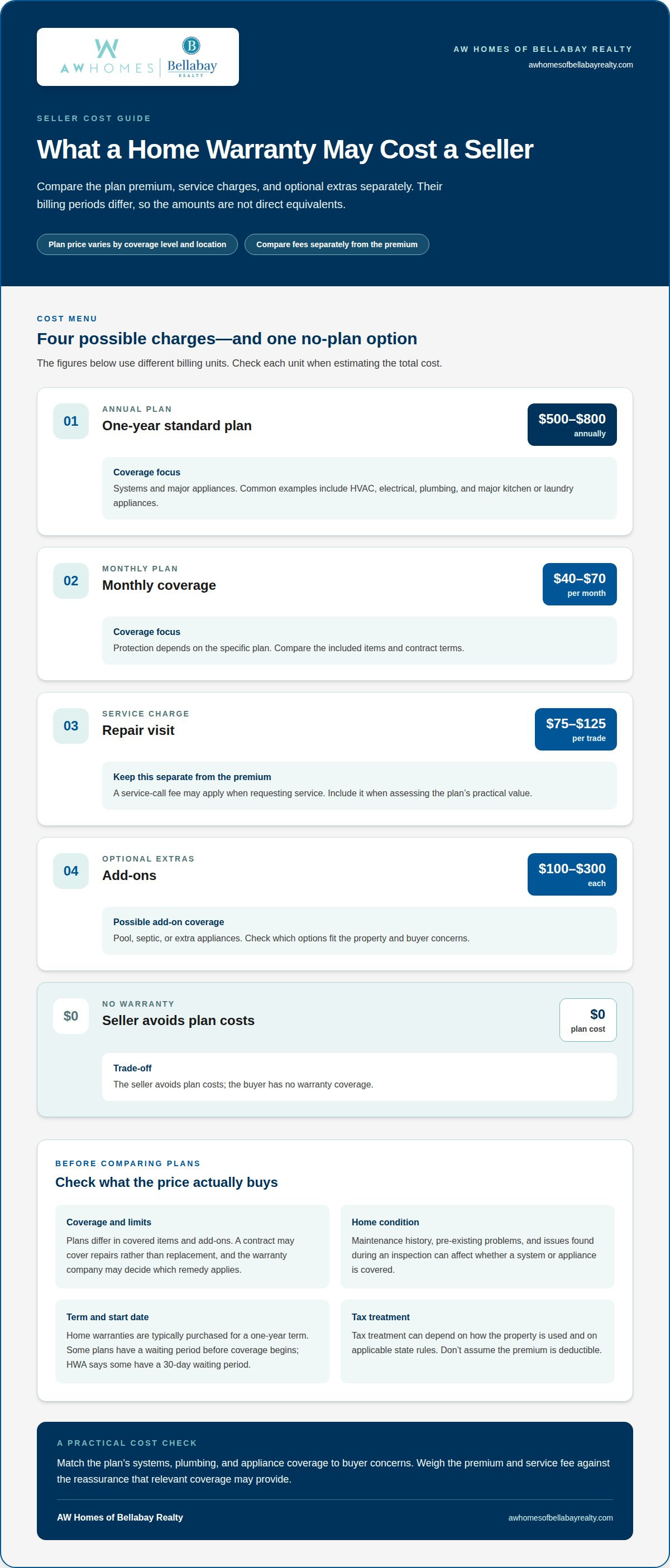
| One-year standard plan | $500 to $800 annually | Systems and major appliances |
| Monthly coverage | $40 to $70 per month | Plan-dependent protection |
| Repair visit | $75 to $125 per trade | Service call charge |
| Optional add-ons | $100 to $300 each | Pool, septic, or extra appliances |
| No warranty | $0 | Seller avoids plan costs; buyer has no warranty coverage |
Tax treatment can depend on how the property is used and on applicable state rules, so don’t assume the premium is deductible. When estimating the total cost, distinguish the warranty premium from any repair charges.
Match the plan’s HVAC, plumbing, and appliance coverage to concerns buyers have raised. Then weigh the premium and service fee against the reassurance that relevant coverage may provide through AW Homes of Bellabay Realty.
How Long is a Home Warranty Coverage Period?
Home warranties are typically purchased for a one-year term. Some plans have a waiting period before coverage begins. HWA says some home warranties have a 30-day waiting period, which matters if a system fails soon after enrollment. Match the start date and term to the expected selling timeline, rather than assuming protection begins immediately.
A seller’s warranty may offer financial protection against eligible malfunctions while the home is listed. Whether a repair qualifies depends on the contract’s effective date, covered items, and exclusions. Treat any free listing-period coverage as included only if the plan terms say so.
Heating and cooling, water heaters, indoor plumbing, and indoor electrical systems commonly appear in coverage. Commonly covered appliances include stoves, ovens, dishwashers, garbage disposals, and built-in microwaves. Plans may offer add-ons for pools, spas, roof leaks, HVAC tune-ups, well pumps, or extra appliances. Each option has its own terms, so compare them with the property’s needs.
Exclusions can matter as much as covered items. Plans may exclude pre-existing problems, issues identified during a home inspection, structural damage, outdoor plumbing, and roofs. Appliances or systems that haven’t been properly maintained may also be excluded. The warranty company may arrange a repair instead of replacement, and the homeowner may not control that decision. Include any service-call fees when assessing the plan’s practical value.
To choose a reputable company and suitable plan, compare the written coverage, exclusions, waiting period, service fees, and repair-versus-replacement terms. Focus on systems and appliances relevant to the home, such as an older furnace or built-in oven, and consider how long the property is expected to remain listed.
Seller-offered home warranties as a buyer incentive
A seller-paid warranty may make a listing more appealing by addressing concerns about unexpected system or appliance failures. Its value depends on the coverage and whether the buyer can use it after closing.
Buyer Incentives and Peace of Mind
A warranty gives buyers a defined way to request service for covered breakdowns, which may offer peace of mind during their first year of homeownership. It may be especially relevant when a home has older appliances or major systems. Unlike an incentive that changes the purchase price, a warranty provides access to coverage and a contractor network for eligible repairs.
A seller may offer a warranty to attract offers or help reduce the time a property spends on the market. It may also help keep a transaction moving when an inspection raises minor concerns. Sellers may offer coverage for one or two years, but the contract’s limits determine how useful it is to buyers.
Warranty Transfer at Closing
If the seller’s plan allows transfer, coverage may continue for the buyer after closing. Transferability matters because it can extend potential protection beyond the seller’s time in the home. The plan may also charge a transfer fee, which adds to the seller’s total cost.
Before presenting a warranty as part of an offer, establish whether the contract permits transfer and whether a fee applies. Clarify what coverage continues and when the buyer can use it. A nontransferable warranty may still be useful while the home is listed, but it won’t provide the same post-closing benefit.
Buyers benefit most when the plan addresses concerns specific to the property, such as an older water heater or included kitchen appliances. A warranty doesn’t promise to cover every repair or replacement; the contract defines eligible service. Clear expectations help buyers understand that a warranty is not a guarantee that all home systems will work without unexpected costs.
For sellers, the decision depends on timing, buyer concerns, and usable coverage. A plan may support marketing before an offer and reassure buyers after closing if it transfers. Compare the listing-period benefit with the value of continued buyer coverage, and include the warranty terms in the transaction discussion.
Who pays for a home warranty in a real estate transaction
In a U.S. real estate transaction, sellers traditionally pay for a home warranty when it’s offered as a purchase incentive. That’s customary, not automatic: the buyer and seller can negotiate who pays, and the seller can offer the warranty as a concession. Make the payment arrangement clear in the purchase agreement.
When the seller pays, they take on the plan cost to offer buyers coverage. With a buyer-paid plan, the buyer covers that cost instead. The difference is who funds the contract, not necessarily what it covers. The warranty company sets the coverage terms, so the payment arrangement alone doesn’t determine which systems or appliances qualify.
Considering a warranty alongside a repair credit? They serve different purposes. A warranty provides access to service for covered breakdowns under the contract’s terms. A repair credit is a negotiated transaction concession, not a service contract with a contractor network. A real estate agent can help frame the options around buyer concerns and the seller’s negotiating position.
For example, if buyers are concerned about an older water heater, the parties could discuss a seller-paid warranty, a buyer-paid plan, or a repair credit. A warranty may provide coverage after closing if the contract permits transfer. A credit instead addresses the agreed transaction terms without creating ongoing warranty coverage. Compare the buyer’s preferred support, the contract’s actual coverage, and the seller’s willingness to contribute.
Before agreeing, identify who pays, which plan applies, and whether coverage transfers at closing. Put the arrangement in the transaction documents so both parties understand it. This can prevent confusion about whether the seller pays the home warranty company directly or contributes through a negotiated concession.
For guidance weighing the purchase terms and buyer needs, discuss your real estate options.
AW Homes of Bellabay Realty: Real Estate Investment Consulting
AW Homes of Bellabay Realty offers Real Estate Investment Consulting to homeowners weighing a sale as part of a broader property decision. If you’re deciding whether a warranty belongs in your selling strategy, investment guidance can help you consider that choice alongside the home’s condition, buyer concerns, and transaction goals.
For a planned sale, Residential Listing Services provide guidance through the listing process. If you’re buying, Buyer Agency Services can support your evaluation of a property and its terms. The right next step depends on where you are in your move and the decisions ahead.
Contact AW Homes of Bellabay Realty to discuss your real estate plans.
Make your next move with confidence
Selling a home is also a transition, so the warranty decision should support what comes next. A careful assessment of the home warranty pros and cons for sellers can help you choose an approach that fits your priorities, the property, and buyer concerns. Then focus on the larger move: preparing to list, finding your next home, or relocating in West Michigan, including Grand Rapids, Ada, Caledonia, or East Grand Rapids.
AW Homes of Bellabay Realty offers Residential Listing Services for sellers preparing to bring a property to market, Buyer Agency Services for people searching for a home, and Relocation Assistance for those planning a move. The right guidance can connect today’s transaction with what comes next while keeping your goals in view.
Connect with AW Homes of Bellabay Realty to discuss your next step. A thoughtful plan can make the transition feel clearer and more manageable.
Frequently Asked Questions
I’m Selling My House - Should I Offer a Home Warranty at Closing?
Offer a warranty when the coverage addresses a concern that matters to prospective buyers and the terms are clear. To weigh the home warranty pros and cons for sellers, consider the premium, exclusions, service fees, and transfer terms together. If buyers are concerned about an older water heater, for example, a warranty may provide a service option for eligible breakdowns. If the plan doesn’t address their concern, another concession may be more useful.
What are the pros of offering a home warranty when selling a house?
A seller-offered warranty gives buyers a defined process for seeking service on covered systems or appliances after purchase. That may make an older home feel less uncertain, especially for first-time homeowners budgeting for unexpected repairs. It may also support negotiations when an inspection raises minor concerns. Its value comes from relevant coverage and clear expectations, not a promise that every repair will be paid.
What are the cons and risks of a seller-paid home warranty?
The seller pays for a contract whose exclusions may limit what the buyer can claim. Pre-existing issues, inspection findings, and poorly maintained equipment may fall outside coverage. A service fee may apply, and the warranty company may authorize a repair instead of replacement. If buyers expect a new appliance or guaranteed repair, unclear expectations can lead to frustration. Review the plan’s limits before offering it.
How much does a home warranty cost for home sellers in the U.S.?
Coverage level and location affect the premium. Repair visits may also carry a separate service fee of . Optional coverage for items such as pools, septic systems, or extra appliances may add to the cost, so assess the full plan expense rather than the premium alone.
Who pays for a home warranty at closing, and is the cost negotiable?
Sellers traditionally pay for a warranty offered as an incentive during a U.S. home purchase, but the cost is negotiable. The parties can agree that the buyer pays or include the seller’s contribution as a concession. For example, an offer can identify who funds the plan and whether it transfers at closing. Putting those terms in the transaction documents helps both parties understand the agreement.
Can a home warranty help attract buyers or reduce post-sale disputes?
A warranty may help attract buyers by offering a service option for eligible breakdowns, particularly when older systems or included appliances raise concerns. The home warranty pros and cons for sellers depend partly on clear expectations. A warranty may help keep a transaction moving after minor inspection findings, but it doesn’t guarantee fewer disputes or resolve every disagreement. Exclusions and repair limits still apply, so buyers shouldn’t mistake it for a promise of full repairs or replacement.


