

A home warranty can be a poor buy even when a home’s systems are aging. Whether you should get a home warranty as a buyer depends on the condition of covered appliances and systems, the contract’s limits, and how comfortably you could handle a repair bill yourself. It isn’t required when you buy a house, and it won’t cover every problem.
It makes sense to want some protection as you take on a new home, especially when your savings are already committed to the move. But a warranty is a service contract, not a substitute for homeowners insurance or a guarantee that every repair will be paid for.
This guide explains how buyer home warranties work, how premiums and service-call fees affect the cost, and which exclusions matter. You’ll learn when a plan may help with repair expenses and when setting money aside or relying on existing coverage may be more practical.
Key Takeaways
- Identify which appliances and home systems a plan covers, then weigh its exclusions and payout limits against the home’s condition.
- Understand how service requests, contractor visits, and coverage caps can affect what you pay when a covered item breaks.
- Consider skipping a warranty if you can set aside repair savings or the home’s existing coverage already addresses likely problems.
Are home warranties actually worth it, or just a waste of money?
A home warranty plan may help pay for repair or replacement when covered appliances or systems break through normal wear. Whether it’s worthwhile depends on the contract, the home’s existing coverage, and the condition of its equipment.
Do home warranty coverage and consumer protections vary by state? Yes. State consumer-protection rules can differ, so contract requirements and available remedies may not be identical across the United States.
Appliance and System Coverage
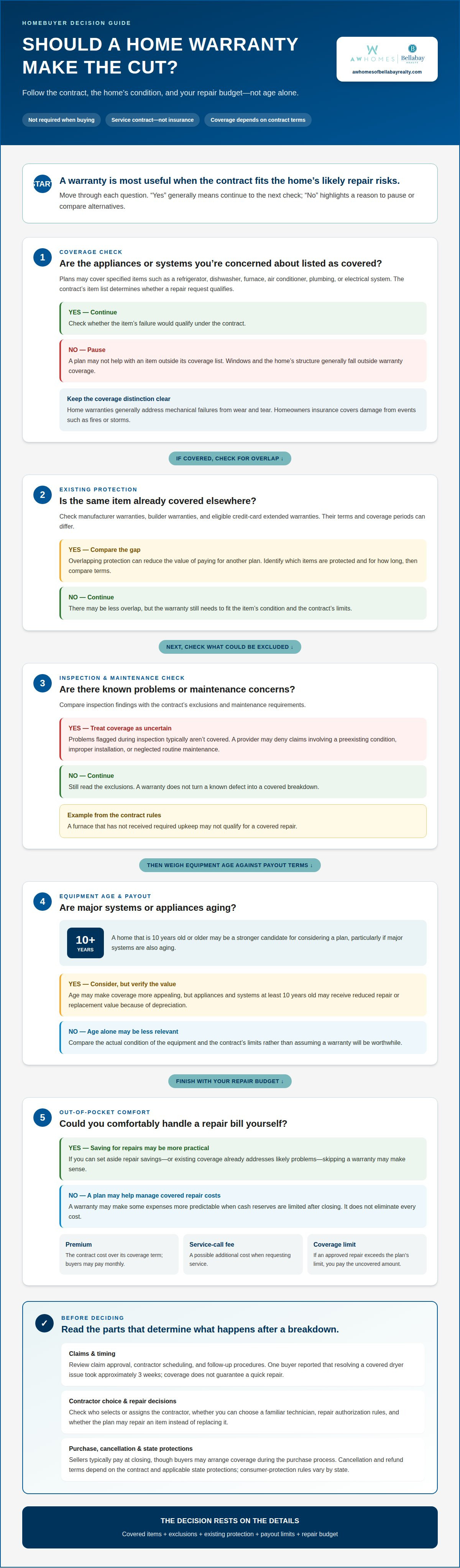
A home warranty is a service contract that can cover specified household appliances and major systems after a mechanical failure. Depending on the plan, covered items may include a refrigerator, dishwasher, furnace, air conditioner, plumbing, or electrical system. The contract’s item list determines whether a repair request qualifies.
Home warranties generally address failures caused by wear and tear, while homeowners insurance covers damage from events such as fires or storms. Windows and the home’s structure generally fall outside warranty coverage.
Overlapping Existing Coverage
Existing coverage may already protect an appliance or system, reducing the value of paying for overlapping protection. A newly purchased refrigerator, for example, may still have a manufacturer’s warranty; a new home may also have a builder’s warranty.
Some credit cards extend eligible manufacturer warranties, subject to the card’s terms. Identify which items are already protected and for how long, then compare that coverage with the home warranty contract before deciding whether it adds useful protection.
Exclusions and Maintenance Requirements
A home warranty contract limits what qualifies for repair or replacement. Problems flagged during a home inspection typically aren’t covered, and a provider may deny a claim involving a preexisting condition, improper installation, or neglected routine maintenance.
For example, a furnace that hasn’t received required upkeep may not qualify for a covered repair. Read the contract’s exclusions and maintenance terms alongside the inspection findings. A warranty doesn’t turn a known defect into a covered breakdown.
Coverage for Aging Equipment
Aging equipment can make coverage more appealing because a home warranty may address normal failures without requiring a natural disaster. A home that’s 10 years old or older may be a stronger candidate for considering a plan, particularly if major systems are also aging.
Still, age doesn’t guarantee a full payout. Appliances and systems at least 10 years old may receive reduced repair or replacement value because of depreciation. Compare the contract’s limits with the condition of items such as the furnace or refrigerator before weighing the premium against potential benefits.
How Does a Home Warranty for Buyers Work?
A home warranty is a service contract for eligible repairs or replacements when covered items fail. The contract shapes the claims process, contractor selection, and the homeowner’s out-of-pocket expenses.
To compare companies, review covered items, payout limits, service-call fees, claim procedures, and contractor-network arrangements. These details help you assess whether a plan fits the home and how much control you retain.
Sellers typically pay for a home warranty at closing, though buyers may arrange coverage during the purchase process.
Cancellation and refund terms depend on the contract and applicable state protections. The agreement’s cancellation section explains the process and any refund conditions.
Contractor Choice and Repair Quality
Contractor choice describes who assigns or selects the professional handling an approved claim. It matters because service quality, scheduling, and communication affect how disruptive a broken appliance can be.
Read the contract for its contractor-network process, repair authorization rules, and steps for addressing an unresolved service issue. If you expect to choose a familiar technician, understand whether the plan allows that. Clear procedures show who coordinates the repair and what happens next.
Service Delays and Claims Handling
Claims handling is the process for reporting a breakdown, obtaining authorization, and arranging service. Delays matter when a major appliance or home system is essential to daily routines.
One buyer reported that resolving a covered dryer issue took approximately 3 weeks. That example shows why coverage alone doesn’t guarantee a quick repair. Review how the contract handles claim approval, contractor scheduling, and follow-up if the first repair doesn’t resolve the problem. Knowing the process helps set practical expectations during a stressful breakdown.
Repair Budgeting and Peace of Mind
A home warranty can help manage the financial impact of a covered repair, making some expenses more predictable for a new homeowner. That may offer peace of mind when cash reserves are limited after closing.
However, a plan doesn’t eliminate every cost. Service-call fees, exclusions, and coverage limits can leave part of a repair bill for the homeowner to pay. For example, if an approved repair exceeds the plan’s limit, you pay the uncovered amount. Weigh the premium and potential out-of-pocket expenses together.
Repair or Replacement Decisions
Repair-versus-replacement control means the contract determines how an approved breakdown is resolved. This matters because you may prefer a new appliance, while the plan may authorize a repair instead.
Review how the agreement defines covered repairs and replacements, including payout limits and any conditions for replacing an item. Understanding these terms clarifies the plan’s role before a major failure occurs.
Annual premiums and service-call fees
A home warranty’s total cost includes the service contract premium and any service-call fees. When buying a home, compare both with your repair savings and the coverage you’d actually use.
Annual Premiums
An annual premium is the cost of the warranty contract over its coverage term. Buyers may pay monthly rather than all at once, but the billing schedule doesn’t change the need to consider the full-term cost.
Coverage affects the premium. A plan that includes major appliances and electrical systems may suit a different household than one covering fewer items. Before purchasing, compare the covered systems and appliances with the home’s condition.
Homeowners insurance addresses events such as fires and storms, while a home warranty service contract covers specified appliances or systems. They serve different purposes, so include the warranty premium separately when planning ownership costs.
Service-Call Fees and Copayments
A service-call fee, sometimes called a copayment, is paid when a contractor visits for a covered problem.
Add that amount to the annual premium to estimate the plan’s total cost for a particular claim scenario. A lower premium may not mean lower overall expenses if several service calls are needed.
Before choosing a contract, compare its premium, service-call fee, and covered-item limits together. A plan with a higher fee can still cost less overall if claims are rare; frequent repairs can change the calculation. This side-by-side review helps you decide whether keeping the premium in savings better fits your budget.
When buyers might skip a home warranty
A home warranty isn’t required when buying a house, and skipping one can be a sound choice. Adequate repair savings, existing coverage, or a contract that doesn’t fit the home’s condition are clear reasons to forgo one.
Start with your post-closing budget. Setting aside money for repairs is an alternative to paying a warranty premium, especially when you can handle unexpected expenses without disrupting essential savings. In a 2025 NerdWallet survey conducted by The Harris Poll, 32% of homeowners had money saved specifically for repairs or maintenance. That finding highlights why the decision depends partly on your own financial cushion, not just the appliances in the house.
Next, account for repairs already identified during the sale. A home warranty typically doesn’t cover issues flagged in an inspection. You might instead expect the seller to address a documented plumbing problem or negotiate a deduction from the purchase price. If the seller resolves the issue before closing, buying a warranty for that known repair adds little value.
Existing protection can also make a separate plan less useful. A newly built home may still have a builder’s warranty, typically limited to about a year. Manufacturer coverage may protect newer appliances, while some credit cards extend eligible manufacturer warranties. Review which items are covered and for how long; overlapping coverage can mean paying twice for similar protection.
Finally, compare the contract with the home’s condition and your budget. If the warranty covers only a few items you’re concerned about, or its exclusions rule out likely repairs, you may be better off keeping the premium in savings. A plan can also be a poor fit when its limits leave you responsible for much of a major repair bill.
For a clear purchase decision, talk through the home’s condition and your buying priorities as part of your real estate planning.
AW Homes of Bellabay Realty: Buyer Agency Services
AW Homes of Bellabay Realty helps buyers evaluate a home purchase through Buyer Agency Services. As you weigh a warranty, consider the decision alongside the property’s condition, inspection findings, existing coverage, and your repair budget.
This guidance is useful before closing, when the home’s systems and appliances are part of your purchase decision. Reviewing those details together can help you understand whether a warranty adds meaningful protection or whether other priorities deserve attention. The goal is a clear, considered decision that fits your plans for the home.
For support as you assess a purchase, contact AW Homes of Bellabay Realty.
Make Your Next Home Decision With Confidence
Asking whether you should get a home warranty as a buyer can prompt a broader question: what support will help you make this home your own? Use the purchase as a chance to align your home’s needs with your plans, priorities, and approach to homeownership.
AW Homes of Bellabay Realty supports buyers through Buyer Agency Services and Relocation Assistance, and homeowners through Residential Listing Services. Whether you’re moving to a new area, buying your next home, or preparing to sell your current one, thoughtful real estate guidance can help you approach each step with greater clarity.
When you’re ready to discuss your next move, contact AW Homes of Bellabay Realty. A considered plan can make the path ahead feel more manageable, and help you move forward with confidence.
Frequently Asked Questions
Bottom Line, Should You Purchase a Home Warranty?
Purchase one if its covered items, limits, and claim process fit the home and your budget. If you’re asking whether you should get a home warranty as a buyer, consider the systems most likely to need attention and how you’d pay for an uncovered repair. A plan can be useful, but it isn’t automatically a better choice than keeping repair funds accessible.
What Is the Difference Between Homeowners Insurance and a Home Warranty?
Homeowners insurance and a home warranty address different risks. Insurance generally covers damage from events such as fire, storms, vandalism, or theft. A home warranty may provide service for appliances and systems covered by the contract. For example, storm damage to a home belongs under the insurance policy, while a covered furnace breakdown may fall under a warranty contract.
Why Get a Home Warranty When Buying a House?
A warranty may help a buyer manage an unexpected repair while adjusting to new ownership. This can matter if savings are low after closing or key equipment is aging. For a purchase in Grand Rapids, Ada, Caledonia, or East Grand Rapids, weigh the home’s inspection findings and existing protections before deciding. Some plans have a 30-day waiting period, so coverage may not begin immediately.
What Does a Home Warranty Cover for a Homebuyer?
Coverage depends on the specific contract and selected plan. A buyer may find protection for appliances such as a refrigerator or dishwasher, and systems such as heating, cooling, plumbing, or electrical components. Some plans let buyers choose combinations of appliances and systems. Check the contract’s item list: a familiar household item isn’t covered simply because it’s commonly included elsewhere.
What Does a Home Warranty Exclude, Including Pre-Existing Conditions?
Plans generally exclude existing problems identified in a home inspection, and a provider may deny claims involving preexisting conditions. Poor installation or neglected routine maintenance can also affect eligibility. Nonmechanical features, including windows and the home’s structure, generally aren’t covered. For example, a known plumbing leak isn’t the same as a new mechanical failure after coverage begins.
How Much Does a Home Warranty Cost for a Buyer, Including Service Fees?
Estimate total spending by adding the premium to the fees for anticipated claims. Also consider whether coverage limits leave you responsible for part of a repair or replacement.


