

A major repair can complicate a closing, but it doesn’t automatically mean you must fix everything before listing. The home repairs to make before selling in Grand Rapids depend on what may affect buyer decisions, financing, and the terms you can negotiate. A buyer’s inspection may lead to repair requests, a credit, or a renegotiated sale price, and some lenders may require certain repairs before closing.
It’s understandable to wonder whether roof damage, a dated bathroom, or storm-related problems are worth addressing when time and budget are limited. Sellers can weigh completing repairs against offering a credit, reducing the price, or selling as-is. Realistic repair estimates can help guide that decision.
This guide explains how to prioritize repairs, account for affordability, and communicate about known issues or work in progress. You’ll also learn how planning ahead can help you approach listing and closing with a clearer sense of your options.
Key Takeaways
- Compare completing major repairs with offering a credit, adjusting the price, or selling as-is, using realistic repair estimates to inform your decision.
- Prioritize roof and storm-damage concerns by considering how their condition may affect buyer confidence, inspection discussions, and closing plans.
- Assess whether bathroom updates address practical concerns or mainly improve appearance before committing to a larger remodeling project.
- Be transparent about known issues and ongoing repairs in the listing and during showings, and keep clear records of the work needed.
What if I can’t afford to make major repairs before selling?
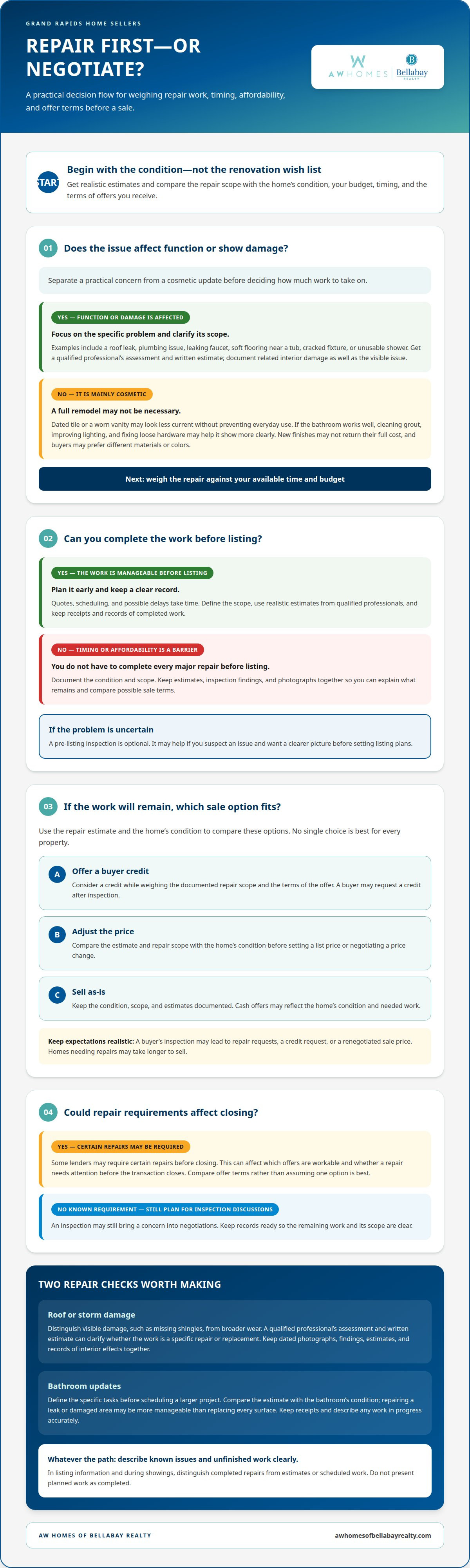
You don’t have to complete every major repair before listing. Grand Rapids sellers can repair first, offer a buyer credit or price reduction, or sell as-is. Deciding which home repairs to make before selling in Grand Rapids starts with the property’s condition, realistic estimates, and how each option may affect negotiations.
Repair, Credit, or As-Is Options
Repairing before listing can address a known concern before buyers view the home. Start early: getting quotes, scheduling work, and managing delays all take time. A pre-listing inspection can help identify potential issues, but it isn’t required. It may be useful if you suspect a problem and want a clearer picture before setting your listing plans.
If you can’t fund the work, document its condition and scope while weighing a credit, price reduction, or as-is sale. Keep estimates, inspection findings, and photographs together. A buyer’s inspection may lead to repair requests, a credit request, or a renegotiated price, so clear records help explain what remains.
Repair Effects on Pricing and Offers
Get realistic estimates from qualified professionals before setting a list price or negotiating a credit. Compare the repair scope with the home’s condition and the terms of offers you receive. Homes needing repairs may take longer to sell, so consider how buyers may view unfinished work when planning your sale.
Some lenders may require certain repairs before closing. This can affect which offers are workable and whether a repair needs attention before the transaction closes. Cash offers may also reflect the home’s condition and needed work. Compare offer terms and repair estimates rather than assuming one option is best.
There isn’t one pre-sale improvement that suits every home. Cosmetic updates may be less worthwhile than fixing a problem that affects function, such as a roof leak or plumbing issue. Common inspection concerns vary by property; be prepared to discuss known roof, furnace, plumbing, or electrical problems clearly. The right home repairs to make before selling in Grand Rapids also depend on timing, affordability, and offer terms.
Roof replacement and storm-damage repairs
A roof problem can affect buyer confidence, inspection discussions, and closing plans. Distinguish visible storm damage, such as missing shingles, from signs of broader wear. An assessment and written estimate from a qualified professional—such as residential re-roofing specialists like swroofingandconstruction.com—can clarify whether the work involves a specific repair or replacement.
Start by documenting the issue and its scope. Keep dated photographs, inspection findings, and repair estimates together, especially if storm damage affects the home. These records help explain what happened and what work remains, giving buyers clearer context than a general statement that the roof needs attention.
Consider timing before listing. Roof work can involve quotes, scheduling, and possible delays, so begin early if you plan to complete it beforehand. If the work remains unfinished, clearly describe its status in listing information and during showings. Don’t present planned work as completed; distinguish finished repairs from estimates or scheduled work.
Replacement may be a substantial project, while a targeted repair may address a specific problem. Compare the professional’s findings with the home’s overall condition and your available budget. New roofing won’t resolve unrelated concerns, such as water damage inside the home. Document interior effects alongside the exterior issue instead of treating each symptom separately.
Some lenders may require certain repairs before a sale closes. That makes a roof assessment relevant beyond appearance or buyer preference. If a buyer’s inspection raises concerns, clear documentation can help both parties discuss the scope, possible repair, or credit. For a Grand Rapids seller, the practical choice is whether completed work, documented condition, or a negotiated term best fits the transaction.
Bathroom remodeling
Buyers in Grand Rapids may see outdated kitchens, bathrooms, and flooring as future projects, while also considering condition and function. A clean, usable bathroom with working fixtures presents differently from one with a leak, damaged flooring, or an unusable shower.
Before remodeling, distinguish cosmetic age from repair needs. Dated tile or a worn vanity may look less current without preventing everyday use. A leaking faucet, soft floor near the tub, or cracked fixture points to a practical concern that deserves attention. Fixing a specific problem can be more manageable than replacing every surface.
A full bathroom remodel isn’t automatically the best pre-sale choice. New finishes may not return their full cost in the sale price, and buyers may prefer different materials or colors. Compare the project’s scope and estimate with the bathroom’s current condition. If the room works well, cleaning grout, improving lighting, and fixing loose hardware may help it show more clearly.
For a larger project, define the work before scheduling it. List each needed task, such as replacing a damaged vanity, repairing a shower leak, or correcting water-stained drywall. Consulting with an experienced general contractor, such as Strother Built Construction, can help you establish realistic estimates and project timelines. This lets you weigh completed work against listing with the issue documented, rather than starting an open-ended renovation.
Keep receipts, estimates, and records of completed bathroom repairs together. If work is underway when you list, describe its status accurately during showings. A buyer’s inspection may bring the repair into negotiations, so clear records help explain what was addressed and what remains. Apply the same practical review to kitchen surfaces and flooring: visible wear differs from damage that affects use.
Disclosure questions for known repair issues
Grand Rapids and Michigan sellers should distinguish repair decisions from communication about known issues. Completing every repair before listing isn’t the only option: sellers may repair, offer a credit, reduce the price, or sell as-is. Some lenders may require certain repairs before closing, so a buyer’s financing can affect the transaction.
For work underway, be transparent in the listing and during showings. Describe the issue, what work has started, and what remains. For example, if storm damage has been assessed but roof repairs aren’t finished, explain the status accurately. Don’t describe planned work as completed or imply a repair resolves more than it actually does.
Keep a clear record for each known issue. A practical file can include dated photographs, professional estimates, inspection findings, invoices for completed work, and notes about unfinished repairs. If a bathroom leak damaged flooring, record both the leak repair and any remaining floor work. This gives buyers specific information to consider instead of a broad, unclear description.
For an as-is sale or proposed repair credit, document the property’s condition and the scope of needed work. A buyer’s inspection may still prompt a repair request, credit proposal, or price renegotiation. Use written estimates to support the discussion, and make sure the listing description matches what you share during showings.
There isn’t one repair decision that fits every sale. Separate what’s known, what’s been repaired, and what remains; then consider the offer terms and financing alongside those records. This keeps roof concerns, plumbing issues, and unfinished projects visible in the transaction rather than surfacing unexpectedly during negotiations. For guidance on structuring a sale around documented repairs, plan your home sale with repair issues in view.
You don’t have to complete every repair before listing; you may repair, offer a credit, reduce the price, or sell as-is. Some lenders may require particular repairs before closing, depending on the buyer’s financing.
AW Homes of Bellabay Realty
AW Homes of Bellabay Realty helps sellers in Grand Rapids, Ada, Caledonia, and East Grand Rapids assess how known repairs fit into their sale plans. When you’re weighing roof work, bathroom updates, a price adjustment, or an as-is listing, its Residential Listing Services offer guidance on positioning the property and preparing for buyer discussions.
Bring together repair estimates, inspection notes, and records of completed work. That information supports a clearer conversation about which issues may influence pricing, how to describe unfinished work, and what terms to consider when reviewing offers. For buyers planning a move or evaluating a property, Buyer Agency Services, Relocation Assistance, and Real Estate Investment Consulting address different real estate needs.
For guidance on your selling options and repair considerations, contact AW Homes of Bellabay Realty.
Make your next move with a clear plan
Choosing which home repairs to make before selling in Grand Rapids is one part of preparing for a transition. Next, connect the property’s condition with your timing, priorities, and plans after the sale. A focused conversation can help turn these considerations into a practical path forward, without treating every improvement as equally important.
AW Homes of Bellabay Realty can help you think through the sale and the move that follows. Whether you’re preparing to list, buying your next home, or relocating, a coordinated plan can make decisions feel more manageable.
Contact AW Homes of Bellabay Realty to discuss your next step. Your move can begin with a plan that fits your home and the life ahead.
Frequently Asked Questions
Should I get a pre-listing inspection if I suspect major issues?
Yes, a pre-listing inspection can help clarify suspected problems before buyers assess the home. In Grand Rapids, it can give you a clearer picture of which findings need attention and which may simply need documentation. For example, if you notice recurring basement dampness or an aging furnace, inspection findings can help you plan questions, estimates, and listing details before showings begin.
Which home repairs give sellers the best return on investment in Grand Rapids, Michigan?
No repair guarantees a particular return; the value depends on the home, its condition, and buyer expectations. In Grand Rapids, Ada, Caledonia, and East Grand Rapids, focus first on correcting issues that affect function or make a room harder to use. A sticking exterior door or loose handrail may deserve attention before a costly design upgrade. Compare the scope of the work with your selling priorities.
What repairs should Grand Rapids sellers make before listing a home?
Start with visible defects that may distract from the home’s usable features, then address practical problems that could complicate a buyer’s evaluation. For example, replace a burned-out light, repair a dripping kitchen faucet, and make sure doors open and close properly. Walk through each room as a buyer might, noting anything that looks unfinished or interferes with normal use. Keep the scope aligned with your listing plans.
Should sellers repair issues or offer a price reduction or closing credit?
Choose based on the issue, the work involved, and the offer terms. A completed repair may suit a clearly defined problem, while a price reduction or credit may fit when buyers want to manage the work themselves. For a home in East Grand Rapids or Caledonia, compare written estimates with the proposed terms and consider whether the repair timing fits the closing schedule.
Are there Grand Rapids or Michigan requirements for repairs before selling a home?
You don’t have to complete every major repair before listing, but some lenders may require certain repairs before closing.


