

The best 55+ communities in West Michigan depend less on the length of an amenities list than on how you want to live, the support you may need over time, and where you feel at home. A ranch-style home in an age-restricted neighborhood offers a different experience from independent living or a community with additional care options.
It can be difficult to compare options because “55+ community” describes different housing arrangements. A move that suits your needs today should also leave room to consider what may matter later. Start with clear priorities, not pressure to choose quickly.
This 2026 guide compares West Michigan options by housing style, services, location, and lifestyle. It explains the difference between age-restricted housing and senior living, and offers practical questions to help you assess support and future flexibility. Use it to build a shortlist that reflects your priorities, from Grand Rapids and nearby communities to lakeshore towns.
Key Takeaways
- Age-restricted ownership, independent living, and care-focused communities are different options. Identify the model that fits your needs.
- Compare housing models, ownership or rental arrangements, services, locations, and flexibility with the same checklist.
- The best 55+ communities in West Michigan depend on the setting and housing style that suit you, not a single best-to-worst ranking.
- Build a shortlist by defining must-haves, comparing community types, narrowing locations, and reviewing current details.
- Local neighborhood insight and real estate guidance can help you coordinate a home search, relocation, or sale as part of your transition.
What Does “55+ Community” Mean in West Michigan?
A 55+ community is housing intended for older adults under age-eligibility rules. The label alone doesn’t tell you whether residents buy a home, rent an apartment, or receive help with daily needs. In West Michigan, it may refer to an age-qualified neighborhood of privately owned homes, an independent living residence, or a community that offers additional care. These are different living arrangements, even when similar language is used to describe them.
For a general overview, see this guide to an age-restricted community. For a specific West Michigan property, review its current eligibility criteria, housing documents, and service descriptions rather than relying on its label.
Age-restricted housing and senior living are not interchangeable
Age-restricted housing sets eligibility rules; senior living describes a residence or service model. In an age-qualified ownership community, residents purchase a home and follow the property’s rules. Independent living typically refers to a residential setting for people who want a community environment, without assuming personal care is included. Other communities may offer additional support or care. Services vary, so don’t assume meals, healthcare, or help with daily activities are included because a community serves older adults.
What West Michigan searchers should clarify first
Begin with the kind of move you’re considering, then separate practical needs from lifestyle preferences. A fitness room or social calendar may be appealing, while step-free entry or access to support could be essential. This distinction keeps your comparison focused on what will shape daily life, not just what looks attractive during a tour.
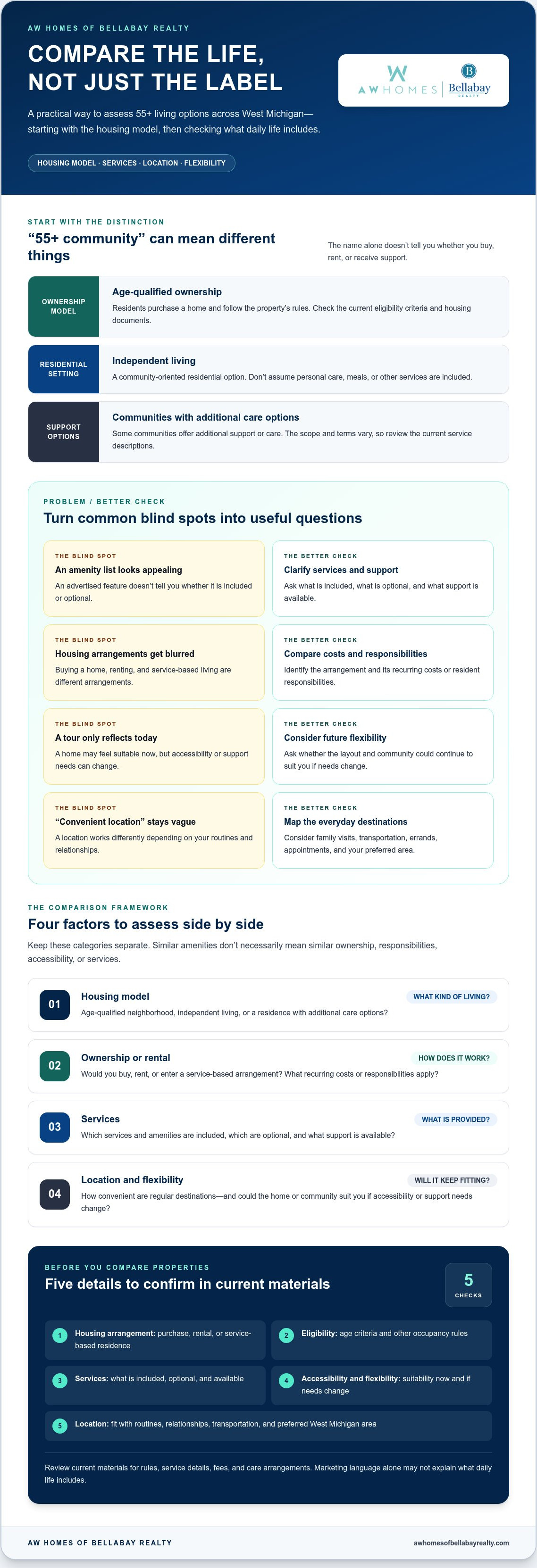
- Housing arrangement: Are you looking to purchase a home, rent, or move into a service-based residence?
- Eligibility: What age criteria and other occupancy rules apply to the property?
- Services: Which services are included, which are optional, and what support is available?
- Accessibility and flexibility: Does the layout suit your needs now, and how might it work if those needs change?
- Location: Does the setting fit your routines, relationships, and preferred West Michigan area?
These distinctions matter when searching for the best 55+ communities in West Michigan. A homeowner comparing a patio home with an apartment-style residence is making a different decision from someone seeking ongoing support. Even properties with similar amenities may differ in ownership structure, monthly responsibilities, accessibility, or services. Compare the home, support model, location, and future flexibility separately.
Before relying on advertised features, review current materials for eligibility requirements, services, fees, and care arrangements. Names and marketing language don’t necessarily explain what daily life includes. Understanding the housing model is the starting point for a useful comparison.
How to Compare West Michigan 55+ Community Options
A side-by-side comparison can make a move more manageable. Start with the housing arrangement, then consider daily life and future needs. Use the table as a working framework, and fill in the details for each community from its current materials.
| What to compare | Questions to answer |
|---|---|
| Housing model | Is it an age-qualified neighborhood, independent living, or a residence with additional care options? |
| Ownership or rental | Would you buy a home, rent, or enter a service-based living arrangement? What recurring costs or responsibilities apply? |
| Services | Which services and amenities are included, which are optional, and what support is available? |
| Location | How convenient are family visits, transportation, everyday errands, and other regular destinations? |
| Flexibility | Could the home or community continue to suit you if accessibility or support needs change? |
Which housing model matches your plans?
Buying in an age-qualified development means purchasing a home under that community’s rules. Independent living is a different residential option, with its own service structure and costs. Some continuing-care settings may offer more than one level of support, but the scope and terms vary. First decide whether homeownership, renting, or access to services is central to your plans.
Which comparison criteria matter beyond amenities?
A pool or social calendar may be attractive, but it won’t tell you whether the layout works for you or what maintenance involves. Compare access to everyday destinations, transportation, community rules, and which services are included or optional. Model, location, services, and flexibility are the four core factors to compare.
For each option, note the source and date of the information you’re using. Review current materials for eligibility, rules, service details, and costs. An advertised amenity doesn’t necessarily mean it’s included. AARP’s Michigan resources for older adults provide broader state context; use the community’s current materials for property-specific details.
- Daily maintenance: Note what residents handle themselves and what, if anything, the community covers.
- Getting around: Consider how you’d reach errands and appointments, and whether transportation options fit your routine.
- Social life: Distinguish activities you’d genuinely use from amenities that simply sound appealing.
- Family access: Consider travel time and how easy it would be to visit regularly.
Once your criteria are clear, local home-buying guidance can help you compare neighborhoods and ownership options around Grand Rapids and nearby communities. Explore local home-buying guidance as you shape your next steps.
West Michigan Communities and Areas to Shortlist
There isn’t one reliable best-to-worst ranking for a move like this. Your shortlist depends on the housing model you want and how well a location fits your routines. Search by both place and property type, then compare current community information before deciding whether an option fits.
Compare Grand Rapids-area settings with nearby communities
Grand Rapids may suit you if you want an urban setting with access to a broad range of everyday destinations. Ada, Caledonia, and East Grand Rapids are also worth considering if their surroundings, family connections, or regular destinations fit your plans. These are geographic starting points, not a guarantee that a particular 55+ community is located in each area.
Picture an ordinary week. Where would you shop, meet friends, attend appointments, or spend time with family? Consider travel routes and the places you’d visit most, rather than relying on an area’s reputation or a map alone. AW Homes’ Grand Rapids relocation guide offers a wider view of the region as you consider neighborhoods.
Profile communities by what they offer, not by unsupported rankings
Organize candidates by location and housing model, such as age-qualified homes for purchase, rental housing, independent living, or residences with additional support. A name or provider portfolio alone doesn’t establish a community’s location, eligibility rules, housing arrangement, or services. For example, Brio Living Services is a senior-living reference point, but shouldn’t automatically be treated as an age-restricted ownership community. Evaluate each specific community using its current details.
Before adding a named property to your shortlist, review its address, age or residency criteria, housing type, services, amenities, and availability in current community materials. Record the details that matter to you and use them to compare options. This keeps a broad search result from standing in for a useful property profile.
- Grand Rapids: Compare candidates by how well their housing model and setting align with your priority destinations and routines.
- Ada: Include it if the location suits your family connections and preferred daily activities, then identify the specific property and housing type.
- Caledonia: Use it as a search area if it fits your geographic priorities; assess each community’s address and eligibility separately.
- East Grand Rapids: Consider it as a location preference, while evaluating a community’s services and housing arrangement separately from the area name.
The best 55+ communities in West Michigan are the options that fit your priorities, not simply the ones that appear first in a search. AW Homes of Bellabay Realty offers local buyer, seller, and relocation guidance for people considering a move across Grand Rapids, Ada, Caledonia, and East Grand Rapids. Local neighborhood insight can help you connect a housing option with the life you want to build there.
Choose a Community That Fits Your Next Chapter
Start with your priorities, not a tour schedule. Before reviewing listings, separate must-haves from preferences. Step-free entry may be essential; a clubhouse or organized activities may be a bonus. This makes it easier to compare options consistently and avoid being swayed by features that don’t address your daily needs.
Match current priorities with future flexibility
List the home size and layout you want, how much maintenance you’re comfortable handling, any accessibility needs, and the kind of social setting you prefer. Consider which services matter now and which could become more important later. Lifestyle amenities and support services serve different purposes, so assess them separately. Compare a community’s rules and service arrangements with your priorities rather than assuming they’ll fit.
A strong shortlist balances your current lifestyle with future flexibility. You don’t have to predict every future need. Instead, consider whether a home’s layout, location, and available support leave room for your preferences to evolve. A Grand Rapids downsizer housing guide can help you think through housing choices in the area, but the properties discussed shouldn’t be assumed to be 55+ communities.
Use this sequence to move from broad priorities to a workable plan:
- Define your needs. Write down must-haves for the home, accessibility, maintenance, budget planning, and daily routines. Keep preferences separate.
- Compare models. Decide whether you’re focused on purchasing, renting, independent living, or a residence with additional support. Compare the responsibilities and services attached to each.
- Shortlist locations. Choose areas based on family proximity, preferred destinations, and the setting you want for everyday life. Narrow the geography before comparing individual properties.
- Review details. Use current community materials to understand eligibility, rules, housing type, services, and costs. Compare the written details with your must-have list before touring or deciding.
- Plan the move. Consider sale timing, purchase readiness, and moving logistics together. The sequence can affect which options are practical and how much time you need to prepare.
Plan the move, sale, and purchase as one transition
Downsizing or relocating involves more than finding your next home. You may need to prepare a current property for sale while deciding what to buy, when to move, and which belongings to bring. Thinking through these pieces together can help set a realistic search timeline. The Grand Rapids buyer’s agent guide offers additional context for planning a local purchase.
AW Homes of Bellabay Realty provides neighborhood insight and buyer or seller guidance for your West Michigan transition. Review options for your West Michigan home search as you consider your priorities and next steps.
Plan Your West Michigan 55+ Home Search With Local Guidance
Choosing a 55+ or senior living option involves more than comparing properties. If your next step includes buying or selling a home, local real estate guidance can help you assess neighborhoods, organize the search, and plan the transaction around your preferred timing. AW Homes of Bellabay Realty, led by Angela Worth, works with buyers, sellers, downsizers, and relocation clients across West Michigan, including Grand Rapids, Ada, Caledonia, and East Grand Rapids.
The real estate process is separate from a community’s housing rules or support services. Community materials explain those arrangements; a local real estate guide can help with the home search, neighborhood comparison, and sale or purchase planning.
How local real estate guidance supports the comparison
Neighborhood knowledge can put a location into context, including nearby destinations, the character of surrounding areas, and how a home may fit your daily routines. Buyer representation can add structure to the property search, from refining criteria to weighing the practical details of a purchase. For downsizers, residential listing guidance can connect the sale of a current home with the search for the next one.
That coordination matters. If you’re selling and buying, the timing of each step can influence which homes are realistic to consider and how you prepare for the transition. A thoughtful plan can account for your preferred move window, the work involved in preparing a home for sale, and the features you want in your next property. It keeps the process focused without treating the move as one decision made all at once.
Make the next step clear and manageable
You don’t need every detail settled before starting a conversation. Bring a short outline of your preferred areas, housing model, must-haves, and approximate timing. Note whether you’re focused on buying, selling, relocating, or coordinating more than one step. Clear priorities give the search a useful starting point.
- Preferred areas: Identify places you want to explore, such as Grand Rapids, Ada, Caledonia, or East Grand Rapids.
- Housing direction: Clarify whether you’re searching for a home to purchase or planning another type of move.
- Transition timing: Note what may affect your schedule, including preparing a current home for sale or coordinating a move.
AW Homes can connect neighborhood insight with buyer or seller guidance, so your property decisions reflect the priorities you’ve set. The goal is a considered next step, not pressure to move before you’re ready. Talk through your West Michigan home search when you’re ready to plan the buying, selling, or relocation side of your transition.
Take the Next Step at Your Own Pace
A housing decision doesn’t have to happen all at once. Start by identifying the question that would make your next choice clearer: which areas feel right, what kind of home suits your routines, or how a move might fit your broader plans. Breaking a major transition into smaller decisions gives you room to consider your options.
Finding the best 55+ communities in West Michigan is less about choosing quickly and more about choosing with intention. As your priorities take shape, a focused conversation can help connect your home search with the timing and changes you’re considering. Explore your West Michigan home search when you’re ready to consider what comes next.
Your next chapter can start with one clear, confident step.
Frequently Asked Questions
What is the difference between a 55+ community and senior living?
A 55+ community is defined mainly by resident age eligibility, while senior living describes residential arrangements that may include independent living or additional support. Someone buying a home in an age-qualified neighborhood still takes on homeownership responsibilities. A resident in an independent-living residence may have a different fee and service structure. Compare the occupancy rules and agreement for a specific property rather than relying on its advertising label.
Are there 55+ communities in Grand Rapids, Michigan?
Yes, the greater Grand Rapids area has age-qualified housing options, including for-sale communities such as Avalon Pointe and Gleneagle Moors, identified in 2026 market research. That doesn’t mean each is within Grand Rapids city limits or has homes currently available. Treat community names as starting points: review the current address, age criteria, housing model, and availability, then compare nearby areas such as Ada, Caledonia, and East Grand Rapids against your daily routines.
Can you buy a home in a 55+ community in West Michigan?
Yes, some West Michigan 55+ communities offer homes for purchase. The transaction may resemble a conventional home purchase, but community-specific age qualifications, association rules, and recurring obligations can affect the decision. Before making an offer, review the purchase documents, applicable community rules, and any fees or responsibilities tied to the property. The best 55+ communities in West Michigan for a buyer are those whose ownership terms and home layout suit their plans.
How much does it cost to live in a 55+ community in Michigan?
Costs depend on whether you’re buying a home or paying for a residence and services. 2026 estimates put the average home price in Grand Rapids-area 55+ communities at about $434,224. Independent living in Grand Rapids is estimated at roughly $3,100 to $3,500 monthly, with another 2026 estimate near $3,613. These figures describe different housing models, not a single comparable price. Confirm current costs and what each includes.
What should I look for when choosing a 55+ community?
Start with the property’s rules and practical fit: age eligibility, ownership or rental terms, home layout, maintenance responsibilities, and access to places you visit regularly. Then compare services and costs, distinguishing what’s included from optional extras. To find the best 55+ communities in West Michigan for your needs, consider how the home would work on an ordinary weekday, not only during a tour or community event.
Does a 55+ community provide assisted living or healthcare?
Not necessarily. An age-qualified neighborhood may offer homes and shared amenities without providing personal care or healthcare. Independent living and assisted living are separate residential models, and some communities may offer additional support under specific arrangements. Before deciding, review the residence’s current service information and agreement to understand what care is available, what it covers, and whether it can meet your needs as they change.
Is Brio Living Services a 55+ community?
Brio Living Services is a senior-living organization, but that description alone doesn’t establish that every residence it operates is an age-restricted ownership community. Communities can differ in housing model, eligibility, and services. If you’re considering a specific Brio residence, evaluate that location’s current information and distinguish a service-based senior living option from a neighborhood where residents purchase age-qualified homes.
How do I coordinate selling my home and moving to a 55+ community?
Map out the steps: prepare your current home for sale, define when you’d like to move, and understand the timing and terms of the next residence or purchase. Aligning those milestones can help you decide which steps need to happen first and where you may need flexibility. For a move in Grand Rapids, Ada, Caledonia, or East Grand Rapids, local buyer and seller guidance can help coordinate the property search and sale planning.
Plan your West Michigan home search with AW Homes of Bellabay Realty for local buyer, seller, or relocation guidance.


