

What if the most significant investment of your life didn't come with an expiration date, but a preservation strategy instead? Transitioning into a new home in Forest Hills, Ada, or Caledonia is a profound milestone that marks a new chapter in your personal story. It's natural to feel a sense of weight regarding your new responsibilities. You might worry about hidden repair costs, struggle with the timing of seasonal tasks, or feel the absence of a clear record for your property's history.
You deserve to feel a sense of emotional security, professional confidence, and localized pride in your home. This comprehensive new homeowner maintenance checklist serves as your strategic roadmap to master home preservation within West Michigan's unique climate. By following this professional-grade guide, you'll transform from a cautious buyer into a confident property steward. We'll walk through a methodical schedule that addresses the demands of Lake Effect snow, ensures your systems remain efficient, and protects your financial future. From the 2023 electrical code updates to the nuances of Michigan's natural gas heating, we provide the expert navigation you need for a seamless homeownership journey.
Key Takeaways
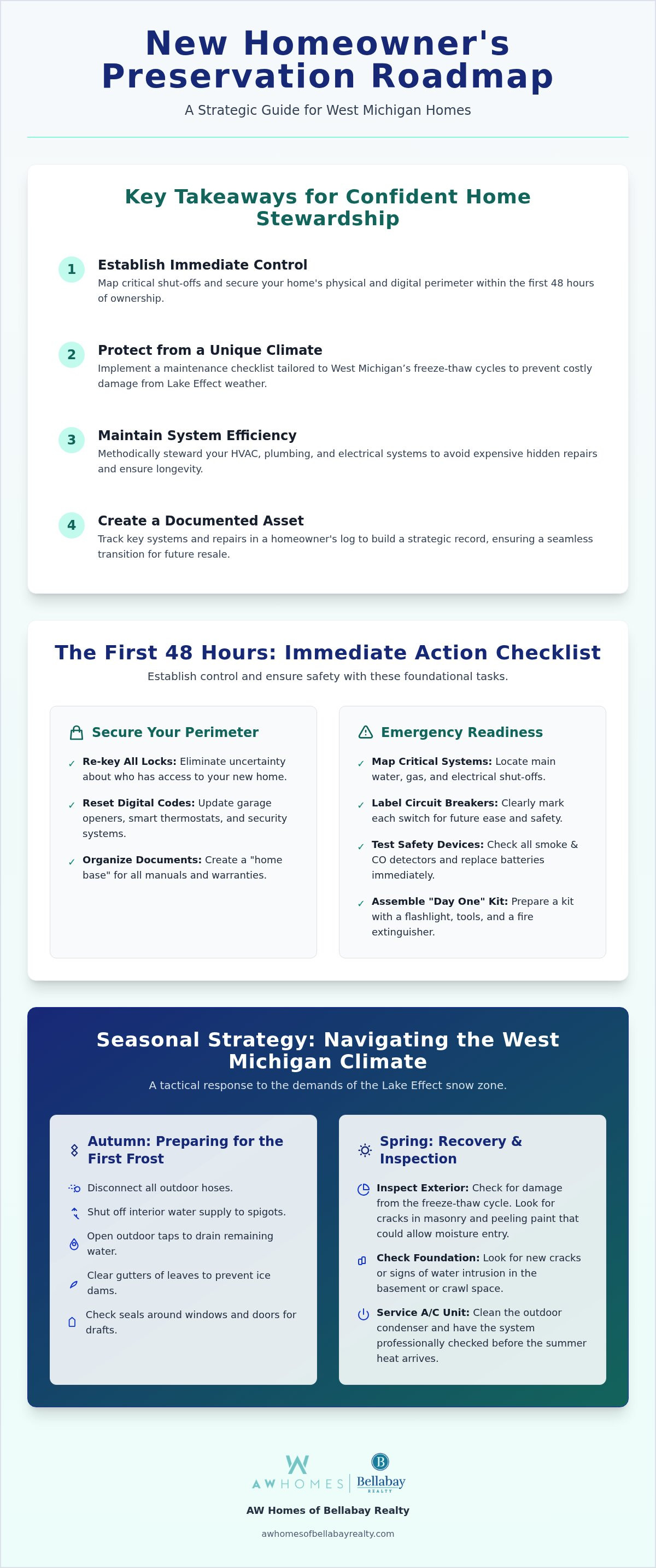
- Establish immediate control by mapping critical shut-offs and securing your perimeter within the first 48 hours of ownership.
- Protect your investment from West Michigan’s unique climate by implementing a new homeowner maintenance checklist tailored to regional freeze-thaw cycles.
- Maintain system efficiency through methodical stewardship of your HVAC, plumbing, and electrical components to avoid expensive hidden repairs.
- Transform your home into a documented asset by tracking "The Big Five" systems, ensuring a seamless transition for future resale.
- Access a neighborhood network of professional referrals and utility programs to simplify your role as a property steward.
The First 48 Hours: Your Immediate Safety and Security Checklist
The moment you receive the keys to your new residence in Forest Hills or Caledonia, the transition from buyer to steward begins. This initial window is about establishing control, ensuring safety, and creating order. While the excitement of decorating is high, your priority should be the foundational tasks on your new homeowner maintenance checklist. These actions provide the emotional security needed to truly settle into your space. It's the first step in transforming a financial transaction into a personal milestone.
Securing Your Physical and Digital Entry Points
Re-keying your home is a non-negotiable step for your peace of mind. You don't know how many copies of the old keys exist with former contractors, neighbors, or distant relatives. This is the primary way to claim your perimeter and ensure your family's privacy. Modern homeownership also requires a digital sweep. You must reset factory codes on garage door openers, smart thermostats, and security cameras to ensure your data remains private. Clearing previous owner information from smart appliances is a vital part of professional home maintenance and repair. Finally, designate a specific "home base" for all physical manuals and warranties. Having these documents organized in one location saves time, reduces stress, and preserves the home's value.
The Emergency Readiness Walkthrough
You need to know how to respond when the unexpected happens. Start by creating a "Critical Map" of your property's vital systems. Locate the main water shut-off valve, the gas meter, and the electrical service panel. Test the water valve to ensure it turns freely; a seized valve is useless during a burst pipe. Label every switch in your circuit breaker clearly. This methodical approach simplifies future troubleshooting and ensures you're prepared for the technical demands of the 2023 National Electrical Code standards.
Perform a comprehensive life safety audit by testing every smoke and carbon monoxide detector. Replace the batteries immediately and write the installation date on the inside of the cover. Michigan homes often rely on natural gas for heating, making functional CO detectors essential for your protection. Assemble a "Day One" emergency kit that includes:
- A high-quality flashlight and extra batteries
- Essential hand tools like pliers and a multi-bit screwdriver
- A plunger, heavy-duty duct tape, and a reliable fire extinguisher
This proactive preparation ensures that minor hiccups don't escalate into expensive repairs. By treating these tasks as the final stage of your closing process, you build a foundation of localized reliability and long-term well-being.
Seasonal Strategy: Navigating the West Michigan Climate
Living in West Michigan requires more than just a passing interest in the weather; it demands a tactical response to the Lake Effect snow zone. Your home's longevity depends on how well you navigate the transition between seasons. Using a localized new homeowner maintenance checklist ensures you're prepared for the specific demands of our regional climate. In areas like Ada or Forest Hills, your gutters are the primary defense against heavy snowmelt and structural ice dams. This seasonal rhythm is about intentionality, protection, and long-term peace of mind.
Preparing for the First Frost
Autumn is the season for fortification. Before the temperature drops, you must execute a critical three-step outdoor faucet winterization. First, disconnect all hoses. Second, shut off the interior water supply to exterior spigots. Third, open the outdoor tap to drain any remaining water. This simple sequence prevents pipes from bursting during the inevitable deep freeze. Clear your gutters of fallen leaves to ensure melting snow has a clear path to the ground. When gutters are blocked, water backs up and freezes, creating ice dams that can compromise your roof's integrity. While you're outside, check the seals around your windows and doors. With over 80% of Michigan homes relying on natural gas for heat, maintaining energy efficiency is a strategic financial move. For a broader perspective on safety and professional timing, University of Georgia's home maintenance guide offers excellent foundational advice on property stewardship.
Spring Recovery and Exterior Inspection
As the snow recedes, your focus shifts to recovery and assessment. The freeze-thaw cycle is particularly harsh on masonry and siding. Inspect your home's exterior for cracks or peeling paint that could allow moisture to penetrate the building envelope. Proper drainage is your foundation's best friend. Ensure that landscaping beds haven't settled in a way that directs water toward the basement. Soil should always slope away from the structure to prevent hydrostatic pressure from causing leaks. This is also the ideal time to schedule your air conditioning service. In Grand Rapids, diagnostic fees for HVAC systems typically range from $89 to $129. Investing in a professional tune-up before the first summer heatwave ensures your system operates at peak efficiency. If you're looking for trusted local contractors to assist with these tasks, reaching out to a strategic real estate partner can provide the neighborhood connections you need for a seamless transition.
Summer in West Michigan brings high humidity that can settle in your basement or crawlspace. Use a dehumidifier to keep moisture levels below 50% to prevent mold growth and protect your home's air quality. Winter safety isn't just about the roof; it's about your entryways. Use salt-safe products on your porch and walkways to prevent pitting in the concrete. By following this methodical approach, you move beyond simple upkeep and into the role of a dedicated property steward. This comprehensive new homeowner maintenance checklist helps you navigate every Michigan season with confidence.
Critical System Stewardship: HVAC, Plumbing, and Electrical
The transition into a new home is a multi-layered process that extends far beyond the final signature at the closing table. True property stewardship involves a methodical approach to the mechanical systems that keep your household running. By treating these systems with intentionality, you move away from the fear of hidden repairs and toward a future of financial stability. This section of your new homeowner maintenance checklist focuses on the critical infrastructure of your residence, ensuring each component serves as a reliable asset for years to come.
Air Quality and Climate Control
Your HVAC system is the primary driver of comfort and energy efficiency. In Michigan, where over 80% of homes rely on natural gas for heating, system performance is directly tied to your monthly utility costs. Adhering to the 90-day filter rule is your first line of defense. Selecting the right MERV rating is a balance of air quality and mechanical health. While a MERV 13 filter captures more particles, it can restrict airflow in older systems; most residential units in Grand Rapids perform optimally with a MERV 8 or 11. Changing these filters regularly protects the blower motor and maintains your home's resale value.
Professional stewardship also includes an annual tuning of your furnace and air conditioner. Diagnostic service fees in the West Michigan area typically range from $89 to $129, a small investment compared to the $3,500 to $12,500 cost of a full AC replacement. During our dry winters, ensure your whole-home humidifier is functioning correctly. Maintaining consistent humidity levels is essential to prevent hardwood floors from shrinking and crown molding from gapping. This organized approach to climate control ensures your home remains a sanctuary regardless of the external weather.
Plumbing and Water Management
Water damage is one of the most common sources of high-stakes repairs. In a West Michigan basement, the sump pump is your most valuable ally. Test this system before the spring rainy season by pouring enough water into the pit to trigger the float switch. If the pump doesn't activate, you've identified a critical failure before a flood occurs. Additionally, flushing your water heater once a year is necessary to remove sediment buildup. Local minerals can settle at the bottom of the tank, reducing efficiency and eventually causing the heating element to fail.
Perform a visual inspection for slow leaks under every sink and around your dishwasher. Even a minor drip can lead to mold growth and subfloor rot. Cleaning the aerators on your faucets and soaking showerheads in vinegar removes mineral deposits that restrict water pressure. These small, direct actions demonstrate a high level of expertise in property management. Finally, test your GFCI outlets in the kitchen and bathrooms monthly. Ensuring these safety devices function correctly is a requirement under the 2023 National Electrical Code and provides the emotional security your family deserves.
The Homeowner’s Log: Building a Strategic Asset Record
Viewing your home as a financial asset requires more than just periodic repairs. It demands a methodical record of every improvement, inspection, and service you perform. This documentation is the most powerful tool you have for maximizing future resale value. When you eventually transition to your next chapter, a detailed log proves to potential buyers that you were a meticulous steward. It transforms a house into a verified high-value asset. This practice is the logical extension of the home closing process in Michigan, ensuring the security you felt at the signing table persists throughout your ownership.
Focus your tracking on "The Big Five": the roof, HVAC systems, windows, siding, and the foundation. These components represent the highest capital expenditures and are the primary focus of any professional home inspection. Use your new homeowner maintenance checklist to record installation dates, warranty information, and contractor contact details for each. Whether you prefer a physical binder or a cloud-based folder, keep every receipt and permit organized. This level of intentionality eliminates guesswork and provides a seamless experience for your future self.
Creating Your Property’s "Service History"
Maximum buyer trust is built on transparency. Include a chronological list of services, copies of all building permits, and a map of your utility shut-offs in your maintenance record. If you undertake renovation projects in Forest Hills or Ada, photograph the home's "bones"-the wiring, plumbing, and framing-before the drywall is installed. These images are invaluable for future repairs and appraisals. Set digital reminders for recurring tasks, such as your annual furnace tune-up, to ensure no detail is left to chance. This methodical approach mirrors the high-end, concierge-style support you deserve as a property owner.
Budgeting for the Unexpected
Strategic financial planning involves building a dedicated repair fund. A common industry standard is the 1% rule, where you set aside 1% of your home's total value each year for maintenance. In Grand Rapids, prioritize repairs that offer the highest return on investment, such as energy-efficient upgrades that align with Michigan Home Energy Rebates. Knowing when to call a West Michigan professional is equally important. While painting or minor landscaping are excellent DIY projects, high-stakes tasks involving the 2023 National Electrical Code or complex plumbing should be handled by licensed experts to preserve your home’s structural integrity.
If you need guidance on which local upgrades will best protect your property's long-term value, consult with a strategic advisor who understands the nuances of our regional market and can provide the expert navigation you need for a successful homeownership journey.
Connecting with Local Expertise: Your Neighborhood Advantage
Mastering your home's preservation is rarely a solitary endeavor. It requires a network of vetted expertise, localized knowledge, and strategic timing. While a new homeowner maintenance checklist provides the necessary structure, the execution often depends on the quality of your professional connections. Your relationship with a Buyers Agent in Grand Rapids shouldn't end when the moving truck pulls away. A concierge-style real estate partner remains a long-term advisor, offering a curated list of contractors who understand the nuances of West Michigan architecture and climate.
Neighborhood stewardship also involves navigating the specific requirements of your local municipality or homeowners association. In communities like Ada and Forest Hills, HOA rules often govern exterior modifications, landscaping standards, and even the types of materials allowed for repairs. Simultaneously, you should leverage state-level resources. The Michigan Home Energy Rebates (MiHER) program, rolled out in 2025, offers pathways for homeowners to improve efficiency through the HOMES and HEAR initiatives. These programs provide more than just financial relief; they offer the emotional security of knowing your home is operating at modern standards of comfort and sustainability.
Building Your Local Professional Network
Vetting trade specialists in West Michigan requires a methodical approach. You need professionals who are familiar with the 2023 National Electrical Code updates and the specific demands of lake-effect snow zones. Timing is the most critical factor in securing high-quality service. The construction season in Michigan generally runs from May through October, meaning the best contractors are often booked months in advance. To maintain your new homeowner maintenance checklist without stress, adopt a "pre-season" scheduling strategy:
- Book AC tune-ups in March or April to avoid the summer diagnostic rush.
- Schedule roof and gutter inspections in early September before the first frost.
- Consult with plumbers in the fall to verify pipe insulation before the deep freeze.
Local knowledge matters because Michigan homes face unique challenges, from high natural gas usage to hydrostatic pressure in basements. A specialist who understands the soil composition in Caledonia will provide better drainage solutions than a generalist from outside the region.
Long-term Neighborhood Stewardship
Your individual maintenance efforts contribute to the collective stability of your community. Staying informed on Grand Rapids real estate trends allows you to time your upgrades for maximum market impact. When every homeowner in a neighborhood prioritizes roof integrity and foundation health, property values remain resilient. This transition from a buyer to a proud homeowner is a journey of personal evolution. By embracing your role as a property steward, you ensure your home remains a source of warmth, trust, and localized reliability for years to come.
Securing Your Future as a West Michigan Homeowner
Transitioning into a new home is a significant personal milestone that deserves a methodical and strategic approach. By implementing this professional-grade new homeowner maintenance checklist, you've taken the first step toward long-term emotional security, financial stability, and property preservation. You now have the tools to navigate the West Michigan freeze-thaw cycle, manage critical mechanical systems, and maintain a meticulous asset record for future resale. This level of intentionality transforms your role from a simple occupant into a dedicated property steward who leaves nothing to chance.
Your journey as a homeowner is a continuous process of personal evolution. It's about more than just keeping systems running; it's about protecting your investment, enhancing your lifestyle, and contributing to your community's vibrancy. Whether you're settling in Forest Hills, Ada, or Caledonia, you don't have to navigate these transitions alone. Expert guidance, localized reliability, and concierge-style support are the anchors of a truly seamless experience.
Looking for a partner in your next life transition? Connect with Angela Worth today.
We provide expert guidance for Grand Rapids and surrounding areas with a focus on your long-term success. Welcome home to your next chapter.
Frequently Asked Questions
How often should I change my furnace filters in Michigan?
You should change your furnace filters every 90 days to maintain optimal air quality and system efficiency. During heavy heating months in West Michigan, checking the filter monthly is a more methodical approach to property care. Using the correct MERV rating for your specific unit prevents blower motor strain. This simple step on your new homeowner maintenance checklist ensures your system operates at peak performance while protecting your home's long-term resale value.
What are the most critical maintenance tasks for a first-time homeowner?
The most critical tasks include locating shut-off valves, testing life safety detectors, and securing your perimeter. Identifying your main water and gas shut-offs prevents minor leaks from becoming catastrophic floods. You must also test smoke and carbon monoxide detectors immediately upon moving into your new space. These foundational actions provide the emotional security needed to transition into your role as a property steward with professional confidence and localized pride.
How do I prevent ice dams on my West Michigan roof?
Preventing ice dams requires a combination of clear gutters and proper attic ventilation. You should remove leaves and debris in late autumn to ensure melting snow drains freely away from the shingles. In heavy snow zones like Caledonia or Ada, using a roof rake to clear the first few feet of your roofline is a strategic move. This prevents the freeze-thaw cycle from backing water under your roof and causing expensive interior damage.
What should be in a new homeowner’s basic tool kit?
A professional-grade starter kit should include a high-quality flashlight, a multi-bit screwdriver, a hammer, and a 25-foot tape measure. You also need a reliable plunger, a utility knife, and a set of Allen wrenches for garbage disposal jams. To keep your outdoor power tools in peak condition, you can check out St-Dalys for a comprehensive selection of garden equipment parts. Having these tools organized and accessible allows you to handle minor household hiccups without the stress of searching for equipment. This organized approach reflects the methodical nature of successful home preservation and expert navigation.
No, a home warranty does not cover routine maintenance tasks. While warranties are designed to repair or replace failed components like a furnace or dishwasher, the homeowner is responsible for ongoing upkeep. Tasks such as flushing your water heater or cleaning gutters fall outside warranty coverage. Maintaining a detailed log of these activities demonstrates the expert insight required to preserve your home's structural integrity and ensures a seamless experience for future owners.
How do I locate my main water shut-off valve if it wasn’t labeled?
If your valve isn't labeled, look for the water meter first. The main shut-off is typically located on the perimeter wall facing the street, often in the basement or a crawlspace. It's usually a gate valve or a ball valve located where the main line enters the structure. Once found, label it clearly with a bright tag to ensure every family member can locate it quickly during an emergency, providing a sense of order and security.
When is the best time to schedule an annual HVAC tune-up?
The best time to schedule your HVAC service is during the "shoulder seasons" of spring and autumn. Schedule your AC tune-up in March or April and your furnace inspection in September or October. This proactive timing ensures you avoid the peak demand periods for Grand Rapids contractors. It also guarantees your system is ready for the first heatwave or the deep winter freeze, reflecting a strategic focus on your home's long-term well-being.
How much should I realistically budget for annual home maintenance?
You should realistically budget approximately 1% of your home's purchase price for annual maintenance. For a residence in Forest Hills or East Grand Rapids, this fund covers recurring costs and unexpected repairs like a sump pump failure. This methodical financial planning moves you away from chance and toward expert navigation. It provides the peace of mind that your home remains a high-value asset throughout your life transition and is a core part of any new homeowner maintenance checklist.


