

A pre-sale inspection can reveal issues before buyers do, but it is not always the right first step. This landlord guide to selling a rental property in Grand Rapids starts with a practical answer: consider an inspection if knowing the property’s condition could affect your repair, pricing, or disclosure decisions. The goal is to get a clearer picture before the sale process gathers momentum.
Weigh that decision alongside the property’s finances and rental history. Taxes, insurance, equity, environmental disclosures, tenant records, and local property documents can all affect the transition from landlord to seller. This guide explains how these details fit together, what records can help keep a sale organized, and how real estate guidance can support your next move in Grand Rapids, Ada, Caledonia, or East Grand Rapids.
Key Takeaways
- Factor property taxes and insurance into your decision to sell, since a rental property’s ongoing costs can affect the value of holding it.
- Estimate how a sale could turn home equity into available funds, while accounting for the mortgage and transaction-related costs.
- Understand how environmental disclosures, including known lead hazards in many older homes, can shape the sale process.
- Organize lease, ownership, tax, and local property records to help present a clearer picture of the rental property to prospective buyers.
1. Property taxes and insurance
Property taxes can change the economics of holding a Grand Rapids rental. Michigan property taxes may increase by 40-50% when a home is no longer the owner’s primary residence. Include the current tax bill and the property’s status in your sale planning. Insurance costs may also increase when a home is no longer a primary residence, so compare the policy’s current terms with the property’s rental use.
Landlord insurance coverage depends on the policy. Depending on the coverage selected, it may reimburse losses from dry rot, other repairs, or lost rental income if the home becomes uninhabitable. Review the policy’s coverage, exclusions, and responsibilities. An uncovered repair or uninsured vacancy can reduce the proceeds you expect to keep.
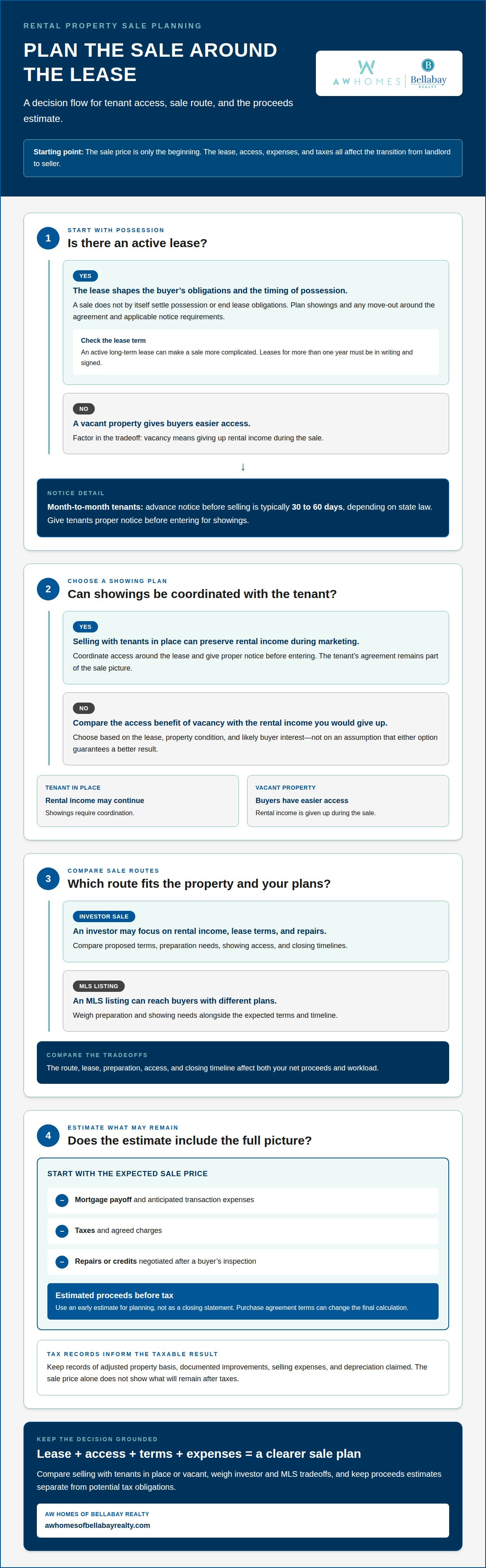
Selling with tenants in place can preserve rental income during marketing, but showings require coordination. A vacant property gives buyers easier access, while vacancy means giving up rental income during the sale. Choose based on the lease, property condition, and likely buyer interest, rather than assuming either option guarantees a better result.
Michigan landlords can sell with tenants in place, but an active long-term lease can make a sale more complicated. The agreement shapes the buyer’s obligations and the timing of possession. For showings, give tenants proper notice before entering. For month-to-month tenants, advance notice before selling is typically 30 to 60 days, depending on state law.
Selling directly to an investor and listing on the MLS involve different tradeoffs. Investors may focus on rental income, lease terms, and repairs, while an MLS listing can reach buyers with different plans. Compare proposed terms, preparation needs, showing access, and closing timelines. These factors affect both your net proceeds and workload.
Capital gains tax and depreciation recapture are potential tax considerations when selling a Michigan rental. The calculation depends on sale proceeds, adjusted property basis, documented improvements, selling expenses, and depreciation claimed. Organize those records to estimate the taxable result. The sale price alone does not show what will remain after taxes.
For landlords with five or more units, Michigan Legislature source-of-income protections prohibit discrimination against tenants using housing vouchers. Keep tenant responsibilities and any agreement terms separate from sale negotiations, and include relevant lease records in the property file.
2. Accessing home equity by selling
Home equity is the difference between a property’s value and the debts secured against it. Selling can turn some of that value into proceeds, but the sale price is only the starting point. A Grand Rapids seller’s estimate should account for the mortgage payoff, transaction expenses, taxes, and agreed charges. Repairs or credits negotiated after a buyer’s inspection can further reduce the amount received.
A real estate professional can estimate proceeds by using the property’s condition, location, and comparable market activity to develop a sale-price range. Subtract the current mortgage payoff and anticipated sale expenses to estimate what may remain. Terms in a signed purchase agreement can change the final calculation, so use an early estimate for planning, not as a closing statement.
Taxes need separate attention. The taxable result depends on details such as adjusted basis, documented improvements, sale expenses, and depreciation claimed. A proceeds estimate can show the amount before tax, while your tax records help frame potential obligations. Keeping the figures separate makes it easier to compare selling with continuing to rent the property.
For an occupied rental, Michigan and Grand Rapids landlords must account for the existing rental agreement and tenant responsibilities during a sale. A sale doesn’t by itself settle possession or end lease obligations. According to Michigan Legislature, leases for more than one year must be in writing and signed. Plan showings and any move-out around the agreement and applicable notice requirements.
Equity also affects the next housing decision. A seller may use net proceeds toward another home, relocation, or a different investment, but repairs and timing can change the available amount. Real estate investment consulting can help compare those paths using the property’s likely sale proceeds and ongoing rental considerations. For a grounded estimate, review your rental property investment options alongside the proposed sale terms.
3. Environmental hazard disclosures
For a Grand Rapids rental, separate known environmental hazards from repair items and rental-program requirements. Federal lead-based paint disclosure rules apply to most housing built before 1978. Landlords must notify prospective tenants of known lead hazards before lease signing. For example, if records identify lead-based paint in a pre-1978 home, keep those records organized and disclose the known hazard before a new lease is signed.
Hazard information matters because buyers need a clear picture of the property. Gather existing inspection reports, environmental assessments, repair invoices, and records of prior hazard-related work. Note what was found, when it was addressed, and which documents support the work. This gives buyers a useful record without treating an old finding as proof that every issue remains active.
Repairs, inspections, disclosures, and permits depend on the property’s condition and work history. Grand Rapids rental inspections apply to properties occupied by people other than the owner, and a rental property must receive a Certificate of Compliance before someone can live in it. This rental compliance review is separate from a buyer’s inspection. Assess any repairs identified in either review against the findings and available records.
Grand Rapids Certificates of Compliance may cover two, four, or six years, depending on the property. Keep the certificate and related inspection documents in the property file. For completed repairs, retain invoices and any associated permit records. These documents help explain the home’s condition and show which work addressed a particular finding.
Environmental issues can affect residents, rental income, and sale planning. Keep hazard disclosures and inspection records consistent across the property file, listing information, and buyer communications. A clear timeline of findings, repairs, and supporting documents helps distinguish known conditions from completed work. It also gives your sale team a factual basis for discussing compliance without overstating what an inspection establishes.
4. Owner and property documentation
An organized property file helps buyers understand the rental’s ownership, occupancy, and operating history. For a Grand Rapids sale, gather the deed, current lease, rental registration, Certificate of Compliance, tax records, and repair documents. Keep digital copies together so your sale team can respond consistently to buyer questions.
Grand Rapids rental properties must be registered every year. Keep the current registration with city correspondence and inspection records. Certificates of Compliance may cover two, four, or six years, depending on the property. Include the certificate’s term and available inspection documents to explain the rental’s compliance history without confusing it with a buyer’s inspection.
Lease documents clarify occupancy and terms that may affect a buyer’s plans. According to the Michigan Legislature, lease agreements for a period of more than one year must be in writing and signed. Keep amendments and renewal records with the active agreement. A complete file also clarifies rent, responsibilities, and the expected end of the tenancy.
Handle security-deposit records carefully. Keep the amount received, payment history, and any records of deductions with the lease documents. This gives the buyer a clear account of the deposit connected to the tenancy and supports an orderly transfer of relevant records. Do not count the deposit as sale proceeds.
Tax and ownership records also support a clear transaction. Organize property tax bills, mortgage information, and receipts for documented improvements. For properties with five or more units, MSHDA requires proof of paid taxes from the most recent tax cycle. Keep that proof with records showing ownership and operating costs.
Before marketing, the real estate team can organize these records into a buyer-ready file and identify gaps that could slow review. This is especially useful when ownership has changed or multiple leases and repair records span several years. To align the property file with your investment plans, discuss real estate investment consulting.
AW Homes of Bellabay Realty
AW Homes of Bellabay Realty helps rental owners in Grand Rapids, Ada, Caledonia, and East Grand Rapids plan a sale and consider their next steps. Its residential real estate guidance can help you prepare a listing, understand how the property may fit an investor’s goals, and plan for what comes after the sale. This perspective can be useful when lease terms, repairs, tax records, and equity all affect your timing.
Whether you are ready to sell or weighing a sale against continued ownership, a clear plan can connect the property’s current position with your broader real estate goals. The right approach depends on the home, its records, and the transition you have in mind.
Contact AW Homes of Bellabay Realty to discuss your rental property sale.
Make Your Next Move With Clarity
Selling a rental can mark a meaningful shift in your financial and personal plans. Use this landlord guide to selling a rental property in Grand Rapids as a starting point, then shape your next move around your priorities: selling now, exploring another investment, or planning a relocation. For landlords or business owners shifting focus toward flexible commercial properties, resources such as Refind highlight modern serviced office opportunities. A conversation about your goals can help connect the property decision with what comes next.
AW Homes of Bellabay Realty offers Residential Listing Services for owners preparing to sell, Buyer Agency Services for those seeking another home, and Relocation Assistance for a move to a new area. The right support depends on your plans and the direction you choose. You do not need to have every detail settled before discussing your options.
Contact AW Homes of Bellabay Realty to talk through your next step. A considered decision can open the door to a new chapter.
Frequently Asked Questions
Should a landlord selling a rental property arrange a pre-inspection, and how can a real estate professional help?
A pre-sale inspection can help you understand the property’s condition before setting a marketing plan. For landlords looking for a guide to selling a rental property in Grand Rapids, it can clarify whether repairs or a different presentation strategy make sense. A real estate professional can help interpret findings for pricing and presentation, organize relevant property information, and explain how the inspection fits into the sale strategy.
So… Rent or Sell?
Renting may suit an owner who can carry ongoing expenses and plans to hold the property for at least 2-3 years. Selling may better fit someone who wants to access equity or avoid future repairs and vacancy risk. A useful landlord guide to selling a rental property in Grand Rapids weighs expected rent against taxes, insurance, maintenance, and mortgage obligations, then compares those costs with estimated sale proceeds and future plans.
What steps does a real estate professional handle when helping a landlord sell a rental property in Grand Rapids, Michigan?
A real estate professional can assess the property’s position in the Grand Rapids market, advise on pricing and presentation, and prepare a listing strategy. During the transaction, the professional manages marketing, buyer communication, offer negotiation, and coordination toward closing. For a rental, the plan also accounts for occupancy and the records buyers may need to understand the property’s condition and history.
How do Grand Rapids property taxes and Michigan transfer taxes affect a rental property sale?
Property taxes are an ownership expense, while transfer taxes are a separate transaction cost. Both can affect your net proceeds, so include them in the sale estimate instead of focusing only on the agreed price. Closing figures account for applicable transaction details and any tax allocation between parties. Review estimated charges alongside the mortgage payoff and other sale expenses.
What capital gains taxes and depreciation recapture apply when selling a Michigan rental property?
Capital gains tax and depreciation recapture may apply. The taxable result depends on sale proceeds, adjusted property basis, documented improvements, selling expenses, and depreciation claimed.


