

Which task should come first when you’re preparing to sell a Michigan home? Repairs, paperwork, pricing, showings, and a move can all compete for your attention. A practical home selling checklist for Michigan residents puts these tasks in a useful order, so you can make decisions without trying to solve everything at once. Start with your timeline and property records, then decide what preparation makes sense for your home and goals.
This 2026 guide covers what to do before listing, while your home is on the market, and as you move toward closing. Use it to organize property preparation, marketing and showings, and questions about Michigan disclosures and sale paperwork. For sellers in Grand Rapids, Ada, Caledonia, and East Grand Rapids, local market context can also help shape decisions about positioning and timing. Treat the checklist as a flexible plan, and focus on one manageable step at a time.
Key Takeaways
- Use a written sequence to make the home selling checklist for Michigan residents easier to manage, while treating it as a planning aid rather than legal or tax advice.
- Organize property records and review disclosure needs in light of current Michigan requirements and your home’s circumstances.
- Compare visible repairs, presentation improvements, and leaving items as they are before deciding what fits your priorities and timeline.
- Work through listing preparation in flexible steps, from decluttering and gathering records to photography and reviewing the listing.
- Local listing guidance can connect neighborhood context with market positioning, marketing, negotiations, and transaction coordination.
Start your Michigan home selling checklist with a clear plan
A written sequence turns a complex sale into a series of decisions you can work through. The home selling checklist for Michigan residents is a planning aid, not legal or tax advice. Use it to organize your next steps, then direct legal, tax, and property-specific questions to the appropriate professional.
Begin with the move itself. Note your preferred move date, where you plan to live next, and what your household needs to feel ready. Selling includes more than preparing the property: you’ll also make decisions, negotiate, and complete closing steps. This overview of the real estate transaction process can help put the sequence in context.
Adapt the checklist to the property and circumstances of the sale. A home with a well or septic system, for example, may raise different questions from one connected to municipal services. Not every task applies to every property. Flag details that need local or professional review rather than assuming they’re covered by a general checklist.
Set your selling timeline and household priorities
Work backward from your preferred move date, allowing time for preparation, listing decisions, negotiations, and the transition to your next home. The pace varies, so treat dates as planning targets, not promises. Identify who will make decisions and note calendar constraints such as school schedules, work travel, or a planned move.
Make showings workable for your household, too. Note how pets, accessibility needs, and daily schedules affect access to the home. Before committing money or time to improvements, separate essential repairs from optional updates. This keeps the to-do list focused on your priorities instead of letting it grow without a clear purpose.
Gather the home’s records before making decisions
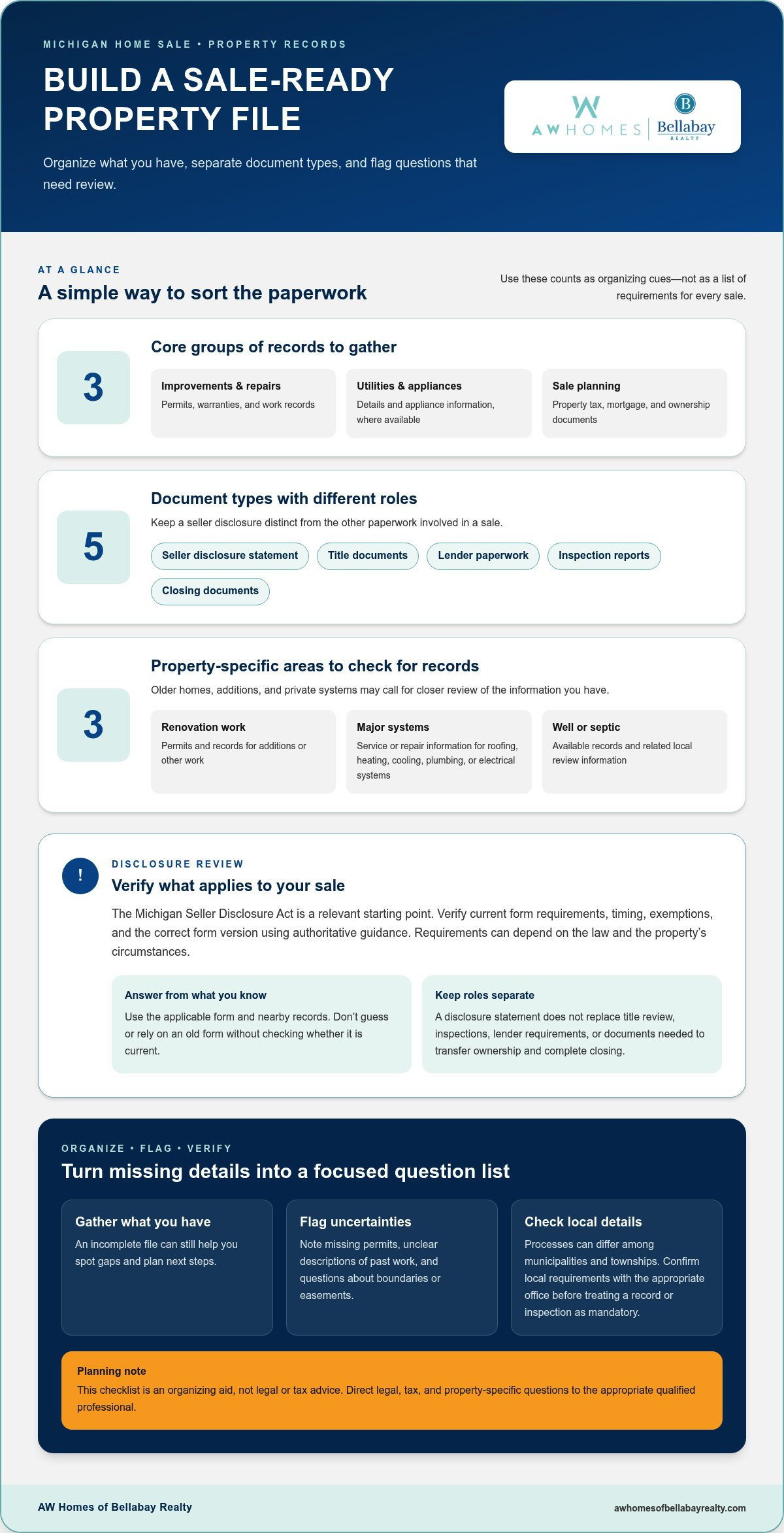
Collect useful property information in one place, even if some records are incomplete. Having documents on hand can help you answer questions, plan next steps, and spot gaps early. Look for:
- Permits, warranties, and records of improvements or repairs
- Utility details and appliance information, where available
- Property tax, mortgage, and ownership documents for transaction planning
Write down questions as you review the paperwork. If you’re unsure about a boundary, easement, or past project, flag it for professional review instead of relying on memory or an old document. A listing professional can help organize sale-related decisions around your property and timeline, while legal and tax questions belong with qualified advisers.
Keep the plan visible and update it as circumstances change. A timeline, household priorities, and organized records give you a practical starting point for preparing your Michigan home for sale.
Prepare Michigan disclosures and property records carefully
Keep seller property disclosures separate from the other documents involved in a sale. The Michigan Seller Disclosure Act is a relevant starting point for understanding the state’s disclosure framework. Review the Michigan Seller Disclosure Act and verify current form requirements, deadlines, and any exemptions using authoritative guidance. Requirements can depend on the law and the property’s circumstances, so treat this part of your home selling checklist for Michigan residents as a prompt to verify, not a substitute for legal advice.
A seller disclosure statement is different from title documents, lender paperwork, inspection reports, and closing documents. Each serves a different purpose and may come up at a different stage of the transaction. Separate digital or paper folders can help you keep a disclosure response distinct from a repair record or title question.
Organize Michigan seller disclosures and supporting records
Use the applicable disclosure form to provide the property information requested of you, based on what you know. Don’t guess about a condition or rely on an old form without checking whether it’s current. If a question is unclear or you’re unsure how to answer accurately, note it for appropriate professional guidance. Keep relevant records nearby so your responses draw on documents and recollection rather than assumptions.
Before completing paperwork, verify which requirements apply to your sale, including timing, exemptions, and the correct form version. Don’t assume one rule or process covers every property. A disclosure statement also doesn’t replace title review, inspections, lender requirements, or documents needed to transfer ownership and complete closing.
Check property-specific records across West Michigan
Older homes, additions, and properties with private wells or septic systems may call for closer review of available records. Gather what you have. Even an incomplete file can help you identify questions early. For renovations or major systems, look for:
- Permits and records related to additions or other renovation work
- Service or repair information for roofing, heating, cooling, plumbing, or electrical systems
- Well or septic records and any related local review information available to you
Don’t assume a requirement applies just because a property is in Kent County. Processes can differ among municipalities and townships, and property features may affect which records or reviews are relevant. Confirm local requirements with the appropriate municipal or township office before describing a document or inspection as mandatory.
As you sort the file, flag missing permits, unclear descriptions of past work, and questions about boundaries or easements. That gives you a focused list to resolve instead of leaving uncertainties buried in a stack of paperwork. AW Homes of Bellabay Realty provides listing support for Greater Grand Rapids sellers, helping bring sale preparation and transaction steps into the broader plan. Read more about local listing guidance for Greater Grand Rapids sellers.
Compare repairs, presentation, and pricing before listing
Pre-listing preparation doesn’t have to become a long renovation project. Sort each issue into a practical category: address a visible concern, improve how the home presents, or leave it unchanged. The right choice depends on the home’s condition, likely buyer expectations, available time, and your priorities. This comparison keeps your home selling checklist for Michigan residents focused on decisions that support your sale instead of improvements made by default.
| Option | Consider it when | Example |
|---|---|---|
| Address visible issues | A condition affects safety, basic function, or a buyer’s first impression. | Repair a loose handrail or a dripping faucet. |
| Improve presentation | A manageable change could help rooms feel cleaner, brighter, or easier to understand. | Declutter a crowded entry and improve lighting. |
| Leave it unchanged | The work is optional, disruptive, or unlikely to fit your timeline and priorities. | Keep a dated but functional finish rather than starting a broad remodel. |
Decide which repairs and updates deserve attention
Start with safety, function, and visible maintenance concerns before taking on cosmetic projects. A small repair may matter more than an ambitious update if it affects how a buyer experiences the home. Weigh each task against the property’s overall condition and your move schedule. Don’t assume an improvement will return its full cost at sale or commit to work based on a guaranteed payoff.
Keep a simple record of completed work, including what was done and when. Save invoices, warranties, permits, and related service documents when applicable. These records can help you describe the home accurately and keep supporting paperwork organized for later steps.
Choose a presentation plan that fits the home
Start with the basics: clear surfaces, tidy rooms, clean high-use areas, working lights, and easy access through the home. Focus on changes that make the layout and condition easier to see rather than trying to erase every sign of use. Apply relevant home staging tips for sellers selectively, based on your home and timeline, instead of trying to follow every suggestion.
Once preparation is complete, professional photography can show the property clearly in its online marketing. AW Homes of Bellabay Realty coordinates professional photography with market positioning so the images and description reflect the home as it will be presented to buyers.
Keep pricing separate from renovation choices. A fresh coat of paint doesn’t determine a home’s value on its own. Pricing should draw on current local comparable sales and an analysis of the specific property, including its condition, features, and location. Statewide averages can’t account for neighborhood-level differences in Grand Rapids, Ada, Caledonia, and East Grand Rapids. Consider repairs, presentation, and pricing as connected but distinct decisions, then choose a plan that fits the home and your priorities.
Use this week-by-week checklist to get listing-ready
Use the sequence below as a flexible roadmap, not a promise that each phase will take a set number of days. Some tasks can happen together; others depend on decisions, contractors, weather, or your household’s schedule. Work through the phases in order, adjusting the pace to your home and preferred listing date. This keeps preparation organized without turning it into a rigid countdown.
Complete the pre-listing tasks in a practical order
Start with decisions and records, then complete the repairs and presentation tasks you’ve chosen. Schedule cleaning after dusty or disruptive work, and coordinate photography once rooms are ready. Before the listing goes live, review the property details and showing arrangements with your listing professional so the marketing reflects the home accurately.
- Plan and gather: Confirm priorities, collect property information, and identify who will handle each task. Owner: decision-maker or household lead.
- Declutter and prepare: Sort belongings, clear key surfaces and walkways, and complete the repairs or improvements you’ve chosen. Owner: assigned household member or service provider.
- Clean and check access: Arrange a final clean after preparation work. Make sure entry areas and rooms are accessible for photography and future showings. Owner: household lead.
- Coordinate photography: Set the photo appointment after the home is ready, and check that lights are working and rooms are presentable. Owner: listing professional and household contact.
- Review before launch: Check listing details, photographs, showing instructions, and household arrangements before the property goes live. Owner: seller and listing professional.
Build Michigan’s seasons into the plan. Snow and ice can affect paths and entry access; rain calls for a plan to keep floors and entrances manageable. In warmer months, check that landscaping looks cared for. Daylight changes can affect photography and showing schedules, so keep the plan adaptable.
Plan showings and the move around daily life
Agree on a simple routine for handling showing requests, straightening shared spaces, and securing valuables. Decide where personal documents and small items will go so they’re out of view and safely stored. If pets or accessibility needs affect access, include them in the showing plan rather than solving them at the last minute.
- Household contact: Keep the calendar and showing instructions current.
- Pet and access lead: Prepare a plan for pets, entry, and mobility needs.
- Everyone at home: Return everyday items to agreed storage spots and keep important papers secure.
For sellers in Grand Rapids, Ada, Caledonia, and East Grand Rapids, neighborhood context can inform listing strategy alongside the property’s features and presentation. AW Homes of Bellabay Realty brings together market positioning, photography, marketing, and transaction coordination around your timeline. Explore Greater Grand Rapids listing guidance.
Bring your Michigan home sale together with local guidance
A well-organized checklist helps you prepare, but decisions still need to fit your property, neighborhood, and next move. A listing professional can bring these pieces into one coordinated plan, connecting market positioning and photography with marketing, offer negotiations, and transaction steps. The aim is a clear process shaped around your priorities, not a promised sale price, closing date, or buyer response.
Know what local listing support can coordinate
AW Homes of Bellabay Realty, led by Angela Worth, provides residential listing support that includes professional photography, market positioning, marketing, negotiation, and transaction coordination. These elements work together: preparation affects how a home is presented, presentation informs marketing, and the terms of an offer shape the next transaction steps.
A tailored plan can help you decide what to address before listing, how to present the property, and how to evaluate offers in light of your timeline and goals. A seller balancing a move with a busy household, for example, may prioritize a manageable preparation schedule. Another seller may have more flexibility to complete selected updates. Local guidance helps organize those choices around the home rather than a generic checklist.
Move from checklist to a personalized selling plan
Before discussing next steps, gather the notes you’ve made along the way. A short, organized summary gives the conversation a practical starting point:
- Your preferred move date and next-housing plans
- Property records, completed work, and questions that still need review
- Preparation priorities, household constraints, and showing considerations
- Your goals for marketing, offer discussions, and the transition after a sale
Neighborhood context matters. Selling in Grand Rapids, Ada, Caledonia, or East Grand Rapids means considering the property in its local setting instead of relying on broad statewide assumptions. AW Homes serves residential sellers across Greater Grand Rapids, bringing regional insight to decisions about market positioning and the listing process. That insight can inform planning, but it doesn’t guarantee a particular result.
The checklist is a starting point, not a demand to finish everything at once. Choose the next step that fits your timing: organize a group of records, settle on preparation priorities, or begin shaping a listing plan. A focused conversation can help connect those tasks to your property and goals.
Take the next step toward your Michigan move
A home sale is also a transition into what comes next. Your plans may still be taking shape, and that’s okay. Let the home selling checklist for Michigan residents serve as a working guide: adjust your priorities as your timeline becomes clearer, and focus on the decisions that matter most to your household.
If you’re ready to turn your notes into a personalized selling plan, AW Homes of Bellabay Realty can help you consider the next steps for your property and circumstances. Led by Angela Worth, the team provides coordinated listing support and local perspective for sellers across Greater Grand Rapids. You don’t need to have every detail settled before starting the conversation.
Plan your Michigan home sale with AW Homes and take a thoughtful first step toward your next chapter. A clear plan can bring greater confidence to the decisions ahead.
Frequently Asked Questions
What should I do first when preparing to sell a house in Michigan?
Start by deciding who will make sale decisions and identifying timing constraints tied to your next move. Then set a realistic window for getting the home ready and discuss your goals with a local listing professional before booking major work. This early conversation can help you avoid spending time on projects that don’t suit your property, schedule, or marketing plan.
Do Michigan home sellers have to complete a seller disclosure form?
Many residential sellers need to provide a disclosure statement, but whether it applies and which rules govern your sale can depend on current law and the property’s circumstances. The Michigan Seller Disclosure Act is a key reference, but don’t rely on a form found online without checking that it’s applicable and current. For a specific interpretation of your obligations or any exemption, consult a qualified legal professional.
Can I sell my Michigan house as-is?
In general, sellers can offer a home in its current condition, but “as-is” shouldn’t be treated as a substitute for checking disclosure obligations or accurately describing known conditions. It also doesn’t guarantee that a buyer won’t request an inspection or negotiate after reviewing the property. Before accepting as-is language in an agreement, understand its meaning in that contract and get legal guidance for questions about your responsibilities.
How long does it take to prepare a Michigan home for sale?
There’s no single preparation timeline. A lightly furnished home with records in order may need less coordination than one requiring repairs, sorting, or property-specific documentation. Seasonal conditions in West Michigan can affect outdoor work and photography plans, too. Choose a target listing window, identify tasks that depend on others, and leave room for delays rather than promising yourself a fixed launch date.
Should I make repairs before listing my Michigan home?
Consider repairs based on the item’s condition, how it affects everyday use, and whether buyers are likely to notice it during a visit. A malfunctioning furnace, for example, raises different questions from dated cabinet hardware. Compare the time and disruption involved with your priorities, and don’t assume an upgrade will return its full cost. Keep records of completed work to support accurate answers to buyer questions.
What documents should I gather before selling a house in Michigan?
Gather documents that help explain ownership, costs, and the home’s history. Alongside property and mortgage information, look for recent tax statements, records of improvements, contractor invoices, appliance manuals, and warranty details. If the home is part of an association, locate relevant ownership or community documents. You may not need every item for every sale, but having them organized can make later questions easier to address.
When should I hire a real estate agent to sell my Michigan home?
Consider speaking with a listing agent before setting a price, committing to major updates, or scheduling photography. Early guidance can connect preparation choices with local market positioning and the practical steps of marketing and negotiations. In Grand Rapids, Ada, Caledonia, and East Grand Rapids, neighborhood context can help shape a property-specific plan. Bring your target timeline and questions so the conversation can focus on your next steps.


