

Buying a home in Heritage Hill isn't just a real estate transaction; it's a deliberate act of stewardship for a legacy that spans over 150 years. As you walk through these tree-lined streets, it's easy to fall in love with the hand-carved woodwork and the stories etched into every stone. However, knowing exactly what to look for when buying a historic home Heritage Hill requires a shift from standard home-buying logic to a more methodical, preservation-focused strategy. This transition represents a significant personal milestone that deserves expert navigation, intentionality, and planning.
We understand that the prospect of navigating strict preservation rules and century-old foundations can feel overwhelming. You deserve to feel confident that your investment is secure, your vision is achievable, and your future is protected. You'll discover the essential structural, regulatory, and financial factors you must evaluate before investing in a historic Heritage Hill estate. We'll preview the latest Grand Rapids Historic Preservation Commission requirements, explain the 25% state tax credit for qualified rehabilitations, and provide a clear checklist for specialized inspections. You will gain the strategic focus needed to balance modern luxury with authentic preservation.
Key Takeaways
- Identify the critical "Big Four" structural systems that require specialized inspection to prevent unexpected costs after your move.
- Navigate the Grand Rapids HPC regulations with confidence by learning exactly what to look for when buying a historic home Heritage Hill.
- Protect your estate's value with a strategic approach to insurance, tax uncapping, and specialized maintenance requirements.
- Discover how the Michigan State Historic Preservation Tax Credit can provide a 25% return on your qualified restoration expenses.
- Transition into your new chapter with a concierge-style process that ensures emotional security and professional precision.
The Historic Allure of Heritage Hill: Understanding the Commitment
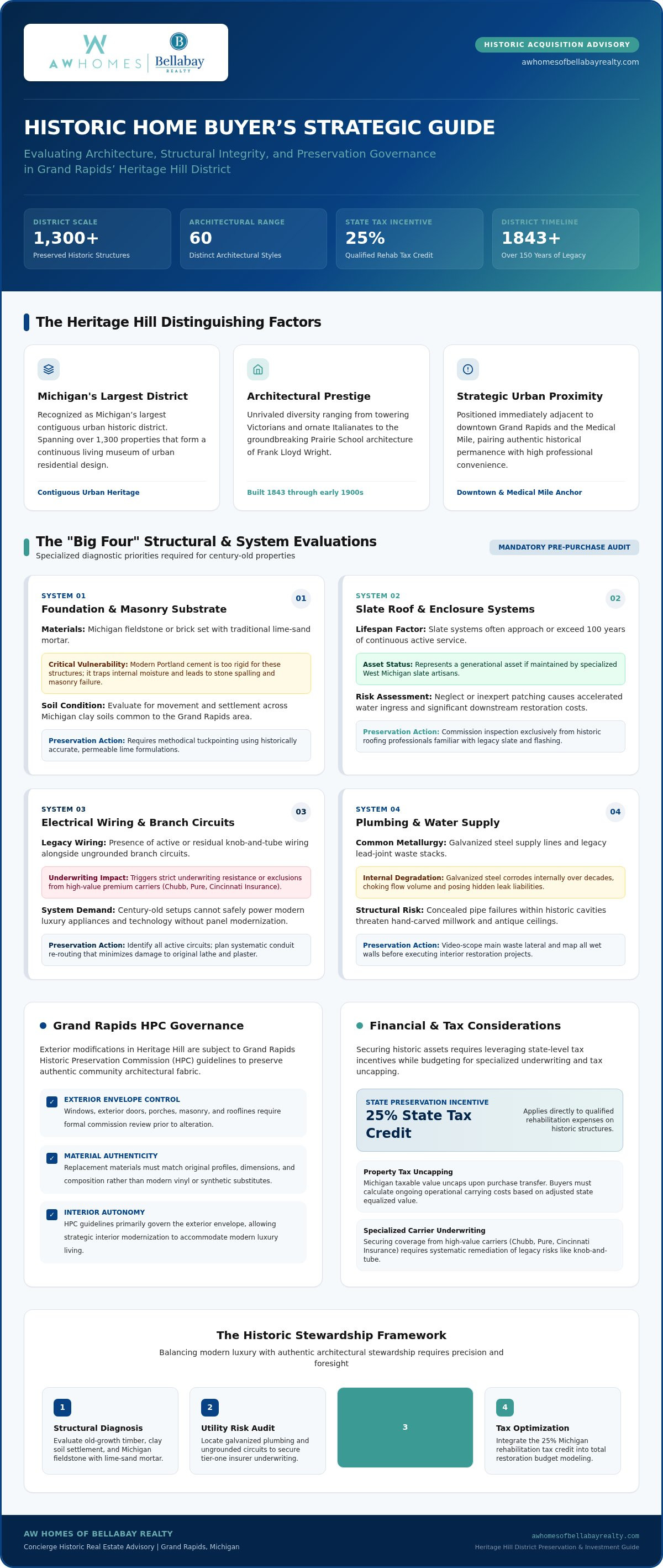
Heritage Hill represents more than a collection of houses; it is Michigan’s largest contiguous urban historic district. Spanning over 1,300 buildings and 60 distinct architectural styles, this neighborhood serves as a living museum of Grand Rapids history. Preservation creates value. When considering what to look for when buying a historic home Heritage Hill, you must recognize that you are stepping into a dual role. You are both a homeowner seeking a personal sanctuary and a historic steward preserving a piece of the 19th and 20th centuries. This transition is a significant personal milestone that requires a blend of expert navigation, intentionality, and planning.
Unlike the uniform aesthetics of modern developments, Heritage Hill offers an unparalleled diversity of design. You will find towering Victorians, ornate Italianates, and the quiet precision of Frank Lloyd Wright’s Prairie School architecture. These homes possess a soul and a sense of permanence that new constructions rarely replicate. Every property tells a story that began between 1843 and the early 1900s, offering a connection to the past that is both grounding and prestigious.
Why Heritage Hill Stands Out in the Grand Rapids Real Estate Market
This neighborhood maintains a unique position because it offers a sophisticated lifestyle rooted in convenience, craftsmanship, and community. Residents enjoy immediate proximity to downtown Grand Rapids and the Medical Mile, making it a premier choice for relocation buyers and local professionals alike. The value here is anchored in non-replicable details such as hand-carved mantels, original stained glass, and unreinforced masonry foundations. Understanding what to look for when buying a historic home Heritage Hill allows you to appreciate these elements as assets rather than liabilities. This is a neighborhood where preservation is a shared value, creating a localized reliability that protects your long-term investment.
The Reality of Historic Stewardship
Owning a century-old estate involves a commitment to methodical planning and professional insight. Many buyers worry that age equates to fragility, yet these structures were built with old-growth timber and traditional lime-mortar that have already stood for over a hundred years. The challenge lies in balancing your desire for modern luxury with the home's original integrity. Successful owners approach their property with a sense of trust, warmth, and strategic focus. Historic stewardship is a blend of architectural respect and strategic modernization.
Essential Structural and Systemic Evaluations for Century-Old Homes
Success in Heritage Hill begins with a methodical evaluation of the home’s anatomy. This process requires knowledge, precision, and foresight. When determining what to look for when buying a historic home Heritage Hill, you must prioritize "The Big Four": foundation, roof, electrical, and plumbing systems. These core elements dictate the property’s longevity and your financial peace of mind. A strategic focus on these systems helps mitigate the inherent stress of high-stakes transactions.
Systems in Heritage Hill estates often feature specialized materials that demand expert navigation. Many properties still contain knob-and-tube wiring or ungrounded branch circuits. While these were standard a century ago, they now trigger strict underwriting pressures from premium insurance carriers like Chubb, Pure, or Cincinnati Insurance. Similarly, galvanized steel plumbing or slate roofs nearing 100 years of service require a professional eye. A slate roof is a generational asset if maintained by a West Michigan specialist, but neglect leads to significant restoration costs that can disrupt your transition into the home.
Foundation and Masonry: The Bedrock of Your Investment
Heritage Hill foundations often utilize Michigan fieldstone or brick set in traditional lime-sand mortar. This is a critical distinction for any buyer. Modern Portland cement is too rigid for these structures; it traps moisture and causes stone failure. You must look for signs of shifting in the Michigan clay soils common to the Grand Rapids area. Methodical repointing with historically accurate lime mixes preserves structural integrity and prevents stone spalling. A secure foundation provides the emotional security you need when investing in a historic landmark.
Windows and Millwork: Preservation vs. Energy Efficiency
Preservation rules in the district strictly protect original wood windows and their signature wavy glass. Replacing these with vinyl or composite is rarely permitted by the Grand Rapids Historic Preservation Commission. Instead, the strategic use of interior or exterior storm windows provides modern energy efficiency without violating the home’s character. Original millwork, built-ins, and hand-crafted details are non-replicable assets that drive future resale value. These elements represent the intentionality and craftsmanship that modern developments cannot match.
Lath-and-plaster walls offer superior sound dampening compared to modern drywall, though they present unique insulation challenges that require careful planning. Navigating these complexities is part of the evolution into historic home ownership. For those seeking a concierge-style real estate approach, having a partner who understands these structural nuances ensures a seamless and secure transaction.
Navigating Grand Rapids Historic Preservation Commission (HPC) Guidelines
Understanding the regulatory framework of Heritage Hill is essential for any prospective owner. The Grand Rapids Historic Preservation Commission (HPC) serves as the guardian of the district’s architectural integrity, ensuring that every modification respects the neighborhood’s 19th-century origins. When determining what to look for when buying a historic home Heritage Hill, you must evaluate the property’s current compliance and your future vision against City Chapter 68 ordinances. This isn't merely about following rules; it’s about a shared commitment to a curated legacy. This methodical navigation of complex preservation rules is a hallmark of a successful transition into the community.
The primary tool of the HPC is the Certificate of Appropriateness (COA). You’ll need this document for any exterior work visible from a public street, alley, or sidewalk. For the 2026 fiscal year, a basic COA requiring full Commission review carries a fee of $90.00, while minor alterations eligible for Staff Review cost only $27.00. It's vital to consult with the HPC or a specialized advisor before signing a purchase agreement. Unauthorized exterior work can lead to significant penalties, including Correction Notices starting at $170.00 and potential Misdemeanor Complaints. We view this process as a strategic partnership that provides emotional security for your investment.
Exterior Alterations: What You Can and Cannot Do
The Commission maintains strict standards to prevent the erosion of historic character. Synthetic materials like vinyl siding or aluminum window wraps are consistently rejected in favor of original wood and masonry. If you're planning modern upgrades, they must be integrated with intentionality. Solar panels and EV chargers are generally permitted, provided they're positioned on non-primary roof slopes or tucked away from public view. Even landscaping and fencing require a methodical approach. Fences must match the home’s era, typically favoring wrought iron or traditional wood pickets over modern privacy styles. These guidelines ensure the enduring value of the entire district.
The Permit Process: A Methodical Approach
Gaining approval on your first attempt requires preparation and professional insight. The HPC meets the first Wednesday of each month at 5:00 p.m. at the Grand Rapids Development Center. Submittals are strictly enforced and are typically due two to three weeks prior to the hearing. Your real estate advisor plays a crucial role here, helping you gather historical documentation and connecting you with "HPC-friendly" contractors. These specialized tradespeople understand the nuances of lime-mortar and wood sash repair, ensuring your project meets the Commission’s high standards. This organized journey moves you away from chance and toward expert navigation of your new home’s evolution.
Financial and Insurance Considerations for Historic Grand Rapids Real Estate
Financial planning for a Heritage Hill estate requires a shift from standard suburban math. While newer developments in Ada or Forest Hills focus on acreage and square footage, value in this district is tied to architectural rarity and historical provenance. When researching what to look for when buying a historic home Heritage Hill, you must account for the "Tax Shock" associated with Michigan's Proposal A. Upon transfer, the property’s taxable value uncaps in the following year to match 50% of the purchase price. For a home selling at the Q3 2026 median price of approximately $700,000, this reset can be significant compared to a long-tenured seller's capped rate. Successful buyers approach this with knowledge, precision, and foresight.
Strategic owners establish a dedicated stewardship fund to manage the specialized maintenance these homes require. This proactive approach covers the costs of artisan trades like slate roofers or master plasterers. This isn't merely an expense; it's a method to protect a non-replicable asset. Data shows Heritage Hill homes maintain an average 101.2% sale-to-list ratio, reflecting the enduring demand for these historic landmarks. This localized reliability ensures that your investment remains secure throughout your personal evolution as a homeowner.
Insuring the Irreplaceable
Standard homeowners insurance policies often fail to cover the true cost of replicating hand-carved mantels, leaded glass, or old-growth wood millwork. You need a specialized carrier that provides Guaranteed Replacement Cost and Ordinance or Law coverage. This ensures that if a loss occurs, your home is restored with historically accurate materials rather than modern substitutes. Additionally, Ordinance or Law coverage is vital for bringing outdated systems to 2026 codes during a repair. Modernizing your electrical and plumbing systems doesn't just provide emotional security; it actively lowers your premiums by reducing the risk profiles of these century-old structures.
Tax Credits and Incentives for Preservation
The Michigan State Historic Preservation Tax Credit is a powerful tool for Heritage Hill owners. This program provides a state income tax credit equal to 25% of Qualified Rehabilitation Expenditures (QREs). With $1,000,000 reserved annually for owner-occupied residential projects and a minimum threshold of just $1,000, it's accessible for both major restorations and smaller preservation projects. The credit carries a 10-year carry-forward provision and currently has a statutory sunset date of December 31, 2030. Buying a home that has already undergone major systemic updates offers a strategic advantage, allowing you to focus your resources on aesthetic personalization rather than foundational remediation.
If you're ready to navigate these complex financial waters with a steady partner, contact us today for expert real estate investment consulting tailored to the Heritage Hill market.
Securing Your Legacy: The Concierge Approach to Heritage Hill Acquisitions
Acquiring a historic estate in Heritage Hill is more than a financial transaction; it's a significant personal milestone that marks a new chapter in your life story. While previous sections detailed the technicalities of foundations and preservation permits, the final step involves a transition that requires emotional security, professional precision, and strategic foresight. Knowing what to look for when buying a historic home Heritage Hill is essential, but navigating the high-stakes negotiations of a 19th-century property requires a partner who understands both the architecture and the human element of the move.
Angela Worth provides a calming, methodical presence during these complex transitions. Our concierge-style approach moves beyond traditional salesmanship to act as a high-level consultancy for your future. We connect you with a vetted network of historic restoration experts, including slate roof specialists and lime-mortar masons, ensuring you have expert insight before you commit. This organized journey removes the element of chance, replacing anxiety with a sense of structure and localized reliability.
The Angela Worth Edge in Heritage Hill
Success in this unique neighborhood demands a deeper understanding of the Grand Rapids real estate market. With inventory levels sitting at a tight 1.2 months in 2026, finding the right property often requires sourcing off-market gems and "pocket listings" that never hit the public portals. We provide the expert navigation, intentionality, and personalized planning needed to secure these rare opportunities. Our team guides you through the complexities of the home closing process in Michigan with an unhurried, logical flow that prioritizes your long-term well-being over a quick closing. We ensure no detail is left to chance, from verifying the 2026 tax multiplier of 1.027 to confirming the status of original wood window preservation.
Your Next Chapter in West Michigan
Integrating into the Heritage Hill lifestyle means becoming part of a community that values history, architecture, and neighborly connection. Your evolution as a homeowner here involves more than just maintenance; it's about participating in home tours, engaging with the neighborhood association, and establishing yourself as a neighborhood authority. We view our role as your transition expert, helping you move from the initial search to long-term stewardship with confidence. This is not a high-pressure process, but a curated journey toward your new home. When you are ready to begin, schedule your strategic historic home consultation with Angela Worth today to ensure your next chapter is handled with the expertise it deserves.
Embracing Your Future in Grand Rapids History
Investing in Heritage Hill is a commitment to excellence, preservation, and personal evolution. You now understand the strategic importance of evaluating "The Big Four" systems and navigating the local HPC guidelines with precision. Knowing what to look for when buying a historic home Heritage Hill ensures that your transition is grounded in reality rather than chance. This methodical approach protects your investment while honoring the craftsmanship of the past.
Angela Worth provides a concierge-style approach tailored to these high-stakes transitions. Our specialized expertise in West Michigan’s historic neighborhoods offers the emotional security you need during significant life milestones. As an independently operated team under the trusted Bellabay Realty brokerage, we prioritize your long-term well-being over a simple transaction. It's time to turn your vision of historic ownership into a secure, well-managed reality.
Start your Heritage Hill journey with a strategic consultation and step into your next chapter with confidence. Your legacy in this historic district begins with a single, well-planned step.
Frequently Asked Questions
Is it harder to get a mortgage for a historic home in Heritage Hill?
Securing a mortgage for a Heritage Hill estate is generally straightforward, provided the property meets basic safety and habitability standards. Conventional, FHA, and VA loans are all viable options. The challenge typically lies in the appraisal process, where the appraiser must use comparable historic sales to justify the price premium. Ensuring "The Big Four" systems are in good repair helps provide the financial security lenders require for high-stakes transactions.
Can I install central air conditioning in a Heritage Hill historic home?
Yes, you can modernize your home’s climate control, but it requires strategic focus. High-velocity mini-duct systems or mini-splits are popular because they don't require large soffits that disrupt original millwork. While interior work doesn't require HPC approval, any exterior condenser unit must be positioned away from public view. You'll need a Certificate of Appropriateness if the unit is visible from a public street or alleyway.
What happens if I make exterior changes without HPC approval?
Making unauthorized changes can lead to significant legal and financial stress. The City of Grand Rapids may issue a Correction Notice with a $170.00 fee or a Notice of Violation at $265.00. You might be forced to undo the work at your own expense to restore the home's historic integrity. Knowing exactly what to look for when buying a historic home Heritage Hill includes verifying that previous owners obtained all necessary permits.
Are there specific lead-based paint disclosures for Grand Rapids historic homes?
Federal law requires a standard Lead-Based Paint Disclosure for any residential property built before 1978. Since the vast majority of Heritage Hill homes were constructed between 1843 and 1925, this is a mandatory part of your Michigan home closing process. You'll receive a lead safety pamphlet and a 10-day window to conduct specialized inspections. This methodical approach ensures your transition into a historic property is both safe and transparent.
How do Heritage Hill property values compare to East Grand Rapids?
Heritage Hill often commands a higher price per square foot for authentic, non-replicable craftsmanship. While East Grand Rapids values are largely driven by the school district, Heritage Hill appeals to those seeking architectural prestige and urban proximity. In Q3 2026, the median sold price in Heritage Hill reached approximately $700,000. Both neighborhoods represent premium West Michigan investments, but Heritage Hill offers a unique sense of stewardship that modern developments cannot match.
What is the most common structural issue found in Heritage Hill inspections?
Foundation settlement caused by Michigan clay soils and deteriorating lime-mortar is the most frequent discovery. Historic unreinforced masonry requires periodic repointing with specific lime-sand mixes to remain stable. If a previous owner used modern Portland cement, it often traps moisture and causes stone failure. Identifying these masonry nuances early is a critical part of expert navigation during the inspection period, ensuring no detail is left to chance.
Does living in a historic district increase my property insurance?
Premiums are often higher because of the specialized labor and materials required for "Guaranteed Replacement Cost" coverage. Standard policies may not account for the artisan skills needed to repair slate roofs or hand-carved millwork. However, updating your home's electrical and plumbing systems can significantly lower these costs. We recommend seeking carriers that understand the value of historic assets to provide the emotional security your significant personal milestone deserves.
How can I find contractors in Grand Rapids who specialize in historic restoration?
The Heritage Hill Association maintains a directory of tradespeople familiar with local preservation ordinances. Our concierge-style approach also connects clients with a vetted network of master plasterers, slate roofers, and copper gutter fabricators. Using specialized contractors ensures that your restoration projects meet HPC standards and gain approval on the first attempt. This methodical planning helps move your project away from chance and toward a successful, stress-free evolution of your home.


