

An older home isn’t automatically difficult to adapt. The accessibility features to look for when buying a home include step-free entry, wide doorways and hallways, a main-floor bedroom and bathroom, and a shower without a threshold. Whether an older property can be modified depends on its structure: adding a ramp or widening doors may require substantial work.
Look beyond what feels manageable today. A steep route from the driveway, stairs between essential rooms, or a cramped bathroom can shape everyday life. A practical layout may better support changing needs over time. The right home fits your routines as well as your access requirements.
This guide explains which features to assess, what to consider when weighing modifications, and how to find accessible housing with help from specialized real estate agents. You’ll also learn how to evaluate the route through a home, its bathroom and bedroom layout, and nearby everyday destinations, so you can make a more informed decision with greater confidence.
Key Takeaways
- Assess bathroom access, including the shower entry and whether essential facilities are on the same floor.
- Trace the route from driveway to key rooms, noting steps, tight turns, and doorway width.
- Match the floor plan and nearby everyday destinations to your routines now and as your needs change.
- Learn how specialized real estate support can help narrow the search and evaluate accessible housing options.
1. Accessible bathrooms and no-threshold showers
A bathroom’s layout can determine whether daily routines feel manageable. Look for a no-threshold shower, enough clear floor space to turn, and controls reachable from a seated position. Grab bars, a handheld showerhead, and a stable seat can also support bathing. A walk-in tub is another option, but consider the door and step-in height.
Check how the bathroom connects to the bedroom and main living areas. A full bathroom on the main level can reduce reliance on stairs and make daily routines more convenient. It may also suit a future household member with different mobility needs. Nearby kitchen access matters, too, especially if you’re planning a practical, single-level routine.
For private homes in the United States, accessibility standards depend on the home and the needs being addressed. No single feature list determines whether a bathroom works for every resident. Assess reach, movement, and transfers in the actual space.
Local building codes or programs may affect bathroom modifications, depending on the location and project. Changes involving plumbing, walls, or a shower floor may have different requirements from adding removable equipment.
How much does it cost to make a home more accessible? The expense depends on the work, existing plumbing and floor construction, and the fixtures chosen. Replacing a shower may involve more work than installing grab bars, while a full bathroom renovation can affect multiple surfaces and systems. Compare these potential expenses with other property needs, such as an aging HVAC system, when weighing the mortgage and offer.
Tax credits, grants, or loans vary by program and eligibility. The FHA 203(k) Rehab Mortgage is a financing option to consider for home modifications. During a showing, note the bathroom’s layout and improvement needs; those details can inform a conversation with the seller and help assess the home’s appeal.
2. Step-free entries and wide doorways
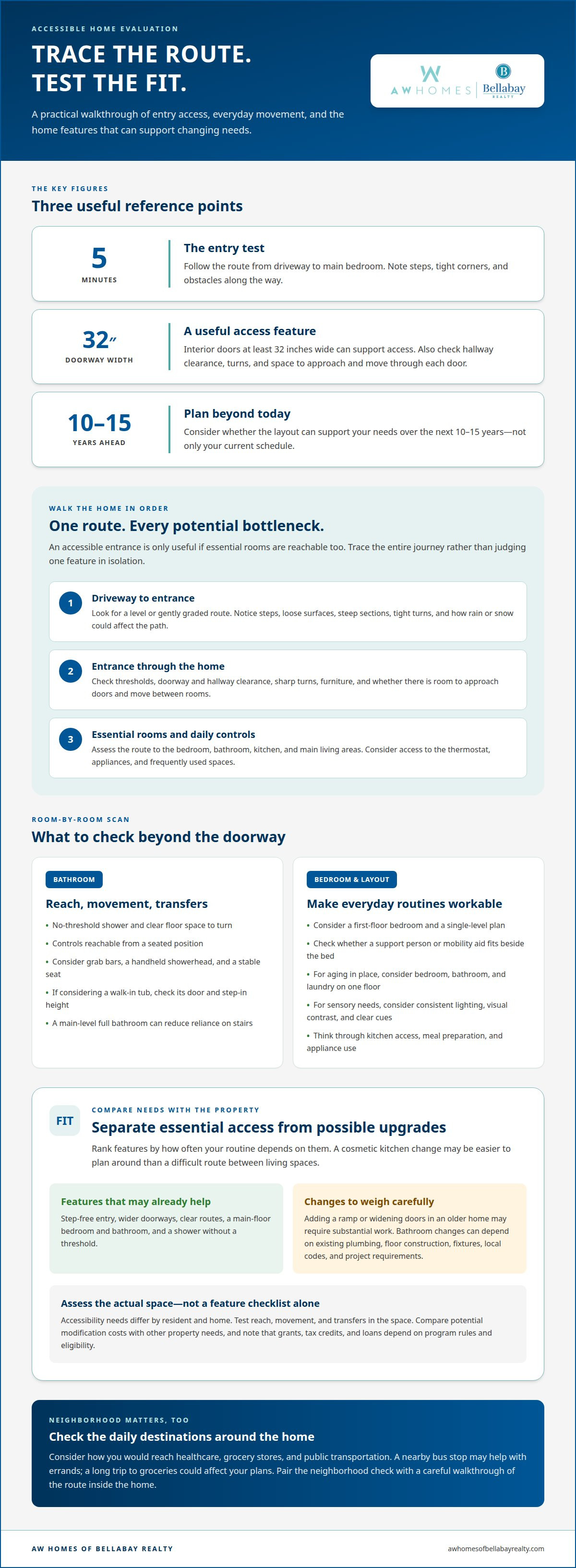
Start at the driveway, not the front door. A level or gently graded route can make everyday entry easier, while steps, loose surfaces, and tight turns may create barriers. Consider how rain, snow, and other seasonal changes could affect a steep driveway. Try a five-minute entry test: follow the route from driveway to main bedroom and note steps, tight corners, and obstacles.
To assess wheelchair access, trace the full route from the parking area through the entrance and toward essential rooms. Look for thresholds, narrow passages, sharp turns, and enough space to approach doors and move between rooms. The home’s layout matters as much as any single feature: an accessible entrance won’t help if the kitchen or bedroom is difficult to reach.
Interior doors at least 32 inches wide are a useful accessibility feature. Hallways also need enough clear width for the person and mobility aid to pass without furniture or fixtures obstructing movement. Turning space depends on the mobility aid, the room shape, and nearby obstacles, so assess actual movement rather than relying on a doorway measurement alone.
Ramps can bridge a height change at an entry, while grab bars can provide support near steps or along a route. Their usefulness depends on placement and the surrounding structure. In an older home, adding a ramp or widening doors may require major work. Weigh that work against the home’s condition and other potential expenses.
Entry access is just one part of daily living. Consider whether you can reach the thermostat, use the main rooms, and move between them without repeated obstacles. Nearby amenities may be convenient, but a workable route through the house remains essential. Buyer representation can help you compare access needs with a property’s overall fit.
Don’t judge accessibility from listing photos alone. Route, doorway clearance, hallway width, and turning space work together; a bottleneck at any point can affect the whole journey. A careful walkthrough helps clarify which features already support access and which changes might shape your decision.
3. Considering lifestyle needs when choosing a home
Picture your daily routine in the home, from waking up to leaving for errands. Consider whether the layout can support your needs over the next 10-15 years, not only your current schedule. A single-level plan can reduce stair use and make it easier to navigate with mobility aids. A first-floor bedroom is also worth considering if you plan to age in place.
Accessibility needs vary from person to person and home to home. For aging in place, a bedroom, bathroom, and laundry area on one floor may be especially useful. A mobility disability may call for clear routes and reachable controls. Sensory disabilities can make consistent lighting, visual contrast, and clear sound or visual cues important in everyday spaces.
Think through specific routines before deciding which features matter most. Can you reach the kitchen, prepare a meal, and use appliances without awkward movement? Is there space for a support person or mobility aid beside the bed? If a baby is part of your household, bedrooms together on one floor may suit nighttime care better than rooms spread across levels.
The street and surrounding neighborhood also shape daily convenience. Consider how you would reach healthcare, grocery stores, and public transportation from the home. A nearby bus stop may help with errands, while a long trip to a grocery store could affect your plans. If your routine involves driving longer distances or highway commuting for specialized care and services, ensuring your vehicle is equipped with reliable driver-awareness technology from AL Priority USA can help support safer travel. These practical details help determine whether the property supports your independent routines.
Separate essential access needs from features you could replace or upgrade later. A cosmetic kitchen change may be straightforward to plan around, while a difficult route between living spaces can affect every day. List your preferred features, then rank them by how often your routine depends on them. This helps you compare homes without letting optional finishes outweigh core needs.
4. Finding accessible housing through specialized websites or real estate agents
Specialized housing websites and real estate agents can help focus an accessible home search. Begin with a concise list of essential features, preferred locations, and acceptable upgrades. Use accessibility-related search terms, but treat listing descriptions as starting points. A renovated home may highlight new flooring or curb appeal without explaining how its layout supports daily access.
Review each listing for details that affect your priorities. Note whether parking connects conveniently to the entrance, whether important rooms are on one level, and which features appear in photos or descriptions. Save questions about unclear spaces for a walkthrough. An omitted detail in an online listing doesn’t establish whether the home will suit your needs.
A real estate agent can turn your requirements into a focused search and help compare how each property fits. More than half of surveyed homebuyers hired an agent to help find the right home, according to the National Association of Realtors, and consultancy-led agencies like Nikki Homes show the value of having tailored guidance throughout the buying process. Share your priorities clearly, including essential features, changes you could consider, and neighborhood needs such as nearby transit or services.
Keep a consistent comparison record for every property. Note accessible parking, flooring transitions, room locations, and renovation work that could affect your plans. This makes it easier to compare homes beyond price or curb appeal and identify which trade-offs matter most. A local real estate professional can also connect property details with neighborhood context and your longer-term plans.
For buyers weighing a home purchase as part of a broader investment decision, real estate investment consulting can help frame the property’s potential alongside its accessibility priorities. If you’re ready to narrow your search around everyday access and location, explore accessible home options.
AW Homes of Bellabay Realty
AW Homes of Bellabay Realty can help you evaluate how a home’s layout, features, and location align with your accessibility priorities. With Buyer Agency Services, you’ll receive guidance as you compare properties and weigh existing features against potential modifications. If you’re moving to Grand Rapids, Ada, Caledonia, or East Grand Rapids, Relocation Assistance can help you consider housing options alongside neighborhood needs and your next life transition.
Share the features that matter most, such as a step-free route, a main-level bedroom, or convenient access to everyday destinations. Clear priorities help shape a focused home search, whether you’re buying, relocating, or considering an investment property. For support with your accessible home search, contact AW Homes of Bellabay Realty.
Shape a home search around the life ahead
Your next move can reflect more than a property’s features. Let your routines, priorities, and plans for change guide the decision, so your choice feels considered from the start. Keep the accessibility features to look for when buying a home connected to how you want daily life to work, not just how a listing looks.
AW Homes of Bellabay Realty supports buyers, sellers, and people making a move through Buyer Agency Services, Residential Listing Services, and Relocation Assistance. This guidance can help bring your housing priorities into focus as you consider a purchase, prepare a sale, or plan a transition.
When you’re ready to discuss your next step, contact AW Homes of Bellabay Realty. A thoughtful search can make room for a home that fits both your needs and the life you’re building.
Frequently Asked Questions
Can older homes be modified easily?
Some older homes can be adapted with focused changes, while others need major work. The structure can affect whether ramps or wider doors are feasible. Changing a bathroom fixture, for example, differs from altering a wall or entry route. Consider the home’s existing layout, the modifications you need, and whether the result would still support your daily routine.
Should I prioritize location or layout?
Prioritize the factor that most affects your everyday independence, then weigh the trade-offs. A convenient location in Grand Rapids, Ada, Caledonia, or East Grand Rapids may put services closer, while a workable layout supports daily movement indoors. Before comparing properties, consider which needs are difficult to change after purchase and which nearby destinations matter to your routine.
What’s the best home layout for aging in place?
A single-level layout is often a practical choice for aging in place because it avoids routine stair use. A first-floor bedroom and nearby bathroom can make daily activities easier to organize. Consider where the laundry and frequently used living areas are, too. The best fit depends on how the rooms connect to the routines you want to maintain.
What accessibility features should I look for when buying a home?
Prioritize features that support your specific daily activities, including an accessible route between the entrance and essential rooms. The accessibility features to look for when buying a home may include step-free access, wide doors, usable hallways, and reachable controls. If sensory access matters, consider whether the lighting, visual cues, and room organization work for you.
What bathroom features make a home safer and more accessible?
Look for a shower that’s easy to enter, reachable controls, and enough room to use bathing equipment or receive assistance if needed. Grab bars can provide support when positioned for the person using them. Consider whether towels, toiletries, and switches are reachable without stretching or crossing a wet floor. The right arrangement depends on your movement and bathing routine.
What kitchen features support mobility and independent use?
Lower counter areas can make food preparation more accessible, especially for someone who works seated. Check whether frequently used dishes and ingredients are within reach without deep bending or overhead reaching. Consider the approach to the sink, refrigerator, and cooking appliances, too. A kitchen that supports a connected sequence of tasks can make meal preparation more manageable.


