

Your earnest money deposit isn't just a financial hurdle; it's the strongest signal of your intent and the foundation of your future home. When you're exploring what is an earnest money deposit Michigan buyers need to know, you're really asking how to balance a competitive offer with ironclad protection for your savings. It's completely natural to feel a sense of hesitation when wire-transferring thousands of dollars before the keys are even in sight. You want to ensure your investment is safe, your contingencies are firm, and your transition is seamless.
We'll provide the clarity you need to move forward with absolute confidence and emotional security. Whether you're targeting a property in Forest Hills, Ada, or East Grand Rapids, this guide will help you master the essentials of Michigan earnest money deposits to protect your investment. We will walk through the critical 2026 timeline, the specific norms for the West Michigan market, and the vital contingencies that keep your money protected. By the end, you'll have a clear, stress-free path to a successful closing, turning a complex financial requirement into a strategic advantage for your next chapter.
Key Takeaways
- Understanding what is an earnest money deposit Michigan requires involves viewing it as a strategic signal of intent that secures your position while protecting the seller's interests.
- Navigate the local landscape with precision by aligning your deposit with West Michigan norms, typically ranging from 1% to 3% in competitive areas like Grand Rapids, Forest Hills, and Ada.
- Secure your investment through carefully structured contingencies, providing you with clear and legal pathways to recover your funds if the property's condition or financing changes.
- Maintain a seamless transition by mastering the critical 48 to 72 hour deposit timeline and understanding exactly which neutral parties will hold your funds in escrow.
- Protect your long-term well-being by avoiding common pitfalls, specifically focusing on strict deadline adherence to ensure your deposit remains safe and your closing stays on schedule.
Understanding the Earnest Money Deposit in Michigan
An earnest money deposit serves as the heartbeat of a real estate contract. It's a "good faith" sum submitted alongside your purchase agreement, signaling to the seller that your intentions are both serious and sincere. When exploring Understanding the Earnest Money Deposit, it's clear that this financial commitment acts as a bridge between your initial offer and the final closing. In our local markets, from the quiet streets of Forest Hills to the vibrant neighborhoods of Grand Rapids, this deposit provides the necessary friction that keeps transactions stable and secure. It represents your first concrete step toward a new chapter.
When asking what is an earnest money deposit Michigan buyers often confuse this initial payment with their total down payment. While both contribute to your final equity, they serve different masters. Your down payment is a requirement of your lender; your earnest money is a commitment to the seller. Think of it as a strategic tool for trust, transparency, and timing. It ensures everyone is moving at the same pace toward a shared goal. By placing these funds in escrow, you demonstrate that you're a prepared and professional participant in the West Michigan market.
Why Earnest Money Matters for Michigan Sellers
Sellers in Ada and East Grand Rapids take their homes off the market based on the strength of your offer. This deposit compensates them for that lost time and market exposure. It demonstrates your financial capability and serious intent from day one. If a buyer breaches the contract without a legal excuse, the deposit often acts as a liquidated damages remedy. This protects the seller's transition while you perform your due diligence. It creates a balanced environment where both parties have skin in the game. This financial weight ensures that only serious offers move forward, protecting the integrity of the local housing market.
The Emotional Security of a Protected Deposit
Writing a large check can feel overwhelming during a major life transition. Professional guidance mitigates this stress by ensuring your funds are handled with methodical care and precision. We view this deposit as the first milestone in your personal evolution toward homeownership. It establishes a professional buyer-seller relationship built on mutual respect. By prioritizing your long-term well-being, we transform a technical requirement into a moment of intentional progress. Your deposit isn't just money in escrow; it's the anchor for your emotional security. It represents the transition from searching for a house to securing your future home.
How Much Earnest Money is Customary in West Michigan?
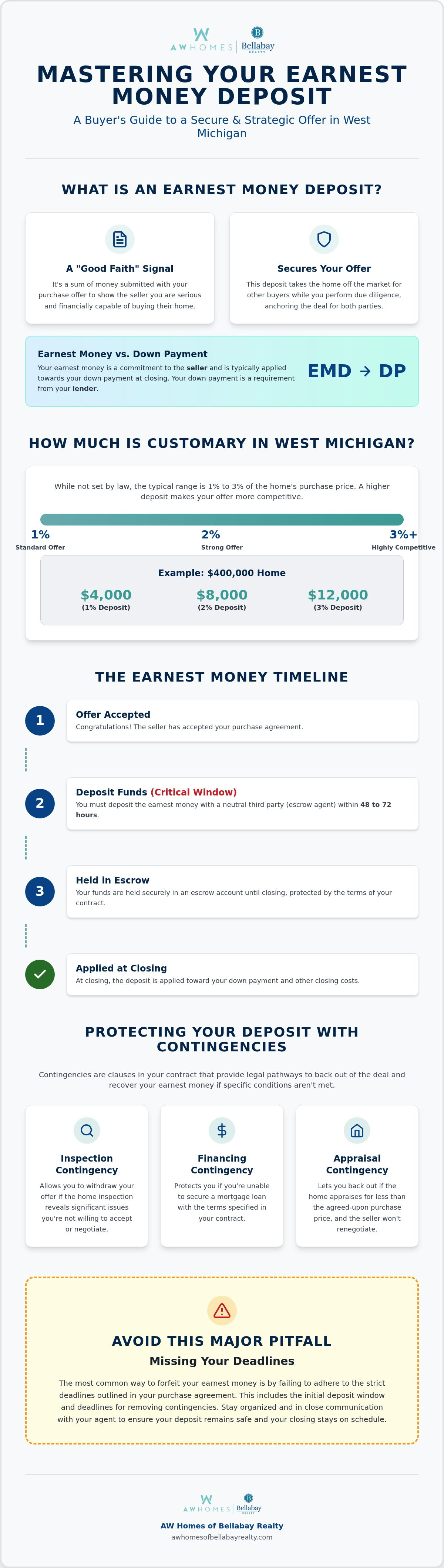
Determining How Much Earnest Money is Customary in West Michigan? requires a sophisticated blend of market data and tactical intuition. While Michigan law doesn't mandate a specific amount for a contract to be binding, the general rule of thumb ranges from 1% to 3% of the purchase price. In a balanced market, a 1% deposit is often sufficient to show intent. However, the local landscape in Grand Rapids and Ada frequently demands a more robust commitment to capture a seller's attention. This deposit isn't just a number; it's a statement of your readiness, your capability, and your resolve.
When you're asking what is an earnest money deposit Michigan sellers prioritize, you're really looking for ways to mitigate their risk. A larger deposit signals that you've done your homework, you're financially prepared, and you're committed to the closing table. In multiple-offer scenarios, increasing your deposit from 1% to 3% can be the deciding factor that differentiates your bid without actually increasing your final purchase price. For a $400,000 home in the Forest Hills district, you should expect to see average deposit ranges between $4,000 and $12,000 depending on the current level of competition.
Factors Influencing Your Deposit Amount
Several variables dictate the final number you'll include in your offer. Inventory levels in high-demand neighborhoods like East Grand Rapids or Caledonia often force buyers to lead with their strongest foot. The home's price point also plays a role. Luxury estates typically require larger flat fees or higher percentages than starter homes to ensure the seller feels secure. Finally, the strength of your other terms, such as your inspection period or appraisal gap coverage, will influence how much earnest money is needed to create a compelling package. We analyze these factors to ensure your offer is balanced, competitive, and methodical.
Strategic Negotiation: Balancing Strength and Safety
Finding the competitive "sweet spot" is where professional insight becomes invaluable. You want to offer enough to stand out, but you must also ensure your funds are protected by airtight contingencies. A seasoned advisor helps you navigate these nuances, ensuring your offer is both aggressive and secure. Understanding these local dynamics is essential for your personal evolution as a homeowner. You can learn more by choosing to Find a Buyers Agent in Grand Rapids who specializes in these strategic maneuvers. Our Buyer Agency Services provide the methodical planning required to turn a high-stakes transaction into a seamless transition.
Protecting Your Deposit: Michigan Real Estate Contingencies
A well-structured purchase agreement acts as a shield for your assets. While you've learned how much to offer, understanding what is an earnest money deposit Michigan buyers can safely recover depends entirely on your contingencies. These legal exit ramps ensure that if specific conditions aren't met, your funds return to your pocket. This methodical approach to contract writing is the bedrock of your emotional security during a high-stakes transition. We treat every deadline with surgical precision to ensure no detail is left to chance. For a deeper dive into the legal nuances, this Michigan Earnest Money Deposit Guide offers an excellent attorney-backed perspective on how these protections function in our state courts.
The Big Three: Inspection, Appraisal, and Finance
The inspection contingency is perhaps the most vital safeguard in West Michigan. You typically have a window of 5 to 10 days to uncover major defects. If the property's condition doesn't align with your vision, you can walk away with your deposit intact. The appraisal contingency follows, protecting your investment if the lender's valuation falls short of the purchase price. Finally, the financing contingency ensures that if your loan is denied through no fault of your own, you aren't penalized for a situation beyond your control. These three pillars provide a foundation of trust between you and the seller.
Secondary Safeguards for Specialized Needs
Move-up buyers in neighborhoods like Ada or East Grand Rapids often rely on sale-of-home contingencies to protect what is an earnest money deposit Michigan law views as a binding commitment. This allows your personal evolution to proceed only when your current residence is successfully under contract. Title and survey contingencies further refine this protection, ensuring the land you're buying is free from hidden encumbrances. Under Michigan law, the return of these funds requires a written mutual release. This document confirms both parties agree to dissolve the contract, providing a clean break and a clear path forward.
Strict adherence to contract timelines is non-negotiable. In Michigan real estate, "Time is of the Essence" clauses mean that missing a single date can jeopardize your entire deposit. This is why professional oversight is essential to your success. We manage these legal safeguards with a concierge-level focus, ensuring your transition remains seamless, stress-free, and secure. By prioritizing your long-term well-being, we turn a complex legal document into a roadmap for your future home.
The Earnest Money Timeline: A Step-by-Step Walkthrough
The journey begins the moment your offer is signed and accepted. In the Michigan real estate market, the typical window to deliver your funds is between 48 and 72 hours. This brief period requires prompt action, clear communication, and secure delivery. When you're managing what is an earnest money deposit Michigan buyers must handle, this initial step sets the tone for the entire transaction. It's a logistical sprint that leads into a methodical marathon. We ensure you have clear instructions for the wire transfer or check delivery, removing the guesswork from these high-stakes first hours.
Once your funds are sent, they don't simply disappear into the seller's bank account. They enter a protected state of escrow while you move through your due diligence period. During this time, your concierge team works behind the scenes to monitor every contractual milestone. We verify the receipt of funds, track the inspection window, and coordinate with your lender. This level of oversight ensures that your transition remains on schedule while your financial interests are shielded from unnecessary risk. You are never navigating these deadlines alone.
Where Does Your Money Go? Escrow in Michigan
Security is paramount during a major life transition. In Michigan, your deposit is held by a neutral third party in a dedicated escrow account. This is usually a broker’s trust account or an established West Michigan title firm. Sellers never hold the earnest money directly. This separation of funds provides emotional security for the buyer and professional protection for the seller. It ensures the money is only released when specific milestones are met or when a mutual release is signed. By using local title experts, we anchor your transaction in regional reliability and methodical planning.
Closing Day: The Final Transition
The final stage of the timeline occurs at the closing table. Your earnest money is not an extra fee; it is a vital prepayment of your future home. On closing day, this deposit is applied directly to your down payment or your closing costs. You will verify this credit on your Settlement Statement, also known as the ALTA. This document provides a line-by-line accounting of every dollar, ensuring total transparency as you finalize your purchase. It represents the successful conclusion of your financial commitment and the start of your new chapter.
Mastering these steps is part of a larger, unhurried journey toward homeownership. You can explore the full roadmap by reading our guide on the Michigan Home Closing Process. If you're ready to begin this evolution with a partner who prioritizes your long-term well-being, our Buyer Agency Services offer the methodical planning you deserve. We ensure no detail is left to chance from the first deposit to the final key exchange.
Common Pitfalls and How to Avoid Forfeiting Your Deposit
The greatest risk to your investment isn't the market itself; it's the fine print of the calendar. In West Michigan real estate, "Time is of the Essence" isn't just a phrase; it's a legal reality that governs every milestone. Missing a single contractual deadline is the #1 reason buyers lose their funds. When you're managing what is an earnest money deposit Michigan contracts define as a firm commitment, you must treat every date as a hard boundary. Our methodical approach ensures that no detail is left to chance, providing the emotional security you need during this major life transition.
Another significant danger is "buyer's remorse." While it's natural to feel a wave of hesitation during a high-stakes purchase, simply changing your mind isn't a legal exit ramp. Without a specific contingency path, such as an unresolved inspection issue or a financing denial, walking away will likely result in the forfeiture of your deposit. Clear, proactive communication between all parties prevents these disputes from arising, keeping your personal evolution on track and your funds secure. We act as your strategic advisor to ensure your intentions are always matched by your contractual protections.
When the Seller Can Keep Your Earnest Money
A seller has a legal right to retain your deposit under specific circumstances of buyer default. If you fail to submit a mortgage application within the agreed-upon timeframe, you may accidentally waive your financing protection. Similarly, failing to notify the seller of inspection concerns within your local 5 to 10 day window effectively accepts the property in its current condition. Unilateral termination, or "walking away" without a valid legal cause, is the most direct path to a loss. These pitfalls are entirely avoidable with the right expert navigation and planning.
Resolving Disputes in West Michigan
When disagreements occur, Michigan real estate brokers often step in to facilitate a resolution before legal action becomes necessary. Mediation is a common and effective tool in the Grand Rapids and Ada areas, allowing both parties to reach a settlement without the stress of a courtroom. However, the best way to handle a dispute is to prevent it through methodical planning and professional oversight. By establishing a transparent relationship from the start, we mitigate the inherent stress of the transaction. We prioritize your long-term well-being by ensuring every contingency is airtight and every deadline is met.
Your path to a successful closing should be seamless, supportive, and secure. You deserve a partner who understands the emotional and logistical nuances of this life stage. To ensure your investment remains protected, choose to secure your next chapter with AW Homes of Bellabay Realty. We provide the high-level concierge service you need to move forward with absolute confidence.
Securing Your Future with Confidence
Your journey toward a new home in West Michigan should be defined by clarity and emotional security. Mastering what is an earnest money deposit Michigan buyers encounter allows you to turn a technical requirement into a strategic advantage. By prioritizing methodical planning and airtight contingencies, you protect your investment while securing your position in competitive markets like East Grand Rapids or Caledonia. Every deadline is a milestone, and every protection is a pillar of your peace of mind.
Angela Worth provides concierge-style guidance and deep localized expertise in Ada and Forest Hills to ensure your transition is entirely stress-free. Our methodical approach removes the guesswork from complex timelines, allowing you to focus on the personal evolution of your next chapter. You deserve a partner who views your transaction as a significant milestone rather than just a financial task. We prioritize your long-term well-being so no detail is left to chance.
Begin your strategic home search with AW Homes today. We're ready to provide the professional authority and empathetic reassurance you need for a successful, seamless closing.
Frequently Asked Questions
Is earnest money the same as a down payment in Michigan?
No, earnest money and a down payment serve two distinct purposes in a transaction. Your earnest money is a "good faith" gesture to the seller that secures your contract, while the down payment is the total cash contribution required by your lender at closing. However, your deposit is typically credited toward your down payment on closing day. This ensures your initial investment directly reduces the final amount you need to bring to the table.
Can I get my earnest money back if I change my mind about the house?
You cannot simply get your money back for a change of heart; you must have a valid legal reason defined by a contingency. If you discover major defects during the inspection or if your financing falls through, your deposit is protected. However, backing out due to "buyer’s remorse" without a contractual path usually means the seller keeps the funds. We ensure your contingencies are airtight to provide emotional security throughout this transition.
Who exactly holds the earnest money deposit in a Michigan transaction?
A neutral third party always holds the funds to ensure transparency and safety for both parties. In West Michigan, this is typically an established title company or the real estate broker’s specialized trust account. The seller never holds the deposit directly. This arrangement prevents disputes and ensures the money is only released when all contractual obligations are met or a mutual release is signed by both the buyer and seller.
How long do I have to submit my earnest money after my offer is accepted?
The standard window for submitting your deposit in Michigan is usually 48 to 72 hours after the offer is fully executed. This timeline is critical because missing the deadline could put you in default of the contract. We provide clear instructions for wire transfers or checks to ensure your funds arrive safely and on time. Staying ahead of this schedule is a vital part of our methodical approach to your home purchase.
What happens to the earnest money if the house doesn’t appraise?
If your contract includes an appraisal contingency and the home’s value comes in lower than the purchase price, your deposit is protected. You typically have the option to renegotiate the price with the seller, pay the difference in cash, or walk away with a full refund of your earnest money. This safeguard is essential in competitive markets like Ada and Forest Hills where prices can fluctuate during high-demand seasons.
Can a seller keep my earnest money if I can’t get a mortgage?
A seller generally cannot keep your deposit if your mortgage is denied, provided you have a financing contingency in place. However, you must adhere to the contract terms, such as applying for the loan within the specified timeframe. If you fail to perform your duties or miss deadlines, you risk forfeiting the funds. We monitor these milestones closely to ensure your financial interests remain secure throughout the entire lending process.
How much earnest money should I offer in a competitive Grand Rapids market?
In the competitive Grand Rapids market, offering 1% to 3% of the purchase price is standard practice. If you are competing for a high-demand property in East Grand Rapids, a higher deposit can signal stronger intent and financial stability to the seller. We help you determine the strategic "sweet spot" that makes your offer stand out while ensuring your investment is balanced against your overall financial goals and long-term well-being.
Do I pay earnest money directly to the home seller?
You should never pay earnest money directly to the home seller. To maintain security and trust, your funds must be deposited into a professional escrow account managed by a title company or real estate brokerage. This ensures that the money is held neutrally and can only be dispersed according to the legal terms of your purchase agreement. Understanding what is an earnest money deposit Michigan buyers need to protect is a vital part of our professional care.


