

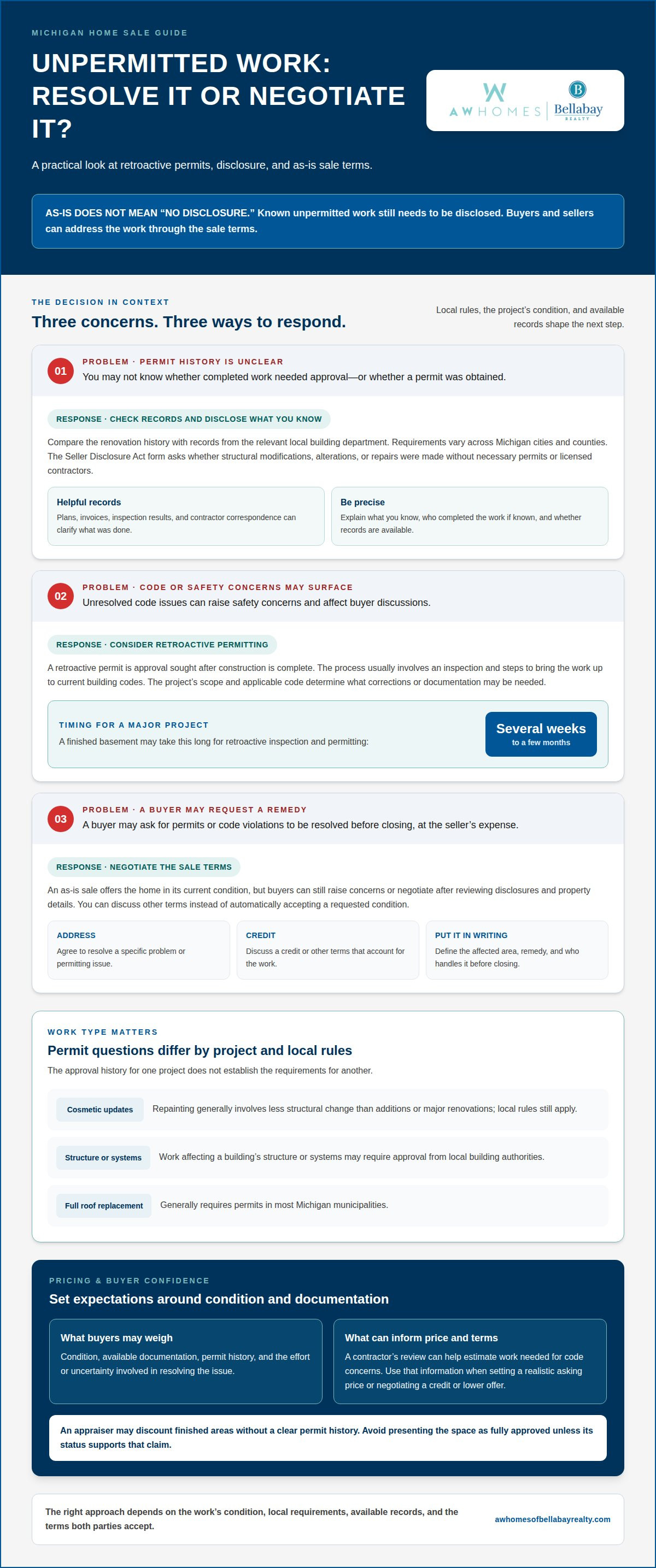
Selling a home with unpermitted work in Michigan is possible, but an as-is sale does not remove the need to disclose known issues. Michigan’s Seller Disclosure Act form asks about structural modifications, alterations, or repairs made without necessary permits or licensed contractors. Buyers and sellers can address the work through the sale terms.
It’s understandable to worry that an older renovation could derail a sale. Start by finding out what work may have required a permit, what buyers or lenders may view as a risk, and how disclosure could shape negotiations.
This guide covers the risks of selling with unpermitted work, when seeking a retroactive permit may make sense, and how an as-is sale can work. You’ll be better prepared to decide what to resolve before listing and what to discuss with a buyer.
Key Takeaways
- Disclose known work without required permits; clear documentation can help buyers understand what was changed.
- Weigh a retroactive permit against an as-is sale, considering the work’s condition and local requirements.
- Unpermitted additions can affect buyer confidence, financing, and negotiations, so plan how to address them before listing.
- Thoughtful pricing and sale terms can help set expectations and keep the transaction moving.
Should I get a retroactive permit before selling?
Not always. You can seek approval for completed work or sell as-is and negotiate with buyers. Let disclosure requirements and local rules guide your decision.
Obtaining Retroactive Permits
A retroactive permit is approval sought after construction is complete. The process usually involves an inspection and steps to bring the work up to current building codes. Unresolved code issues can raise safety concerns and affect buyer discussions. For a major project, such as a finished basement, retroactive inspection and permitting may take several weeks to a few months.
Work That May Require Permits
Cosmetic updates, such as repainting, generally involve less structural change than additions or major renovations, but local rules still apply. Work affecting a building’s structure or systems may require approval from local building authorities. Full roof replacements generally require permits in most Michigan municipalities. Before assuming completed work did not need a permit, identify what changed and ask the relevant local building department how its rules apply.
Permit Requirements by Work Type
Permit requirements depend on the type of work and local regulations, so the approval history for one project does not establish the rules for another. An addition, finished basement, and roof replacement can raise different questions about plans, inspections, and code compliance. Retroactive permitting focuses on bringing completed work up to code. The project’s scope and applicable building code determine what corrections or documentation may be needed.
Checking Permit Records and Seller Disclosures
Checking permit records means comparing the home’s renovation history with records held by the relevant local building department. Rules vary across Michigan cities and counties, so requirements depend on the local authority. The Michigan Legislature’s Seller Disclosure Act form asks whether structural modifications, alterations, or repairs were made without necessary permits or licensed contractors. Review known work and available records before completing the disclosure. Buyers may also investigate permit history through the local building department.
Can I sell a house with an unpermitted addition in Michigan?
Yes. You can list and sell a Michigan home with an unpermitted addition, including as-is, while disclosing what you know. Buyers may consider the addition’s condition, documentation, and permit history when deciding what terms to offer.
Disclosing Unpermitted Work
Disclosure means giving buyers an accurate account of known renovations completed without necessary permits, so they can evaluate the property with clearer expectations. The Michigan Legislature says the Seller Disclosure Act requires certain disclosures in residential property transfers. Its form asks whether structural modifications, alterations, or repairs were made without necessary permits or licensed contractors.
Explain what you know about the work, including who completed it and whether records are available. Plans, invoices, inspection results, and contractor correspondence can help clarify an addition or basement renovation. If a previous owner did the work and you genuinely do not know its permit history, distinguish that from facts you can document.
Selling As-Is With Disclosure
An as-is sale means offering the home in its current condition while still disclosing known information about unpermitted work. Buyers can still raise concerns or negotiate after reviewing the disclosure and property details.
A buyer may propose a purchase-agreement clause requiring you to obtain permits or resolve code violations before closing, at your expense. You can also discuss other terms that account for the work. Early, clear disclosure gives both sides a chance to consider their options before moving forward.
Pricing a Home Accordingly
Set a price with buyers’ likely assessment of the addition in mind, rather than relying only on its finished appearance or added square footage. An appraiser may discount finished areas without a clear permit history, and buyers may account for the effort or uncertainty involved in resolving the issue.
When setting your listing price, consider the addition’s condition, available documentation, and likely buyer questions. A contractor’s review can help estimate work needed to address code concerns. Use that information to set a realistic asking price or negotiate a credit or lower offer, rather than presenting the space as fully approved.
A considered home listing strategy can help frame the addition’s condition and documentation clearly for buyers.
What is Unpermitted Work?
Unpermitted work is construction or renovation completed without a permit required by local authorities. An addition or finished basement can raise questions about approval, code compliance, and the sale. A buyer may ask for a purchase-agreement clause requiring you to obtain permits or resolve code violations before closing. You can negotiate that condition rather than accept it automatically.
The term refers to whether required approval was obtained, not simply whether a project looks finished. A home inspector may identify work without a clear permit history or that appears inconsistent with code. Buyers, lenders, and local officials may each have different concerns about that finding. Keep records of completed repairs and contractor correspondence together to make the work’s history easier to explain.
Repairs and concessions are possible ways to negotiate. You might agree to address a specific problem, offer a credit, or adjust the sale terms instead of completing every requested improvement. The right approach depends on inspection findings and what both parties accept in the purchase agreement. Be specific about the affected area, the requested remedy, and who will handle it before closing.
An as-is sale leaves the property in its current condition, but buyers can still negotiate after an inspection. If you agree that repairs or permitting must happen, define the obligation in writing. Disagreements over who pays, what work is required, or when it must be finished can delay closing. Clear terms help avoid these issues surfacing late in the transaction.
Legalizing past construction may involve retroactive permitting and corrections to meet current requirements. Local inspectors may uncover work during their review, and a buyer may then be required to obtain a retroactive permit. That possibility can affect negotiations even if you are not making repairs. In Grand Rapids, one seller began retroactive permitting after two weeks of limited offers on a home with an unpermitted finished basement, illustrating how permit concerns can affect buyer response.
Risks of selling a home with unpermitted work
Unpermitted work can affect safety, financing, value, and the sale timeline. If it comes to light during a Michigan transaction, inspection findings and buyer concerns may lead to new negotiations or required corrections.
Risks During a Home Sale
Unapproved electrical, plumbing, or structural work can raise safety and building-code compliance questions. Local authorities may assess fines or require repairs, while work that appears unsafe or noncompliant can raise insurance coverage concerns. An insurer may refuse coverage for a home it considers unsafe or out of compliance.
Financing and valuation may also be affected. Some lenders may refuse to finance a property with certain unpermitted spaces, particularly when safety or reported square footage is at issue. An appraiser may discount a finished basement, bedroom, or addition without a clear permit history. Buyers anticipating extra review or future repairs may reconsider their offer.
Discovering Unpermitted Work During the Sale
A home inspection may reveal construction without permits, work that appears incomplete, or other concerns. If the finding involves a structural change or electrical work, buyers may request further review, repairs, a price change, or terms requiring you to address code violations. Those negotiations can affect the agreed closing timeline.
Local inspectors who find unpermitted renovations may require the homeowner to obtain a retroactive permit. The process can involve inspections and corrections to meet current requirements. If the work raises safety concerns, resolving them can become central to the sale rather than a minor paperwork issue.
Concealing known work carries a different risk: it may create legal liability after closing. Keep disclosures accurate and records organized, including inspection results and completed repairs. For a sale plan that accounts for permit concerns, discuss your home sale strategy.
AW Homes of Bellabay Realty: Residential Listing Services
AW Homes of Bellabay Realty can help you plan a residential listing when unpermitted work raises questions about disclosure, pricing, or buyer negotiations. Its Residential Listing Services offer guidance on presenting the property and setting expectations around its condition and documentation.
Before listing, organize available permits, contractor records, and inspection findings. A clear record of the home’s history can help you describe its features and respond to buyer questions. If you’re deciding whether to sell as-is or address the work first, discuss how each approach could affect your listing strategy and sale terms.
For guidance on your home sale, contact AW Homes of Bellabay Realty or visit awhomesofbellabayrealty.com.
Plan Your Next Move With Clarity
When selling a home with unpermitted work in Michigan, consider more than the property itself as you plan your next move. Think about timing, the transition ahead, and how you want to approach the sale. A thoughtful plan can help you make decisions that fit your priorities and keep communication clear.
AW Homes of Bellabay Realty offers Residential Listing Services for homeowners preparing to sell, along with Buyer Agency Services and Relocation Assistance for those planning what comes next. The right support can connect a home sale with your next chapter, whether you’re finding another home or coordinating a move.
When you’re ready to discuss your plans, contact AW Homes of Bellabay Realty. Take the next step at your own pace, with a clear direction for the transition ahead.
Frequently Asked Questions
How do permits work, and why do you need them?
Permits let local authorities review certain construction or renovation work for safety and building-code compliance. Requirements depend on the work and local rules, so a structural change may need different approval from a smaller project. Permit records document what was approved and can clarify which parts of a home were altered. That history may also help you explain the project to a future buyer.
How do appraisers treat unpermitted spaces?
Appraisers may discount finished basements, bedrooms, or additions without a clear permit history. For example, an undocumented finished basement may be evaluated differently from one with a clear approval record. Keep plans, renovation records, and permit information available for the appraisal. Buyers and lenders may also consider the space’s status when assessing the property and deciding whether its reported area affects an offer.
Can you sell a house with unpermitted work in Michigan?
Yes, selling a home with unpermitted work in Michigan is possible, including through an as-is sale. Buyers may negotiate after reviewing the property, so be ready to discuss the work and any records you have. If you inherited a home or were unaware of earlier renovations, distinguish what you know from what the documents show. Buyers can investigate permit history with local building authorities.
What are Michigan’s disclosure rules for unpermitted renovations when selling?
The Michigan Legislature’s Seller Disclosure Act requires certain disclosures in residential property transfers. Its disclosure form asks about structural modifications, alterations, or repairs made without necessary permits or licensed contractors. When selling a home with unpermitted work in Michigan, answer according to what you know about the property. For example, accurately describe a known basement renovation rather than implying it has an approval record you do not have.
How can I find out whether home improvements have permits in Michigan?
Contact the local building department responsible for the property to learn how to look up permits for renovations. For homes in Grand Rapids, Ada, Caledonia, and East Grand Rapids, the relevant authority depends on the property’s location. Compare available records with visible improvements, such as an addition or finished basement. Keep plans or invoices with your sale documents to help answer questions about the project.
How much does it cost to legalize unpermitted work in Michigan?
That estimate concerns permitting; total expenses may also depend on inspection findings and required corrections. A major renovation may receive a different review from a smaller project. Identify the work and what compliance requires to help decide whether to seek approval before listing or discuss another approach with a buyer.


