

A home inspection isn’t a pass-or-fail test, so can a house fail a home inspection? Not formally. The inspector documents concerns about the property’s condition, and what happens next depends on the findings and your purchase agreement. A serious issue can change the deal, but it doesn’t automatically end it.
It’s understandable to worry that a major repair could derail your plans. Often, buyers and sellers can discuss repairs, a credit toward repair costs, or a change to the purchase terms. If your offer includes an inspection contingency, you may also have the option to walk away. This guide explains common issues inspectors may flag, what typically follows the report, and how to weigh your choices before moving forward. The goal is to understand the property and choose a deliberate next step, not to make a snap decision.
Key Takeaways
- Treat the inspection report as a guide to the home’s condition, then sort findings by urgency and likely impact.
- Use the report to prepare a focused request for repairs, a closing credit, or a price adjustment.
- Separate safety and code concerns from routine maintenance so you can assess the risks clearly.
- Review your inspection contingency and purchase terms to understand whether renegotiating or ending the deal is an option.
1. Common structural, electrical, plumbing, mold, roof, HVAC, and pest problems
Foundation concerns may appear as cracks, uneven floors, or doors that stick. Cracks around doors or windows may signal structural movement, especially when several signs appear together. A damaged roof can also raise concern: missing shingles, visible sagging, or signs of water entry may point to repairs beyond routine maintenance. In Grand Rapids, note where each finding appears and whether the report recommends further evaluation. This helps distinguish a visible symptom from a confirmed underlying problem.
Plumbing findings can range from a dripping faucet to leaks, drainage problems, or aging pipes that may need whole-home repiping. Note low water pressure alongside slow drains, damp cabinet interiors, or stains near pipes. These details can help show whether an issue involves one fixture or multiple areas. A leak under a sink, for instance, differs from recurring moisture across several rooms. An inspection report can identify concerns, but it may not establish the cause or full scope of repairs.
Electrical systems may draw attention when outlets or switches don’t work, wiring appears damaged, or the report identifies other safety concerns. HVAC problems can include a system that doesn’t operate as expected; heating, ventilation, and air conditioning units typically last 15–20 years. An air conditioner that runs constantly may indicate inefficient operation. Inspectors may also note appliance problems, such as an oven that doesn’t heat or a dishwasher that won’t run through a cycle. Record which system or appliance is affected.
Moisture can contribute to mold concerns, while pest findings may include termite damage or an active infestation. Reports may also flag radon or carbon monoxide concerns. Some homes built before 1980 may contain asbestos in insulation, flooring, or textured ceilings, and professional testing is usually recommended when it may be present. Treat these findings distinctly: visible damage, a suspected hazard, and a test result are not interchangeable. Their details help buyers decide what to investigate and discuss next.
2. What happens if you fail the home inspection?
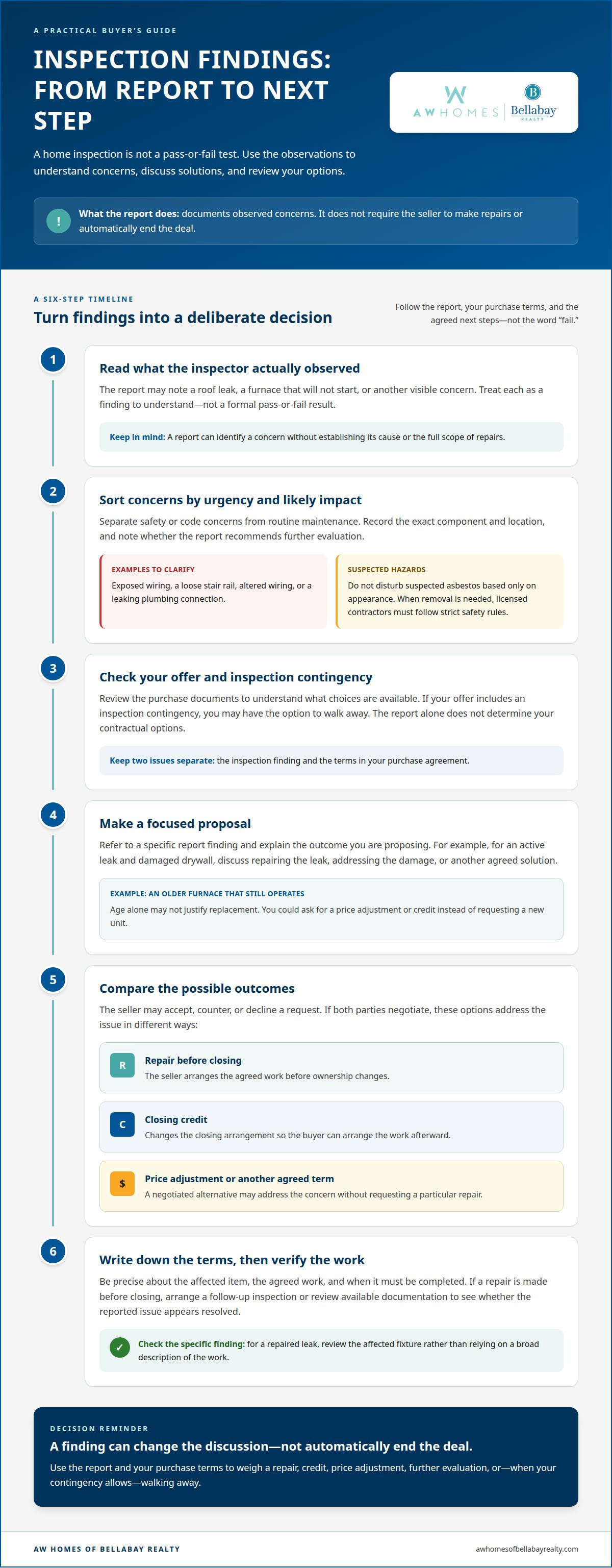
A home inspection isn’t a pass-or-fail test. The inspector reports observed concerns, such as a roof leak or a furnace that won’t start. The report does not require the seller to make repairs.
Sellers aren’t automatically required to fix every issue found during an inspection. They can decline a repair request or negotiate how to address it. Disclosure duties are separate from repair negotiations, so an inspection finding alone doesn’t determine what a seller must disclose. Buyers should consider known defects, the purchase documents, and applicable Michigan requirements.
Use the report to make a focused request. For example, if it identifies an active leak and damaged drywall, ask the seller to repair the leak, address the damage, or discuss another agreed solution. The seller may arrange repairs before closing, or the parties can negotiate a closing credit so the buyer can arrange the work afterward.
Age alone doesn’t always justify replacing a functioning system. If an older furnace still operates, you could ask for a price adjustment or credit instead of requesting a new unit. Explain your concern, refer to the report’s finding, and propose a specific outcome. The seller may accept, counter, or decline.
Keep repair terms precise. Identify the affected item, the agreed work, and when it must be completed. If the seller completes a repair before closing, arrange a follow-up inspection or review available documentation to see whether the reported issue appears resolved. For example, check the repaired leak at the affected fixture.
A credit and a repair solve different problems: a credit changes the closing arrangement, while completed work addresses the issue before ownership changes. Buyers weighing a property as an investment can use real estate investment consulting to consider how inspection findings fit the purchase decision.
3. Building-code and safety violations
Work that may not comply with local building codes can be flagged during a home inspection. Examples include altered wiring, plumbing problems, or a finished space with visible signs of incomplete work. The report records observed concerns; it doesn’t establish the full code history or certify every part of the property.
Inspection and inspector-licensing rules vary by state. Keep two questions separate: what rules govern the inspector, and whether particular work meets the building requirements that apply locally. For a Grand Rapids purchase, use specific observations in the report to identify questions about the property. A general inspection is not code approval.
Safety findings deserve a clear response. Homes built before 1978 may contain lead paint, and work that doesn’t meet local codes can raise concerns. Asbestos may also be present in older homes. When asbestos removal is needed, licensed contractors must follow strict safety rules while handling it. Don’t disturb suspected material based only on appearance.
Look beyond obvious cracks. A loose stair rail, exposed wiring, or a leaking plumbing connection can signal safety or workmanship concerns. Note the exact room, component, and report wording. Then distinguish an immediate hazard from an item that needs further evaluation, so repair discussions address the specific finding rather than a broad label like “failed.”
To assess code-related concerns, compare the inspection notes with available records of past work and identify the specific requirement or safety issue involved. If a specialist evaluates an electrical, plumbing, or structural concern, keep the written findings with the inspection report. Together, these records can clarify whether correction, further review, or negotiation is the next practical step.
4. Buyer options after inspection problems
Buyers don’t have to treat an inspection finding as an automatic reason to end a purchase. First, compare the report with your offer’s terms and identify concerns that could change your decision, such as a safety issue, a major repair, or an unresolved water problem.
Can buyers cancel after a bad inspection? A buyer whose offer includes a satisfactory-inspection contingency may choose to walk away. That option depends on the wording and deadlines in the purchase agreement, so read those terms before deciding or sending notice.
Consider these paths based on the finding and your priorities:
- Renegotiate: Request a repair, a closing credit, or a price reduction for a clearly documented problem.
- Proceed: Accept the home as it stands when the repair needs fit your plans and budget.
- End the deal: Use an applicable inspection contingency if the concern outweighs the reasons to buy.
For a significant concern, such as suspected foundation movement, seek a focused evaluation and use its findings to guide your decision. A broad note in the inspection report may not explain the cause, urgency, or full scope. Specific information helps buyers distinguish a manageable repair from a risk they don’t want to take on.
Pay attention to financing and insurance, too. A serious property issue can affect a lender’s willingness to finance the purchase or an insurer’s willingness to provide coverage. If a finding raises either concern, clarify how it affects the transaction before removing a contingency or committing to closing.
Keep the report, repair proposals, and seller responses together. For support weighing inspection findings against your purchase goals, discuss your buyer options with an agent.
AW Homes of Bellabay Realty: Residential Listing Services
AW Homes of Bellabay Realty helps buyers and sellers make informed decisions during residential transactions. If an inspection report raises concerns, Buyer Agency Services can help buyers consider the findings alongside their purchase goals and the terms of their offer. That means weighing repair requests, credits, or whether to proceed, rather than treating every observation as an automatic deal-breaker.
For homeowners preparing to sell, Residential Listing Services can support planning around the property’s condition and the steps involved in bringing a home to market. Clear decisions about known issues and transaction priorities can help sellers approach buyer discussions with focus.
If an inspection has changed your plans, contact AW Homes of Bellabay Realty to discuss your next step, or visit awhomesofbellabayrealty.com.
Move Forward with a Clear Plan
Whether a house can fail a home inspection matters less than what the findings mean for your next decision. Use the report to clarify your priorities, review your purchase terms, and decide what you need to know before moving forward. A thoughtful choice can protect your plans and help you feel more confident during a major transition.
If the inspection has changed your timeline or raised questions about your next move, take time to plan what comes next. AW Homes of Bellabay Realty offers Relocation Assistance for people planning a move, alongside guidance for residential transactions. A clear plan can help you approach the transition with focus instead of feeling rushed by the report.
Contact AW Homes of Bellabay Realty to talk through your next step. You can move ahead with purpose, one decision at a time.
Frequently Asked Questions
What happens if you fail the home inspection?
There’s no formal failing grade, but an inspection report can prompt buyers to reconsider a purchase. In Grand Rapids, start by matching each concern to your priorities: safety, repair scope, timing, or future upkeep. A buyer planning immediate renovations, for example, may assess an issue differently from someone seeking a move-in-ready home. Use that distinction to decide what information or terms you need before proceeding.
What Does It Mean When a Home Inspection Fails in Maryland?
In Maryland, “failed inspection” is informal wording for a report that identifies concerns, not an official pass-or-fail result. Maryland sellers provide a property disclosure statement summarizing known issues. The Maryland General Assembly states that a seller’s residential property disclaimer must disclose known latent defects that threaten health or safety and wouldn’t reasonably be found through careful visual inspection. Disclosure and repair requests are separate matters.
Can a house fail a home inspection in the United States?
A typical home inspection in the United States doesn’t give a house a formal pass-or-fail judgment. The inspector documents visible conditions, and buyers use those findings to inform their decisions. Keep this separate from a lender’s property assessment, which estimates market value for financing. For buyers in Grand Rapids, knowing which evaluation raised a concern helps clarify whether it relates to the property’s condition or financing.
What issues are most likely to cause problems on a home inspection?
Problems often involve the home’s structure, roof, electrical or plumbing systems, heating and cooling equipment, moisture, or pests. Look for clusters of related observations rather than viewing each note in isolation. For instance, several signs of water entry in one area may warrant a closer look at the source and affected materials. Location-specific details in the report help focus any follow-up evaluation.
Which home inspection findings are safety hazards or major defects?
Give findings prompt attention when they suggest immediate danger, affect structural stability, or prevent an essential system from operating safely. Examples include exposed electrical components, unstable stairs, substantial structural movement, or suspected carbon monoxide concerns. A major defect may also involve damage affecting several parts of a home. Separate urgent safety questions from maintenance concerns when setting priorities.
How do inspection contingencies and repair negotiations work?
An inspection contingency in a purchase agreement sets out how inspection findings can affect the transaction. Read its deadlines and notice requirements, then send any request in the form and timeframe the agreement requires. A clear request identifies the finding and proposed resolution. For example, buyers and sellers can document whether agreed work must be completed before closing or handled through another negotiated term.


