

A condo can be a sound purchase in Grand Rapids, but the numbers need to work beyond the listing price. The answer to “Is buying a condo a good investment in Grand Rapids?” depends on the unit’s price, association dues, maintenance responsibilities, local demand, and property taxes.
It’s easy to focus on the purchase price and overlook recurring costs that shape affordability and long-term value. This guide explains how condo fees and maintenance affect your budget, what local inventory and market activity can signal, and how property taxes factor into the decision. You’ll also see how condo ownership may help build equity and what to compare when weighing a condo against other housing options in Grand Rapids. A clear view of costs, location, and your goals can make the decision more deliberate.
Key Takeaways
- Compare a condo’s asking price and cost per square foot with similar Grand Rapids options before judging its value.
- Include monthly association dues and unit-level maintenance in your budget, then review what the dues cover.
- Use local inventory and market activity to understand your choices and set a thoughtful offer strategy.
- Weigh potential equity growth against ownership costs and your investment timeline.
- Factor property taxes into the full cost of ownership; the estimated Grand Rapids city property tax rate is approximately 1.54%.
1. Why Choose a Condo in Grand Rapids?
Grand Rapids condo listings show a broad range of purchase options for Michigan buyers. Condo listings and asking prices can vary across the city. These figures describe different measures, not one guaranteed value for every listing. Compare similar units by location, size, building condition, and included features.
Price per square foot can help compare listings of different sizes. A larger unit may have a higher asking price but a lower per-square-foot figure. Compare condos with similar layouts and locations, then consider both the total price and price per square foot. Neither figure alone tells you about the unit’s condition or the association’s finances.
Location also creates distinct purchase bands in the 2026 market overview. These ranges help buyers narrow searches, but a specific listing’s value still depends on its features, condition, and exact location.
Property features can explain why nearby condos have different asking prices. Compare size, layout, condition, and building amenities. Grand Rapids condo communities may include pools, clubhouses, or fitness facilities, which can affect appeal and ownership costs. List the features that matter to your household, then see which listings offer them. A family home may provide more private space, while a condo may suit buyers who prioritize a particular location or shared amenities.
Compare listings in similar locations and with similar sizes and conditions before deciding whether a condo offers better value than a family home. The right choice depends on how the price and features fit your needs.
2. Condo association dues and covered maintenance
In Grand Rapids, rental permissions for a condo depend on the association’s governing documents and applicable local requirements. Short-term rentals may face different restrictions from longer leases, so review the association rules and relevant city requirements before planning to rent.
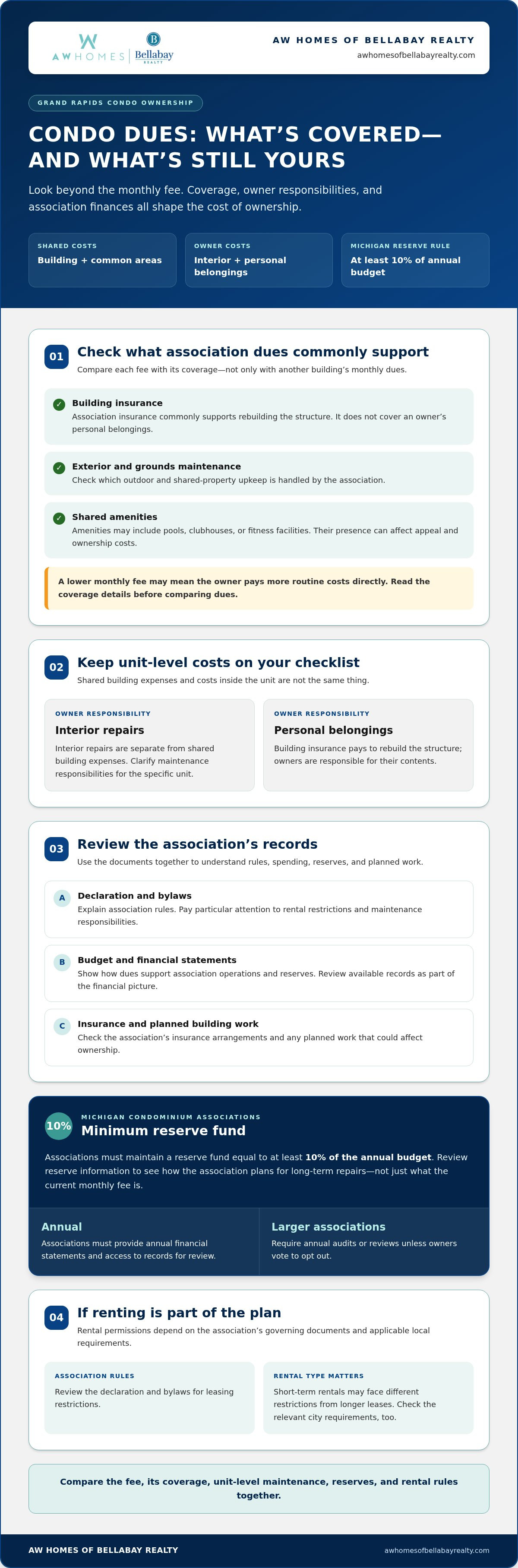
Compare each fee with what it covers, not just with another building’s monthly dues. Lower dues may mean the owner pays more routine costs directly.
Association dues commonly support building insurance for rebuilding the structure, exterior and grounds maintenance, and shared amenities. Read the association’s budget and maintenance responsibilities alongside the listing. Interior repairs and personal belongings are separate from shared building expenses. If a building burns, unit owners are responsible for their contents, while building insurance pays to rebuild.
Review the condominium declaration, bylaws, budget, financial statements, and available association records before deciding to buy. The declaration and bylaws explain the rules; the budget and statements show how dues support operations and reserves. Pay particular attention to rental restrictions, maintenance responsibilities, insurance, and planned building work. These details can affect everyday ownership and future selling plans.
Michigan condominium associations must maintain a reserve fund equal to at least 10% of the annual budget. They must also provide annual financial statements and access to records for review. Larger associations require annual audits or reviews unless owners vote to opt out. Use these records to understand whether the association plans for long-term repairs, rather than relying only on the current monthly fee.
Specific listings show why fees need context. They can differ from typical ranges because buildings, services, and ownership structures vary. Compare each fee with its coverage and the association’s financial records.
For a more complete ownership assessment, weigh dues, maintenance coverage, reserves, and rental rules together. Reviewing those factors as part of your condo investment considerations can help clarify how association costs fit your plans.
Before renting out a Grand Rapids condo, review the association’s declaration and bylaws for leasing restrictions, along with applicable local requirements. Short-term rentals may face different association rules from longer leases, so understand which rules apply to the unit before making a rental plan.
3. Local condo inventory and market activity
Grand Rapids housing conditions give condo buyers useful context, but citywide figures cover more than condos. Recent market data reported 399 homes available and 1.8 months of housing supply. These figures describe different parts of the market, so use them as context rather than direct measures of a specific condo’s value.
Market activity figures also vary by period and dataset. One recent measure put average time to contract at seven days, while another reported homes typically stayed listed for 48 days. Grand Rapids homes sold in about nine days on average in April 2026. Those figures are not interchangeable: dates, property types, and market areas can change the result. Check comparable condo listings and sales in the same neighborhood before drawing conclusions.
Demand for condos and rentals varies across Grand Rapids neighborhoods, and general housing activity cannot establish demand for a particular unit. The city’s identified need for about 14,106 new dwelling units by 2027 points to broader housing demand, while a condo’s location, rental rules, and features shape its appeal to buyers and renters.
Offers provide another signal, though the reported figures reflect different snapshots. Recent data said the average Grand Rapids home sold for about 1.5% over list price, while April 2026 data reported about five offers per home. Another market measure reported an average of one offer. Treat these as separate indicators, not a single prediction for a condo purchase. A downtown property may attract a different buyer pool than one in an outlying neighborhood.
Vacancy rates and rent growth depend on the neighborhood, rental supply, unit condition, and association restrictions. The broader forecast of 14,106 needed dwellings by 2027 signals housing demand, but it does not establish a condo’s vacancy rate or future rent growth. For an investment assessment, compare similar rental units in the target neighborhood and account for the condo association’s leasing rules.
Use market activity to plan your purchase, not to skip due diligence. If comparable homes are moving quickly, set a clear budget and prioritize essential features before touring. If a downtown listing has been available longer, compare its condition, price, and location with active alternatives. Reviewing nearby listings and recent sales helps distinguish broader market momentum from a property’s individual position.
Citywide figures suggest active housing demand, including 1.8 months of supply, quick reported sales, and a broader need for about 14,106 new dwellings by 2027. Condo and rental demand is not uniform, however: neighborhood, unit features, rental supply, and association leasing rules all affect a particular property’s appeal and prospects.
4. Condo investment potential
A Grand Rapids condo can build equity through ownership rather than rent, but investment value depends on purchase costs, ongoing expenses, and the holding period. The city identified demand for about 14,106 new dwelling units by 2027. That figure indicates broader housing needs, not a guaranteed return for a particular condo. Assess the unit’s location, condition, association finances, and likely resale appeal together.
For a Michigan investment condo, lenders consider the down payment, credit history, income, existing debts, cash reserves, and the property’s financing eligibility. Occupancy plans matter, too: financing an owner-occupied home differs from financing a rental. Review the loan terms and expected monthly costs against your plans for living in or renting the unit.
Condo rents and rental yields in Grand Rapids vary by unit and neighborhood. Compare rental listings for similar units by size, condition, location, and amenities, then estimate potential annual rent against the full acquisition cost. Include association dues, property taxes, insurance, repairs, and periods without rental income. A higher advertised rent alone does not mean a stronger yield.
Consider your ownership timeline. Someone planning to live in a condo before selling has different priorities from an investor focused on rental income. In either case, building equity depends on the amount paid toward ownership, the property’s future market value, and costs along the way. A clear plan helps separate long-term goals from short-term market changes.
Association rules can shape the investment case before you buy. Review condo documents for rental limits, lease terms, and restrictions that could affect your intended use. A unit with a pool or fitness facility may appeal to residents, but shared amenities can also affect association expenses. Weigh those costs against the location and unit’s likely appeal.
For each condo, compare estimated rent, ownership expenses, financing obligations, and resale considerations. If you’re buying a home for yourself, compare the costs with renting a similar property. A well-located unit with high dues, for example, calls for a different assessment than one with fewer amenities and lower recurring costs. The right choice is the one whose numbers and use fit your investment horizon.
Real estate investment analysis should consider both income potential and ownership responsibilities. Grand Rapids housing demand provides context, but a specific condo’s rental rules, condition, and costs determine how it fits your plan.
5. Property taxes in Grand Rapids
Property taxes should be part of the condo budget from the start, not an afterthought. Grand Rapids’ estimated city property tax rate is approximately 1.54%. The amount depends on the property’s taxable value, so a lower-valued condo may carry lower taxes than a nearby house. Compare the tax estimate for each address rather than assuming two properties have similar bills.
Property taxes on a condo are tax deductible, as they are for a single-family home. This can matter when comparing ownership costs with rent, but it doesn’t eliminate the tax bill. Include the property tax estimate in your monthly budget alongside mortgage payments, association dues, and insurance.
Location can change the comparison. A buyer choosing between a downtown condo and a home in another Grand Rapids neighborhood should review each property’s tax estimate separately. School preferences may also shape the location shortlist, so compare the tax figure for each candidate rather than relying on a citywide rate alone. The estimated 1.54% rate gives context, but it isn’t a property-specific bill.
Insurance costs depend on what the association’s building policy covers and what protection you need for the unit’s interior and belongings. The association typically maintains insurance to rebuild the structure, while unit owners are responsible for their contents if the building burns. Review the association documents and insurance details together so your personal policy addresses gaps in shared coverage.
Closing costs vary by transaction. Loan terms, title work, and prepaid items can affect how much money you need at closing. Budget for these expenses alongside the down payment and recurring monthly costs. Comparing a condo’s full ownership expenses with those of a family home gives you a clearer basis for choosing between them.
To decide whether buying a condo is a good investment in Grand Rapids, compare the tax estimate, insurance responsibilities, and closing costs for each property. A lower purchase price may not mean lower total costs if taxes, dues, or insurance needs differ. Keep a simple comparison for each listing that includes estimated property taxes, association dues, expected insurance coverage, and transaction expenses.
For a focused review of how a condo’s tax and ownership costs fit your investment plans, discuss your Grand Rapids condo purchase.
AW Homes of Bellabay Realty: Residential Listing Services
AW Homes of Bellabay Realty helps condo buyers and sellers in Grand Rapids make informed residential decisions. If you’re comparing units, weighing association costs, or assessing investment potential, Buyer Agency Services and Real Estate Investment Consulting can help you evaluate a purchase against your goals. Relocation Assistance supports buyers moving to West Michigan, and Residential Listing Services can guide owners preparing to sell.
Bring your priorities to the conversation: intended use, preferred neighborhoods, ownership timeline, and the costs you’ve considered. This context helps shape a practical next step for your condo plans.
Contact AW Homes of Bellabay Realty to discuss your Grand Rapids real estate goals.
Make Your Next Move With a Clear Plan
Whether buying a condo is a good investment in Grand Rapids depends on how the purchase fits your next chapter, not just your spreadsheet. Before moving forward, define success for you: a comfortable place to live, a future sale, or a property that supports an investment plan. A clear goal helps align each decision, from choosing a neighborhood to deciding when to act.
AW Homes of Bellabay Realty can support your next step with Buyer Agency Services, Relocation Assistance, and Residential Listing Services. Whether you’re preparing to buy, moving to West Michigan, or considering a future sale, local guidance can help you approach the transition with purpose and confidence.
Contact AW Homes of Bellabay Realty to discuss your plans and take the next step with clarity.
Frequently Asked Questions
Why Choose a Condo in Grand Rapids?
A condo may suit buyers who value a particular Grand Rapids location and prefer shared upkeep to managing every exterior task themselves. For example, someone downsizing and hoping to stay near downtown might prioritize accessible features and shared amenities over yard size. Whether buying a condo is a good investment in Grand Rapids depends on how that lifestyle, ownership costs, and future plans fit together.
Who Should Consider a Condo?
Condos may suit first-time buyers seeking a smaller home, downsizers wanting less exterior responsibility, or relocating households drawn to a particular neighborhood. If you plan to rent the unit, first check whether association rules allow it. Compare the floor plan and shared features with your daily needs, including storage, accessibility, and space for visitors, before choosing between a condo and a detached home.
What is the median condo price in Grand Rapids, Michigan, and how has it changed?
The median listing price for Grand Rapids condos is $350,000. These figures represent different measures, not a year-over-year price change. To assess movement over time, compare median listing prices with earlier median listing prices using the same property type, geography, and time period.
How do Grand Rapids condo prices and returns compare with single-family homes and other investments?
Averages don’t show which investment will perform better. For a condo, estimate potential rent after ownership expenses, then consider resale prospects and your holding period. Compare that expected outcome with other investment choices, taking account of their risks, liquidity, and time horizon.
What are typical condo HOA fees in Grand Rapids, and what do they cover?
Dues may support shared building insurance, exterior upkeep, and grounds maintenance. Before comparing fees, check whether they cover similar services. A building with extensive shared amenities, for example, may have a different cost structure from one that covers basic exterior maintenance.
What risks affect Grand Rapids condo investments, such as special assessments, reserves, and building maintenance?
Unexpected major repairs can create financial pressure if an association’s reserves don’t cover the work, potentially leading to a special assessment for owners. Michigan condominium associations must maintain a reserve fund equal to at least 10% of the annual budget. Review whether the building has deferred repairs, recurring maintenance problems, or planned projects, and consider how those issues could affect ownership costs and resale appeal.
What should buyers check in a Grand Rapids condo association’s finances, bylaws, and meeting records?
Review the association’s current budget, annual financial statements, reserve balance, bylaws, and recent meeting minutes. Look for recurring discussion of repairs, insurance, dues changes, or special assessments, and check whether rental rules fit your intended use. Michigan associations must provide annual financial statements and access to records for review. These documents can help you understand how the association plans for maintenance and manages shared responsibilities.
What are the vacancy rates, rent growth, and long-term housing market forecasts for Grand Rapids?
Grand Rapids has identified demand for about 14,106 new dwelling units by 2027. Vacancy rates and rent growth vary by neighborhood, rental supply, unit condition, and association leasing rules.


