

What if the final figure on your settlement statement wasn't a source of anxiety, but a calculated step toward your personal evolution? You've invested years into your home, and as you prepare for your next milestone, the last thing you want is a surprise at the finish line. Managing the closing costs for seller in MI requires a blend of local expertise, strategic planning, and methodical preparation. It's natural to feel a sense of tension regarding Michigan-specific taxes, commission structures, or the exact timing of your final payments.
We agree that your hard-earned equity deserves protection and professional oversight. You'll learn how to master the financial nuances of selling your property with this expert guide to taxes, commissions, and strategic budgeting. We'll walk through the specific 2026 landscape, including the $8.60 per $1,000 transfer tax and the shifting trends in title insurance. This roadmap provides a clear, predictable estimate of your net proceeds, ensuring a seamless transition to your next home with absolute emotional security.
Key Takeaways
- Redefine your net proceeds as a strategic measure of a successful and rewarding life transition.
- Identify, calculate, and manage the closing costs for seller in MI to maintain total control over your home equity.
- Master the nuances of Michigan transfer taxes and property tax prorations to ensure your financial planning remains precise.
- Evaluate the role of seller concessions and administrative fees in securing a smooth, favorable, and legally secure deal.
- Leverage a methodical concierge approach to eliminate last-minute stress and move forward into your next chapter with confidence.
Defining Your Net Proceeds: The Strategic Importance of Seller Closing Costs
Net proceeds represent more than just a figure on a settlement statement; they are the tangible result of your home investment and the financial foundation for your next chapter. While buyers often focus on their monthly mortgage payment, sellers must look at the "walk-away" number. This is the final amount you receive after all liens, service fees, and closing costs for seller in MI are settled. Understanding these figures allows you to shift from a place of uncertainty to one of strategic control. Instead of viewing these expenses as lost capital, we invite you to see them as the final investment in a successful, legally secure life transition.
When asking What are closing costs?, it is vital to recognize that Michigan sellers typically carry a heavier financial load than buyers do. While a buyer focuses on loan origination and appraisals, the seller is responsible for the transfer of clear title and state-mandated levies. The ALTA settlement statement acts as your master roadmap during this process. This document provides total financial clarity, grouping every debit and credit into a logical, transparent format that ensures no detail is left to chance.
The Three Pillars of Seller Expenses
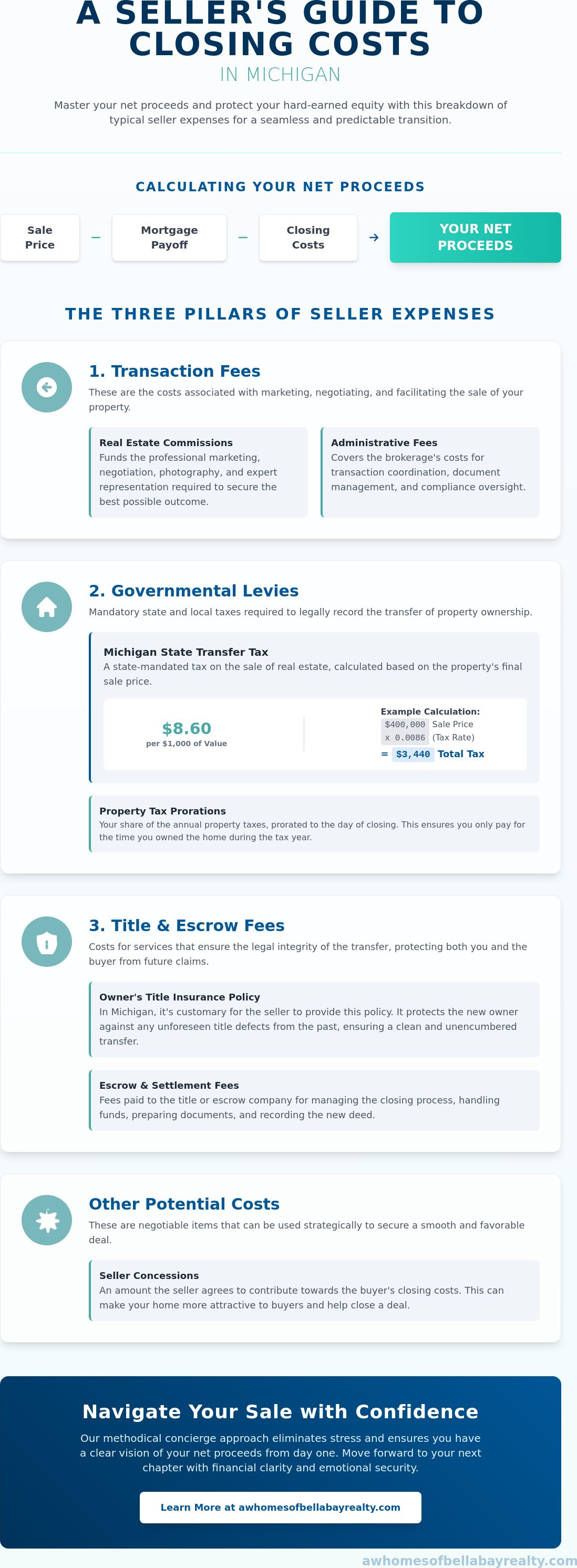
To master your budget, we categorize your obligations into three essential pillars. First, transaction fees encompass professional commissions and administrative costs that fund the marketing and negotiation of your sale. Second, governmental levies include the Michigan State Transfer Tax and county-specific assessments required to record the deed. Third, title and escrow fees ensure the legal integrity of the transfer, protecting you from future liability. This tripartite structure simplifies complex ideas, making your value proposition clear and your financial path predictable.
Timing the Financial Flow
A common point of stress for many sellers is the timing of payments. Most expenses are not paid out-of-pocket during the listing period. Instead, they are deducted from your home equity at the moment of closing. This arrangement preserves your liquidity as you prepare for your relocation. AW Homes of Bellabay Realty provides financial transparency from the very first consultation by offering a preliminary net sheet. This methodical planning moves the conversation away from chance and toward expert navigation, ensuring you have a clear vision of your future proceeds before the first showing even occurs.
The Financial Architecture: Real Estate Commissions and Title Insurance
The financial architecture of your sale is built on strategic investments that protect your equity and maximize your return. When calculating the closing costs for seller in MI, professional commissions and title insurance represent the most significant components of the transaction. Rather than viewing these as simple expenses, consider them the engine of your transition. These funds fuel a sophisticated marketing machine, provide legal security, and facilitate the home closing process in Michigan with precision and care.
A well-structured commission covers the complex logistics required to position your home as a premier offering. This includes professional photography, high-end staging, and targeted digital exposure. These elements work in harmony to attract qualified buyers and create the competitive environment necessary to secure your desired outcome. By investing in professional market positioning, you aren't just paying for a service; you're securing a methodical partner who prioritizes your long-term well-being over a quick closing.
Title Insurance: Protecting Your Legacy
In Michigan, custom dictates that the seller provides the owner’s title policy. This is a gesture of professional confidence and a legal necessity. While the buyer typically pays for the lender’s policy to protect their mortgage provider, the seller’s contribution ensures the buyer receives a clean, unencumbered title. In West Michigan, this practice is a standard pillar of a smooth transaction. A clear title protects your legacy, prevents future litigation, and guarantees that your personal milestone isn't delayed by unforeseen liens. This step is as essential as the Michigan real estate transfer tax in finalizing the legal transfer of your property.
The Value of Professional Listing Services
High-level market positioning in areas like Grand Rapids requires more than a sign in the yard. It involves expert negotiation, managed transaction pipelines, and localized authority. A strategic advisor earns their commission by navigating the emotional and logistical nuances of the sale, ensuring no detail is left to chance. This methodical approach reduces stress by handling the heavy lifting of compliance and administrative oversight. By moving the conversation away from chance and toward expert planning, we help you transition to your next chapter with absolute confidence. Our residential listing services are designed to provide this exact level of curated support and financial transparency.
Michigan-Specific Obligations: Transfer Taxes and Property Tax Prorations
Understanding the granular details of local mandates is the next step in your financial journey. While commissions cover the marketing and negotiation, transfer taxes and property tax prorations are the legal requirements that anchor your transaction to the state. These figures represent a significant portion of the closing costs for seller in MI. They require a methodical approach to ensure your final net proceeds are both accurate and predictable. By mastering these nuances, you move away from the stress of the unknown toward a position of expert navigation.
The Michigan property transfer tax is a two-tiered obligation consisting of state and county levies. The state portion is fixed at $3.75 for every $500 of the sale price. In Kent County, the county portion is typically $0.55 per $500. These taxes are paid at the time of the deed recording, effectively reducing the gross sale price. We monitor these figures closely to ensure you understand exactly how they influence your transition. This clarity allows you to focus on the emotional significance of your move rather than the logistics of the levy.
The Math of Michigan Transfer Taxes
Calculations for a home in Forest Hills or Ada highlight the importance of precision. For a property selling at a luxury price point, these percentages translate into thousands of dollars. The state mandates the $3.75 rate, while the county applies its specific $0.55 levy. At the closing table, the title company typically handles the physical distribution of these funds. They deduct the amounts from your equity, verify the exemptions, and record the deed with the appropriate authorities. This structured process ensures your legal transfer is seamless, secure, and professional.
Property Tax Prorations and Credits
Property tax prorations are often the most complex element of the settlement statement. In West Michigan, we generally use the 365-day proration method to divide the tax burden between the buyer and the seller. This calculation depends on whether your local municipality operates on a calendar year or a fiscal year. It also accounts for whether taxes are paid in advance or in arrears. Because Michigan has both summer and winter tax bills, your specific closing date can significantly shift your final payout. A mid-summer closing might result in a substantial credit or debit depending on which bills you've already settled. We provide a preliminary net sheet early in the process to offer the financial transparency you need to plan your next chapter with confidence.
Strategic Negotiation: Managing Seller Concessions and Hidden Fees
Strategic negotiation transforms the final phase of your sale from a logistical hurdle into a masterfully managed transition. While previous sections detailed fixed obligations like transfer taxes, the closing costs for seller in MI also include variable elements that require a consultant's eye. Managing seller concessions and administrative fees is essential for protecting your "Sell and Buy" timeline. This ensures that your equity remains intact as you move toward your next chapter with confidence, clarity, and peace.
The Strategy of Concessions
In a competitive Grand Rapids market, concessions act as a powerful lever to secure your desired outcome. You might choose to pay a portion of the buyer’s costs to maintain a higher offer price or to guarantee a specific closing date. This strategy helps the home appraise more easily while keeping your out-of-pocket credits predictable. It's about balancing the immediate financial impact against the long-term goal of a seamless evolution. If you are selling my home in Forest Hills MI, these concessions can be the difference between a stagnant listing and a successful, premium transaction. In this specific neighborhood, buyers often prioritize turnkey readiness. Offering a home warranty or a credit for minor repairs can create the emotional security they need to sign.
Local Customary Fees in West Michigan
Beyond the high-profile figures, several smaller fees anchor the legal and administrative integrity of the deal. You should expect costs related to recording the deed, discharging existing mortgages, and conducting municipal lien searches. These methodical steps ensure that the neutral third party, the escrow agent, can facilitate a clean transfer. Additionally, several "hidden" components of the closing costs for seller in MI may arise depending on your property’s specific location and condition:
- HOA Transfer Fees: Costs to update ownership records within a neighborhood association.
- Well and Septic Inspections: Mandatory health department certifications often required in more rural West Michigan pockets.
- Home Warranties: A strategic offering that provides the buyer with peace of mind regarding the home's mechanical systems.
Professional authority and empathetic reassurance are the hallmarks of a successful closing. By addressing these fees early, you gain the confidence that you are not overpaying for administrative oversight or compliance. This organized approach mitigates the inherent stress of high-stakes transactions by being steady, logical, and supportive. If you are ready to begin this journey with a clear, predictable estimate of your proceeds, we invite you to explore our real estate investment consulting services for a personalized financial overview.
Expert Navigation: The Angela Worth Concierge Approach to Closing
The final mile of your real estate journey shouldn't be a race against time. It should be a curated, unhurried progression toward your next chapter. By this stage, we've already accounted for the technical aspects of closing costs for seller in MI. Now, the focus shifts to the human element. A high-level consultant acts as your steady partner, mitigating the inherent stress of the final walkthrough and ensuring every logistical detail aligns with your vision. This methodical planning is the AW Homes of Bellabay Realty promise: zero surprises, absolute transparency, and complete emotional security.
Whether you are transitioning from a historic estate in Grand Rapids or a modern sanctuary in Ada, local expertise matters at the closing table. We coordinate the intricate "Sell and Buy" timeline to ensure your relocation is seamless. This isn't just a financial transaction; it's a significant personal milestone. We move the conversation away from chance and toward expert navigation. This provides the calm authority, strategic focus, and localized reliability needed to handle high-stakes decisions.
Seamless Transitions for Every Life Stage
Every life stage requires a different level of intentionality. Move-up buyers need the timing to be perfect to avoid carrying two mortgages. Luxury downsizers require a gentle, respectful pace as they transition from a long-term family residence. We provide tailored guidance that prioritizes your long-term well-being. By maintaining clear communication, we anchor your transition in trust and warmth. If you are moving beyond the local area, our Grand Rapids relocation guide offers a strategic roadmap to help you settle into your next community with ease. This personalized approach ensures your evolution is a positive development in your life story.
Your Final Checklist for a Stress-Free Closing
Organization is the ultimate antidote to anxiety. As we approach the settlement table, we help you gather necessary disclosures and up-to-date mortgage payoff information. We review the Preliminary Closing Disclosure together. This ensures every credit and debit reflects our early planning. This final review confirms that the closing costs for seller in MI are exactly what you expected. Our checklist includes:
- Verifying all repair receipts and inspection clearances are in order.
- Confirming the transfer of utilities and homeowner association keys.
- Reviewing the final settlement statement for total financial clarity.
The moment you hand over the keys is more than a legal requirement. It's the celebratory conclusion of one chapter and the welcoming invitation to the next. We stand beside you as a composed, attentive, and highly competent partner. We ensure your transition is as rewarding as the home you've built. Your personal evolution is our priority, from the first consultation to the final signature.
Securing Your Legacy and Your Next Chapter
You've mastered the financial architecture of your sale, from the precision of Michigan transfer taxes to the strategic value of professional commissions. This roadmap provides the clarity you need to navigate every levy and lien with absolute confidence. By viewing these expenses as the final investment in your personal evolution, you transform a complex transaction into a rewarding life milestone. You deserve a transition that is defined by order, transparency, and emotional security.
Successfully managing the closing costs for seller in MI requires more than just a calculator. It demands a partner who understands the emotional and logistical weight of your move. As a West Michigan neighborhood authority, we offer concierge-style listing management and methodical planning to ensure no detail is left to chance. Our goal is your long-term well-being and a stress-free path to your next home. Request a Strategic Net Proceeds Consultation with Angela Worth to receive a personalized financial overview tailored to your unique goals. Your next adventure is waiting, and it's time to step into it with peace and excitement.
Frequently Asked Questions
What is the average percentage of closing costs for a seller in Michigan?
Average closing costs for seller in MI typically range from 1% to 3% of the home's sale price when excluding agent commissions. If you include professional real estate commissions, the total average can reach approximately 4.14% of the final sale price. These figures vary based on specific county taxes and the service providers you select. We provide a preliminary net sheet early in our consultation to ensure you have a predictable estimate of your proceeds.
Who pays for the title insurance in a Michigan real estate transaction?
The seller traditionally pays for the Owner’s Title Insurance Policy in Michigan. This custom provides the buyer with emotional security by guaranteeing a clean, unencumbered title at the time of the transition. Buyers are generally responsible for the Lender’s Policy required by their mortgage provider. This professional division of costs is a standard pillar of a seamless property transfer in the West Michigan market.
How is the Michigan state transfer tax calculated for a home sale?
The Michigan State Transfer Tax is calculated at a rate of $3.75 for every $500 of the total sale price. For example, a $500,000 home sale results in a state tax of $3,750. This is separate from the county transfer tax, which is typically $0.55 per $500 in Kent County. These levies are deducted from your equity at the closing table to facilitate the legal deed recording.
Are seller closing costs tax-deductible in MI?
Closing costs are generally not directly deductible from your annual income taxes; however, they do reduce your capital gains liability. Fees such as commissions, transfer taxes, and title insurance are added to your cost basis or deducted from the sale price. This methodical adjustment can lower the amount of profit that is subject to taxation. You should always consult with a qualified tax professional regarding your specific financial situation.
Can I negotiate who pays for specific closing costs in Grand Rapids?
Negotiation is a standard part of the real estate contract in Grand Rapids and across Michigan. While local customs often suggest who pays for title insurance or transfer taxes, you can negotiate "seller concessions" to cover a buyer's costs in exchange for a higher offer price. This strategic approach helps you manage your timeline while ensuring a smooth transition. We help you navigate these discussions to protect your net proceeds and your long-term well-being.
What happens if my home equity doesn’t cover the closing costs?
If your home equity is insufficient to cover the closing costs for seller in MI and your mortgage payoff, you may need to bring cash to the closing table. This situation often occurs in short sales or when a property has high lien balances. In these cases, we work closely with you to explore all financial options and mitigate stress. Our goal is to ensure a secure transition without unexpected administrative surprises.
How do property tax prorations affect my final net proceeds at closing?
Property tax prorations ensure that both the buyer and seller pay only for the days they actually owned the home. Because Michigan taxes are billed in summer and winter, you might receive a credit for taxes paid in advance or a debit for taxes paid in arrears. These calculations are based on the specific closing date and the local municipality's fiscal year. This methodical division ensures a fair and logical financial settlement for both parties.
Do I need to bring cash to the closing as a seller?
Most sellers don't need to bring physical cash to the closing because fees and the $30 recording fee are deducted directly from the sale proceeds. You will typically receive your net proceeds via wire transfer or a certified check after all obligations are settled. Cash is only required if the sale price is lower than the total amount of your mortgage payoff and transaction fees. We provide total financial transparency so you know exactly what to expect before you arrive.


