
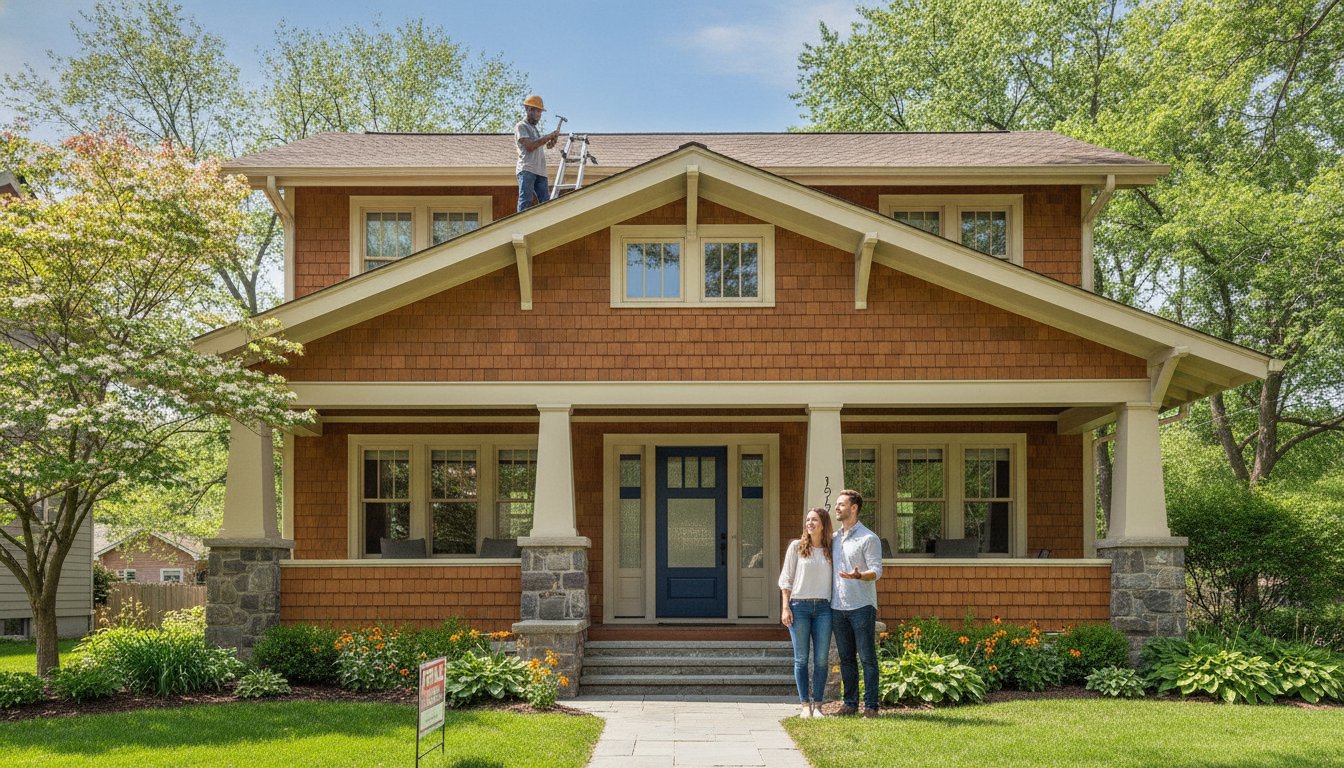
The $20,000 kitchen renovation you're currently considering might actually be the biggest obstacle to your upcoming home sale. In a market where West Michigan properties often go pending in less than a week, buyers are prioritizing structural integrity, mechanical reliability, and climate-ready maintenance over trendy aesthetics. It's natural to feel a sense of hesitation as you weigh the cost of repairs against your potential return. You deserve to know exactly what to fix before selling a house Michigan so you can avoid wasting resources on projects that don't add real value to your listing price.
This strategic guide offers the clarity you need to navigate this significant life transition with total confidence. We've distilled current 2026 market data from Grand Rapids to Kalamazoo to help you identify which repairs are essential and which are merely distractions. You'll learn to address Michigan-specific concerns like basement moisture, roof integrity, and HVAC efficiency to ensure a seamless inspection process. By following this methodical checklist, you'll protect your equity, simplify your move, and secure the high-return sale your investment deserves.
Key Takeaways
- Understand how 2026 inventory levels in Grand Rapids and East Grand Rapids dictate a repair strategy focused on climate-resilient integrity.
- Pinpoint exactly what to fix before selling a house Michigan, focusing on high-priority structural elements like basement moisture and winter-worn roofing.
- Maximize your home's "first thirty seconds" with curated curb appeal strategies that utilize native Michigan plants and intentional entryway staging.
- Protect your equity by identifying the major renovations to skip, ensuring you don't lose thousands on improvements buyers would rather customize themselves.
- Transition with confidence by following a professional, step-by-step preparation plan that prioritizes your emotional security and long-term financial well-being.
The ROI of Pre-Sale Repairs in the 2026 West Michigan Market
A successful sale begins with a strategic audit. In the current West Michigan landscape, homeowners often struggle to distinguish between necessary repairs and elective improvements. Necessary repairs address the structural, mechanical, and safety systems of the home. Elective improvements focus on aesthetics, style, and personal preference. Deciding what to fix before selling a house Michigan requires a shift in perspective. You aren't just selling a building; you're offering a secure foundation for a new life chapter. This distinction is the difference between a high-return sale and a wasted investment.
Our "Inspection Protection" philosophy centers on proactive maintenance. It's often more cost-effective to address a known issue today than to offer a significant credit during the high-stress period of a pending sale. Buyers in 2026 are looking for move-in ready estates that can withstand our local climate. They value reliability, efficiency, and peace of mind. By addressing these needs upfront, you remove the friction that often stalls a transaction. This creates an atmosphere of trust, transparency, and professional integrity.
Market Conditions in Grand Rapids and Forest Hills
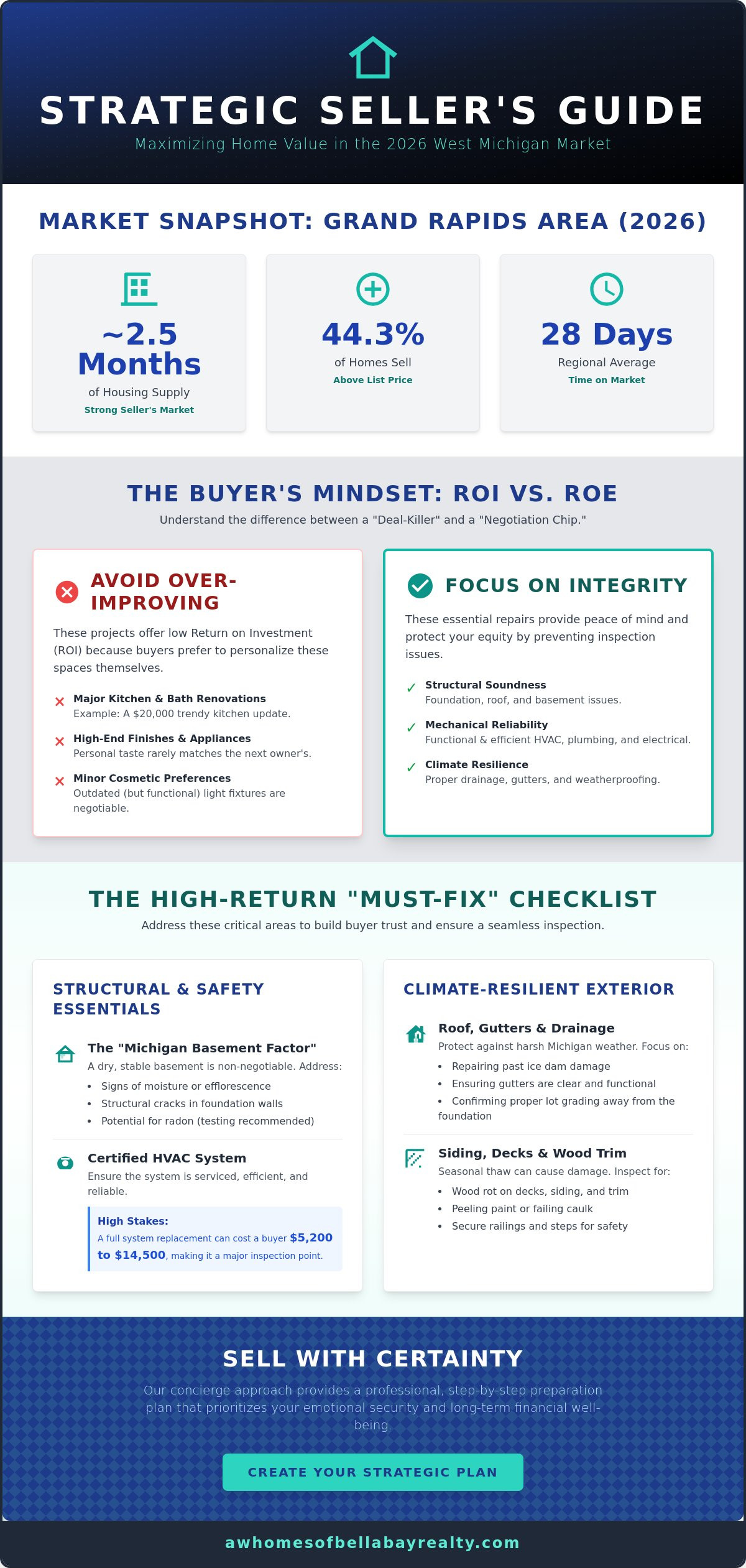
With approximately 2.5 months of housing supply, Grand Rapids remains a strong seller's market. However, low inventory doesn't grant permission to neglect basic maintenance. Buyers in 2026 are highly discerning due to stabilized interest rates. They expect Forest Hills home values to be supported by tangible quality and modern resilience. A home that feels neglected will often sit on the market longer than the regional 28-day average, even in premium neighborhoods like East Grand Rapids or Ada. Quality, condition, and presentation remain the three pillars of a successful listing.
Calculating Your Return on Effort (ROE)
Return on investment is a financial metric, but Return on Effort (ROE) considers your most valuable resource: time. In a market where 44.3% of homes sell over list price, getting to the "pending" stage quickly is vital. A pre-listing inspection provides the strategic leverage you need to understand your home's condition before the first showing. By understanding your home's value through a professional lens, you can separate "Deal-Killers," such as a failing furnace, from "Negotiation Chips" like outdated light fixtures. This methodical approach ensures your resources are spent where they matter most, providing a stress-free transition to your next chapter.
The "Must-Fix" List: Structural and Safety Essentials
A successful sale is built on a foundation of transparency, reliability, and structural integrity. When deciding what to fix before selling a house Michigan, your first priority must be the systems that ensure the home is safe and sound. Buyers in 2026 are not just looking for a beautiful space; they're looking for a secure investment that won't reveal expensive surprises after the closing. Addressing these essentials upfront protects your equity and prevents the emotional friction that arises during a difficult inspection process.
The Michigan "Basement Factor" is often the most scrutinized area of a local home. Moisture, radon, and structural cracks are the three primary concerns for any West Michigan buyer. If your basement shows signs of seasonal dampness or efflorescence, professional remediation is a strategic necessity. Similarly, a certified HVAC system is non-negotiable. With full system replacements in 2026 ranging between $5,200 and $14,500, a buyer will likely demand a functioning, efficient furnace before committing to a purchase. Keeping your mechanical systems in peak condition demonstrates a methodical approach to homeownership that builds immediate buyer trust. To further bolster your home's efficiency and appeal, you can learn more about Third Coast Spray Foam and their specialized insulation solutions designed for the West Michigan climate.
Michigan Climate-Resilient Exterior Fixes
Our regional weather is relentless, and your home's exterior must prove it can withstand the elements. Ice dam damage from previous winters can lead to hidden moisture issues in the attic and walls. Repairing these areas and ensuring your gutters are clear and functional is essential. Check for wood rot on decks and siding that may have occurred during the seasonal thaw. Finally, ensure the grading around your foundation is pitched away from the house. Proper grading is a simple yet powerful way to keep Michigan spring rains where they belong: outside. If you're unsure where to begin your exterior audit, reviewing your residential listing options with a specialist can provide the clarity you need.
Safety and Health Compliance
Compliance with safety standards is a hallmark of a professional listing. Update all smoke and carbon monoxide detectors to ensure they meet current 2026 requirements. For those selling Grand Rapids heritage homes, pay close attention to peeling lead-based paint, which can be a significant hurdle for buyers using FHA or VA financing. Most importantly, all repairs and known defects must be documented in accordance with Michigan real estate disclosure laws. Under the Michigan Seller's Disclosure Act, you have a personal obligation to share known issues. Addressing these items now ensures a seamless transition and provides the emotional security every seller deserves.
High-Impact Cosmetic Wins for West Michigan Curb Appeal
While structural integrity ensures a sound transaction, cosmetic presentation secures an emotional connection. The first thirty seconds of a showing often dictate the buyer's entire perception of the property. Deciding what to fix before selling a house Michigan requires a focus on the sensory experience of the entryway. A freshly painted front door, modern hardware, and a pristine welcome mat create an immediate sense of arrival. This isn't just about decoration; it's about signaling to the buyer that the home has been cared for with intentionality, pride, and professional attention.
Strategic landscaping in West Michigan should prioritize resilience and low-maintenance beauty. Incorporating native plants like Switchgrass, Black-eyed Susans, or Michigan Holly ensures a vibrant exterior that survives our harsh winters without requiring constant attention. This approach appeals to the 2026 buyer who values sustainability, effortless curb appeal, and regional authenticity. Well-defined garden beds and fresh mulch act as a visual shorthand for a well-maintained lifestyle, setting a steady and supportive tone before the buyer even steps inside.
Interiors require a similar level of strategic focus. During our notoriously grey West Michigan months, lighting becomes a critical asset. Upgrading to high-lumen, warm-toned LED bulbs and modern fixtures can transform a dim space into an inviting sanctuary. Pair this with 2026's preferred neutral palettes—soft greiges, warm whites, and muted earth tones—to create a canvas that feels both high-end and accessible. These updates are relatively low-cost but offer a significant return on effort by making rooms feel larger, brighter, and more intentional.
Exterior Refresh Strategies
Power washing siding and driveways is the most effective way to remove accumulated winter grime and salt residue. Small details like modernizing house numbers and mailbox hardware provide a subtle luxury feel that resonates in neighborhoods like Ada or East Grand Rapids. For those listing luxury homes in Grand Rapids, MI, seasonal staging is essential. Tasteful autumn planters or elegant winter greenery can anchor the property as a neighborhood authority and provide a welcoming vision of the future.
Interior "Quick-Fix" Checklist
Minor updates often yield the most significant psychological results. Replacing outdated cabinet hardware in kitchens and baths is a methodical way to modernize a space without the stress of a full remodel. While professional interior painting in Michigan typically costs between $2 and $6 per square foot in 2026, it remains one of the highest-impact investments you can make. Professional carpet cleaning is often sufficient to refresh a room, though strategic flooring replacement in high-traffic areas may be necessary to maintain a premium feel. Finally, installing modern, high-efficiency window treatments helps control light and temperature, reinforcing the home's move-in ready status.
What NOT to Fix: Avoiding the Over-Improvement Trap
Strategic selling requires a sophisticated understanding of where value truly lives. It's often tempting to believe that a major overhaul will result in a higher closing price, but the reality of the 2026 market suggests otherwise. Over-improvement can quickly erode your net proceeds. It complicates your timeline. It introduces unnecessary stress. Deciding what to fix before selling a house Michigan means weighing every dollar against the actual expectations of local buyers in neighborhoods like Ada and Forest Hills.
The "Major Kitchen Remodel" is perhaps the most persistent myth in real estate. While a beautiful kitchen is a selling point, a full renovation rarely recoups its cost in a fast-paced market. Buyers today often prefer a clean, functional space they can personalize to their own tastes. Partial upgrades can also be counterproductive. Installing a high-end granite countertop on 20-year-old cabinets only serves to highlight the age of the rest of the room. Consistency is more valuable than isolated luxury.
Grandfathered building code issues are another area where sellers often over-invest. If an older system is safe and functional, it doesn't need to be brought up to current codes unless a major renovation is already underway. Focus your efforts on the structural integrity and climate resilience points we've already discussed. Perfection in every corner isn't the goal; professional reliability is. You want to offer a home that feels solid, well-maintained, and ready for its next chapter.
Renovations with Diminishing Returns
High-end appliance upgrades in mid-range neighborhoods often fail to move the needle on the final sale price. Similarly, extensive backyard hardscaping or swimming pool installations rarely return their full value in West Michigan's seasonal climate. Converting functional spaces like garages into living areas can actually devalue a home, as local buyers prioritize vehicle protection from the winter snow. Understanding what to fix before selling a house Michigan involves recognizing these traps before you sign a contractor's agreement.
The "Potential vs. Perfection" Balance
Buyers need space to envision their own personal evolution within a home. A house that's too "finished" can sometimes feel restrictive or sterile. Professional staging is a methodical way to mask minor cosmetic flaws without the permanence or cost of a construction project. By consulting a buyers agent in Grand Rapids, you'll gain insight into what modern families are actually seeking in 2026. This intelligence allows you to focus on repairs that matter while leaving elective customizations to the next owner. To ensure you aren't over-investing in the wrong areas, schedule a professional consultation today.
The AW Homes Concierge Approach: Strategic Planning for Your Sale
The transition from one home to the next is a deeply personal evolution. At AW Homes of Bellabay Realty, we view our residential listing services as more than a financial arrangement; we see them as a partnership in your future. Navigating what to fix before selling a house Michigan shouldn't be a solitary burden. Angela Worth provides a methodical roadmap that simplifies the complex, clarifies the uncertain, and secures your peace of mind. By positioning ourselves as your strategic advisor, we move beyond simple salesmanship to offer a high-level consultancy that honors your unique life stage.
Our concierge approach leverages a vetted network of trusted West Michigan contractors. Whether you need a certified HVAC technician from Crome Mechanical, a precision painter, or a professional stager, we manage the logistics so you don't have to. We balance aggressive market positioning with a steadfast commitment to your emotional security. This ensures that every repair, every update, and every showing is a step toward a seamless result. The final walkthrough is our signature process, confirming your property is "Grand Rapids Ready" to command top dollar in the 2026 market.
A Tailored Roadmap for Every Life Stage
Every seller's journey is distinct. A family in Caledonia looking for a move-up home has different priorities than a couple downsizing to a luxury condo in East Grand Rapids. We provide specialized advice tailored to these situational needs, ensuring no detail is left to chance. If you are relocating to Grand Rapids from out of state, our concierge services become even more vital. We act as your neighborhood authority, managing the local nuances of home preparation while you focus on your family's transition.
Your Next Steps to a Successful Closing
A high-return sale is the result of expert navigation and careful planning. To begin your journey, we invite you to schedule an initial strategic consultation. During this meeting, we'll review a comprehensive Comparative Market Analysis (CMA) to establish a clear, data-driven repair budget. This ensures you aren't guessing at what to fix before selling a house Michigan, but rather making informed decisions that protect your equity. Together, we will finalize a timeline for your spring or summer 2026 launch, moving you toward a stress-free transition and a successful closing.
Securing Your Success in the West Michigan Market
Navigating the complexities of the 2026 real estate market requires more than just a list of repairs; it demands a clear, methodical vision for your property's future. By prioritizing structural integrity and high-impact curb appeal over elective renovations, you protect your equity and simplify your move. Understanding what to fix before selling a house Michigan allows you to focus your resources where they generate the highest return. This strategic focus ensures your home stands out as a premier listing in Grand Rapids, Forest Hills, or Ada.
Angela Worth provides the professional authority, localized reliability, and empathetic reassurance you deserve during this significant life milestone. Our concierge approach leverages deep expertise in the West Michigan landscape, providing you with a vetted contractor network to handle every detail. This methodical planning transforms a high-stakes transaction into a celebratory milestone. We invite you to Request Your Strategic Home Valuation and Repair Consultation to begin your evolution with confidence. Your future is bright; let's prepare the way together.
Frequently Asked Questions
Do I have to fix everything on the home inspection report in Michigan?
You aren't legally required to repair every item identified in a buyer's inspection report. Instead, you should prioritize structural, safety, and mechanical issues that could prevent a buyer from securing financing. Negotiating repairs is a common part of the process; some sellers offer financial credits while others address specific "must-fix" items to ensure the transaction remains seamless and the buyer feels emotionally secure.
What is the most important repair to make before selling a house in Grand Rapids?
The most vital repair typically involves moisture control in the basement and foundation. In the Grand Rapids market, buyers are highly sensitive to dampness, cracks, or efflorescence due to our regional climate. Ensuring your foundation is dry and sound is a methodical way to build immediate trust and protect your home's valuation during the 2026 spring and summer selling seasons.
Should I replace my roof before listing my home in 2026?
You should replace your roof only if it's at the end of its functional life or shows significant damage from West Michigan winters. In 2026, an asphalt shingle roof replacement for a typical 2,000-square-foot home averages around $12,000. If the roof is nearing 20 years old, replacing it beforehand can prevent inspection delays and ensure you receive offers close to the regional 98.2% sale-to-list price ratio.
How much should I spend on repairs before selling my house?
Your repair budget should be determined by a Comparative Market Analysis (CMA) and a professional strategic consultation. Generally, you should focus on essential structural items and high-impact cosmetic updates like neutral paint. Avoid over-improving beyond your neighborhood's standard. A methodical approach ensures you don't waste thousands on renovations that don't pay back, keeping your focus on a high-return sale and a stress-free transition.
Can I sell my house "as-is" in the current West Michigan market?
Yes, you can sell "as-is," but it often results in lower offers even in a strong seller's market. While Grand Rapids homes average only 28 days on the market, "as-is" listings may attract investors rather than families seeking move-in ready estates. If you choose this route, you must still comply with the Michigan Seller's Disclosure Act by revealing all known defects to prospective buyers to maintain legal and professional integrity.
What are the Michigan mandatory disclosures for home sellers?
Michigan law requires sellers of residential properties with one to four units to provide a written Seller's Disclosure Statement. This document mandates the disclosure of known defects, including issues with the foundation, HVAC systems, and electrical wiring. Failure to provide this statement before the purchase agreement is signed can give the buyer the right to terminate the contract, so honesty is essential for a secure closing and your long-term peace of mind.
Is a pre-listing inspection worth the cost?
A pre-listing inspection is a strategic investment that provides total clarity before your home hits the market. It allows you to identify "deal-killers" early, giving you time to manage repairs with our vetted contractor network. This proactive approach removes the element of chance, mitigates stress during the pending phase, and gives you significant leverage when deciding what to fix before selling a house Michigan.
Will a fresh coat of paint really help my home sell for more?
Professional interior painting is one of the most effective ways to increase your home's appeal and perceived value. In 2026, whole-house painting projects in Michigan typically range between $4,500 and $9,000. Using a neutral palette creates a welcoming sanctuary that allows buyers to envision their own personal evolution in the space, which often leads to faster sales and stronger offers in competitive neighborhoods.


