

Your home is likely your most significant financial asset, yet a single overlooked detail regarding Michigan home sale disclosure requirements can turn a successful closing into a years-long legal dispute. It's a heavy burden to carry when you're trying to focus on your next chapter. Most sellers in our competitive 2026 market feel the same weight of responsibility; they worry about the distinction between a minor nuisance and a reportable defect. You deserve to move forward with a sense of order, certainty, and peace.
Navigating the complexities of state law doesn't have to be a source of stress. We've designed this guide to provide the professional clarity you need for a secure, high-value, and legally sound transaction. By mastering these legal obligations, you protect your financial interests and ensure your transition is as seamless as possible. Transparency isn't a hurdle to your sale; it's the strategic foundation for your future success.
We'll explore the specific mandates of the Michigan Seller Disclosure Act, clarify federal lead paint obligations for older homes, and navigate the local ordinances that define our regional landscape. This is your roadmap to a compliant sale that prioritizes your long-term well-being, financial health, and emotional security.
Key Takeaways
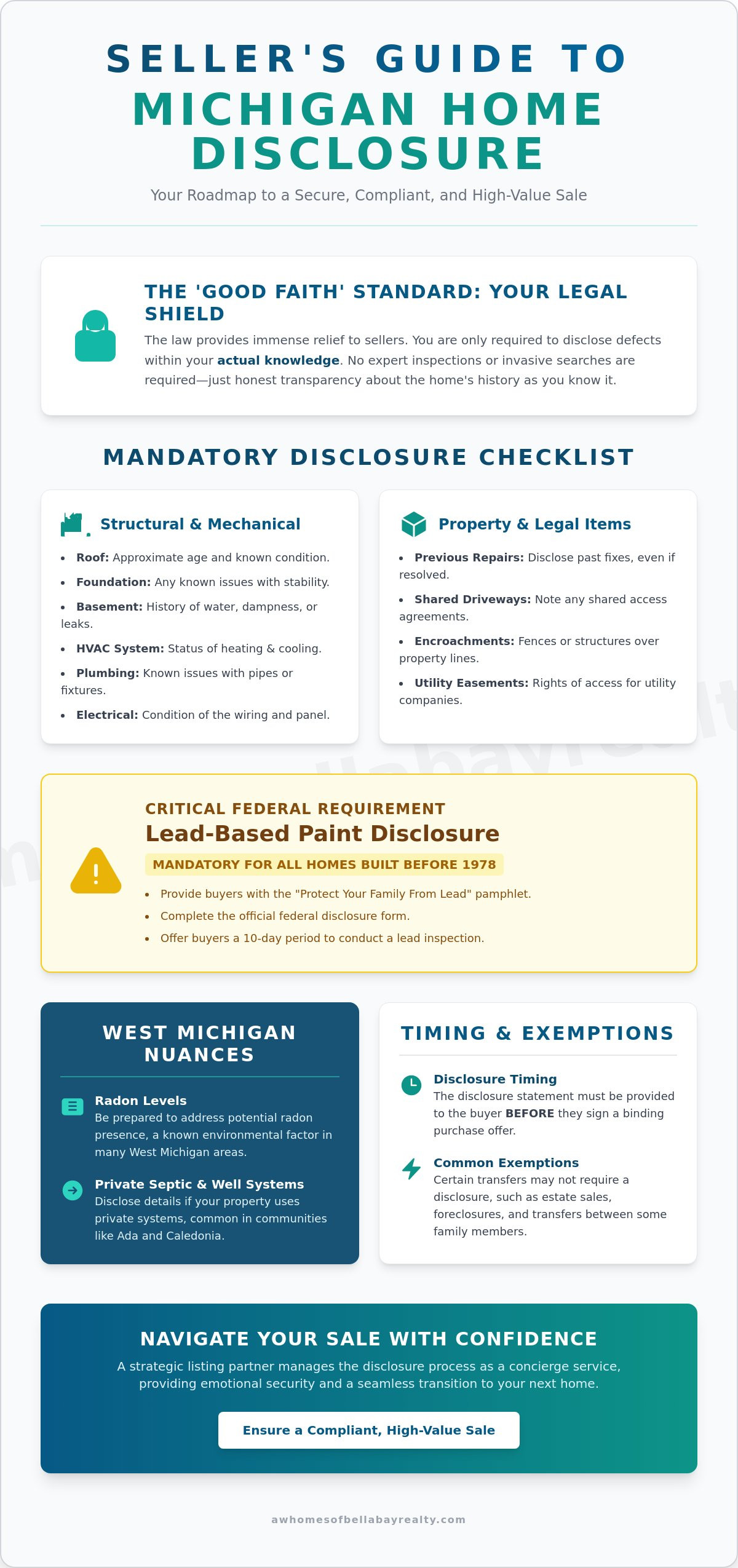
- Understand the "Good Faith" standard under the Michigan Seller Disclosure Act to ensure you only report defects within your actual knowledge.
- Master the Michigan home sale disclosure requirements by identifying mandatory state and federal categories, including critical lead-based paint protocols for homes built before 1978.
- Navigate West Michigan nuances by addressing regional factors like radon levels and private septic systems specific to Grand Rapids, Ada, and Caledonia.
- Identify the exact timing for providing disclosures to buyers and determine if your property transfer qualifies for legal exemptions like estate sales or foreclosures.
- Discover how a strategic listing partner manages the disclosure process as a concierge service to provide emotional security and a seamless transition to your next home.
Understanding the Michigan Seller Disclosure Act (Act 92 of 1993)
The Michigan Seller Disclosure Act serves as the essential legal framework for every residential transaction across the Great Lakes State. It requires you to complete a formal Seller Disclosure Statement before a buyer signs an offer. This document isn't just a hurdle; it's a strategic record that defines the condition of your home at a specific point in time. By adhering to Michigan home sale disclosure requirements, you establish a baseline of honesty that protects your financial interests. This process provides clarity, ensures compliance, and offers peace of mind.
Central to this law is the "Good Faith" standard. This principle provides immense relief to sellers because it means you're only responsible for disclosing what you actually know. You aren't expected to be a structural engineer or a licensed plumber. The law doesn't require you to crawl into tight attic spaces or hire expensive experts to uncover latent issues. It simply asks for your honest perspective as the person who has lived within these walls.
Think of this process as a shield against future litigation. When you document a known issue clearly, you eliminate the buyer's ability to claim they were misled. A transparent record fosters trust, reduces friction, and ensures a cleaner path to the closing table. By being proactive, you move toward your next chapter with your reputation and your proceeds intact.
The Definition of a Known Defect
It's vital to distinguish between a property's natural evolution and a genuine problem. A scuffed baseboard or an outdated paint color is merely cosmetic wear. However, a "known defect" is any condition that significantly affects the property value or structural integrity. If you've noticed recurring basement dampness or know the exact age of a thinning roof, honesty is the best policy. Providing this clarity up front prevents surprises that could derail your progress later.
The Calming Reality of Disclosure
Buyers in sought-after communities like Forest Hills and Ada understand that pre-owned homes come with history. They aren't looking for perfection; they're looking for transparency. When you disclose minor issues early, you build a bridge of trust that makes the entire negotiation feel more like a partnership. This methodical approach prevents "deal-killers" from surfacing during the home inspection. Understanding Michigan home sale disclosure requirements ensures you maintain control over the narrative and keep your transition on schedule.
Mandatory State and Federal Disclosure Categories
The standard Seller’s Disclosure Statement (SDS) organizes your home’s history into several logical categories. This structure helps you provide a comprehensive overview without feeling overwhelmed by the technical details of your property. While the Michigan Seller Disclosure Act (Act 92 of 1993) defines the state-level requirements, certain federal mandates also apply depending on the age of your home. Adhering to Michigan home sale disclosure requirements is about protecting your equity, honoring your home's history, and securing your future.
One area that often surprises sellers is the requirement to disclose previous repairs. Even if a basement leak was professionally sealed five years ago, you should still record it. Disclosing the repair, along with any warranties or receipts, demonstrates that you've been a responsible steward of the property. You must also note any legal or boundary issues. This includes shared driveways, encroachments from a neighbor's fence, or easements that allow utility companies access to your land. Addressing these items early prevents them from becoming roadblocks during the title search. If you feel uncertain about how to phrase these details, our residential listing services provide the personalized guidance needed to document your home's history accurately.
Structural and Mechanical Systems
Buyers prioritize the "big ticket" items. You'll need to provide the approximate age and known condition of the roof, the stability of the foundation, and the history of the basement. The SDS also requires status updates on your HVAC, plumbing, and electrical systems. If you're including appliances like the refrigerator or dishwasher in the sale, you'll mark whether they're in working order. This clarity reduces the likelihood of post-closing disputes and keeps the focus on your successful move.
Environmental and Health Hazards
Safety is a primary concern for every modern buyer. You must disclose any known presence of asbestos, mold, or radon. If your home was built before 1978, federal law mandates a specific Lead-Based Paint Disclosure. This involves providing an EPA-approved pamphlet, disclosing any known lead paint hazards, and allowing a 10-day period for a lead-based paint assessment. Finally, the SDS asks about underground storage tanks or fuel sources. These details might seem minor, but they're essential for establishing the emotional security and trust that define a high-end real estate experience.
West Michigan Nuances: Radon, Septic, and Well Considerations
While the broad strokes of state law apply to every resident, West Michigan presents a unique set of geographical and regulatory nuances. Sellers in Grand Rapids, Ada, and Caledonia must account for regional environmental factors that rarely appear in generic guides. Understanding these localized Michigan home sale disclosure requirements is the key to maintaining your momentum. It establishes trust, validates property value, and simplifies the transaction. By following the Michigan Seller Disclosure Act with a neighborhood-specific lens, you ensure no detail is left to chance.
Kent County and several surrounding municipalities often operate under "Time of Transfer" ordinances. These local laws mandate the professional evaluation of private septic systems or water wells before a property title can change hands. Even though a statewide septic code remains a topic of legislative debate in mid-2026, our local authorities prioritize environmental safety through these point-of-sale inspections. Being proactive about these evaluations prevents last-minute delays that could disrupt your life transition. It's about moving toward your next chapter with absolute certainty.
Neighborhood-specific details also play a significant role in our region's high-end markets. If you're selling a property in Forest Hills or a curated development in Cascade, you must disclose Homeowners Association (HOA) rules, pending assessments, or specific architectural restrictions. These details are just as critical as the physical condition of the house itself. Providing this information early protects you from potential disputes and helps buyers feel at home before they even move in.
Private Water and Waste Systems
In rural and suburban pockets like Caledonia or Cascade, your private utility systems are a primary focus for buyers. If your home relies on a well, you'll need to provide any known water quality issues or recent test results. Similarly, your septic system maintenance records are your best friend during a sale. Documenting regular pumping and professional inspections transforms a potential concern into a point of professional pride. For buyers arriving from outside the region, these systems are often new territory. Providing clear records helps them feel secure in their investment. If you're preparing your home for the market, our Grand Rapids relocation guide offers valuable perspective on what incoming residents are looking for in these specific communities.
Radon and Soil Conditions
Radon gas is a frequent topic of conversation in Grand Rapids real estate due to our regional soil composition. While the law doesn't mandate a new test for every sale, you must disclose any elevated levels you've personally discovered. High water tables and specific drainage patterns in West Michigan also warrant your attention. If you've managed seasonal dampness or installed a professional mitigation system, documenting these actions demonstrates your intentionality as a homeowner. Addressing these soil-related factors early ensures a seamless home closing process in Michigan. This methodical approach protects your equity and honors the emotional weight of your move.
Timing, Exemptions, and the Risks of Non-Disclosure
The timing of your disclosure delivery is a critical component of the broader closing process. In Michigan, you must provide the completed statement to a prospective buyer before they sign a binding purchase agreement. This sequence isn't merely a legal formality; it's a strategic move that anchors the negotiation in reality. By presenting the facts early, you ensure the buyer's offer is informed and stable. This prevents the emotional volatility that often occurs when issues are discovered late in the transaction. It's about maintaining control and providing a clear path forward for both parties.
Your responsibility doesn't end once you've signed the form. If a material change occurs between the disclosure date and the final closing, you have a legal obligation to update the document. If a heavy rain reveals a new basement leak or a mechanical system fails, you must inform the buyer immediately. Handling these updates with professional clarity protects you from claims of misrepresentation and keeps your transition on track. If you're concerned about how these timelines impact your specific move, our residential listing services offer the methodical oversight needed to manage every detail with precision.
Who is Exempt from Disclosure?
While the majority of residential sales require an SDS, certain situations fall outside the mandate of Michigan home sale disclosure requirements. Common exemptions include property transfers between spouses during a divorce or the sale of a foreclosed home by a financial institution. Fiduciary sales, such as those managed by the personal representative of an estate, also often qualify for an exemption if the representative has never occupied the property. Even in these cases, providing a disclosure with "unknown" markers can be a powerful tool for building trust. It signals to the buyer that you're acting with intentionality and transparency, even when the law doesn't strictly require it.
The Legal and Financial Risks of Silence
Attempting to gloss over a known defect is a high-risk strategy that rarely ends well. If a buyer can prove you intentionally withheld information about a significant issue, you could face post-closing lawsuits for fraud or civil damages. These disputes are expensive, stressful, and can linger long after you've moved. Many sellers mistakenly believe an "as-is" clause exempts them from these duties. In reality, "as-is" only means the buyer accepts the property in its current, disclosed state. It does not override your legal obligation to be honest about what you know. Providing timely, accurate disclosures protects your proceeds and ensures your emotional security as you enter your next life stage.
Navigating Your Sale with Strategic Professional Guidance
Managing the intricacies of a high-stakes transaction requires more than just filling out forms. It demands a level of strategic focus that views your property as a significant personal milestone rather than a mere financial asset. At AW Homes of Bellabay Realty, we integrate the management of Michigan home sale disclosure requirements into our signature concierge service. This methodical approach ensures that every detail is addressed with professional clarity, removing the guesswork from your transition. We don't just hand you a document; we provide a high-level consultation that positions your home for a secure and successful closing. Our team ensures your reputation remains intact and your equity is protected.
A listing agent’s role is vital in reviewing your Seller's Disclosure Statement for completeness and clarity. We look for potential gaps that could lead to confusion later, ensuring your narrative is both honest and protective. In competitive markets like Forest Hills and Grand Rapids, transparency acts as a magnet for serious, high-quality buyers. When a buyer feels secure in the information provided, they're more likely to submit a firm, attractive offer. Proper disclosure directly correlates with achieving a successful final sale price by minimizing the risk of renegotiations during the inspection phase. It builds a foundation of trust that carries through to the final signature.
The Angela Worth Edge: A Methodical Approach
Our process is a curated journey designed to provide emotional security and a stress-free experience. From the initial market positioning to the final legal closing, we prioritize your long-term well-being. We understand the specific situational needs of different life stages, whether you're uprooting a family or downsizing for retirement. We leave nothing to chance. For those looking to maximize their results in specific local pockets, our Forest Hills seller guide offers an area-specific strategy tailored to the nuances of that community. We ensure your evolution is met with expert navigation and planning.
Your Next Chapter Starts Here
Your transition is a significant personal milestone that deserves our full attention and expert insight. We invite you to a personalized consultation where we can discuss the unique attributes of your property and the best path forward. Our goal is to handle the complex details of the transaction so you can focus on the excitement of your next chapter. You deserve a partner who values your peace of mind as much as the final closing. This is about your future. Experience a seamless sale with AW Homes of Bellabay Realty and discover the difference that professional authority and empathetic reassurance can make in your life story.
Your Strategic Path to a Secure Closing
Selling your property is more than a financial transaction; it's a significant milestone in your personal evolution. Mastering the Michigan home sale disclosure requirements isn't just about meeting a legal obligation. It's a strategic move that protects your financial legacy and ensures a clean break as you move toward your next chapter. You now understand that transparency acts as a shield against future disputes, providing the emotional security you need to focus on what comes next.
At AW Homes of Bellabay Realty, we specialize in a methodical, stress-free approach to real estate transitions. Our concierge-style listing service is designed specifically for the West Michigan market, bringing localized expertise to every sale in Forest Hills, Ada, and East Grand Rapids. We manage the technical details and regulatory nuances so you don't have to carry that burden alone. We believe that professional authority and empathetic reassurance are the keys to a successful move.
Your future deserves a partnership grounded in intentionality and expert navigation. Schedule your strategic home selling consultation today to experience a seamless process tailored to your unique life stage. We're here to ensure your transition is handled with the precision and care it deserves.
Common Questions Regarding Your Michigan Home Sale
Do I have to disclose a death in the house in Michigan?
Michigan law doesn't require you to disclose a death in the home, as it's considered a "psychologically impacted property" rather than a physical defect. However, if a buyer asks you directly, you must answer honestly. Providing a truthful response often builds trust and maintains the emotional security of the transaction, even though it isn't a mandate under standard Michigan home sale disclosure requirements.
What happens if I discover a problem after I have already filled out the disclosure form?
You have an ongoing legal duty to update the disclosure statement if a material change occurs before the final closing. If a pipe bursts or a roof leak appears after you've signed, you must amend the document and provide the update to the buyer immediately. Handling these shifts with professional clarity ensures your transaction remains secure, legally compliant, and stress-free for all parties involved.
Does an "as-is" sale mean I don’t have to fill out the Michigan Seller Disclosure Statement?
An "as-is" clause doesn't exempt you from providing a complete and honest Seller Disclosure Statement. Selling "as-is" simply means the buyer accepts the property in its current, disclosed condition without further repairs. You still have a firm legal obligation to reveal every known defect to avoid potential claims of misrepresentation or fraud. This transparency is the foundation of a high-end real estate experience.
Are there local Grand Rapids city disclosures I need to be aware of?
Yes, several West Michigan municipalities, including Grand Rapids and Kentwood, have specific "Time of Transfer" ordinances for septic and well systems. While these aren't part of the statewide disclosure form, they are mandatory local requirements that must be satisfied before a title transfer. Checking your specific township's rules ensures no detail is left to chance during your transition to your next home.
How far back do I need to go when disclosing previous repairs?
Michigan law doesn't set a specific timeframe for previous repairs, but you should disclose any major past issues that could affect the home's current integrity or value. If a structural repair was made ten years ago, documenting it provides a transparent record for the buyer. This methodical approach demonstrates your intentionality as a homeowner and prevents surprises from emerging during the professional inspection phase.
Can a buyer sue me after the sale if they find a defect I didn’t know about?
Generally, a buyer cannot successfully sue for a defect that you truly didn't know about at the time of the sale. The law is based on the "Good Faith" standard of your actual knowledge. As long as you were honest and didn't intentionally hide issues, you are typically protected from post-closing litigation. This reality provides immense relief and peace of mind to responsible sellers.
Do I need to disclose if my house is in a flood zone or high-risk area?
You must disclose if the property is located in a designated flood plain or if you have actual knowledge of past flooding issues. The disclosure statement specifically asks about environmental hazards and water-related problems. Providing this information early establishes trust with the buyer and ensures the sale proceeds with professional clarity, which is essential for fulfilling the broader Michigan home sale disclosure requirements.
What is the Lead-Based Paint disclosure and does it apply to my home?
The Lead-Based Paint disclosure is a federal mandate that applies to any residential property built before 1978. You must provide buyers with an EPA-approved pamphlet and disclose any known lead hazards within the structure. This requirement is separate from state laws but is a critical step in ensuring a legally sound transaction for older homes in neighborhoods like East Grand Rapids.


