

A single unchecked box on a disclosure form can derail a West Michigan life transition faster than a failing roof or a cracked foundation. Whether you're preparing a listing in Forest Hills or evaluating a property in Cascade, understanding the seller's disclosure statement MI is the most vital step toward a protected, transparent, and successful transaction. It's completely natural to feel anxious about technical legal jargon or the fear of an accidental omission leading to a future dispute. You deserve a process that prioritizes clarity, honesty, and professional oversight.
We recognize that the transition to a new home is a significant personal milestone that requires more than just a signature. This guide will help you navigate the complexities of the Michigan Seller Disclosure Act with absolute confidence, ensuring your equity and your peace of mind remain intact. We'll examine the 2026 legal requirements, provide a framework for evaluating the good faith of a seller, and deliver the strategic insight you need to move toward the closing table. By the end of this article, you'll have the tools to ensure a seamless, stress-free, and secure transition for your family.
Key Takeaways
- Master the "Good Faith" standard to protect your equity, ensure legal compliance, and foster trust throughout your property transition.
- Learn how understanding the seller's disclosure statement MI acts as a strategic roadmap for your home inspector, identifying areas of concern before they become costly surprises.
- Discover why providing a comprehensive disclosure before the first showing is a powerful tool for building immediate buyer confidence in the West Michigan market.
- Differentiate between operational systems and structural integrity to gain a clear, unhurried perspective on a property’s true condition and long-term value.
- Leverage a concierge-style review of all disclosure documents to mitigate stress, clarify technical jargon, and ensure a secure path to the closing table.
Michigan’s Seller Disclosure Act: Why Transparency is Non-Negotiable
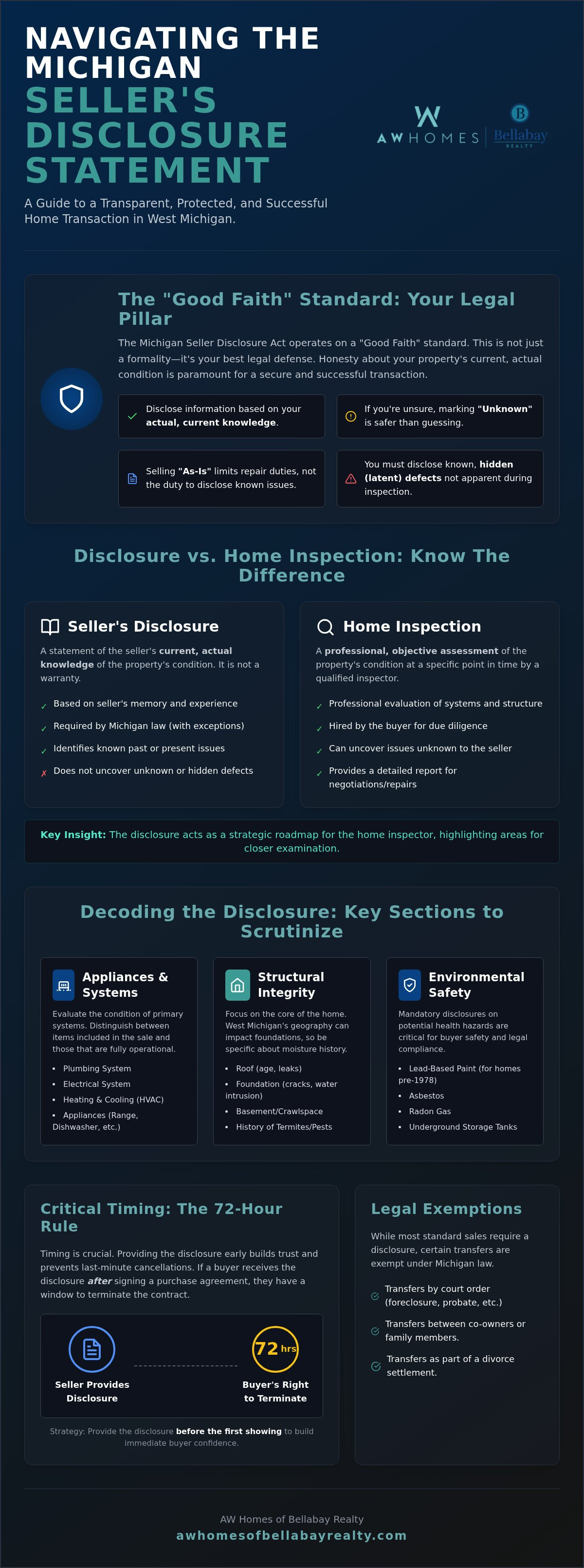
Gaining a clear perspective on understanding the seller's disclosure statement MI begins with recognizing that this document is a legal pillar rather than a mere formality. The Michigan Seller Disclosure Act, codified as MCL 565.951 through 565.966, serves as the primary governing framework for residential property transfers across the state. This legislation mandates that every seller of a one-to-four-unit residential property provide a written Seller's Disclosure Statement to potential buyers. For homeowners in West Michigan, this process is an essential part of a transition that is transparent, protected, and successful.
The law operates on a "Good Faith" standard. You must disclose information based on your actual, current knowledge of the property's condition. Honesty is your best legal defense. If you're unsure about a specific system, marking "unknown" is often safer than guessing. Even if you've never lived in the home or you're selling the property "as-is," Michigan law generally requires this document. An "as-is" clause might limit your duty to repair, but it never excuses your duty to disclose known issues. This approach ensures your transaction is methodical, intentional, and secure.
Timing is equally critical for maintaining the integrity of your sale. If a buyer doesn't receive the disclosure before signing a purchase agreement, the "72-hour rule" applies. This gives the buyer a three-day window to terminate the contract without penalty after the form is finally delivered. By providing this information early, you eliminate the risk of a late-stage cancellation and maintain control over the closing timeline. It's about creating a path that is predictable, professional, and calm.
Mandatory vs. Voluntary Disclosures
The Act strictly requires you to reveal the condition of the home's primary systems, including the roof, electrical, and plumbing. You must also disclose environmental hazards like lead-based paint or radon. However, Michigan law does not require you to disclose psychological impacts, such as whether a death occurred on the property or if a neighbor is difficult. In West Michigan real estate, the latent defect rule dictates that a seller must disclose any known, hidden defect that would not be apparent to a buyer during a typical, reasonable inspection.
Legal Exemptions to the Disclosure Act
While most residential sales in the Grand Rapids area require full disclosure, specific legal exemptions exist. These typically include transfers resulting from court orders, such as foreclosures, bankruptcy proceedings, or probate estates where the personal representative has never occupied the home. Transfers between family members, co-owners, or as part of a divorce settlement also often qualify for an exemption. Most standard market sales between unrelated parties do not meet these criteria, making a thorough disclosure a non-negotiable part of your listing strategy.
Decoding the Sections: Mechanicals, Structure, and Environmental
The disclosure form is an essential inventory of a home's vital systems. It requires you to evaluate the roof, the foundation, and the environmental safety of your living space. For many, understanding the seller's disclosure statement MI feels like an overwhelming technical audit. However, viewed through a strategic lens, this document is your primary tool for establishing emotional security. It transforms vague assumptions into concrete facts, allowing both parties to move forward with clarity, confidence, and transparency.
When reviewing the appliance checklist, you must distinguish between items that are simply included in the sale and those that are truly operational. A refrigerator that stays with the home but fails to maintain temperature must be documented accurately. This level of detail adheres to the Michigan seller disclosure rules, which prioritize the buyer's right to an informed purchase. If you're unsure how to categorize a specific system, consulting with a strategic advisor can help you provide the most accurate representation of your property.
Structural Concerns in West Michigan Homes
Regional geography plays a significant role in structural disclosures. Homes located within the Grand Rapids river valley often face unique challenges with clay soils and basement moisture. You must be specific about any history of dampness or past water intrusion. In areas like Forest Hills, where mature trees are abundant, it's vital to disclose whether a roof has undergone minor repairs or a complete replacement. For those managing the transition of an older East Grand Rapids estate, "Unknown" responses are acceptable only when you truly lack knowledge of a system's history, such as the condition of century-old plumbing hidden behind plaster walls.
Mechanical and Systemic Transparency
Transparency regarding mechanical systems prevents post-closing friction. You should clearly state the age of your furnace and AC units to help buyers plan for future life cycles. In rural or semi-rural areas like Ada and Caledonia, well water and septic tank disclosures are mandatory. This includes sharing the date of the last septic pumping and any known water quality issues. The seller's duty to disclose known past repairs remains absolute even if the system is currently functioning as intended. This methodical approach ensures no detail is left to chance.
Environmental hazards require precise attention. Approximately 1 in 4 homes in Michigan has elevated radon levels, making known test results a critical disclosure. For homes built before 1978, federal law mandates the disclosure of known lead-based paint hazards and the provision of educational pamphlets. Addressing these issues early creates a seamless process and reinforces your position as a trustworthy partner in this significant life milestone.
The Disclosure vs. The Home Inspection: Setting Expectations
A successful property transition relies on three distinct pillars: a seller's disclosure, a professional inspection, and a strategic negotiation phase. While both documents evaluate the home's condition, they serve entirely different purposes. The disclosure is a historical record based on the seller's actual knowledge; the inspection is a technical, point-in-time assessment by a licensed professional. Truly understanding the seller's disclosure statement MI means viewing it as a roadmap rather than a guarantee. It provides the home inspector with critical clues about where to focus their specialized tools, such as moisture meters or thermal imaging cameras.
Michigan law follows the 'Visual Inspection' rule for sellers. You aren't required to climb into crawlspaces or dismantle mechanical systems to complete the form. You simply report what's visible and known during your daily life in the home. In contrast, a West Michigan home inspection, which typically costs between $325 and $475, involves a methodical deep dive into the attic, foundation, and electrical panels. When discrepancies arise between these two documents, it creates a pivotal moment for negotiation. These differences don't necessarily signal dishonesty; often, they reveal issues that were hidden from the seller's view for years.
The Buyer’s Perspective: Spotting Red Flags
From a buyer's viewpoint, the disclosure is your first opportunity to identify patterns of concern. A long list of 'Unknown' checkmarks in a relatively new home might suggest a lack of maintenance or an attempt to avoid transparency. You should look for recurring issues, such as repeated sump pump failures or multiple roof patches, which often indicate underlying systemic problems. When these patterns emerge, it's appropriate to ask for supplemental documentation, contractor receipts, or specialized secondary inspections for radon or sewer lines to ensure your emotional security.
The Seller’s Perspective: Protecting Your Equity
For sellers, full transparency is a powerful shield against post-closing litigation and the dreaded 'buyer's remorse.' By disclosing a known defect upfront, you shift the risk to the buyer, who then chooses to move forward with that knowledge. This honesty builds immediate trust in a competitive market, positioning you as a composed and professional partner. Furthermore, a thorough disclosure allows you to justify your how to price my home to sell strategy. When the price reflects the home’s actual condition, you reduce the likelihood of aggressive re-negotiations after the inspection report is delivered. This methodical approach protects your equity and ensures a seamless path to the closing table.
Strategic Guidance for West Michigan Buyers and Sellers
In the competitive West Michigan market, the timing of your disclosure delivery can be the difference between a smooth closing and a failed deal. For sellers, completing the form before the first showing is an act of professional intentionality. It builds immediate trust with potential buyers, signaling that you're a transparent and organized partner in this life transition. Truly understanding the seller's disclosure statement MI is a prerequisite for any buyer hoping to compete in a hot Grand Rapids market; it allows for a more focused and decisive offer strategy. When a buyer encounters a detailed disclosure upfront, they can evaluate the property with a sense of security rather than suspicion.
A listing agent provides an essential layer of oversight during this phase. They review the document for clarity, ensuring that technical legal jargon doesn't obscure the home's true history or maintenance record. If a "material change" occurs after the form is signed, such as a sudden mechanical failure or storm damage, the seller is legally obligated to provide a written amendment to the original document. This ongoing transparency prevents the stress of last-minute surprises and keeps the transaction on a steady, logical path toward the closing table. It ensures that the process remains methodical and that no detail is left to chance.
A Seller's Step-by-Step Preparation
Successful disclosure begins long before the first open house. You should gather all maintenance records for your HVAC systems, roofing, and major renovations to provide concrete proof of care to interested parties. Walk through your home with a "disclosure mindset," looking for minor issues that you've grown accustomed to but a new owner should know, such as a sticky window or a slow drain. Consulting with a top listing agent Grand Rapids allows you to verify that your document is both compliant and comprehensive. This methodical preparation ensures your transition is handled with expert insight, transforming the task of understanding the seller's disclosure statement MI into a significant strategic advantage.
The Buyer’s Due Diligence Checklist
Due diligence is your primary anchor for emotional security in a high-stakes transaction. You should cross-reference the seller's claims with public permit records in Kent County to confirm that significant structural or electrical work was performed by licensed professionals. Don't be afraid to ask "second-level" questions based on the disclosure notes, such as requesting the specific name of the contractor who performed a past foundation repair. Gaining these insights is a critical component of understanding the Michigan home closing process and identifying where your personal journey in the home begins. If you're looking for a partner to guide you through these complexities with expert insight, contact our residential listing services team to begin your next chapter with confidence.
The AW Homes Advantage: Navigating Disclosures with Ease
A high-stakes real estate transaction requires more than just legal compliance; it demands a partner who prioritizes your emotional security. Angela Worth provides a concierge-style review of all disclosure documents, ensuring that every line item is treated with the gravity it deserves. By moving beyond simple salesmanship, we act as high-level consultants who view your property transition as a significant personal milestone. Truly understanding the seller's disclosure statement MI is a collaborative journey where we provide the professional authority, empathetic reassurance, and strategic focus necessary for a successful closing.
We mitigate the inherent stress of the Michigan Seller Disclosure Act through methodical planning and expert navigation. Our team leverages deep-rooted neighborhood insights to validate disclosure accuracy, drawing on our specialized knowledge of West Michigan markets. We understand the specific soil conditions in the Grand Rapids river valley, the unique architectural nuances of Forest Hills estates, and the systemic requirements of rural Ada properties. This localized expertise ensures that no detail is left to chance and that your disclosure acts as a pillar of trust rather than a source of anxiety.
Our Methodical Approach to Listing
Precision is the foundation of our listing process. We address every detail early to prevent unnecessary delays in the sell my home Forest Hills MI journey. This proactive stance allows us to identify potential red flags before they reach a buyer's inspector, protecting your equity and your reputation. Our professional guidance prioritizes your long-term well-being over a quick sale, utilizing transparent data and honest disclosures to fuel our expert negotiations. We create an atmosphere of order, balance, and reliability that benefits both sides of the transaction.
Your Partner in Every Life Stage
Our services are tailored to the specific situational needs of move-up buyers, downsizers, and relocation clients. We recognize that understanding the seller's disclosure statement MI is a different experience for a first-time seller than it is for a seasoned investor. As your strategic advisor, we provide a steady and knowledgeable presence that simplifies complex legal requirements into actionable steps. This composed approach ensures that your transition is not just a financial transaction but a positive evolution in your life story. If you are ready to move forward with a partner who values intentionality and personalization, contact AW Homes of Bellabay Realty for a strategic consultation today.
Securing Your Future with Transparency and Expert Insight
Your journey toward a successful property transition is built on a foundation of transparency, intentionality, and professional oversight. By mastering the legal nuances of the state's requirements, you transform a complex obligation into a strategic advantage that protects your equity and your peace of mind. We've explored how honesty serves as your best legal defense, how these documents guide professional inspections, and why early preparation fosters immediate trust in the competitive West Michigan market.
Navigating these high-stakes milestones requires more than just a signature. It demands a partner who views your transaction as a significant life milestone rather than a simple financial exchange. Angela Worth provides the concierge-style real estate service and Grand Rapids neighborhood authority needed to ensure your process remains methodical and stress-free. Truly understanding the seller's disclosure statement MI is the first step toward a secure closing and a positive evolution in your personal story.
Schedule your strategic home selling consultation with Angela Worth to begin your next chapter with absolute confidence. You deserve a seamless transition managed with expert navigation and unwavering emotional security.
Strategic Insights: Frequently Asked Questions
Is a seller's disclosure required for an 'as-is' sale in Michigan?
Yes, a disclosure is mandatory for "as-is" sales of one-to-four-unit residential properties in West Michigan. While an "as-is" clause might limit your obligation to make repairs, it never excuses your legal duty to reveal known defects. Truly understanding the seller's disclosure statement MI requires recognizing that transparency protects your equity. By disclosing issues upfront, you mitigate the risk of post-closing litigation and ensure a more secure, seamless transition for all parties involved.
What happens if a seller lies on the disclosure statement?
If a seller intentionally misrepresents the property's condition, they may be held liable for fraud or silent misrepresentation. Buyers in the Grand Rapids area can seek damages for repair costs or, in extreme cases, pursue a rescission of the sale. This potential for litigation is why we emphasize a methodical, honest approach to every line item. Providing accurate data is your primary anchor for emotional security and professional integrity throughout the closing process.
Do I have to disclose a death in the house in Michigan?
No, Michigan law does not require you to disclose psychological impacts such as a death, suicide, or alleged paranormal activity in the home. These are considered non-material facts under the Michigan Seller Disclosure Act. However, if a buyer asks you directly about such an event, you must answer truthfully or decline to answer. We focus on the structural, mechanical, and environmental health of the property to ensure a transparent and stress-free milestone.
Can a buyer back out after signing the disclosure statement?
Yes, a buyer can terminate the contract based on the disclosure under specific circumstances. If the document is delivered after the purchase agreement is signed, the buyer has a 72-hour window to back out. In a competitive market like East Grand Rapids, providing the disclosure before the first showing is a strategic move. It builds immediate trust and ensures that the buyer's offer is based on a clear, unhurried understanding of the home's history.
Does a seller have to fix items found on the disclosure?
A seller is not legally obligated to repair any issues identified on the disclosure statement. The form is designed for transparency and information sharing rather than as a repair mandate. In areas like Ada and Caledonia, these items often become points of negotiation during the home inspection period. You may choose to fix the issue, offer a closing credit, or maintain your current price based on the strategic advice of your listing agent.
How long does a buyer have to review the seller's disclosure in MI?
Michigan law provides a specific timeline for review if the disclosure is delivered after an offer is accepted. Buyers typically have 72 hours to review the document if it was delivered in person, or 120 hours if delivered by mail. For a truly seamless process, we recommend that our clients review all documents before submitting an offer. This proactive due diligence allows you to move toward the closing table with expert insight and absolute confidence.
What should I do if I discover a problem after I've filled out the form?
If you discover a "material change" in the home's condition after the form is signed, you must provide a written amendment immediately. This could include a sudden basement leak after a heavy West Michigan storm or a failing furnace in the middle of winter. Promptly updating the document maintains your "Good Faith" standing and prevents the stress of last-minute surprises. This methodical approach ensures your transition remains predictable, professional, and grounded in localized reliability.
Are lead-based paint disclosures different from the standard MI disclosure?
Yes, lead-based paint disclosures are a federal requirement for any residential property built before 1978. While the standard Michigan disclosure covers a broad range of mechanical and structural items, the lead-based paint form is a separate legal obligation. Sellers must provide the EPA-approved pamphlet and disclose any known lead hazards. Managing these distinct requirements is a core part of our concierge-style service, ensuring no detail is left to chance during your transition.


