

Did you know that nearly 77% of real estate lawsuits involve property disclosure disputes? In the 2026 market, a single missed detail on the Michigan Seller's Disclosure Act form can jeopardize your financial future and your peace of mind. Successfully managing the steps to selling a house in Michigan requires more than a sign in the yard; it demands legal precision, strategic market positioning, and a methodical plan for your next chapter.
You likely want a transition that feels steady and predictable, yet the stress of coordinating showings and navigating shifting interest rates can feel heavy. We understand that selling your home is a significant personal milestone that deserves a sophisticated, expert approach. This roadmap is designed to simplify the complexities of the current market, ensuring you maximize your equity while maintaining emotional security. We will guide you through mandatory disclosures, 2026 pricing strategies, and the essential preparations that turn a listing into a successful closing.
Key Takeaways
- Protect your financial future by mastering the 2026 Michigan Seller’s Disclosure Statement requirements and legal ownership verification.
- Utilize hyper-local market data to establish a strategic price point that attracts serious buyers while maximizing your final sale price.
- Master the essential steps to selling a house in Michigan with a marketing plan that prioritizes both property exposure and your family’s daily comfort.
- Navigate the complexities of offer evaluation and home inspections with a focus on protecting your equity and ensuring a firm closing timeline.
- Transition seamlessly to your next life stage by understanding the final closing disclosures and managing the logistical nuances of your move.
Step 1: Establishing Legal Ownership and Required Disclosures
The first stage of your transition involves grounding the transaction in legal certainty. Before your listing reaches the public, you must verify your right to sell and identify the specific documentation required by state law. This initial phase ensures your sale remains unburdened by unexpected legal hurdles or title disputes. Understanding these foundational steps to selling a house in Michigan provides the emotional security you need to move forward with confidence.
The Michigan Seller’s Disclosure Statement
Under the Michigan Seller Disclosure Act, specifically Act 92 of 1993, sellers of residential properties with one to four units must complete a standardized form. This document covers the property's condition, including mechanical systems, structural integrity, and environmental hazards. Even if you choose to market the home "as-is," state law requires transparency regarding known defects. Providing this statement before a purchase agreement is signed protects your interests. If a buyer receives the disclosure after signing, they typically have a 72 hour window to terminate the agreement. High level transparency builds trust; it simplifies negotiations; it prevents future litigation.
Confirming Title and Ownership Rights
A clear title is the bedrock of a successful transaction. You should review your current deed to ensure all parties are prepared for the Michigan home closing process. Unresolved liens, estate complications, or clerical errors in public records can delay your timeline if not addressed early. Working with a strategic advisor helps you navigate these complex ownership transfers with ease. This preparation is essential for a smooth transition toward Closing the Sale without last minute surprises.
For homes built before 1978, federal mandates require a Lead Based Paint Disclosure. You'll need to provide the EPA's informational pamphlet and disclose any known hazards to prospective buyers. Beyond these legal mandates, gathering your tax records and utility history demonstrates professional care. This level of organization positions your home as a high quality asset. It provides buyers with the clarity they need to move forward, making it one of the most vital steps to selling a house in Michigan. Collect your records; verify your standing; secure your peace of mind.
Step 2: Strategic Market Positioning and Pricing
Once you've secured your legal standing through the Michigan Seller's Disclosure Statement, your focus must shift to market psychology. Pricing is not a matter of chance; it's a calculated move. In the 2026 market, buyers are discerning and prioritize move-in ready properties with updated mechanical systems. To succeed, you must balance current inventory levels with the unique features of your specific property. This stage is one of the most critical steps to selling a house in Michigan, as it dictates how quickly you can transition to your next home.
Evaluating West Michigan Market Trends
A successful sale relies on hyper-local data rather than broad statewide averages. While the Michigan median home sale price reached approximately $279,000 in May 2026, those numbers don't capture the nuances of Kent County. You must analyze recent sales in Grand Rapids, Ada, and Caledonia to find your competitive "sweet spot." Consider the Grand Rapids real estate forecast to understand how seasonal fluctuations impact demand. For instance, summer prices in West Michigan often trend higher than winter lows, making timing a vital component of your strategy. Analyze the data; define your value; secure your future.
The Power of Professional Presentation
In a digital first market, your home's online presence acts as the primary showing. High-end photography and intentional staging are no longer optional; they are the standard for maximizing your final sale price. We recommend focusing your resources on three high-impact areas:
- Curb Appeal: The first five seconds of a buyer's visit set the emotional tone for the entire tour.
- Kitchen Functionality: Buyers in 2026 look for energy-efficient appliances and modern layouts that support a busy lifestyle.
- Primary Suite Luxury: Create a sanctuary that emphasizes comfort and personal evolution.
Positioning your home correctly involves more than just a number on a screen. It requires aligning your price point with your personal timeline and the specific expectations of local buyers. If you're seeking a partner to navigate these micro-trends, our residential listing services offer the strategic insight needed for a high-end experience. By implementing a strategic pricing bracket, you can attract maximum buyer interest while protecting your equity. Data drives decisions. Presentation builds value. Success follows planning.
Step 3: Executing the Marketing and Showing Strategy
Marketing a home in 2026 is an intentional exercise in storytelling. It's the bridge between your current life and your next chapter. Marketing is not a passive act; it is a strategic hunt for the buyer who recognizes the unique value of your property. In the 2026 Michigan market, where inventory levels fluctuate, your home must stand out across multiple digital and physical channels. Executing these specific steps to selling a house in Michigan involves launching a multi-channel campaign that targets the MLS, social media platforms, and exclusive private networks. Identify the audience; craft the narrative; secure the interest.
Attracting the Right Buyer Profile
We don't just list homes; we position them for specific lifestyles. Whether your property is a luxury estate in Ada or a modern family home in Caledonia, the marketing must speak directly to the demographic most likely to buy. Our executive-level listing services are tailored to reach relocation and move-up buyers who are searching for more than just square footage. They're looking for a community. Highlighting neighborhood amenities like top-tier school districts or local park access frames the house as a gateway to a better life. For out-of-state buyers, we leverage our Grand Rapids relocation guide to showcase the regional lifestyle. It's also vital to ensure all marketing materials align with Key Legal Requirements to protect the integrity of the sale.
Managing the Showing Experience
Managing showings while living in your home is often the most stressful part of the process. We mitigate this through an unhurried, methodical approach that respects your family's daily rhythm. A daily "show-ready" checklist ensures the home is always prepared for a tour without disrupting your peace of mind. We utilize secure lockbox technology and showing management software to provide safety and real-time tracking for every visit. This structure reinforces the brand's promise of a stress-free experience.
Creating an inviting atmosphere is about intentionality. Neutralize scents; optimize lighting; clear the pathways. This level of preparation allows buyers to envision their own personal evolution within your walls. As showings progress, we monitor buyer feedback in real-time. This data allows for agile adjustments to the strategy, ensuring we remain aligned with shifting market expectations. By treating the showing process as a curated journey, we move the conversation away from chance and toward expert navigation. Preparation builds trust. Presentation drives offers. Success follows a plan.
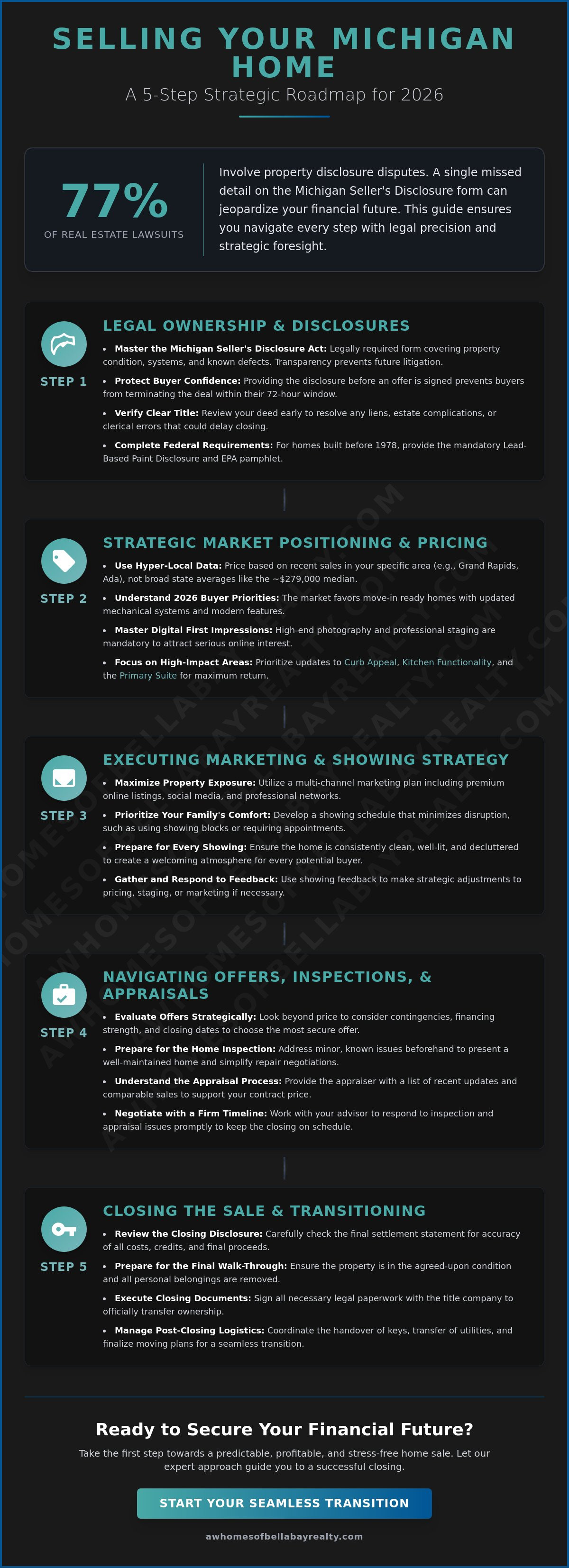
Step 4: Navigating Offers, Inspections, and Appraisals
The moment an offer arrives, your strategic preparation meets the reality of the market. This phase requires a composed, attentive partner who prioritizes your long-term well-being over a quick closing. Navigating this stage effectively is one of the most complex steps to selling a house in Michigan. It involves more than just accepting a number; it requires a deep dive into financing strength, contingency timelines, and the buyer's overall readiness to close. Analyze the terms. Refine the details. Secure the equity.
The Art of Strategic Negotiation
A high-end transaction isn't won by the highest price alone. You must evaluate the total package to ensure it aligns with your transition goals. We look closely at the down payment percentage and verify the lender's reputation to minimize the risk of a deal falling through. Using counter-offers allows you to maintain control over the process. You might adjust the occupancy date to align with your own move or limit the scope of the inspection to major structural items. Maintaining a calm, professional perspective during these high-stakes financial discussions is essential for a successful outcome. If you are looking for a strategic advisor to manage these discussions, our residential listing services provide the professional authority you need.
Clearing the Inspection and Appraisal Hurdles
The home inspection is often where the emotional weight of the sale feels heaviest. You can mitigate this stress by addressing minor, known repairs before the listing goes live. In the 2026 Michigan market, buyers look for well-maintained mechanical systems and energy efficiency. If the inspector identifies issues, we approach the repair requests with a focus on protecting your equity while keeping the buyer engaged. Address the repairs. Support the value. Finalize the deal.
Similarly, the appraisal ensures the contract price aligns with current market value. We provide the appraiser with a curated list of recent upgrades and hyper-local neighborhood comps to support the valuation. This methodical approach helps prevent "appraisal gaps" that can derail a transaction. By treating these hurdles as manageable milestones rather than roadblocks, we ensure a seamless path to the closing table. Every detail is managed with intentionality to ensure your financial and emotional security remains intact throughout the transition.
Step 5: Closing the Sale and Transitioning to Your Next Chapter
The final stage of your journey is where the strategic preparation of the previous weeks culminates in a successful hand-off. It's the moment when the logistical details and emotional weight of the transaction transform into a clear path forward. Closing isn't merely a meeting; it's a milestone. By following the methodical steps to selling a house in Michigan, you ensure that this final transition is as unhurried and predictable as the rest of the process. You've navigated the disclosures, the pricing, and the negotiations; now, you can focus on the evolution of your lifestyle.
Three days before the scheduled meeting, you'll receive the Closing Disclosure. This document provides the final accounting of the transaction, detailing your closing costs and the exact net proceeds you'll receive. Review this carefully with your strategic advisor to ensure every credit and fee aligns with your expectations. Confirming these figures in advance provides the emotional security needed to walk into the closing office with total confidence. Verify the numbers; confirm the proceeds; celebrate the clarity.
Finalizing the Transaction
The closing meeting is the formal venue for signing the new deed and transferring ownership to the buyer. During this session, you'll account for specific Michigan requirements, including the real estate transfer tax. As of 2026, this combined state and county tax remains at $8.60 per $1,000 of the sale price. Your advisor will ensure these payments, along with recording fees and any negotiated concessions, are handled accurately. Once the documents are executed, the title company will initiate a wire transfer of your funds. Seeing those funds hit your account provides immediate peace of mind and the financial fuel for your next chapter.
If that next chapter involves a move to Southern California, seeking out a specialized agency like County Properties can help you navigate the unique nuances of that regional market with ease.
Your Next Chapter: Buying or Relocating
A well-planned life transition involves more than just leaving your current home; it requires a seamless entry into your new one. Coordinating the timing of your sale with your next purchase is essential to avoid the stress of double moves or temporary housing. If your journey keeps you within West Michigan, leveraging the expertise of a buyers agent in Grand Rapids can help you find a property that matches your new life stage. Whether you're downsizing to a low-maintenance condo in the city or moving to a larger estate in Ada, we view our buyer agency services as a natural extension of our commitment to your long-term well-being. Embrace the change. Trust the process. Begin your new story with the confidence that every detail has been handled with expert care.
Your Seamless Transition to a New Chapter
Selling your home is a profound milestone that marks the beginning of a significant personal evolution. By mastering legal disclosures, aligning your price with hyper-local West Michigan data, and navigating negotiations with a composed partner, you ensure your equity remains protected. These essential steps to selling a house in Michigan are designed to transform a complex financial transaction into a predictable, unhurried journey. Success in the 2026 market relies on this methodical approach. It moves you away from chance and toward expert navigation and planning.
Angela Worth serves as your dedicated strategic advisor, providing concierge-style listing services for a stress-free transition in Forest Hills, Ada, and the Greater Grand Rapids area. Her regional expertise ensures that every detail of your sale is managed with intentionality and professional care. Ready to start your next chapter? Let’s create your strategic listing plan today. We look forward to guiding you through this significant life stage with the emotional security and localized reliability you deserve. Your future is waiting; let's approach it with confidence together.
Frequently Asked Questions
How long does it typically take to sell a house in Michigan?
The timeline varies by region, but as of April 2026, the median days on market has seen a slight increase of 5.26% year over year. In competitive West Michigan markets like Ada or Forest Hills, well-positioned homes often move faster than the statewide average. Your specific timeline depends on market inventory, seasonal demand, and the precision of your initial pricing strategy.
Do I need a lawyer to sell my house in Michigan?
Michigan law does not require a lawyer to facilitate a residential home sale. Most sellers rely on their strategic listing advisor and a reputable title company to manage the legal documentation and deed transfers. However, if your property involves complex estate issues or unique land use restrictions, consulting a legal professional can provide an additional layer of emotional security during the process.
What are the mandatory disclosures for Michigan home sellers?
You are legally required to provide the Michigan Seller’s Disclosure Statement, which details the property’s condition and mechanical systems. Federal law also mandates a Lead-Based Paint Disclosure for any home constructed prior to 1978. Completing these forms with total transparency is one of the most vital steps to selling a house in Michigan to avoid the risk of future litigation.
How can I avoid paying capital gains tax on my home sale?
Most sellers qualify for the IRS Section 121 exclusion, which allows you to exclude up to $250,000 in profit if single, or $500,000 if married filing jointly. To qualify, the property must have been your primary residence for at least two of the last five years. We recommend consulting a tax professional to review your specific financial evolution and transition goals before closing.
What is the "due diligence" period in a Michigan real estate contract?
This period typically refers to the negotiated timeframe, often seven to ten days, during which the buyer performs inspections and reviews property records. During this window, the buyer can request repairs or terminate the agreement based on their findings. A methodical approach to this phase ensures both parties remain committed to a seamless, predictable path to the final closing table.
Who pays for the title insurance in a Michigan home sale?
In a standard Michigan transaction, the seller typically pays for the owner’s title insurance policy to guarantee a clear title to the buyer. Conversely, the buyer usually covers the cost of the lender’s policy if they are securing a mortgage. This arrangement is a customary practice that helps ensure a steady, professional closing process for all parties involved in the transition.
How do I handle multiple offers on my home strategically?
Evaluating multiple offers requires a focus on financing strength, contingency removals, and closing timelines rather than just the highest price. You might set an offer deadline to create a structured environment for competitive bidding. A strategic advisor helps you compare these variables to find the offer that best supports your personal transition, financial goals, and long-term well-being.
What happens if my home appraises for less than the offer price?
If an appraisal gap occurs, you can negotiate for the buyer to cover the difference in cash, lower your sale price, or meet in the middle. Providing the appraiser with a curated list of recent upgrades and local neighborhood comps can often prevent this hurdle. Managing this process with intentionality ensures the transaction remains on track for a successful and stress-free conclusion.


