

In 2026, the most secure path to wealth in West Michigan isn't necessarily finding the cheapest property; it's identifying exactly where new zoning shifts and school district stability intersect. Finding the best areas to invest in real estate Grand Rapids requires a blend of local intuition, hard data, and strategic foresight. It's natural to feel a sense of hesitation when navigating a 6.99% mortgage rate or the premium prices found in Ada and Forest Hills. You want to ensure your capital is protected, your equity is growing, and your time isn't wasted on micro-trends that have already peaked.
This guide reveals high-growth corridors that offer the strongest ROI and long-term equity for your portfolio. You'll discover how to balance the cash flow potential of the urban core with the wealth preservation found in our most prestigious suburbs. We'll explore the impact of the new institutional investor ban, the rise of missing middle housing, and the specific neighborhoods poised for significant evolution. This is your curated roadmap to making an informed, methodical, and stress-free investment in the Grand Rapids community.
Key Takeaways
- Understand how the robust healthcare and technology sectors create a recession-proof foundation, fostering steady population growth and rental demand across West Michigan.
- Compare high-yield urban opportunities in Eastown and Creston against the stable, equity-driven corridors of Ada, Cascade, and Forest Hills.
- Pinpoint the best areas to invest in real estate Grand Rapids by evaluating neighborhood transition potential and proximity to major infrastructure projects like the Medical Mile.
- Learn to utilize a strategic investor’s checklist that prioritizes methodical planning, emotional security, and data-driven cap rate analysis.
- Transition from a simple transaction mindset to a long-term wealth strategy through a personalized, consultant-led approach to property acquisition.
Why Grand Rapids Remains a Strategic Investment Hub in 2026
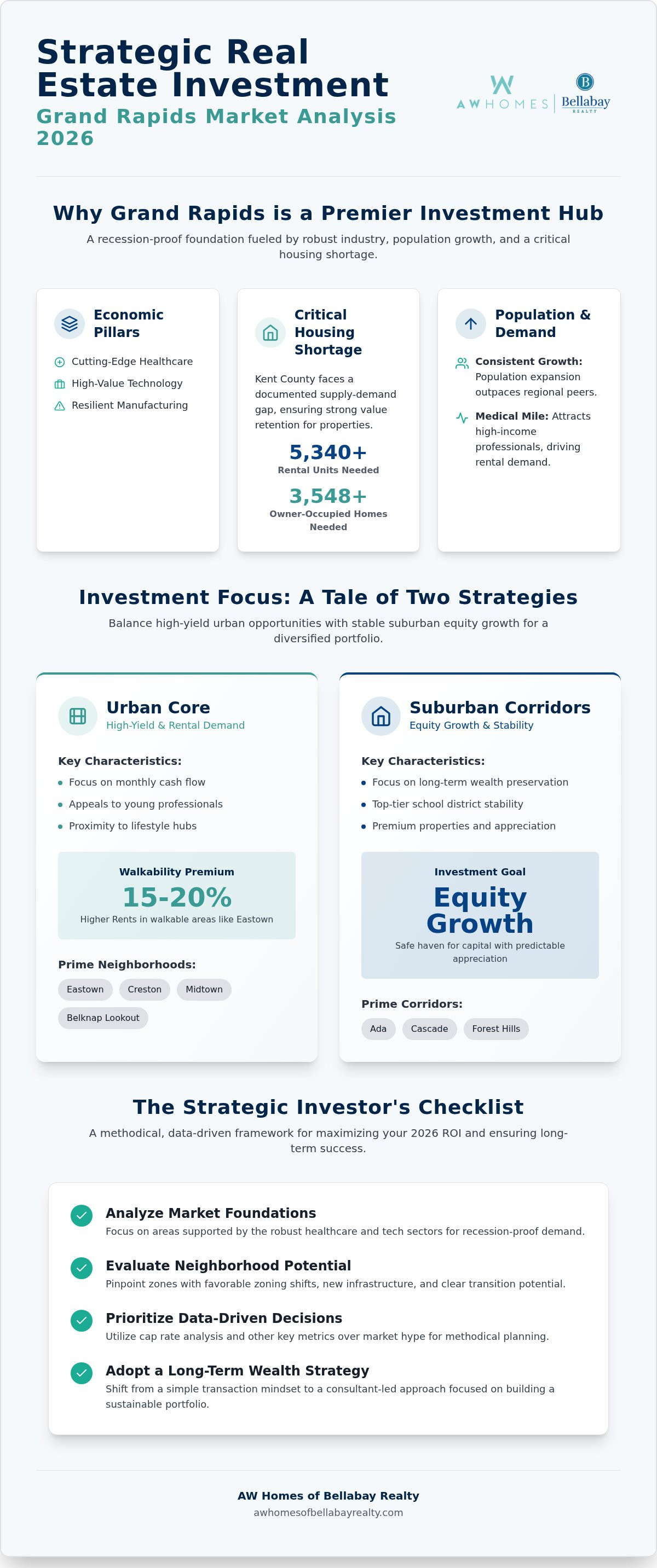
Grand Rapids is no longer a hidden gem; it is a primary destination for capital seeking both security and growth. While other Midwest metros grapple with stagnant populations, Grand Rapids, Michigan continues to expand through a deliberate focus on high-value industries. Understanding the best areas to invest in real estate Grand Rapids begins with recognizing these foundational drivers. Investors find confidence in the city’s tripartite of stability: elite education systems, cutting-edge healthcare facilities, and a resilient manufacturing base. This economic diversity creates a recession-proof environment where professional demand remains constant regardless of national market shifts. As Kent County faces a documented shortage of over 5,340 rental units and 3,548 owner-occupied homes in 2026, the city's investment appeal is cemented by a population growth rate that consistently outpaces its regional peers.
The Medical Mile and Innovation Impact
The continued expansion of the Medical Mile has transformed the city's tenant profile into one of the most stable in the country. With Corewell Health and Grand Valley State University attracting a steady stream of medical professionals and researchers, the demand for high-quality housing near the city center is relentless. Identifying the best areas to invest in real estate Grand Rapids often begins here, in neighborhoods like Belknap Lookout and Midtown. These areas benefit from a significant ripple effect, as proximity to high-paying jobs drives long-term appreciation and minimizes vacancy risks. We view these pockets not just as rental markets, but as essential infrastructure for the city's professional class, offering a predictable path for equity growth.
Inventory Shortages and Value Retention
The 2026 market is characterized by a persistent supply-demand gap that acts as a natural floor for property values. Current data shows that the inventory of available homes remains significantly below the levels required to house our growing workforce. This scarcity turns local property into a safe haven for equity, protecting your investment from the volatility seen in more saturated markets. To fully grasp how these supply constraints influence your strategy, it's helpful to review our broader analysis of Grand Rapids real estate. By focusing on areas where zoning changes now permit missing middle housing, you can leverage this shortage to build a portfolio that serves both the community's needs and your financial milestones.
Urban Core Opportunities: High Yield and Rental Demand
Investing in the heart of the city requires a keen eye for lifestyle drivers and neighborhood character. While the suburbs offer stability, the urban core provides the high-yield opportunities that drive monthly cash flow. Identifying the best areas to invest in real estate Grand Rapids often leads seasoned investors toward neighborhoods defined by culture, connectivity, and commerce. These areas capture the growing demand from millennials and Gen Z professionals who prioritize proximity to their workplaces and social hubs. Success in these districts isn't about chasing the lowest price; it's about recognizing which micro-neighborhoods are poised for the next stage of evolution.
Heritage Hill and Midtown offer a unique blend of historical prestige and modern rental demand. Heritage Hill allows investors to capture high-end rental rates by offering unique architectural character that new builds simply cannot replicate. However, success here requires a methodical approach to maintenance and historic preservation. By leveraging resources from the City of Grand Rapids Economic Development department, investors can better understand the long-term vision for these districts and how urban renewal projects will continue to support property values. If you're looking to navigate these emerging pockets with a strategic partner, exploring our investment consulting services can help ensure your transition into the urban market is seamless and secure.
Eastown and the Walkability Premium
Walkability isn't just a lifestyle choice; it's a financial multiplier in the 49506 zip code. In Grand Rapids, properties in highly walkable neighborhoods command rents 15-20% higher than their less accessible counterparts. Eastown remains the gold standard for this trend, as it functions as the city's cultural heart. For investors, the strategy involves finding fix-and-hold opportunities where cosmetic updates can unlock significant equity. The consistent influx of local businesses ensures that residential demand remains high, making Eastown a reliable cornerstone for any urban portfolio.
Creston: The North Quarter Growth Story
Creston has emerged as the premier choice for first-time investors in 2026. The commercial revitalization of Plainfield Avenue has sparked a North Quarter growth story that mirrors the evolution of more established neighborhoods. It offers a strategic value alternative to the increasingly expensive downtown core. Young professionals are flocking to Creston for its authentic feel and lower entry price points. This demographic shift creates a prime environment for multi-family conversions and small-scale developments that cater to the "missing middle" housing demand.
Suburban Growth Corridors: Investing in Ada, Cascade, and Forest Hills
While the urban core offers immediate cash flow, the true equity engines of West Michigan lie in the eastern suburbs. For investors prioritizing wealth preservation and high-end appreciation, the best areas to invest in real estate Grand Rapids are found within the "Big Three": Ada, Cascade, and Forest Hills. These townships offer a sophisticated blend of stability, prestige, and long-term equity. The Grand Rapids 2026 Economic Forecast highlights sustained business confidence and professional migration, which translates directly into a high-demand market for executive-level housing. Investors here benefit from a lack of municipal income tax and a market that remains resilient even during broader economic shifts.
Cascade Township serves as a primary destination for executive rentals, specifically for families transitioning into the region for leadership roles in healthcare or manufacturing. Recent zoning changes in Cascade have prioritized the preservation of its rural character, which naturally limits new high-density developments and increases the scarcity of existing single-family homes on large lots. This supply constraint ensures that properties remain a "safe haven" for capital. For those looking to build a portfolio of high-value assets, our guide to luxury homes Grand Rapids MI provides deeper insights into navigating these premium estates with a methodical, consultant-led approach.
Ada Village: The New Standard for Suburban Investment
The multi-million dollar redevelopment of Ada Village has created a ripple effect that has permanently elevated local property values. This walkable, curated village center has transformed the area into a lifestyle destination, driving intense demand for high-end townhomes and "lock-and-leave" executive housing. Investors are seeing significant success in properties that offer proximity to the village’s boutique shops and riverside parks. To understand the specific micro-trends within this township, you can explore our Ada MI neighborhood guide, which details how this village-centric growth creates a unique opportunity for suburban rental premiums.
Forest Hills: Equity Growth Driven by Education
The "School District Shield" is a tangible reality in Forest Hills, where home values are inextricably linked to the reputation of Forest Hills Public Schools. This area attracts a permanent base of "move-up" buyers who prioritize educational excellence above all else, creating a solid floor for property prices. Because these buyers are often relocating for life milestones, the market remains unhurried and logical. While the broader city of Grand Rapids maintains consistent growth, Forest Hills properties frequently experience higher appreciation rates due to the unrelenting competition for entry into this specific district. It's a strategic choice for investors seeking a low-stress, high-security asset that serves a vital community need.
The Strategic Investor’s Checklist: Evaluating 2026 ROI
Successful investing in the West Michigan market isn't a matter of chance; it's the result of a methodical, logical, and strategic framework. Identifying the best areas to invest in real estate Grand Rapids requires you to look past the surface level of list prices and aesthetic appeal. To ensure your capital is protected and your equity is growing, we recommend a five-step evaluation process. This checklist helps you move from the stress of uncertainty to the security of a data-driven decision.
- Analyze Cap Rate vs. Cash-on-Cash Return: Understand the efficiency of the property itself versus the actual return on your invested capital. In a 6.99% interest rate environment, your leverage strategy is just as important as the property's location.
- Assess Transition Potential: Look for indicators of neighborhood evolution. This includes new permits for ADUs, upcoming commercial developments on corridors like Plainfield Avenue, or proximity to major anchors like the Medical Mile.
- Calculate Maintenance Reserves: Be precise with your projections. A historic build in Heritage Hill requires a different financial cushion than a 2010s construction in Forest Hills. We suggest tiered reserves based on the home's era and mechanical age.
- Leverage the 1031 Exchange: Michigan offers specific tax-deferred pathways that allow you to roll your gains into larger, more stable assets. This is a vital tool for those transitioning from urban rentals to suburban equity plays.
- Vet for 'Move-Up' Appeal: Always consider your exit. Does the property sit in a school district or neighborhood that will attract a permanent, high-equity buyer in five to ten years?
Understanding the Total Cost of Ownership
One of the most critical factors in Michigan real estate is the "uncapping" of property taxes. When a property is sold, the taxable value resets to the state equalized value, which can lead to a significant increase in your annual carrying costs. It's essential to calculate your ROI based on the anticipated new tax rate rather than the seller's current bill. To understand these nuances and prepare for a seamless transition, you can review our guide on the home closing process in Michigan. Additionally, don't overlook the power of professional home photography; it's a small investment that attracts higher-quality tenants and justifies premium rental rates.
Risk Mitigation and Emotional Security
A methodical approach beats "timing the market" every time. We believe that real estate should provide emotional security, not just financial gain. This means aligning your investment with your specific life stage goals, whether you're building a legacy for your family or seeking stable retirement income. A concierge agent plays a vital role here by vetting off-market opportunities and providing localized insights that software can't replicate. If you're ready to build a portfolio with intentionality and expert navigation, schedule a strategic investment consultation with our team today.
Partnering for Success: Strategic Investment with AW Homes
Identifying the best areas to invest in real estate Grand Rapids is only the beginning of a successful wealth-building journey. True success requires a blend of professional authority, localized reliability, and strategic foresight. At AW Homes, we move beyond simple salesmanship to position ourselves as high-level consultants for your portfolio. We view every property acquisition not merely as a financial transaction, but as a significant personal milestone in your life story. By leveraging our strategic partnership with Bellabay Realty, we provide our clients with exclusive market insights and off-market opportunities that generalist agencies often overlook. Our approach is intentionally calming, designed to mitigate the inherent stress of high-stakes investing through methodical planning and expert navigation.
Our philosophy is grounded in the concept of personal evolution. We believe that your investment strategy should mirror your current life stage and your long-term vision for the future. Whether you're seeking high-yield urban multi-families or high-equity suburban estates, our work is characterized by intentionality, personalization, and expert insight. We don't just help you buy a house; we help you transition into a new chapter of financial security. This focus on the "human element" of real estate ensures that no detail is left to chance, providing the emotional security you need to move forward with confidence.
Expert Guidance for Relocation and Investment
Navigating a new market from a distance presents unique challenges that require a steady and knowledgeable hand. We specialize in assisting out-of-state investors and relocation clients who are targeting the executive and luxury corridors of West Michigan. Our team provides the localized authority needed to vet individual neighborhood micro-trends, ensuring you don't overpay in a competitive landscape. We understand the logistical nuances of high-end property transitions, offering a seamless process that respects your time and your capital. By acting as your regional specialist, we ensure your entry into the Grand Rapids market is both profitable and unhurried.
Starting Your Investment Journey
The path to a robust portfolio begins with a clear, strategic vision. Our consultation process is designed to narrow down the best areas to invest in real estate Grand Rapids based on your specific ROI goals and risk tolerance. We provide access to curated listings in Ada, Cascade, and Forest Hills, focusing on properties that offer the "School District Shield" and long-term equity growth. This is a partnership built on trust, warmth, and a shared commitment to your long-term well-being. If you're ready to transform your financial goals into a reality through expert navigation, it's time to take the first step toward your next chapter. Schedule your strategic investment consultation with Angela Worth today to begin building your West Michigan legacy.
Your Strategic Path to Wealth in West Michigan
The 2026 market offers a unique landscape for those who approach it with intentionality and expert insight. By balancing the high-yield potential of urban pockets like Creston with the enduring equity found in the Forest Hills and Ada luxury markets, you can build a portfolio that serves both your financial goals and your personal evolution. Identifying the best areas to invest in real estate Grand Rapids is about more than just tracking data; it's about finding the right environment for your next chapter. Success in this region requires a methodical approach, localized authority, and a commitment to long-term stability.
At AW Homes, we provide the concierge-style strategic consulting you need to navigate these high-stakes transitions with confidence. Through our partnership with Bellabay Realty, we offer the regional dominance and exclusive insights required to secure assets with precision. We prioritize your emotional security, your financial growth, and your long-term well-being above all else. Secure your strategic investment future with AW Homes. Your journey toward a more prosperous future starts with a single, well-planned step.
Frequently Asked Questions
Is Grand Rapids a good place to invest in real estate in 2026?
Grand Rapids remains a premier investment destination in 2026 due to its resilient economic foundation. The city's growth is anchored by the Medical Mile and a stable manufacturing sector; these pillars ensure consistent tenant demand. With a documented shortage of thousands of housing units across Kent County, property values are supported by strong fundamentals. It's an ideal environment for those seeking long-term equity growth and reliable cash flow in a stable Midwest market.
Which Grand Rapids neighborhood has the highest rental demand?
Eastown continues to command the highest rental demand due to its walkability and cultural appeal. Professionals prioritize this area for its unique local businesses and proximity to downtown employment hubs. Creston is also seeing a surge in interest as a high-value alternative for young tenants. These neighborhoods are among the best areas to invest in real estate Grand Rapids for those who prioritize low vacancy rates and consistent monthly income.
What are the best school districts for real estate investment in West Michigan?
Forest Hills and Ada are the gold standards for education-driven investment in the region. These districts act as a "School District Shield," protecting property values even during broader market fluctuations. Families often relocate specifically to access these top-rated schools, which creates a permanent base of high-equity buyers. Investing within these boundaries ensures your asset remains highly desirable for future move-up buyers, securing your long-term return through steady, predictable appreciation.
How do property taxes in Michigan affect my investment ROI?
Michigan's property tax system features an "uncapping" mechanism that resets the taxable value upon sale. This means your tax bill will likely be higher than the previous owner's, which can impact your initial cash flow. It's essential to calculate your ROI based on the anticipated new state equalized value rather than current rates. Methodical planning around these tax transitions ensures that your financial projections remain accurate and your investment remains secure.
Should I invest in urban multi-family or suburban single-family homes?
The choice depends on your specific life stage and long-term financial goals. Urban multi-family properties in areas like Midtown offer higher immediate yields and serve the professional rental market. Conversely, suburban single-family homes in Cascade or Forest Hills provide superior wealth preservation and long-term equity growth. A balanced portfolio often includes both to mitigate risk while capturing the unique benefits of the urban core and high-end suburban corridors.
What is the average appreciation rate for homes in Forest Hills and Ada?
In 2026, the Grand Rapids market has transitioned to a more stable growth phase. Homes in Forest Hills and Ada are projected to see annual price gains of approximately 3% to 4%. While this is a shift from the rapid increases of previous years, it represents a healthier and more predictable environment. This steady appreciation, combined with high demand for elite school districts, makes these areas excellent for long-term, low-stress wealth building.
How can a concierge real estate agent help me find investment properties?
A concierge agent acts as a strategic consultant rather than a simple transaction agent. We provide localized authority by vetting neighborhood micro-trends and identifying off-market opportunities that aren't visible on public platforms. This methodical approach reduces the stress of high-stakes transactions and ensures your investment aligns with your vision. We prioritize your emotional security by handling the logistical nuances of property transitions with professional care, precision, and unhurried expert guidance.
What are the hidden costs of investing in Grand Rapids real estate?
Beyond the purchase price, investors should account for the 1.5% Grand Rapids resident income tax if the property is within city limits. Historic properties in districts like Heritage Hill also require higher maintenance reserves to preserve their unique character. Additionally, the uncapping of property taxes and Michigan-specific closing costs can affect your total cost of ownership. Vetting these details during the due diligence phase is vital for maintaining a healthy and predictable ROI.


